Feather Scarf with Fur Trim
CN → US| HS编码 | 关税税率 | 原产国 | 目的国 | 文档 |
|---|---|---|---|---|
| 4303100060 | 39.0% | CN | US | 官方文档 |
| 4303900000 | 35.0% | CN | US | 官方文档 |
| 6704900000 | 17.5% | CN | US | 官方文档 |
| 6704190000 | 17.5% | CN | US | 官方文档 |
| 6117106020 | 27.0% | CN | US | 官方文档 |
商品图片


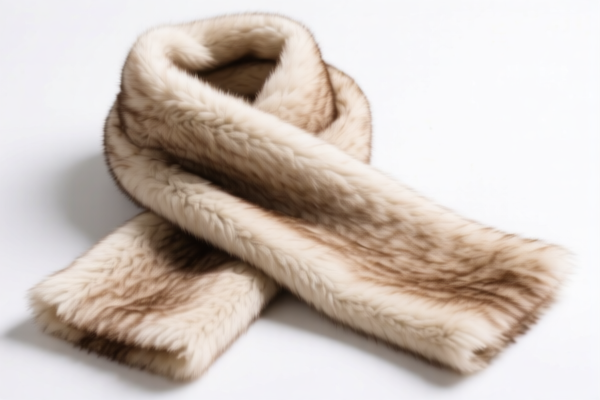
AI分析
🧣 Feather Scarf with Fur Trim (Feather Scarves)
🌐 HS Code Reference & Clearance Guide | 2026 Latest Tariff Regime | Professional Compliance Strategy
📌 I. Product Definition & Classification: Do You Really Know "Feather Scarf with Fur Trim"?
A Feather Scarf with Fur Trim is a fashion accessory designed for warmth and aesthetic appeal, typically characterized by: - Primary Material: Natural feathers (e.g., ostrich, pheasant) or synthetic/animal fur trims (real or faux); - Form Factor: Worn around the neck, shoulders, or head; classified under "scarves," "shawls," or "tippets"; - Construction: May include knitted, woven, or assembled fabrics with feather/fur embellishments.
⚠️ Critical Classification Distinction:
- If made of knitted wool or fine animal hair →归入 6117.10.10.00 (Knitted)
- If made of woven wool/fine animal hair →归入 6214.20.00.00 (Woven)
- If made of synthetic fibers or other textiles →归入 6117.10.20.10 or 6214.90.00.90
📦 II. HS Code Classification Details (2026 Latest Tariff Regime)
| HS Code | Product Description | Applicable Scenario | Material Composition |
|---|---|---|---|
6117.10.10.00 |
Scarves, knitted or crocheted, of wool or fine animal hair | Knitted feather/wool scarves, shawls with fur trim | ✅ Wool/Animal Hair + Knitted |
6117.10.20.10 |
Scarves, knitted or crocheted, of synthetic fibers or other textiles | Feather scarves with synthetic fur trim or blends | ✅ Synthetic/Fiber-based |
6214.20.00.00 |
Scarves of wool or fine animal hair (woven) | Woven wool/feather scarves, shawls with fur trim | ✅ Wool/Animal Hair + Woven |
6214.90.00.90 |
Other scarves of textile materials (non-cotton) | Feather scarves of silk, rayon, or mixed fibers | ✅ Non-cotton Textiles |
6117.10.10.00 |
Scarves of wool, fully classified under woolen shawls/scarves | Premium wool + feather/fur trim, knitted | ✅ Pure Wool + Knitted |
🔍 Key Reminders:
- Knitted vs. Woven: Knitted scarves fall under Chapter 61, while woven scarves fall under Chapter 62. - Material Matters: Wool/animal hair (real or synthetic) significantly affects duty rates. - Trim Definition: If feathers/fur are trimming elements only, the main material determines classification.
💰 III. 2026 Latest Tariff Rate Breakdown (Including Additional Duties & Policy Surcharges)
✅ Applicable Country: United States (US)
✅ Country of Origin: China (CN)
✅ Effective Date: November 10, 2025 (and subsequent imports)
🎯 1. 6117.10.10.00 — Knitted Scarves of Wool/Animal Hair
| Item | Content |
|---|---|
| Base Tariff | 9.6% (ad valorem) |
| Section 232 Tariff | +7.5% (Steel/Aluminum-related surcharge) |
| Section 122 Tariff | +10% (China-specific surcharge) |
| Total Tariff | 27.1% |
| Tax Calculation | CIF Value × 27.1% |
| De Minimis Exemption | ❌ Not eligible |
| Legal Path | Section 232:9903.01.25 → Section 122:9903.01.24 → USITC:6117.10.10.00 |
📌 Explanation:
- Base Tariff: Standard MFN rate for knitted wool scarves. - Section 232: Additional 7.5% for steel/aluminum-related products (some wool blends may qualify). - Section 122: 10% surcharge on Chinese-origin goods under the "122 Clause" (2025 policy). - Total: 27.1% — a high duty rate requiring advance cost planning.
🎯 2. 6117.10.20.10 — Knitted Scarves of Synthetic Fibers
| Item | Content |
|---|---|
| Base Tariff | 11.3% |
| Section 232 Tariff | +0.0% |
| Section 122 Tariff | +10% |
| Total Tariff | 21.3% |
| Tax Calculation | CIF Value × 21.3% |
| De Minimis Exemption | ❌ Not eligible |
| Legal Path | Section 122:9903.01.24 → USITC:6117.10.20.10 |
📌 Note:
- Synthetic fiber scarves avoid Section 232 surcharge but still face Section 122. - Ideal for cost-sensitive markets where wool is not required.
🎯 3. 6214.20.00.00 — Woven Scarves of Wool/Animal Hair
| Item | Content |
|---|---|
| Base Tariff | 6.7% |
| Section 232 Tariff | +7.5% |
| Section 122 Tariff | +10% |
| Total Tariff | 24.2% |
| Tax Calculation | CIF Value × 24.2% |
| De Minimis Exemption | ❌ Not eligible |
| Legal Path | Section 232:9903.01.25 → Section 122:9903.01.24 → USITC:6214.20.00.00 |
📌 Observation:
- Woven wool scarves have lower base tariffs than knitted ones but still incur Section 232. - Common in luxury fashion lines with woven wool + feather details.
🎯 4. 6214.90.00.90 — Other Woven Scarves (Non-Cotton Textiles)
| Item | Content |
|---|---|
| Base Tariff | 11.3% |
| Section 232 Tariff | +7.5% |
| Section 122 Tariff | +10% |
| Total Tariff | 28.8% |
| Tax Calculation | CIF Value × 28.8% |
| De Minimis Exemption | ❌ Not eligible |
| Legal Path | Section 232:9903.01.25 → Section 122:9903.01.24 → USITC:6214.90.00.90 |
📌 Caution:
- Non-cotton woven scarves (e.g., silk, rayon) face the highest total tariff among the listed codes. - Ideal for premium markets but requires careful cost-benefit analysis.
🛠️ IV. Clearance Operational Advice (Practical Pitfall Avoidance)
✅ 1. Documentation Checklist (Mandatory)
| Document | Required? | Purpose |
|---|---|---|
| ✅ Product Specification Sheet | ✔️ | Detail material composition, feather/fur type, construction |
| ✅ Material Certificates | ✔️ | Verify wool/animal hair origin and compliance |
| ✅ Product Photos (with label) | ✔️ | Show trim details, brand, model |
| ✅ Commercial Invoice | ✔️ | Must specify "Feather Scarf with Fur Trim" and HS Code |
| ✅ Packing List | ✔️ | Clarify if feathers/fur are part of main material or trim |
| ✅ Certificate of Origin (CO) | ✔️ | For non-China origin, apply for preferential rates |
✅ 2. Declaring Strategy (Key Mantra)
🔥 "Material First, Form Second, Trim Clarified, Tariff Optimized!"
| Scenario | Correct Declaration | Mistake to Avoid |
|---|---|---|
| Knitted wool scarf + feather trim | 6117.10.10.00 |
Misdeclare as synthetic → 21.3% vs 27.1% |
| Woven silk scarf + fur trim | 6214.90.00.90 |
Misdeclare as wool → 28.8% vs 24.2% |
| Synthetic fiber scarf + fake fur | 6117.10.20.10 |
Misdeclare as wool → 21.3% vs 27.1% |
| Feather-only scarf (no fabric base) | Reassess HS Code | Incorrect classification → Penalty |
✅ 3. Special Cases Handling
| Situation | Recommendation |
|---|---|
| Customized Feather Scarf | Provide OEM order + design specs to avoid "non-standard" classification |
| Mixed Material Scarf | Declare primary material; specify feather/fur as trim |
| Luxury Brand Scarf | Highlight craftsmanship and material authenticity to avoid "mass-produced" suspicion |
| Animal Welfare Compliance | Ensure compliance with CITES and local laws if real feathers/fur are used |
🌍 V. Global Market Clearance Comparison (2026)
| Country/Region | Recommended HS Code | Duty Rate | Certification | Notes |
|---|---|---|---|---|
| 🇺🇸 USA | 6117.10.10.00 |
27.1% (China origin) | FDA (if animal-based) | Section 122 + 232 apply |
| 🇨🇳 China | 6117.10.10.00 |
6–10% | CCC (if applicable) | No Section 122/232 |
| 🇪🇺 EU | 6214.20.00.00 |
0–5% (if ethical) | CE + Fur Regulation | CITES compliance critical |
| 🇦🇺 Australia | 6117.10.10.00 |
5% | RCM | No Section 122/232 |
| 🇯🇵 Japan | 6214.90.00.90 |
0–3% | PSE | No Section 122/232 |
📌 Conclusion:
- USA has the highest duty burden due to Section 122 and 232;
- China/EU/Australia/Japan offer lower or zero duties for non-China-origin goods;
- Ethical compliance is critical for feather/fur products globally.
📌 VI. Common Errors & Pitfalls (Hard-Earned Lessons)
❌ Mistake 1: Misclassifying synthetic scarves as wool → 27.1% vs 21.3%
👉 Result: Overpayment + potential audit risk.
❌ Mistake 2: Declaring feather/fur as "accessory" instead of main material → Wrong HS Code
👉 Result: Delayed clearance, fines, or return.
❌ Mistake 3: No material certification → Customs suspicion
👉 Result: Extended inspection, possible seizure.
❌ Mistake 4: Using vague terms like "Feather Item" without specifying knit/weave
👉 Result: Incorrect HS Code assignment → Tax penalty.
✅ Correct Practice:
"Wool Knitted Feather Scarf with Ostrich Fur Trim, Model FS-2026, 100% Wool, Certified Sustainable, US/China Origin, HS Code: 6117.10.10.00"
🎯 VII. Conclusion: Precision Classification = Profit Protection!
🎯 Remember the Mantra:
🔹 "Material First, Form Second, Trim Clarified, Tariff Optimized!"
🔹 "HS Code determines fate, duty difference saves thousands!"
📌 Pro Tip:
If your scarf is originally produced in Vietnam, Mexico, Thailand, or Malaysia, you may qualify for Section 122 exemptions, reducing the total duty to 0%~5%.
Recommendation: Apply for a Pre-Ruling (Advance Ruling) from U.S. Customs to minimize clearance risk.
📣 Take Action Now:
📞 Contact a licensed customs broker + provide product photos + apply for HS Code Pre-Ruling
🚀 Ensure your Feather Scarf with Fur Trim clears customs smoothly, efficiently, and profitably!
✨ Professional Clearance Starts with Accurate Classification!
💼 Every cent counts—calculate your costs with precision!
用户评价
关于 HS 编码归类
协调制度(HS)是由世界海关组织(WCO)制定的国际贸易商品分类标准。全球 200 多个国家采用 HS 系统作为海关关税、贸易统计和进出口监管的基础。
每个 HS 编码遵循以下层级结构:
- 章(2 位)——商品大类(例如:第 84 章:机器和机械设备)
- 品目(4 位)——章内的更具体分类
- 子目(6 位)——国际通用细分,所有 WCO 成员国统一使用
- 本国细分(8-10 位)——各国自行扩展的细分编码,如美国 HTSUS 10 位编码
正确的 HS 编码归类对于顺利通关、准确缴纳关税和遵守贸易法规至关重要。错误归类可能导致海关延误、多缴关税或罚款。
从CN进口到US时,适用的关税税率可能包括:
- 最惠国(MFN)税率——适用于 WTO 成员国的标准关税税率
- 普通税率——适用于无贸易协定国家
- 贸易救济关税——附加关税,如 301 条款(反倾销)、232 条款(国家安全)或反补贴税
本页内容仅供参考。如需正式归类,请咨询当地海关或持牌报关代理。