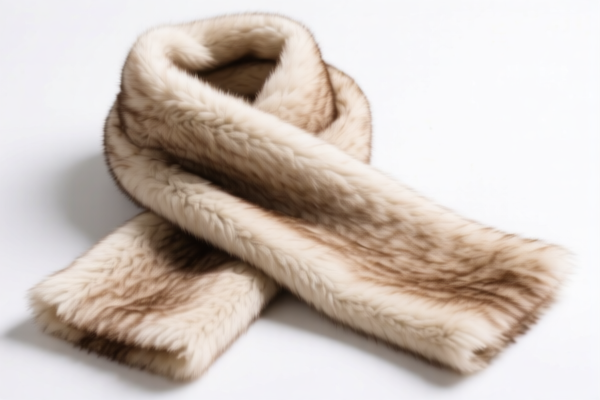
Feather Scarf with Fur Trim
CN → US| HS Code | Tariff Rate | Origin | Destination | Doc |
|---|---|---|---|---|
| 4303100060 | 39.0% | CN | US | Official Doc |
| 4303900000 | 35.0% | CN | US | Official Doc |
| 6704900000 | 17.5% | CN | US | Official Doc |
| 6704190000 | 17.5% | CN | US | Official Doc |
| 6117106020 | 27.0% | CN | US | Official Doc |
Product Images


AI Analysis
🧣 Feather Scarf with Fur Trim (Feather Scarves)
🌐 HS Code Reference & Clearance Guide | 2026 Latest Tariff Regime | Professional Compliance Strategy
📌 I. Product Definition & Classification: Do You Really Know "Feather Scarf with Fur Trim"?
A Feather Scarf with Fur Trim is a fashion accessory designed for warmth and aesthetic appeal, typically characterized by: - Primary Material: Natural feathers (e.g., ostrich, pheasant) or synthetic/animal fur trims (real or faux); - Form Factor: Worn around the neck, shoulders, or head; classified under "scarves," "shawls," or "tippets"; - Construction: May include knitted, woven, or assembled fabrics with feather/fur embellishments.
⚠️ Critical Classification Distinction:
- If made of knitted wool or fine animal hair →归入 6117.10.10.00 (Knitted)
- If made of woven wool/fine animal hair →归入 6214.20.00.00 (Woven)
- If made of synthetic fibers or other textiles →归入 6117.10.20.10 or 6214.90.00.90
📦 II. HS Code Classification Details (2026 Latest Tariff Regime)
| HS Code | Product Description | Applicable Scenario | Material Composition |
|---|---|---|---|
6117.10.10.00 |
Scarves, knitted or crocheted, of wool or fine animal hair | Knitted feather/wool scarves, shawls with fur trim | ✅ Wool/Animal Hair + Knitted |
6117.10.20.10 |
Scarves, knitted or crocheted, of synthetic fibers or other textiles | Feather scarves with synthetic fur trim or blends | ✅ Synthetic/Fiber-based |
6214.20.00.00 |
Scarves of wool or fine animal hair (woven) | Woven wool/feather scarves, shawls with fur trim | ✅ Wool/Animal Hair + Woven |
6214.90.00.90 |
Other scarves of textile materials (non-cotton) | Feather scarves of silk, rayon, or mixed fibers | ✅ Non-cotton Textiles |
6117.10.10.00 |
Scarves of wool, fully classified under woolen shawls/scarves | Premium wool + feather/fur trim, knitted | ✅ Pure Wool + Knitted |
🔍 Key Reminders:
- Knitted vs. Woven: Knitted scarves fall under Chapter 61, while woven scarves fall under Chapter 62. - Material Matters: Wool/animal hair (real or synthetic) significantly affects duty rates. - Trim Definition: If feathers/fur are trimming elements only, the main material determines classification.
💰 III. 2026 Latest Tariff Rate Breakdown (Including Additional Duties & Policy Surcharges)
✅ Applicable Country: United States (US)
✅ Country of Origin: China (CN)
✅ Effective Date: November 10, 2025 (and subsequent imports)
🎯 1. 6117.10.10.00 — Knitted Scarves of Wool/Animal Hair
| Item | Content |
|---|---|
| Base Tariff | 9.6% (ad valorem) |
| Section 232 Tariff | +7.5% (Steel/Aluminum-related surcharge) |
| Section 122 Tariff | +10% (China-specific surcharge) |
| Total Tariff | 27.1% |
| Tax Calculation | CIF Value × 27.1% |
| De Minimis Exemption | ❌ Not eligible |
| Legal Path | Section 232:9903.01.25 → Section 122:9903.01.24 → USITC:6117.10.10.00 |
📌 Explanation:
- Base Tariff: Standard MFN rate for knitted wool scarves. - Section 232: Additional 7.5% for steel/aluminum-related products (some wool blends may qualify). - Section 122: 10% surcharge on Chinese-origin goods under the "122 Clause" (2025 policy). - Total: 27.1% — a high duty rate requiring advance cost planning.
🎯 2. 6117.10.20.10 — Knitted Scarves of Synthetic Fibers
| Item | Content |
|---|---|
| Base Tariff | 11.3% |
| Section 232 Tariff | +0.0% |
| Section 122 Tariff | +10% |
| Total Tariff | 21.3% |
| Tax Calculation | CIF Value × 21.3% |
| De Minimis Exemption | ❌ Not eligible |
| Legal Path | Section 122:9903.01.24 → USITC:6117.10.20.10 |
📌 Note:
- Synthetic fiber scarves avoid Section 232 surcharge but still face Section 122. - Ideal for cost-sensitive markets where wool is not required.
🎯 3. 6214.20.00.00 — Woven Scarves of Wool/Animal Hair
| Item | Content |
|---|---|
| Base Tariff | 6.7% |
| Section 232 Tariff | +7.5% |
| Section 122 Tariff | +10% |
| Total Tariff | 24.2% |
| Tax Calculation | CIF Value × 24.2% |
| De Minimis Exemption | ❌ Not eligible |
| Legal Path | Section 232:9903.01.25 → Section 122:9903.01.24 → USITC:6214.20.00.00 |
📌 Observation:
- Woven wool scarves have lower base tariffs than knitted ones but still incur Section 232. - Common in luxury fashion lines with woven wool + feather details.
🎯 4. 6214.90.00.90 — Other Woven Scarves (Non-Cotton Textiles)
| Item | Content |
|---|---|
| Base Tariff | 11.3% |
| Section 232 Tariff | +7.5% |
| Section 122 Tariff | +10% |
| Total Tariff | 28.8% |
| Tax Calculation | CIF Value × 28.8% |
| De Minimis Exemption | ❌ Not eligible |
| Legal Path | Section 232:9903.01.25 → Section 122:9903.01.24 → USITC:6214.90.00.90 |
📌 Caution:
- Non-cotton woven scarves (e.g., silk, rayon) face the highest total tariff among the listed codes. - Ideal for premium markets but requires careful cost-benefit analysis.
🛠️ IV. Clearance Operational Advice (Practical Pitfall Avoidance)
✅ 1. Documentation Checklist (Mandatory)
| Document | Required? | Purpose |
|---|---|---|
| ✅ Product Specification Sheet | ✔️ | Detail material composition, feather/fur type, construction |
| ✅ Material Certificates | ✔️ | Verify wool/animal hair origin and compliance |
| ✅ Product Photos (with label) | ✔️ | Show trim details, brand, model |
| ✅ Commercial Invoice | ✔️ | Must specify "Feather Scarf with Fur Trim" and HS Code |
| ✅ Packing List | ✔️ | Clarify if feathers/fur are part of main material or trim |
| ✅ Certificate of Origin (CO) | ✔️ | For non-China origin, apply for preferential rates |
✅ 2. Declaring Strategy (Key Mantra)
🔥 "Material First, Form Second, Trim Clarified, Tariff Optimized!"
| Scenario | Correct Declaration | Mistake to Avoid |
|---|---|---|
| Knitted wool scarf + feather trim | 6117.10.10.00 |
Misdeclare as synthetic → 21.3% vs 27.1% |
| Woven silk scarf + fur trim | 6214.90.00.90 |
Misdeclare as wool → 28.8% vs 24.2% |
| Synthetic fiber scarf + fake fur | 6117.10.20.10 |
Misdeclare as wool → 21.3% vs 27.1% |
| Feather-only scarf (no fabric base) | Reassess HS Code | Incorrect classification → Penalty |
✅ 3. Special Cases Handling
| Situation | Recommendation |
|---|---|
| Customized Feather Scarf | Provide OEM order + design specs to avoid "non-standard" classification |
| Mixed Material Scarf | Declare primary material; specify feather/fur as trim |
| Luxury Brand Scarf | Highlight craftsmanship and material authenticity to avoid "mass-produced" suspicion |
| Animal Welfare Compliance | Ensure compliance with CITES and local laws if real feathers/fur are used |
🌍 V. Global Market Clearance Comparison (2026)
| Country/Region | Recommended HS Code | Duty Rate | Certification | Notes |
|---|---|---|---|---|
| 🇺🇸 USA | 6117.10.10.00 |
27.1% (China origin) | FDA (if animal-based) | Section 122 + 232 apply |
| 🇨🇳 China | 6117.10.10.00 |
6–10% | CCC (if applicable) | No Section 122/232 |
| 🇪🇺 EU | 6214.20.00.00 |
0–5% (if ethical) | CE + Fur Regulation | CITES compliance critical |
| 🇦🇺 Australia | 6117.10.10.00 |
5% | RCM | No Section 122/232 |
| 🇯🇵 Japan | 6214.90.00.90 |
0–3% | PSE | No Section 122/232 |
📌 Conclusion:
- USA has the highest duty burden due to Section 122 and 232;
- China/EU/Australia/Japan offer lower or zero duties for non-China-origin goods;
- Ethical compliance is critical for feather/fur products globally.
📌 VI. Common Errors & Pitfalls (Hard-Earned Lessons)
❌ Mistake 1: Misclassifying synthetic scarves as wool → 27.1% vs 21.3%
👉 Result: Overpayment + potential audit risk.
❌ Mistake 2: Declaring feather/fur as "accessory" instead of main material → Wrong HS Code
👉 Result: Delayed clearance, fines, or return.
❌ Mistake 3: No material certification → Customs suspicion
👉 Result: Extended inspection, possible seizure.
❌ Mistake 4: Using vague terms like "Feather Item" without specifying knit/weave
👉 Result: Incorrect HS Code assignment → Tax penalty.
✅ Correct Practice:
"Wool Knitted Feather Scarf with Ostrich Fur Trim, Model FS-2026, 100% Wool, Certified Sustainable, US/China Origin, HS Code: 6117.10.10.00"
🎯 VII. Conclusion: Precision Classification = Profit Protection!
🎯 Remember the Mantra:
🔹 "Material First, Form Second, Trim Clarified, Tariff Optimized!"
🔹 "HS Code determines fate, duty difference saves thousands!"
📌 Pro Tip:
If your scarf is originally produced in Vietnam, Mexico, Thailand, or Malaysia, you may qualify for Section 122 exemptions, reducing the total duty to 0%~5%.
Recommendation: Apply for a Pre-Ruling (Advance Ruling) from U.S. Customs to minimize clearance risk.
📣 Take Action Now:
📞 Contact a licensed customs broker + provide product photos + apply for HS Code Pre-Ruling
🚀 Ensure your Feather Scarf with Fur Trim clears customs smoothly, efficiently, and profitably!
✨ Professional Clearance Starts with Accurate Classification!
💼 Every cent counts—calculate your costs with precision!
Customer Reviews
About HS Code Classification
The Harmonized System (HS) is an internationally standardized nomenclature developed by the World Customs Organization (WCO) to classify traded products. Over 200 countries use the HS system as the basis for customs tariffs, trade statistics, and import/export regulations.
Each HS code follows a hierarchical structure:
- Chapter (2 digits) — Broad category of goods (e.g., Chapter 84: Machinery and Mechanical Appliances)
- Heading (4 digits) — More specific grouping within the chapter
- Subheading (6 digits) — Internationally standardized breakdown, used by all WCO member countries
- National subdivisions (8-10 digits) — Country-specific extensions for further classification, such as US HTSUS 10-digit codes
Correct HS code classification is essential for smooth customs clearance, accurate duty payment, and compliance with trade regulations. Misclassification can lead to customs delays, overpayment of duties, or penalties.
When importing from CN to US, the applicable tariff rates may include:
- Most-Favored-Nation (MFN) rate — The standard duty rate applied to WTO members
- General rate — Applied to countries without trade agreements
- Trade remedy duties — Additional tariffs such as Section 301 (anti-dumping), Section 232 (national security), or countervailing duties
The information provided on this page is for reference purposes only. For official classification, please consult with your local customs authority or a licensed customs broker.