Fiber Reinforced Tape for Pipeline Protection
CN → US| HS编码 | 关税税率 | 原产国 | 目的国 | 文档 |
|---|---|---|---|---|
| 3919905020 | 40.8% | CN | US | 官方文档 |
| 3926909989 | 22.8% | CN | US | 官方文档 |
| 3926905500 | 40.1% | CN | US | 官方文档 |
| 3919102010 | 40.8% | CN | US | 官方文档 |
| 5603110070 | 35.0% | CN | US | 官方文档 |
商品图片
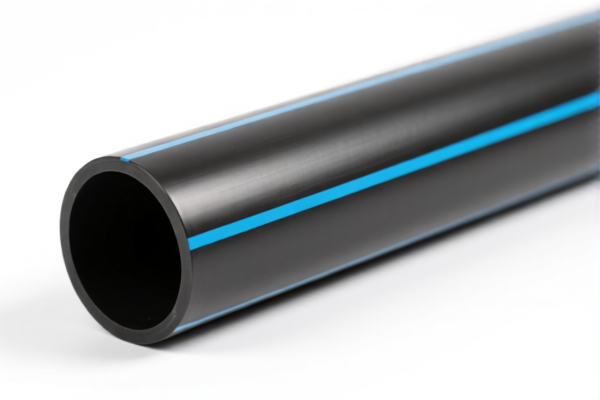
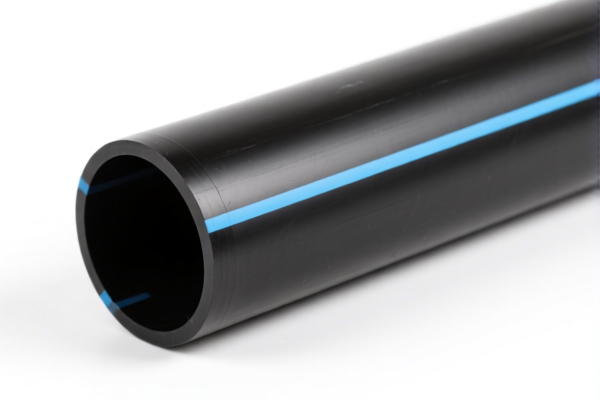
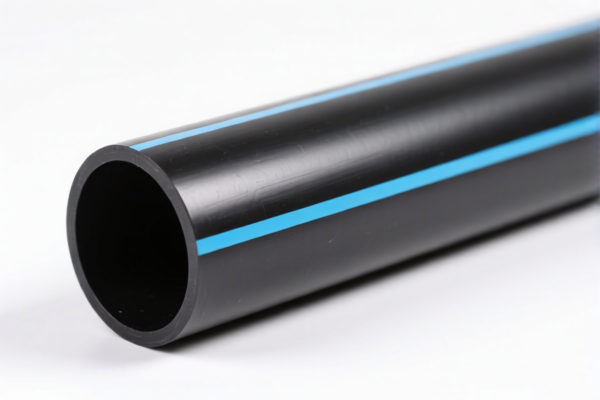
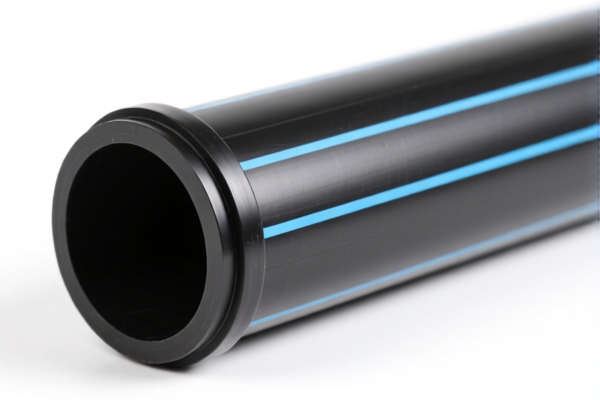
AI分析
🛡️ Fiber Reinforced Tape for Pipeline Protection
🌐 HS Code Reference & Customs Clearance Guide | 2026 Latest Tariff Analysis | Professional Tier 2 Compliance Strategy
📌 I. Product Definition & Classification: What is "Fiber Reinforced Tape"?
Fiber Reinforced Tape, specifically designed for pipeline protection, is a composite material used to wrap, shield, and protect underground or above-ground pipelines from corrosion, mechanical damage, and environmental stress.
In international trade, this product is not a single commodity. Its Harmonized System (HS) Code depends entirely on three critical factors: 1. Material Composition: Is it primarily plastic/polymer-based or textile-based? 2. State/Form: Is it self-adhesive and rolled, or non-woven fabric? 3. Reinforcement Method: How are the fibers integrated?
⚠️ Key Classification Distinction:
- If it is a self-adhesive, rolled tape where the plastic acts as the binding agent → Likely Chapter 39 (Plastics).
- If it is a non-woven fabric reinforced with fibers, lacking self-adhesive backing or distinct plastic sheeting → Likely Chapter 56 (Non-wovens).
- If it is a plastic sheeting with fabric backing used for general purposes → Likely Chapter 39 (Other plastic articles).
📦 II. HS Code Classification Details (2026 Official Tariff Alignment)
Based on the specific material and form, the following 6 HS Codes are the primary candidates for "Fiber Reinforced Tape for Pipeline Protection."
| HS Code | Product Description | Application Scenario | Key Material Feature |
|---|---|---|---|
3919.90.50.20 |
Fiber-reinforced tape, material/shape match, for pipeline protection | General pipeline wrapping, anti-corrosion layer | Plastic base + Fiber reinforcement, rolled sheet |
3919.10.20.10 |
Self-adhesive fiber-reinforced tape in rolls | Pipe joint sealing, cold-applied wrapping | Self-adhesive (Pressure-sensitive) |
3926.90.99.89 |
Other plastic articles: Plastic/Polymer-based fiber-reinforced tape | General industrial reinforcement, non-adhesive plastic composites | Plastic/Polymer dominant, other articles |
3926.90.55.00 |
Other plastic articles: Textile-fiber reinforced tape | Pipe protection where textile is the primary carrier | Textile fiber embedded in/with plastic |
5603.11.00.70 |
Non-woven fabric: Reinforced with synthetic filaments | Lightweight pipe insulation wraps, non-adhesive | Synthetic long filaments, non-woven structure |
5603.12.00.70 |
Non-woven fabric: Reinforced with artificial filaments | Similar to above, but using artificial (not synthetic) fibers | Artificial filaments, non-woven structure |
🔍 Critical Reminder:
- Self-Adhesive vs. Non-Adhesive: Codes3919...require the item to be self-adhesive. If the tape is not self-adhesive (e.g., requires heat sealing or glue application), it may NOT qualify for Chapter 39.19. - Non-Woven vs. Woven: Codes5603...apply to non-woven fabrics. If the fiber reinforcement is woven into a mesh, it might fall under different textile headings (not listed in current Data), but5603is specific to non-woven. - "Other Articles": Codes3926...are catch-alls for plastic goods that do not fit specific plastic heading descriptions (like films or sheets).
💰 III. 2026 Tariff Rate Breakdown (Detailed Tax Analysis)
✅ Applicable Country: United States (US)
✅ Country of Origin: China (CN)
✅ Effective Date: November 10, 2025 (and subsequent imports)
✅ Note: All rates below include Base Tariff, Section 301 Additional Tariff (25%), and Section 122/IEEPA Tariff (10%).
🎯 1. 3919.90.50.20 & 3919.10.20.10 – High-Tariff Plastic Tapes
These are the most common codes for self-adhesive, rolled pipeline tapes. However, they attract the maximum penalty rate in the provided dataset.
| Item | Content |
|---|---|
| Base Tariff | 5.8% |
| Section 301 Additional Tariff | +25.0% |
| Section 122 / IEEPA Tariff | +10.0% |
| Total Effective Tariff | 40.8% |
| Tax Calculation | CIF Value × 40.8% |
| De Minimis Exemption? | ❌ NO (Denied) |
| Legal Basis | Standard USITC classification + Trade Act penalties |
📌 Explanation:
- The 40.8% rate is extremely high for a low-value commodity like tape.
- Section 301 (25%) applies to almost all Chinese plastic goods under Chapter 39.
- Section 122 (10%) is a specific additional duty often applied to goods deemed sensitive or during specific trade enforcement periods.
- Warning: Misclassifying a non-self-adhesive tape as3919to "save" on duties is high-risk. If customs determines it is not self-adhesive, they will reclassify it, leading to back taxes and penalties.
🎯 2. 3926.90.99.89 – "Other" Plastic Articles (Mixed Material)
This code is used when the tape is primarily plastic/polymer but doesn't fit the strict "self-adhesive tape" definition of 3919, or is a composite where plastic is the essential character.
| Item | Content |
|---|---|
| Base Tariff | 5.3% |
| Section 301 Additional Tariff | +7.5% |
| Section 122 / IEEPA Tariff | +10.0% |
| Total Effective Tariff | 22.8% |
| Tax Calculation | CIF Value × 22.8% |
| De Minimis Exemption? | ❌ NO (Denied) |
📌 Explanation:
- This represents a significant saving (18% lower) compared to the standard3919codes.
- To use this code, you must prove the product is not a standard self-adhesive tape (e.g., it might be a plastic mesh with fiber, or a specific composite article) OR that it falls under "other plastic articles."
- Strategy: If your tape is not pressure-sensitive adhesive, strongly consider this classification to reduce costs.
🎯 3. 3926.90.55.00 – Textile-Reinforced Plastic Articles
Used when textile fibers are the reinforcement within a plastic matrix, classified under "Other Plastic Articles."
| Item | Content |
|---|---|
| Base Tariff | 5.1% |
| Section 301 Additional Tariff | +25.0% |
| Section 122 / IEEPA Tariff | +10.0% |
| Total Effective Tariff | 40.1% |
| Tax Calculation | CIF Value × 40.1% |
| De Minimis Exemption? | ❌ NO (Denied) |
📌 Explanation:
- Similar to3919, this carries a high Section 301 penalty (25%).
- Only use if the product is fundamentally a plastic article (Chapter 39) but with textile reinforcement that prevents it from being a simple "tape."
🎯 4. 5603.11.00.70 & 5603.12.00.70 – Non-Woven Fabrics
These codes apply if the "tape" is essentially a non-woven fabric reinforced with synthetic (5603.11) or artificial (5603.12) filaments. This is common for lightweight, non-adhesive pipe wraps or insulating layers.
| Item | Content |
|---|---|
| Base Tariff | 0.0% |
| Section 301 Additional Tariff | +25.0% |
| Section 122 / IEEPA Tariff | +10.0% |
| Total Effective Tariff | 35.0% |
| Tax Calculation | CIF Value × 35.0% |
| De Minimis Exemption? | ❌ NO (Denied) |
📌 Explanation:
- Base Tariff is 0%, which is the lowest starting point.
- However, the 35% total rate is still punitive due to Section 301 and Section 122.
- Eligibility: The product MUST be a non-woven fabric. If it is woven or a plastic film, this code is incorrect.
- Advantage: If your product is a non-woven geotextile/fabric wrap, this is often the most accurate and second-best tariff option.
🛠️ IV. Customs Clearance Practical Advice
✅ 1. Documentation Checklist (Mandatory)
| Document | Required | Purpose |
|---|---|---|
| Product Specification Sheet | ✔️ | Must clearly state: Self-adhesive? Base material (PE/PP/PVC)? Fiber type (Glass/Polyester/Carbon)? |
| Material Composition Breakdown | ✔️ | Percentage of plastic vs. fiber. Critical for distinguishing between Ch. 39 and Ch. 56. |
| Technical Data Sheet (TDS) | ✔️ | Shows application method (heat seal vs. pressure sensitive). Proves if it's a "tape" or "fabric." |
| Commercial Invoice | ✔️ | Description must match HS Code logic (e.g., "Non-woven synthetic fiber fabric roll" vs. "Self-adhesive plastic tape"). |
| Packing List | ✔️ | Net/Gross weight, dimensions. |
| Certificate of Origin (CO) | ✔️ | Proves Chinese origin to trigger correct additional duties. |
✅ 2. Declaration Strategy (Key Mantras)
🔥 "Know Your Backing, Know Your Weave, Pay the Right Rate!"
| Scenario | Recommended HS Code | Avoid This Code | Why? |
|---|---|---|---|
| Self-Adhesive Roll (Pressure-sensitive) | 3919.10.20.10 or 3919.90.50.20 |
5603... |
5603 is for non-wovens, not adhesive tapes. Misclassification risk. |
| Non-Adhesive Plastic Composite | 3926.90.99.89 |
3919... |
Saves 18% in duties (22.8% vs 40.8%) if not self-adhesive. |
| Non-Woven Fabric Wrap (No plastic film) | 5603.11.00.70 |
3919... |
More accurate material description. 35% total duty. |
| Textile-Reinforced Plastic Sheet | 3926.90.55.00 |
5603... |
If it's a plastic sheet with fabric embedded, Ch. 39 is primary. |
✅ 3. Special Considerations for Pipeline Tapes
-
"Tape" vs. "Fabric": Customs officers often confuse tapes with fabrics.
- Tape: Usually narrow, self-adhesive, or heat-shrinkable.
- Fabric: Wider, woven/non-woven, requires mechanical fastening or glue.
- Action: If your product is wide (e.g., >10cm) and non-adhesive, argue for Non-Woven (Ch. 56) or Other Plastic Articles (Ch. 39.26) to avoid the higher "Adhesive Tape" classification if possible.
-
Section 122 Enforcement:
- The 10% Section 122 tariff is specific and often overlooked. Ensure your broker is aware of this, as it applies to all Chinese-origin goods in this dataset. It cannot be negotiated.
-
De Minimis Exemption:
- ❌ None of these codes qualify for de minimis (Section 321). All shipments are subject to full duty calculation. Do not attempt to split shipments to avoid tariffs.
🌍 V. Global Market Comparison (2026 Outlook)
| Market | Likely HS Code | Approx. Total Duty (China Origin) | Key Requirement |
|---|---|---|---|
| 🇺🇸 USA | 3919 / 3926 / 5603 |
22.8% – 40.8% | Heavy Section 301 & 122 tariffs. |
| 🇨🇳 China (Import) | N/A | Low (5-10%) | CCC Certification may be needed for pipeline safety components. |
| 🇪🇺 EU | 3919 / 5603 |
~0-5% | CE Marking, REACH Compliance. No Section 301. |
| 🇬🇧 UK | 3919 / 5603 |
~0-5% | UKCA Marking. |
📌 Conclusion:
The US market is the most challenging for Chinese-made fiber-reinforced tapes due to cumulative tariffs (Base + 301 + 122).
- Optimization Strategy: If your product is not self-adhesive, reclassify to3926.90.99.89(22.8%) instead of3919(40.8%). This is an 18% saving.
- If it is a non-woven fabric, use5603(35%).
📌 VI. Common Errors & Pitfalls (Lessons Learned)
❌ Error 1: Declaring a non-adhesive plastic-wrapped fiber roll as 3919 (Adhesive Tape).
👉 Consequence: Customs reclassifies to 3926 or 5603. If 3926, you overpaid 18%. If 5603, you overpaid 5.8%.
👉 Fix: Check adhesive properties. If no pressure-sensitive adhesive, do not use 3919.
❌ Error 2: Declaring a plastic film-based tape as 5603 (Non-woven).
👉 Consequence: Rejected by Customs. Non-wovens must be fibrous, not plastic films.
👉 Fix: If it has a plastic backing, it belongs in Chapter 39.
❌ Error 3: Ignoring Section 122 (10%).
👉 Consequence: Underpayment of duties, audits, and penalties.
👉 Fix: Always add 10% to the base + 301 rate for Chinese origin.
🎯 VII. Conclusion: Precision Classifies, Savings Accompany
🎯 Remember the Mantra:
🔹 "Self-Adhesive? Think 3919 (40.8%). Not Adhesive? Think 3926 (22.8%). Non-Woven? Think 5603 (35%).
🔹 Check the Backing, Check the Weave, Avoid the 40% Pitfall!
📌 Pro Tip:
If your pipeline tape is made in Vietnam, Thailand, or Malaysia, you may qualify for zero Section 301 tariffs.
- Strategy: Consider supply chain diversification or substantial transformation (e.g., final assembly/packaging) in a third country to reduce the 25% Section 301 burden.
- Action: Consult a trade attorney for Substantial Transformation rules before altering supply chains.
📣 Immediate Action:
📞 Review your Product Spec: Is it adhesive? Is it woven?
📄 Select the Correct HS Code from the table above.
🚀 Declare Accurately to avoid 20%+ duty savings or customs holds!
✨ Professional Clearance Starts with Accurate Classification!
💼 Your Bottom Line Depends on the Decimal Point!
用户评价
关于 HS 编码归类
协调制度(HS)是由世界海关组织(WCO)制定的国际贸易商品分类标准。全球 200 多个国家采用 HS 系统作为海关关税、贸易统计和进出口监管的基础。
每个 HS 编码遵循以下层级结构:
- 章(2 位)——商品大类(例如:第 84 章:机器和机械设备)
- 品目(4 位)——章内的更具体分类
- 子目(6 位)——国际通用细分,所有 WCO 成员国统一使用
- 本国细分(8-10 位)——各国自行扩展的细分编码,如美国 HTSUS 10 位编码
正确的 HS 编码归类对于顺利通关、准确缴纳关税和遵守贸易法规至关重要。错误归类可能导致海关延误、多缴关税或罚款。
从CN进口到US时,适用的关税税率可能包括:
- 最惠国(MFN)税率——适用于 WTO 成员国的标准关税税率
- 普通税率——适用于无贸易协定国家
- 贸易救济关税——附加关税,如 301 条款(反倾销)、232 条款(国家安全)或反补贴税
本页内容仅供参考。如需正式归类,请咨询当地海关或持牌报关代理。