Fiber Reinforced Tape for Pipeline Protection
CN → US| HS Code | Tariff Rate | Origin | Destination | Doc |
|---|---|---|---|---|
| 3919905020 | 40.8% | CN | US | Official Doc |
| 3926909989 | 22.8% | CN | US | Official Doc |
| 3926905500 | 40.1% | CN | US | Official Doc |
| 3919102010 | 40.8% | CN | US | Official Doc |
| 5603110070 | 35.0% | CN | US | Official Doc |
Product Images
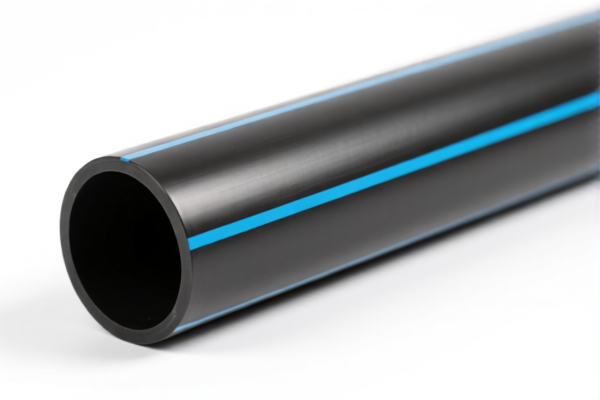
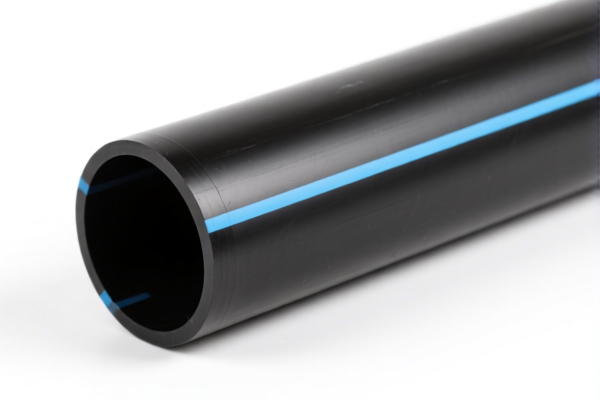
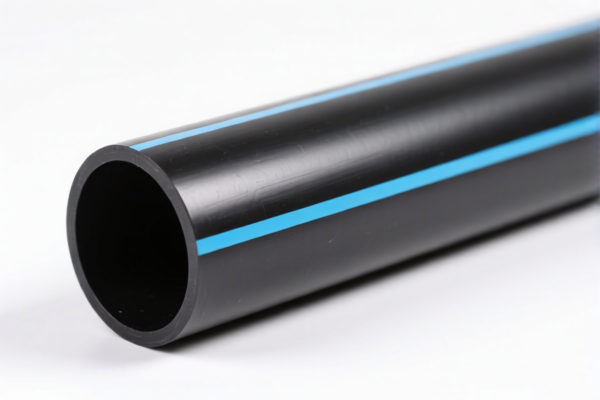
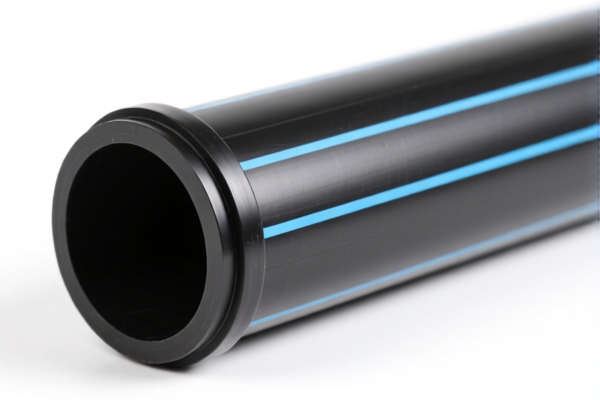
AI Analysis
🛡️ Fiber Reinforced Tape for Pipeline Protection
🌐 HS Code Reference & Customs Clearance Guide | 2026 Latest Tariff Analysis | Professional Tier 2 Compliance Strategy
📌 I. Product Definition & Classification: What is "Fiber Reinforced Tape"?
Fiber Reinforced Tape, specifically designed for pipeline protection, is a composite material used to wrap, shield, and protect underground or above-ground pipelines from corrosion, mechanical damage, and environmental stress.
In international trade, this product is not a single commodity. Its Harmonized System (HS) Code depends entirely on three critical factors: 1. Material Composition: Is it primarily plastic/polymer-based or textile-based? 2. State/Form: Is it self-adhesive and rolled, or non-woven fabric? 3. Reinforcement Method: How are the fibers integrated?
⚠️ Key Classification Distinction:
- If it is a self-adhesive, rolled tape where the plastic acts as the binding agent → Likely Chapter 39 (Plastics).
- If it is a non-woven fabric reinforced with fibers, lacking self-adhesive backing or distinct plastic sheeting → Likely Chapter 56 (Non-wovens).
- If it is a plastic sheeting with fabric backing used for general purposes → Likely Chapter 39 (Other plastic articles).
📦 II. HS Code Classification Details (2026 Official Tariff Alignment)
Based on the specific material and form, the following 6 HS Codes are the primary candidates for "Fiber Reinforced Tape for Pipeline Protection."
| HS Code | Product Description | Application Scenario | Key Material Feature |
|---|---|---|---|
3919.90.50.20 |
Fiber-reinforced tape, material/shape match, for pipeline protection | General pipeline wrapping, anti-corrosion layer | Plastic base + Fiber reinforcement, rolled sheet |
3919.10.20.10 |
Self-adhesive fiber-reinforced tape in rolls | Pipe joint sealing, cold-applied wrapping | Self-adhesive (Pressure-sensitive) |
3926.90.99.89 |
Other plastic articles: Plastic/Polymer-based fiber-reinforced tape | General industrial reinforcement, non-adhesive plastic composites | Plastic/Polymer dominant, other articles |
3926.90.55.00 |
Other plastic articles: Textile-fiber reinforced tape | Pipe protection where textile is the primary carrier | Textile fiber embedded in/with plastic |
5603.11.00.70 |
Non-woven fabric: Reinforced with synthetic filaments | Lightweight pipe insulation wraps, non-adhesive | Synthetic long filaments, non-woven structure |
5603.12.00.70 |
Non-woven fabric: Reinforced with artificial filaments | Similar to above, but using artificial (not synthetic) fibers | Artificial filaments, non-woven structure |
🔍 Critical Reminder:
- Self-Adhesive vs. Non-Adhesive: Codes3919...require the item to be self-adhesive. If the tape is not self-adhesive (e.g., requires heat sealing or glue application), it may NOT qualify for Chapter 39.19. - Non-Woven vs. Woven: Codes5603...apply to non-woven fabrics. If the fiber reinforcement is woven into a mesh, it might fall under different textile headings (not listed in current Data), but5603is specific to non-woven. - "Other Articles": Codes3926...are catch-alls for plastic goods that do not fit specific plastic heading descriptions (like films or sheets).
💰 III. 2026 Tariff Rate Breakdown (Detailed Tax Analysis)
✅ Applicable Country: United States (US)
✅ Country of Origin: China (CN)
✅ Effective Date: November 10, 2025 (and subsequent imports)
✅ Note: All rates below include Base Tariff, Section 301 Additional Tariff (25%), and Section 122/IEEPA Tariff (10%).
🎯 1. 3919.90.50.20 & 3919.10.20.10 – High-Tariff Plastic Tapes
These are the most common codes for self-adhesive, rolled pipeline tapes. However, they attract the maximum penalty rate in the provided dataset.
| Item | Content |
|---|---|
| Base Tariff | 5.8% |
| Section 301 Additional Tariff | +25.0% |
| Section 122 / IEEPA Tariff | +10.0% |
| Total Effective Tariff | 40.8% |
| Tax Calculation | CIF Value × 40.8% |
| De Minimis Exemption? | ❌ NO (Denied) |
| Legal Basis | Standard USITC classification + Trade Act penalties |
📌 Explanation:
- The 40.8% rate is extremely high for a low-value commodity like tape.
- Section 301 (25%) applies to almost all Chinese plastic goods under Chapter 39.
- Section 122 (10%) is a specific additional duty often applied to goods deemed sensitive or during specific trade enforcement periods.
- Warning: Misclassifying a non-self-adhesive tape as3919to "save" on duties is high-risk. If customs determines it is not self-adhesive, they will reclassify it, leading to back taxes and penalties.
🎯 2. 3926.90.99.89 – "Other" Plastic Articles (Mixed Material)
This code is used when the tape is primarily plastic/polymer but doesn't fit the strict "self-adhesive tape" definition of 3919, or is a composite where plastic is the essential character.
| Item | Content |
|---|---|
| Base Tariff | 5.3% |
| Section 301 Additional Tariff | +7.5% |
| Section 122 / IEEPA Tariff | +10.0% |
| Total Effective Tariff | 22.8% |
| Tax Calculation | CIF Value × 22.8% |
| De Minimis Exemption? | ❌ NO (Denied) |
📌 Explanation:
- This represents a significant saving (18% lower) compared to the standard3919codes.
- To use this code, you must prove the product is not a standard self-adhesive tape (e.g., it might be a plastic mesh with fiber, or a specific composite article) OR that it falls under "other plastic articles."
- Strategy: If your tape is not pressure-sensitive adhesive, strongly consider this classification to reduce costs.
🎯 3. 3926.90.55.00 – Textile-Reinforced Plastic Articles
Used when textile fibers are the reinforcement within a plastic matrix, classified under "Other Plastic Articles."
| Item | Content |
|---|---|
| Base Tariff | 5.1% |
| Section 301 Additional Tariff | +25.0% |
| Section 122 / IEEPA Tariff | +10.0% |
| Total Effective Tariff | 40.1% |
| Tax Calculation | CIF Value × 40.1% |
| De Minimis Exemption? | ❌ NO (Denied) |
📌 Explanation:
- Similar to3919, this carries a high Section 301 penalty (25%).
- Only use if the product is fundamentally a plastic article (Chapter 39) but with textile reinforcement that prevents it from being a simple "tape."
🎯 4. 5603.11.00.70 & 5603.12.00.70 – Non-Woven Fabrics
These codes apply if the "tape" is essentially a non-woven fabric reinforced with synthetic (5603.11) or artificial (5603.12) filaments. This is common for lightweight, non-adhesive pipe wraps or insulating layers.
| Item | Content |
|---|---|
| Base Tariff | 0.0% |
| Section 301 Additional Tariff | +25.0% |
| Section 122 / IEEPA Tariff | +10.0% |
| Total Effective Tariff | 35.0% |
| Tax Calculation | CIF Value × 35.0% |
| De Minimis Exemption? | ❌ NO (Denied) |
📌 Explanation:
- Base Tariff is 0%, which is the lowest starting point.
- However, the 35% total rate is still punitive due to Section 301 and Section 122.
- Eligibility: The product MUST be a non-woven fabric. If it is woven or a plastic film, this code is incorrect.
- Advantage: If your product is a non-woven geotextile/fabric wrap, this is often the most accurate and second-best tariff option.
🛠️ IV. Customs Clearance Practical Advice
✅ 1. Documentation Checklist (Mandatory)
| Document | Required | Purpose |
|---|---|---|
| Product Specification Sheet | ✔️ | Must clearly state: Self-adhesive? Base material (PE/PP/PVC)? Fiber type (Glass/Polyester/Carbon)? |
| Material Composition Breakdown | ✔️ | Percentage of plastic vs. fiber. Critical for distinguishing between Ch. 39 and Ch. 56. |
| Technical Data Sheet (TDS) | ✔️ | Shows application method (heat seal vs. pressure sensitive). Proves if it's a "tape" or "fabric." |
| Commercial Invoice | ✔️ | Description must match HS Code logic (e.g., "Non-woven synthetic fiber fabric roll" vs. "Self-adhesive plastic tape"). |
| Packing List | ✔️ | Net/Gross weight, dimensions. |
| Certificate of Origin (CO) | ✔️ | Proves Chinese origin to trigger correct additional duties. |
✅ 2. Declaration Strategy (Key Mantras)
🔥 "Know Your Backing, Know Your Weave, Pay the Right Rate!"
| Scenario | Recommended HS Code | Avoid This Code | Why? |
|---|---|---|---|
| Self-Adhesive Roll (Pressure-sensitive) | 3919.10.20.10 or 3919.90.50.20 |
5603... |
5603 is for non-wovens, not adhesive tapes. Misclassification risk. |
| Non-Adhesive Plastic Composite | 3926.90.99.89 |
3919... |
Saves 18% in duties (22.8% vs 40.8%) if not self-adhesive. |
| Non-Woven Fabric Wrap (No plastic film) | 5603.11.00.70 |
3919... |
More accurate material description. 35% total duty. |
| Textile-Reinforced Plastic Sheet | 3926.90.55.00 |
5603... |
If it's a plastic sheet with fabric embedded, Ch. 39 is primary. |
✅ 3. Special Considerations for Pipeline Tapes
-
"Tape" vs. "Fabric": Customs officers often confuse tapes with fabrics.
- Tape: Usually narrow, self-adhesive, or heat-shrinkable.
- Fabric: Wider, woven/non-woven, requires mechanical fastening or glue.
- Action: If your product is wide (e.g., >10cm) and non-adhesive, argue for Non-Woven (Ch. 56) or Other Plastic Articles (Ch. 39.26) to avoid the higher "Adhesive Tape" classification if possible.
-
Section 122 Enforcement:
- The 10% Section 122 tariff is specific and often overlooked. Ensure your broker is aware of this, as it applies to all Chinese-origin goods in this dataset. It cannot be negotiated.
-
De Minimis Exemption:
- ❌ None of these codes qualify for de minimis (Section 321). All shipments are subject to full duty calculation. Do not attempt to split shipments to avoid tariffs.
🌍 V. Global Market Comparison (2026 Outlook)
| Market | Likely HS Code | Approx. Total Duty (China Origin) | Key Requirement |
|---|---|---|---|
| 🇺🇸 USA | 3919 / 3926 / 5603 |
22.8% – 40.8% | Heavy Section 301 & 122 tariffs. |
| 🇨🇳 China (Import) | N/A | Low (5-10%) | CCC Certification may be needed for pipeline safety components. |
| 🇪🇺 EU | 3919 / 5603 |
~0-5% | CE Marking, REACH Compliance. No Section 301. |
| 🇬🇧 UK | 3919 / 5603 |
~0-5% | UKCA Marking. |
📌 Conclusion:
The US market is the most challenging for Chinese-made fiber-reinforced tapes due to cumulative tariffs (Base + 301 + 122).
- Optimization Strategy: If your product is not self-adhesive, reclassify to3926.90.99.89(22.8%) instead of3919(40.8%). This is an 18% saving.
- If it is a non-woven fabric, use5603(35%).
📌 VI. Common Errors & Pitfalls (Lessons Learned)
❌ Error 1: Declaring a non-adhesive plastic-wrapped fiber roll as 3919 (Adhesive Tape).
👉 Consequence: Customs reclassifies to 3926 or 5603. If 3926, you overpaid 18%. If 5603, you overpaid 5.8%.
👉 Fix: Check adhesive properties. If no pressure-sensitive adhesive, do not use 3919.
❌ Error 2: Declaring a plastic film-based tape as 5603 (Non-woven).
👉 Consequence: Rejected by Customs. Non-wovens must be fibrous, not plastic films.
👉 Fix: If it has a plastic backing, it belongs in Chapter 39.
❌ Error 3: Ignoring Section 122 (10%).
👉 Consequence: Underpayment of duties, audits, and penalties.
👉 Fix: Always add 10% to the base + 301 rate for Chinese origin.
🎯 VII. Conclusion: Precision Classifies, Savings Accompany
🎯 Remember the Mantra:
🔹 "Self-Adhesive? Think 3919 (40.8%). Not Adhesive? Think 3926 (22.8%). Non-Woven? Think 5603 (35%).
🔹 Check the Backing, Check the Weave, Avoid the 40% Pitfall!
📌 Pro Tip:
If your pipeline tape is made in Vietnam, Thailand, or Malaysia, you may qualify for zero Section 301 tariffs.
- Strategy: Consider supply chain diversification or substantial transformation (e.g., final assembly/packaging) in a third country to reduce the 25% Section 301 burden.
- Action: Consult a trade attorney for Substantial Transformation rules before altering supply chains.
📣 Immediate Action:
📞 Review your Product Spec: Is it adhesive? Is it woven?
📄 Select the Correct HS Code from the table above.
🚀 Declare Accurately to avoid 20%+ duty savings or customs holds!
✨ Professional Clearance Starts with Accurate Classification!
💼 Your Bottom Line Depends on the Decimal Point!
Customer Reviews
About HS Code Classification
The Harmonized System (HS) is an internationally standardized nomenclature developed by the World Customs Organization (WCO) to classify traded products. Over 200 countries use the HS system as the basis for customs tariffs, trade statistics, and import/export regulations.
Each HS code follows a hierarchical structure:
- Chapter (2 digits) — Broad category of goods (e.g., Chapter 84: Machinery and Mechanical Appliances)
- Heading (4 digits) — More specific grouping within the chapter
- Subheading (6 digits) — Internationally standardized breakdown, used by all WCO member countries
- National subdivisions (8-10 digits) — Country-specific extensions for further classification, such as US HTSUS 10-digit codes
Correct HS code classification is essential for smooth customs clearance, accurate duty payment, and compliance with trade regulations. Misclassification can lead to customs delays, overpayment of duties, or penalties.
When importing from CN to US, the applicable tariff rates may include:
- Most-Favored-Nation (MFN) rate — The standard duty rate applied to WTO members
- General rate — Applied to countries without trade agreements
- Trade remedy duties — Additional tariffs such as Section 301 (anti-dumping), Section 232 (national security), or countervailing duties
The information provided on this page is for reference purposes only. For official classification, please consult with your local customs authority or a licensed customs broker.