Film Roll Long Roll
CN → US| HS编码 | 关税税率 | 原产国 | 目的国 | 文档 |
|---|---|---|---|---|
| 3702100060 | 38.7% | CN | US | 官方文档 |
| 3702310100 | 38.7% | CN | US | 官方文档 |
| 3704000000 | 35.0% | CN | US | 官方文档 |
| 3921190090 | 41.5% | CN | US | 官方文档 |
| 3921905050 | 39.8% | CN | US | 官方文档 |
| 3701300000 | 35.0% | CN | US | 官方文档 |
商品图片
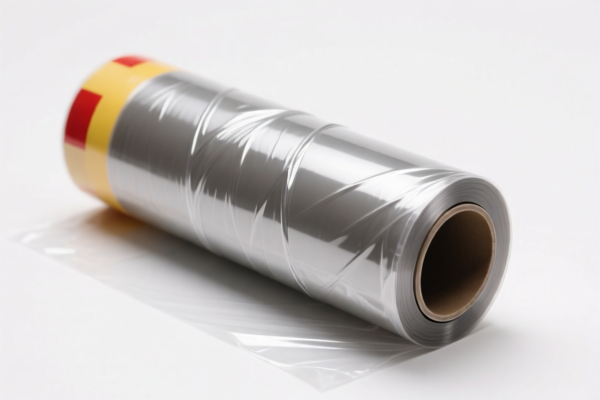

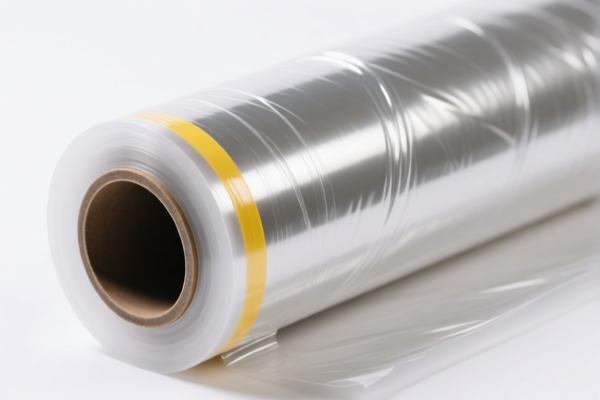
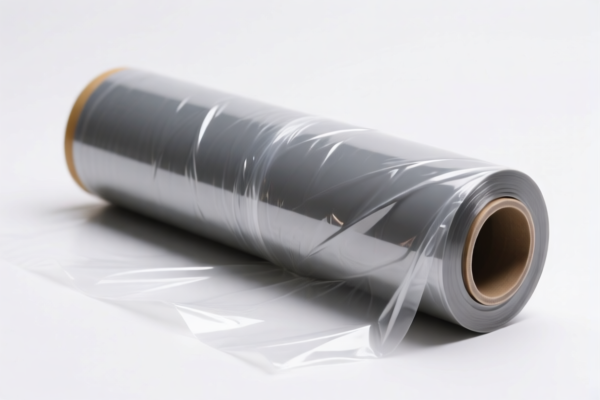
AI分析
🎞️ Film Roll & Long Roll Industrial Film (Photographic & Plastic Substrates)
🌐 HS Code Reference & Customs Clearance Guide | 2026 Latest Tariff Analysis | Professional Clearance Strategy
📌 I. Product Definition & Classification: Do You Really Understand "Film Rolls"?
In international trade, "Film Roll" is a broad term that covers two entirely different categories based on material and function:
- Photographic Film (感光材料): Light-sensitive media used for photography or industrial imaging (e.g., X-ray, industrial radiography).
- Key Characteristic: Contains emulsion layers; designed to be exposed and developed.
- Industrial Plastic Film (工业塑料薄膜): Non-sensitized plastic sheets/rolls used for packaging, protection, or as substrates.
- Key Characteristic: Made of polymers (PP, PE, PET); no light-sensitive coating.
⚠️ Critical Distinction Point:
- If the roll is light-sensitive (unexposed photographic film) → It belongs to Chapter 37 (Photographic Goods).
- If the roll is plain plastic (non-sensitized) → It belongs to Chapter 39 (Plastics and Articles Thereof).
- Misclassification Risk: Declaring plain plastic film as photographic film (or vice versa) can lead to severe penalties because the HS codes and tax liabilities differ significantly.
📦 II. HS Code Classification Details (2026 Latest Tariff Authority Comparison)
Based on the provided data, here are the precise classifications for "Film Roll" and "Long Roll Industrial Film":
| HS Code | Product Description | Application Scenario | Material/Sensitivity |
|---|---|---|---|
3702.10.00.60 |
Photographic Film, unspecified type, rolled form | General photographic rolls, ambiguous material | ✅ Photographic (Chapter 37) |
3702.31.01.00 |
Photographic Film, non-paper/non-textile support | Standard roll film for cameras, industrial sensors | ✅ Photographic (Chapter 37) |
3704.00.00.00 |
Photographic Plates & Film (Developed) | Developed film rolls, post-processing imaging | ✅ Photographic (Chapter 37) |
3921.19.00.90 |
Long Roll Industrial Film, Plastic, Other | Industrial-grade plastic rolls, generic plastic substrates | ❌ Plastic (Chapter 39) |
3921.90.50.50 |
Long Roll Industrial Film, Plastic Sheet/Film | Specific plastic board/film classification for industrial use | ❌ Plastic (Chapter 39) |
3701.30.00.00 |
Industrial Photographic Film, Large Format | Large-scale industrial photographic plates/rolls (unexposed) | ✅ Photographic (Chapter 37) |
🔍 Key Note:
-3701/3702/3704are for Photographic Goods. These often have lower base tariffs (0% - 3.7%) but are subject to high additional duties.
-3921is for Plastic Articles. These have higher base tariffs (4.8% - 6.5%) but are subject to the same additional duties.
💰 III. 2026 Latest Tariff Rate Breakdown (Including Surcharges & Policy Add-ons)
✅ Applicable Country: United States (US)
✅ Origin: China (CN)
✅ Effective Date: From November 10, 2025 (Including subsequent imports)
🎯 1. Photographic Film HS Codes (3702.10.00.60, 3702.31.01.00, 3704.00.00.00, 3701.30.00.00)
These codes cover light-sensitive materials. While the base duty is low, the additional taxes make the total cost high.
| Item | Content |
|---|---|
| Base Tariff | 0.0% - 3.7% (Ad valorem) |
| Section 301 Tariff (Additional) | +25.0% (USITC Footnote 9903.88.01) |
| Section 122 Tariff (IEEPA) | +10.0% (Specific China-targeted levy) |
| Total Effective Tax Rate | 35.0% - 38.7% |
| Tax Calculation | CIF Value × Total Rate |
| De Minimis Exemption? | ❌ No (Not eligible for Section 321/De Minimis) |
| Legal Basis Path | IEEPA:9903.01.25 → USITC:3702.xxxx → FOOTNOTE:301 |
📌 Interpretation:
-3702.10.00.60&3702.31.01.00: Total tax is 38.7% (3.7% Base + 25% Section 301 + 10% Section 122).
-3704.00.00.00&3701.30.00.00: Total tax is 35.0% (0% Base + 25% Section 301 + 10% Section 122).
- Why is Section 122 mentioned? The data explicitly lists a "122 Clause Tariff" of 10%. This is an additional US levy on specific Chinese goods, distinct from the standard 301 tariff.
🎯 2. Industrial Plastic Film HS Codes (3921.19.00.90, 3921.90.50.50)
These codes cover non-sensitized plastic rolls. Higher base duties apply.
| Item | Content |
|---|---|
| Base Tariff | 4.8% - 6.5% (Ad valorem) |
| Section 301 Tariff (Additional) | +25.0% |
| Section 122 Tariff (IEEPA) | +10.0% |
| Total Effective Tax Rate | 39.8% - 41.5% |
| Tax Calculation | CIF Value × Total Rate |
| De Minimis Exemption? | ❌ No |
| Legal Basis Path | IEEPA:9903.01.25 → USITC:3921.xxxx → FOOTNOTE:301 |
📌 Interpretation:
-3921.19.00.90: Total tax is 41.5% (6.5% Base + 25% Section 301 + 10% Section 122).
-3921.90.50.50: Total tax is 39.8% (4.8% Base + 25% Section 301 + 10% Section 122).
- Key Takeaway: Even if you claim it's just "plastic," the 35-41.5% total tariff is extremely high. You cannot avoid the 35%+ burden by simply reclassifying plastic film as "goods" without verifying the exact material composition.
🛠️ IV. Customs Clearance Practical Advice (Real-World Pitfall Guide)
✅ 1. Preparation Checklist (Mandatory Documents)
| Document | Required | Description |
|---|---|---|
| ✅ Product Specification Sheet | ✔️ | Must specify: Sensitivity (ISO?), Material (PP/PET/Cellulose Acetate?), Width, Length, Thickness. |
| ✅ Composition Statement | ✔️ | Explicitly state if "Light-Sensitive" or "Non-Sensitized." |
| ✅ Product Photos (Packaging & Roll) | ✔️ | Show the label indicating "Unexposed Photographic Film" or "Industrial Plastic Film." |
| ✅ Commercial Invoice | ✔️ | Use precise HS Code descriptions. Do not use generic terms like "Rolls." |
| ✅ Packing List | ✔️ | Detail weight and dimensions to match HS Code volume/weight criteria. |
| ✅ FCC/CE Certificates | If Applicable | For electronic components if film is part of a device. |
✅ 2. Declaration Tips (Critical Mnemonic)
🔥 "Sensitized is Ch37, Plastic is Ch39. Don't Guess, Verify!"
| Scenario | Correct Declaration | Wrong Declaration | Consequence |
|---|---|---|---|
| Unexposed Camera Film | 3702.31.01.00 |
3921.19.00.90 (Plastic) |
Under-declaration Risk: Penalties for misclassification. Base duty differs. |
| Developed Photo Roll | 3704.00.00.00 |
3702.10.00.60 (Unexposed) |
Tax Discrepancy: 35.0% vs 38.7%. May trigger audit. |
| Plain Plastic Wrap | 3921.19.00.90 |
3702.10.00.60 (Photographic) |
Over-declaration Risk: Paying higher base duty unnecessarily, but still facing 35%+ total. |
| Industrial X-ray Film | 3701.30.00.00 |
3921.90.50.50 |
Legal Risk: X-ray film is strictly regulated under Chapter 37. |
✅ 3. Special Case Handling
| Case | Handling Advice |
|---|---|
| "Long Roll" is ambiguous | Specify if it is Photographic (e.g., for industrial radiography) or Plastic (e.g., for packaging). The term "Long Roll" alone is insufficient for Customs. |
| Mixed Packaging | If Plastic Film and Photographic Film are packed together, declare separately. Mixing them can lead to denial of entry for the entire shipment. |
| Sample vs. Commercial | If shipping samples, declare as "Commercial Sample, Value X." However, the tariff rate remains the same (35-41.5%). Do not expect tax-free entry. |
| Country of Origin | If the film is not made in China (e.g., manufactured in Japan or USA), the 25% Section 301 and 10% Section 122 tariffs may be exempt. Ensure your Certificate of Origin is accurate. |
🌍 V. Global Market Comparison (2026 Latest)
| Country/Region | Recommended HS Code | Tariff (China Origin) | Certification | Note |
|---|---|---|---|---|
| 🇺🇸 USA | 3702.31.01.00 / 3921.19.00.90 |
35.0% - 41.5% | None Specific | High Tax Burden: 35%+ total is mandatory. |
| 🇨🇳 China | 3702.31.01.00 / 3921.19.00.90 |
0% - 6.5% | None | Low Base Tax: No additional Section 301/122. |
| 🇪🇺 EU | 3702.31.00 / 3920.99.00 |
0% - 5% | CE (if applicable) | No Retaliatory Tariffs. |
| 🇯🇵 Japan | 3702.31.00 / 3920.99.00 |
0% - 3% | PSE (if applicable) | Competitive Market. |
| 🇬🇧 UK | 3702.31.00 / 3920.99.00 |
0% - 5% | UKCA | Post-Brexit Standards. |
📌 Conclusion:
- USA is the most expensive market for film rolls due to the 35-41.5% total tariff.
- China, EU, and Japan have significantly lower base tariffs and no additional US-style surcharges.
- Strategy: If shipping to the US, ensure precise classification to avoid penalties. If possible, consider supply chain diversification (e.g., manufacturing in Vietnam or Mexico) to avoid Section 301/122 tariffs.
📌 VI. Common Mistakes & Pitfall Guide (Lessons Learned)
❌ Mistake 1: Declaring "Photographic Film" as "Plastic Roll" to avoid scrutiny.
👉 Result: Customs exam reveals light-sensitive emulsion. Penalty + Back Taxes.
❌ Mistake 2: Using generic name "Film" on the Invoice.
👉 Result: Customs rejects the entry for lack of detail. Delay + Demurrage Fees.
❌ Mistake 3: Assuming "Long Roll" means "Industrial" and thus lower tax.
👉 Result: If it's photographic film, it's still 35-38.7%. If it's plastic, it's 39-41.5%. No tax advantage.
❌ Mistake 4: Ignoring Section 122.
👉 Result: Underpaying by 10%. Customs will assess 10% + Interest + Penalties.
✅ Correct Approach:
"Unexposed Photographic Roll Film, 35mm, Cellulose Acetate Base, ISO 400, HS 3702.31.01.00"
OR
"Industrial Plastic Stretch Film, PP Material, Clear, 500m Roll, HS 3921.19.00.90"
🎯 VII. Conclusion: Precision Classification Saves Money!
🎯 Remember the Mnemonic:
🔹 "Sensitized = Ch37, Plastic = Ch39."
🔹 "Base Tax Low, Add-Ons High: 35% Min, 41% Max."
🔹 "Section 301 (25%) + Section 122 (10%) = 35% Flat + Base."
📌 Pro Tip:
If your film rolls are originating from countries other than China (e.g., USA, Japan, Germany), you may exempt the 25% Section 301 and 10% Section 122 tariffs.
Action:
📞 Consult a licensed customs broker.
📄 Provide a Certificate of Origin.
🚀 Optimize your supply chain to reduce the 35-41% tariff burden.
✨ Professional Clearance Starts with Accurate Classification!
💼 Your Profit Margin Depends on These 10%!
用户评价
关于 HS 编码归类
协调制度(HS)是由世界海关组织(WCO)制定的国际贸易商品分类标准。全球 200 多个国家采用 HS 系统作为海关关税、贸易统计和进出口监管的基础。
每个 HS 编码遵循以下层级结构:
- 章(2 位)——商品大类(例如:第 84 章:机器和机械设备)
- 品目(4 位)——章内的更具体分类
- 子目(6 位)——国际通用细分,所有 WCO 成员国统一使用
- 本国细分(8-10 位)——各国自行扩展的细分编码,如美国 HTSUS 10 位编码
正确的 HS 编码归类对于顺利通关、准确缴纳关税和遵守贸易法规至关重要。错误归类可能导致海关延误、多缴关税或罚款。
从CN进口到US时,适用的关税税率可能包括:
- 最惠国(MFN)税率——适用于 WTO 成员国的标准关税税率
- 普通税率——适用于无贸易协定国家
- 贸易救济关税——附加关税,如 301 条款(反倾销)、232 条款(国家安全)或反补贴税
本页内容仅供参考。如需正式归类,请咨询当地海关或持牌报关代理。