Film Roll Long Roll
CN → US| HS Code | Tariff Rate | Origin | Destination | Doc |
|---|---|---|---|---|
| 3702100060 | 38.7% | CN | US | Official Doc |
| 3702310100 | 38.7% | CN | US | Official Doc |
| 3704000000 | 35.0% | CN | US | Official Doc |
| 3921190090 | 41.5% | CN | US | Official Doc |
| 3921905050 | 39.8% | CN | US | Official Doc |
| 3701300000 | 35.0% | CN | US | Official Doc |
Product Images
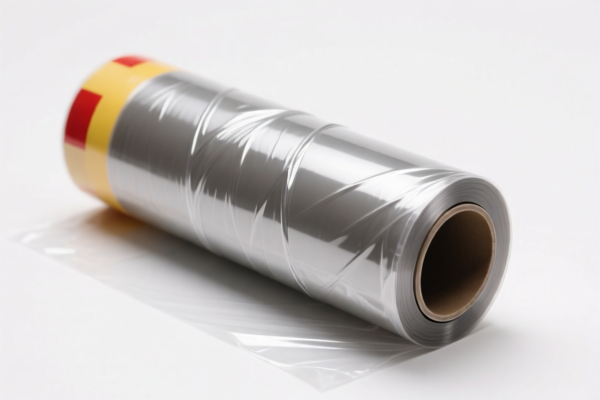

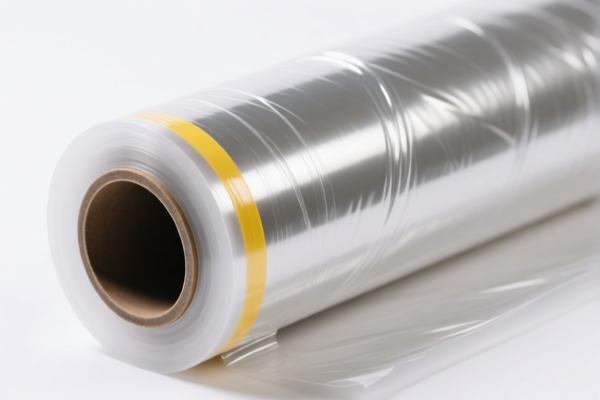
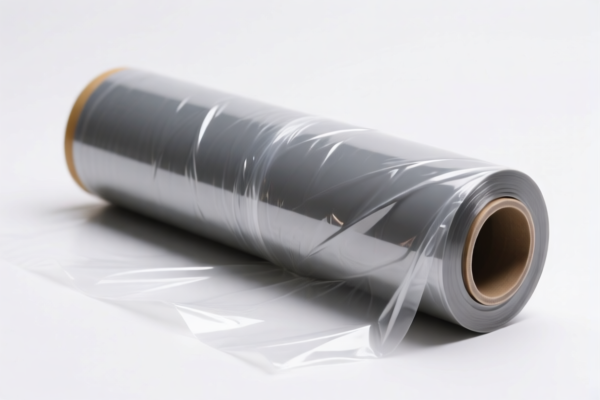
AI Analysis
🎞️ Film Roll & Long Roll Industrial Film (Photographic & Plastic Substrates)
🌐 HS Code Reference & Customs Clearance Guide | 2026 Latest Tariff Analysis | Professional Clearance Strategy
📌 I. Product Definition & Classification: Do You Really Understand "Film Rolls"?
In international trade, "Film Roll" is a broad term that covers two entirely different categories based on material and function:
- Photographic Film (感光材料): Light-sensitive media used for photography or industrial imaging (e.g., X-ray, industrial radiography).
- Key Characteristic: Contains emulsion layers; designed to be exposed and developed.
- Industrial Plastic Film (工业塑料薄膜): Non-sensitized plastic sheets/rolls used for packaging, protection, or as substrates.
- Key Characteristic: Made of polymers (PP, PE, PET); no light-sensitive coating.
⚠️ Critical Distinction Point:
- If the roll is light-sensitive (unexposed photographic film) → It belongs to Chapter 37 (Photographic Goods).
- If the roll is plain plastic (non-sensitized) → It belongs to Chapter 39 (Plastics and Articles Thereof).
- Misclassification Risk: Declaring plain plastic film as photographic film (or vice versa) can lead to severe penalties because the HS codes and tax liabilities differ significantly.
📦 II. HS Code Classification Details (2026 Latest Tariff Authority Comparison)
Based on the provided data, here are the precise classifications for "Film Roll" and "Long Roll Industrial Film":
| HS Code | Product Description | Application Scenario | Material/Sensitivity |
|---|---|---|---|
3702.10.00.60 |
Photographic Film, unspecified type, rolled form | General photographic rolls, ambiguous material | ✅ Photographic (Chapter 37) |
3702.31.01.00 |
Photographic Film, non-paper/non-textile support | Standard roll film for cameras, industrial sensors | ✅ Photographic (Chapter 37) |
3704.00.00.00 |
Photographic Plates & Film (Developed) | Developed film rolls, post-processing imaging | ✅ Photographic (Chapter 37) |
3921.19.00.90 |
Long Roll Industrial Film, Plastic, Other | Industrial-grade plastic rolls, generic plastic substrates | ❌ Plastic (Chapter 39) |
3921.90.50.50 |
Long Roll Industrial Film, Plastic Sheet/Film | Specific plastic board/film classification for industrial use | ❌ Plastic (Chapter 39) |
3701.30.00.00 |
Industrial Photographic Film, Large Format | Large-scale industrial photographic plates/rolls (unexposed) | ✅ Photographic (Chapter 37) |
🔍 Key Note:
-3701/3702/3704are for Photographic Goods. These often have lower base tariffs (0% - 3.7%) but are subject to high additional duties.
-3921is for Plastic Articles. These have higher base tariffs (4.8% - 6.5%) but are subject to the same additional duties.
💰 III. 2026 Latest Tariff Rate Breakdown (Including Surcharges & Policy Add-ons)
✅ Applicable Country: United States (US)
✅ Origin: China (CN)
✅ Effective Date: From November 10, 2025 (Including subsequent imports)
🎯 1. Photographic Film HS Codes (3702.10.00.60, 3702.31.01.00, 3704.00.00.00, 3701.30.00.00)
These codes cover light-sensitive materials. While the base duty is low, the additional taxes make the total cost high.
| Item | Content |
|---|---|
| Base Tariff | 0.0% - 3.7% (Ad valorem) |
| Section 301 Tariff (Additional) | +25.0% (USITC Footnote 9903.88.01) |
| Section 122 Tariff (IEEPA) | +10.0% (Specific China-targeted levy) |
| Total Effective Tax Rate | 35.0% - 38.7% |
| Tax Calculation | CIF Value × Total Rate |
| De Minimis Exemption? | ❌ No (Not eligible for Section 321/De Minimis) |
| Legal Basis Path | IEEPA:9903.01.25 → USITC:3702.xxxx → FOOTNOTE:301 |
📌 Interpretation:
-3702.10.00.60&3702.31.01.00: Total tax is 38.7% (3.7% Base + 25% Section 301 + 10% Section 122).
-3704.00.00.00&3701.30.00.00: Total tax is 35.0% (0% Base + 25% Section 301 + 10% Section 122).
- Why is Section 122 mentioned? The data explicitly lists a "122 Clause Tariff" of 10%. This is an additional US levy on specific Chinese goods, distinct from the standard 301 tariff.
🎯 2. Industrial Plastic Film HS Codes (3921.19.00.90, 3921.90.50.50)
These codes cover non-sensitized plastic rolls. Higher base duties apply.
| Item | Content |
|---|---|
| Base Tariff | 4.8% - 6.5% (Ad valorem) |
| Section 301 Tariff (Additional) | +25.0% |
| Section 122 Tariff (IEEPA) | +10.0% |
| Total Effective Tax Rate | 39.8% - 41.5% |
| Tax Calculation | CIF Value × Total Rate |
| De Minimis Exemption? | ❌ No |
| Legal Basis Path | IEEPA:9903.01.25 → USITC:3921.xxxx → FOOTNOTE:301 |
📌 Interpretation:
-3921.19.00.90: Total tax is 41.5% (6.5% Base + 25% Section 301 + 10% Section 122).
-3921.90.50.50: Total tax is 39.8% (4.8% Base + 25% Section 301 + 10% Section 122).
- Key Takeaway: Even if you claim it's just "plastic," the 35-41.5% total tariff is extremely high. You cannot avoid the 35%+ burden by simply reclassifying plastic film as "goods" without verifying the exact material composition.
🛠️ IV. Customs Clearance Practical Advice (Real-World Pitfall Guide)
✅ 1. Preparation Checklist (Mandatory Documents)
| Document | Required | Description |
|---|---|---|
| ✅ Product Specification Sheet | ✔️ | Must specify: Sensitivity (ISO?), Material (PP/PET/Cellulose Acetate?), Width, Length, Thickness. |
| ✅ Composition Statement | ✔️ | Explicitly state if "Light-Sensitive" or "Non-Sensitized." |
| ✅ Product Photos (Packaging & Roll) | ✔️ | Show the label indicating "Unexposed Photographic Film" or "Industrial Plastic Film." |
| ✅ Commercial Invoice | ✔️ | Use precise HS Code descriptions. Do not use generic terms like "Rolls." |
| ✅ Packing List | ✔️ | Detail weight and dimensions to match HS Code volume/weight criteria. |
| ✅ FCC/CE Certificates | If Applicable | For electronic components if film is part of a device. |
✅ 2. Declaration Tips (Critical Mnemonic)
🔥 "Sensitized is Ch37, Plastic is Ch39. Don't Guess, Verify!"
| Scenario | Correct Declaration | Wrong Declaration | Consequence |
|---|---|---|---|
| Unexposed Camera Film | 3702.31.01.00 |
3921.19.00.90 (Plastic) |
Under-declaration Risk: Penalties for misclassification. Base duty differs. |
| Developed Photo Roll | 3704.00.00.00 |
3702.10.00.60 (Unexposed) |
Tax Discrepancy: 35.0% vs 38.7%. May trigger audit. |
| Plain Plastic Wrap | 3921.19.00.90 |
3702.10.00.60 (Photographic) |
Over-declaration Risk: Paying higher base duty unnecessarily, but still facing 35%+ total. |
| Industrial X-ray Film | 3701.30.00.00 |
3921.90.50.50 |
Legal Risk: X-ray film is strictly regulated under Chapter 37. |
✅ 3. Special Case Handling
| Case | Handling Advice |
|---|---|
| "Long Roll" is ambiguous | Specify if it is Photographic (e.g., for industrial radiography) or Plastic (e.g., for packaging). The term "Long Roll" alone is insufficient for Customs. |
| Mixed Packaging | If Plastic Film and Photographic Film are packed together, declare separately. Mixing them can lead to denial of entry for the entire shipment. |
| Sample vs. Commercial | If shipping samples, declare as "Commercial Sample, Value X." However, the tariff rate remains the same (35-41.5%). Do not expect tax-free entry. |
| Country of Origin | If the film is not made in China (e.g., manufactured in Japan or USA), the 25% Section 301 and 10% Section 122 tariffs may be exempt. Ensure your Certificate of Origin is accurate. |
🌍 V. Global Market Comparison (2026 Latest)
| Country/Region | Recommended HS Code | Tariff (China Origin) | Certification | Note |
|---|---|---|---|---|
| 🇺🇸 USA | 3702.31.01.00 / 3921.19.00.90 |
35.0% - 41.5% | None Specific | High Tax Burden: 35%+ total is mandatory. |
| 🇨🇳 China | 3702.31.01.00 / 3921.19.00.90 |
0% - 6.5% | None | Low Base Tax: No additional Section 301/122. |
| 🇪🇺 EU | 3702.31.00 / 3920.99.00 |
0% - 5% | CE (if applicable) | No Retaliatory Tariffs. |
| 🇯🇵 Japan | 3702.31.00 / 3920.99.00 |
0% - 3% | PSE (if applicable) | Competitive Market. |
| 🇬🇧 UK | 3702.31.00 / 3920.99.00 |
0% - 5% | UKCA | Post-Brexit Standards. |
📌 Conclusion:
- USA is the most expensive market for film rolls due to the 35-41.5% total tariff.
- China, EU, and Japan have significantly lower base tariffs and no additional US-style surcharges.
- Strategy: If shipping to the US, ensure precise classification to avoid penalties. If possible, consider supply chain diversification (e.g., manufacturing in Vietnam or Mexico) to avoid Section 301/122 tariffs.
📌 VI. Common Mistakes & Pitfall Guide (Lessons Learned)
❌ Mistake 1: Declaring "Photographic Film" as "Plastic Roll" to avoid scrutiny.
👉 Result: Customs exam reveals light-sensitive emulsion. Penalty + Back Taxes.
❌ Mistake 2: Using generic name "Film" on the Invoice.
👉 Result: Customs rejects the entry for lack of detail. Delay + Demurrage Fees.
❌ Mistake 3: Assuming "Long Roll" means "Industrial" and thus lower tax.
👉 Result: If it's photographic film, it's still 35-38.7%. If it's plastic, it's 39-41.5%. No tax advantage.
❌ Mistake 4: Ignoring Section 122.
👉 Result: Underpaying by 10%. Customs will assess 10% + Interest + Penalties.
✅ Correct Approach:
"Unexposed Photographic Roll Film, 35mm, Cellulose Acetate Base, ISO 400, HS 3702.31.01.00"
OR
"Industrial Plastic Stretch Film, PP Material, Clear, 500m Roll, HS 3921.19.00.90"
🎯 VII. Conclusion: Precision Classification Saves Money!
🎯 Remember the Mnemonic:
🔹 "Sensitized = Ch37, Plastic = Ch39."
🔹 "Base Tax Low, Add-Ons High: 35% Min, 41% Max."
🔹 "Section 301 (25%) + Section 122 (10%) = 35% Flat + Base."
📌 Pro Tip:
If your film rolls are originating from countries other than China (e.g., USA, Japan, Germany), you may exempt the 25% Section 301 and 10% Section 122 tariffs.
Action:
📞 Consult a licensed customs broker.
📄 Provide a Certificate of Origin.
🚀 Optimize your supply chain to reduce the 35-41% tariff burden.
✨ Professional Clearance Starts with Accurate Classification!
💼 Your Profit Margin Depends on These 10%!
Customer Reviews
About HS Code Classification
The Harmonized System (HS) is an internationally standardized nomenclature developed by the World Customs Organization (WCO) to classify traded products. Over 200 countries use the HS system as the basis for customs tariffs, trade statistics, and import/export regulations.
Each HS code follows a hierarchical structure:
- Chapter (2 digits) — Broad category of goods (e.g., Chapter 84: Machinery and Mechanical Appliances)
- Heading (4 digits) — More specific grouping within the chapter
- Subheading (6 digits) — Internationally standardized breakdown, used by all WCO member countries
- National subdivisions (8-10 digits) — Country-specific extensions for further classification, such as US HTSUS 10-digit codes
Correct HS code classification is essential for smooth customs clearance, accurate duty payment, and compliance with trade regulations. Misclassification can lead to customs delays, overpayment of duties, or penalties.
When importing from CN to US, the applicable tariff rates may include:
- Most-Favored-Nation (MFN) rate — The standard duty rate applied to WTO members
- General rate — Applied to countries without trade agreements
- Trade remedy duties — Additional tariffs such as Section 301 (anti-dumping), Section 232 (national security), or countervailing duties
The information provided on this page is for reference purposes only. For official classification, please consult with your local customs authority or a licensed customs broker.