Fine Animal Hair Lightweight Scarf
CN → US| HS编码 | 关税税率 | 原产国 | 目的国 | 文档 |
|---|---|---|---|---|
| 5112113030 | 60.0% | CN | US | 官方文档 |
| 6214200000 | 24.2% | CN | US | 官方文档 |
| 6117909085 | 24.6% | CN | US | 官方文档 |
| 6117101000 | 27.1% | CN | US | 官方文档 |
| 5112116030 | 60.0% | CN | US | 官方文档 |
| 6214900090 | 28.8% | CN | US | 官方文档 |
商品图片
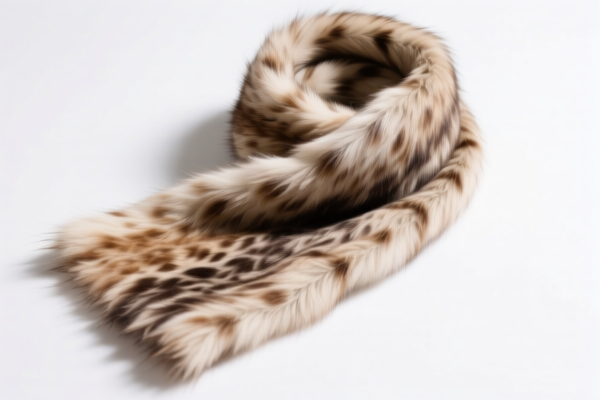


AI分析
🧣 Fine Animal Hair Lightweight Scarf (Cashmere/Sheep/Goat Wool)
🌐 HS Code Reference & Customs Clearance Guide | 2026 Latest Tariff Analysis | Professional Entry Strategy
📌 I. Product Definition & Classification: What Exactly Is a "Fine Animal Hair Lightweight Scarf"?
A "Fine Animal Hair Lightweight Scarf" is an accessory made primarily from fibers derived from animals such as cashmere, alpaca, mohair, or high-quality sheep wool. In international trade, its classification depends heavily on two factors: 1. Knitted vs. Woven: Is it made by looping yarn (knitted/crocheted) or interlacing threads (woven)? 2. Weight: Is it considered "lightweight" (typically <200 g/m²)?
⚠️ Key Distinction:
- Knitted/Crocheted (Chapter 61): If the scarf is made by knitting or crochet, it generally falls under 6117. This includes "other made up clothing accessories."
- Woven (Chapter 62): If woven, it falls under 6214 ("Scarves, shawls, mufflers, mantillas, veils, and the like").
- Material Specifics: "Fine animal hair" specifically refers to cashmere, camel hair, alpaca, or similar fine fibers, not coarse wool. This triggers specific sub-headings (e.g., 5112.11 for woven fine animal hair).
📦 II. HS Code Classification Details (2026 Latest Tariff Authority Comparison)
Based on the provided data, here are the 6 possible HS Codes and their corresponding tax rates. Note the significant difference between Woven (Chapter 51) and Woven/Knitted Accessories (Chapters 61/62).
| HS Code | Product Description & Logic | Total Tax Rate | Tax Breakdown Details |
|---|---|---|---|
5112.11.30.30 |
Woven Fine Animal Hair Scarf (Lightweight) Classified as a woven fabric item. "Lightweight" fits <200g/m² definition. |
60.0% | Base: 25.0% Additional: 25.0% 122 Clause: 10% |
6214.20.00.00 |
Woven Scarf of Fine Animal Hair Standard woven scarf category. Material matches "fine animal hair" perfectly. |
24.2% | Base: 6.7% Additional: 7.5% 122 Clause: 10% |
6117.90.90.85 |
Knitted/Crocheted Accessory (Other) Classified as a knitted accessory. If not specifically listed under scarves, it falls under "other." |
24.6% | Base: 14.6% Additional: 0.0% 122 Clause: 10% |
6117.10.10.00 |
Knitted/Crocheted Scarf Specifically for knitted scarves made of fine animal hair. |
27.1% | Base: 9.6% Additional: 7.5% 122 Clause: 10% |
5112.11.60.30 |
Woven Fine Animal Hair Fabric/Item (Other) Another woven variant. Weight (<200g/m²) fits "lightweight" criteria. |
60.0% | Base: 25.0% Additional: 25.0% 122 Clause: 10% |
6214.90.00.90 |
Woven Scarf of Other Textile Materials If the "fine animal hair" is mixed with non-fine materials or classified under "other," it might fall here. |
28.8% | Base: 11.3% Additional: 7.5% 122 Clause: 10% |
🔍 Critical Insight:
- Woven vs. Knitted: Woven items (Chapter 51/62) and Knitted items (Chapter 61) have vastly different tax structures.
- High Tax Risk: Codes5112.11.30.30and5112.11.60.30carry a 60% total tax rate. This is likely due to the specific "woven fabric" classification triggering higher base rates + additional duties.
- Optimal Codes:6214.20.00.00(24.2%) and6117.90.90.85(24.6%) offer significantly lower total tariffs.
💰 III. 2026 Latest Tariff Rate Explanation (Including Additional Taxes & Policy Add-ons)
✅ Applicable Country: United States (US)
✅ Origin: China (CN)
✅ Effective Time: 2025 onwards (Includes subsequent imports)
🎯 1. 5112.11.30.30 & 5112.11.60.30 —— Woven Fine Animal Hair Items (High Tax Zone)
| Item | Content |
|---|---|
| Base Tariff | 25.0% (Standard MFN rate for woven fabrics of fine animal hair) |
| Additional Tariff (Section 301) | 25.0% (Added by USITC for Chinese origin goods) |
| Clause 122 Tariff | 10.0% (Specific trade remedy or surcharge) |
| Total Tax Rate | 60.0% |
| Tax Calculation | CIF Value × 60% |
| De Minimis Exemption | ❌ Not Eligible |
| Legal Basis Path | HTSUS:5112.11 → USITC:301 → Section 122 |
📌 Explanation:
- These codes classify the scarf as a woven fabric product rather than a finished accessory.
- The 25% Additional Tariff is the standard Section 301 duty on Chinese textiles.
- The 10% Clause 122 is an additional surcharge applicable to certain textile imports.
- Result: Extremely high cost. Importers must ensure the product is NOT classified here if a better option exists.
🎯 2. 6214.20.00.00 —— Woven Scarf of Fine Animal Hair (Recommended Woven Option)
| Item | Content |
|---|---|
| Base Tariff | 6.7% (Lower base for finished scarf accessories) |
| Additional Tariff (Section 301) | 7.5% (Reduced additional duty for certain scarf categories) |
| Clause 122 Tariff | 10.0% |
| Total Tax Rate | 24.2% |
| Tax Calculation | CIF Value × 24.2% |
| De Minimis Exemption | ❌ Not Eligible |
| Legal Basis Path | HTSUS:6214.20 → USITC:301 → Section 122 |
📌 Explanation:
- This is the most efficient woven classification.
- The base rate is much lower (6.7%) because it's classified as a "scarf" (finished good) rather than just "woven fabric."
- Savings: Compared to5112.11codes, this saves 35.8% in total taxes.
🎯 3. 6117.10.10.00 —— Knitted/Crocheted Scarf
| Item | Content |
|---|---|
| Base Tariff | 9.6% |
| Additional Tariff (Section 301) | 7.5% |
| Clause 122 Tariff | 10.0% |
| Total Tax Rate | 27.1% |
| Tax Calculation | CIF Value × 27.1% |
| De Minimis Exemption | ❌ Not Eligible |
📌 Explanation:
- If your scarf is knitted (looped yarn), use this code.
- Slightly higher than6214.20but still far better than Chapter 51 codes.
🎯 4. 6117.90.90.85 —— Knitted/Crocheted Other Accessories
| Item | Content |
|---|---|
| Base Tariff | 14.6% |
| Additional Tariff (Section 301) | 0.0% (No additional 301 duty for this specific sub-category) |
| Clause 122 Tariff | 10.0% |
| Total Tax Rate | 24.6% |
| Tax Calculation | CIF Value × 24.6% |
| De Minimis Exemption | ❌ Not Eligible |
📌 Explanation:
- If the scarf is knitted but doesn't fit the specific "scarf" definition, it may fall under "other accessories."
- Key Advantage: 0% Additional Tariff makes this very competitive.
🛠️ IV. Customs Clearance Practical Advice (Battle-Tested Pitfall Guide)
✅ 1. Document Checklist (Mandatory)
| Document | Required | Explanation |
|---|---|---|
| ✅ Product Specification Sheet | ✔️ | Must specify: Fiber content (e.g., 100% Cashmere), Weight (g/m²), Knitted vs. Woven. |
| ✅ Photos of Scarf | ✔️ | Show texture (knit loops vs. woven threads), edges, and any labels. |
| ✅ Commercial Invoice | ✔️ | Clearly state "Lightweight Scarf, Fine Animal Hair, [Knitted/Woven]." |
| ✅ Packing List | ✔️ | Include weight and dimensions to prove "lightweight" status if challenged. |
| ✅ Origin Certificate | ✔️ | Proof of Chinese origin is critical for Section 301 and Clause 122 assessment. |
| ✅ Third-Party Test Report | ✔️ | Fiber content verification (e.g., SGS report) to prove "Fine Animal Hair." |
✅ 2. Declaration Tips (Key Mnemonics)
🔥 "Know the Weave, Choose the Code, Avoid the 60% Trap!"
| Scenario | Correct HS Code | Wrong Approach |
|---|---|---|
| Woven Scarf (Thread interlaced) | 6214.20.00.00 (24.2%) |
Misclassifying as 5112.11 (60%) → Loss of 35.8%! |
| Knitted Scarf (Looped yarn) | 6117.10.10.00 (27.1%) or 6117.90.90.85 (24.6%) |
Misclassifying as woven → Higher tax. |
| Mixed Material (e.g., 50% Wool, 50% Polyester) | 6214.90.00.90 (28.8%) |
Declaring as 100% fine hair if not true → Customs penalty. |
| Lightweight Definition | Must be <200 g/m² | If >200g/m², it may be classified as "Heavy" fabric → Different code. |
✅ 3. Special Handling
| Situation | Handling Advice |
|---|---|
| OEM Custom Scarf | Provide design sketches showing knit/woven structure. |
| Sample Imports | Still subject to full tariffs. Do not assume "samples" are exempt. |
| Fabric vs. Finished Scarf | If the scarf is not finished (no hem, no edge), it may be classified as fabric (5112.11) → 60% tax. Ensure it is a finished product. |
| Origin Labeling | Must clearly state "Made in China" on product and packaging to avoid misdeclaration. |
🌍 V. Global Market Comparison (2026 Latest)
| Country/Region | Recommended HS Code | Total Tariff | Key Certification | Notes |
|---|---|---|---|---|
| 🇺🇸 USA | 6214.20.00.00 |
24.2% | No specific tech certs, but fiber content proof needed | Highest risk of 60% if misclassified as woven fabric. |
| 🇨🇳 China | 6214.20.00.00 |
~6.7% | GB Standards for Textiles | No additional duties. |
| 🇪🇺 EU | 6214.20.00.00 |
~12% | REACH Compliance | No Section 301 equivalent. |
| 🇬🇧 UK | 6214.20.00.00 |
~12% | UKCA Marking (if applicable) | Post-Brexit rules apply. |
| 🇯🇵 Japan | 6214.20.00.00 |
~5-7% | JLAC (if applicable) | Low tariffs, strict fiber labeling. |
📌 Conclusion:
- USA is the most complex market due to Section 301 and Clause 122.
- Classification Accuracy is Critical: A 35% tax difference exists between5112.11(60%) and6214.20(24.2%).
- Woven Scarves should always aim for6214.20.00.00.
- Knitted Scarves should aim for6117.90.90.85(24.6%) if no specific scarf code applies.
📌 VI. Common Mistakes & Pitfalls (Lessons Learned)
❌ Mistake 1: Classifying a finished woven scarf as woven fabric (5112.11)
👉 Consequence: 60% tax instead of 24.2%. Loss of profit!
❌ Mistake 2: Claiming 100% Cashmere when it's a blend
👉 Consequence: Customs may reclassify to a lower-grade fiber code or impose penalties for misdeclaration.
❌ Mistake 3: Ignoring the "Lightweight" Definition
👉 Consequence: If weight >200g/m², it may not qualify for specific "lightweight" sub-codes, leading to higher duties.
❌ Mistake 4: Failing to provide Fiber Content Verification
👉 Consequence: Customs may use worst-case scenario classification (e.g., synthetic fibers) → Higher tax.
✅ Correct Action:
"Woven Scarf, 100% Cashmere, 150g/m², Hemmed Edges, Model XYZ, Made in China"
HS Code:6214.20.00.00
Tax: 24.2%
🎯 VII. Conclusion: Professional Declaration, Cost Savings!
🎯 Remember the Mnemonic:
🔹 "Woven Scarf → 6214 (24.2%) | Knitted Scarf → 6117 (24.6%-27.1%) | Woven Fabric → 5112 (60% - AVOID!) "
🔹 "Classify as Finished Product, Not Fabric, to Save 35%!"
📌 Pro Tip:
- If your scarf is knitted, check if it fits 6117.10.10.00 (Scarves) or 6117.90.90.85 (Other Accessories).
- If woven, always use 6214.20.00.00 unless it's a non-fine hair blend.
- Get a Pre-Ruling: For high-value shipments, request a Binding Ruling from US Customs to lock in the 24.2% rate.
📣 Immediate Action:
📞 Contact Your Broker: Provide photos and fiber test reports.
🚀 Declare Accurately: Use "Scarf, Woven, Fine Animal Hair" →6214.20.00.00.
💡 Save Money: Avoid the 60% tax trap by classifying correctly!
✨ Professional Customs Clearance Starts with Precise Classification!
💼 Every Percent Saved is Pure Profit!
用户评价
关于 HS 编码归类
协调制度(HS)是由世界海关组织(WCO)制定的国际贸易商品分类标准。全球 200 多个国家采用 HS 系统作为海关关税、贸易统计和进出口监管的基础。
每个 HS 编码遵循以下层级结构:
- 章(2 位)——商品大类(例如:第 84 章:机器和机械设备)
- 品目(4 位)——章内的更具体分类
- 子目(6 位)——国际通用细分,所有 WCO 成员国统一使用
- 本国细分(8-10 位)——各国自行扩展的细分编码,如美国 HTSUS 10 位编码
正确的 HS 编码归类对于顺利通关、准确缴纳关税和遵守贸易法规至关重要。错误归类可能导致海关延误、多缴关税或罚款。
从CN进口到US时,适用的关税税率可能包括:
- 最惠国(MFN)税率——适用于 WTO 成员国的标准关税税率
- 普通税率——适用于无贸易协定国家
- 贸易救济关税——附加关税,如 301 条款(反倾销)、232 条款(国家安全)或反补贴税
本页内容仅供参考。如需正式归类,请咨询当地海关或持牌报关代理。