Fine Animal Hair Lightweight Scarf
CN → US| HS Code | Tariff Rate | Origin | Destination | Doc |
|---|---|---|---|---|
| 5112113030 | 60.0% | CN | US | Official Doc |
| 6214200000 | 24.2% | CN | US | Official Doc |
| 6117909085 | 24.6% | CN | US | Official Doc |
| 6117101000 | 27.1% | CN | US | Official Doc |
| 5112116030 | 60.0% | CN | US | Official Doc |
| 6214900090 | 28.8% | CN | US | Official Doc |
Product Images
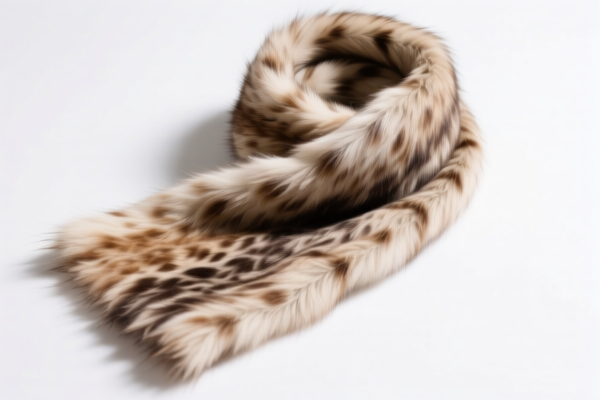


AI Analysis
🧣 Fine Animal Hair Lightweight Scarf (Cashmere/Sheep/Goat Wool)
🌐 HS Code Reference & Customs Clearance Guide | 2026 Latest Tariff Analysis | Professional Entry Strategy
📌 I. Product Definition & Classification: What Exactly Is a "Fine Animal Hair Lightweight Scarf"?
A "Fine Animal Hair Lightweight Scarf" is an accessory made primarily from fibers derived from animals such as cashmere, alpaca, mohair, or high-quality sheep wool. In international trade, its classification depends heavily on two factors: 1. Knitted vs. Woven: Is it made by looping yarn (knitted/crocheted) or interlacing threads (woven)? 2. Weight: Is it considered "lightweight" (typically <200 g/m²)?
⚠️ Key Distinction:
- Knitted/Crocheted (Chapter 61): If the scarf is made by knitting or crochet, it generally falls under 6117. This includes "other made up clothing accessories."
- Woven (Chapter 62): If woven, it falls under 6214 ("Scarves, shawls, mufflers, mantillas, veils, and the like").
- Material Specifics: "Fine animal hair" specifically refers to cashmere, camel hair, alpaca, or similar fine fibers, not coarse wool. This triggers specific sub-headings (e.g., 5112.11 for woven fine animal hair).
📦 II. HS Code Classification Details (2026 Latest Tariff Authority Comparison)
Based on the provided data, here are the 6 possible HS Codes and their corresponding tax rates. Note the significant difference between Woven (Chapter 51) and Woven/Knitted Accessories (Chapters 61/62).
| HS Code | Product Description & Logic | Total Tax Rate | Tax Breakdown Details |
|---|---|---|---|
5112.11.30.30 |
Woven Fine Animal Hair Scarf (Lightweight) Classified as a woven fabric item. "Lightweight" fits <200g/m² definition. |
60.0% | Base: 25.0% Additional: 25.0% 122 Clause: 10% |
6214.20.00.00 |
Woven Scarf of Fine Animal Hair Standard woven scarf category. Material matches "fine animal hair" perfectly. |
24.2% | Base: 6.7% Additional: 7.5% 122 Clause: 10% |
6117.90.90.85 |
Knitted/Crocheted Accessory (Other) Classified as a knitted accessory. If not specifically listed under scarves, it falls under "other." |
24.6% | Base: 14.6% Additional: 0.0% 122 Clause: 10% |
6117.10.10.00 |
Knitted/Crocheted Scarf Specifically for knitted scarves made of fine animal hair. |
27.1% | Base: 9.6% Additional: 7.5% 122 Clause: 10% |
5112.11.60.30 |
Woven Fine Animal Hair Fabric/Item (Other) Another woven variant. Weight (<200g/m²) fits "lightweight" criteria. |
60.0% | Base: 25.0% Additional: 25.0% 122 Clause: 10% |
6214.90.00.90 |
Woven Scarf of Other Textile Materials If the "fine animal hair" is mixed with non-fine materials or classified under "other," it might fall here. |
28.8% | Base: 11.3% Additional: 7.5% 122 Clause: 10% |
🔍 Critical Insight:
- Woven vs. Knitted: Woven items (Chapter 51/62) and Knitted items (Chapter 61) have vastly different tax structures.
- High Tax Risk: Codes5112.11.30.30and5112.11.60.30carry a 60% total tax rate. This is likely due to the specific "woven fabric" classification triggering higher base rates + additional duties.
- Optimal Codes:6214.20.00.00(24.2%) and6117.90.90.85(24.6%) offer significantly lower total tariffs.
💰 III. 2026 Latest Tariff Rate Explanation (Including Additional Taxes & Policy Add-ons)
✅ Applicable Country: United States (US)
✅ Origin: China (CN)
✅ Effective Time: 2025 onwards (Includes subsequent imports)
🎯 1. 5112.11.30.30 & 5112.11.60.30 —— Woven Fine Animal Hair Items (High Tax Zone)
| Item | Content |
|---|---|
| Base Tariff | 25.0% (Standard MFN rate for woven fabrics of fine animal hair) |
| Additional Tariff (Section 301) | 25.0% (Added by USITC for Chinese origin goods) |
| Clause 122 Tariff | 10.0% (Specific trade remedy or surcharge) |
| Total Tax Rate | 60.0% |
| Tax Calculation | CIF Value × 60% |
| De Minimis Exemption | ❌ Not Eligible |
| Legal Basis Path | HTSUS:5112.11 → USITC:301 → Section 122 |
📌 Explanation:
- These codes classify the scarf as a woven fabric product rather than a finished accessory.
- The 25% Additional Tariff is the standard Section 301 duty on Chinese textiles.
- The 10% Clause 122 is an additional surcharge applicable to certain textile imports.
- Result: Extremely high cost. Importers must ensure the product is NOT classified here if a better option exists.
🎯 2. 6214.20.00.00 —— Woven Scarf of Fine Animal Hair (Recommended Woven Option)
| Item | Content |
|---|---|
| Base Tariff | 6.7% (Lower base for finished scarf accessories) |
| Additional Tariff (Section 301) | 7.5% (Reduced additional duty for certain scarf categories) |
| Clause 122 Tariff | 10.0% |
| Total Tax Rate | 24.2% |
| Tax Calculation | CIF Value × 24.2% |
| De Minimis Exemption | ❌ Not Eligible |
| Legal Basis Path | HTSUS:6214.20 → USITC:301 → Section 122 |
📌 Explanation:
- This is the most efficient woven classification.
- The base rate is much lower (6.7%) because it's classified as a "scarf" (finished good) rather than just "woven fabric."
- Savings: Compared to5112.11codes, this saves 35.8% in total taxes.
🎯 3. 6117.10.10.00 —— Knitted/Crocheted Scarf
| Item | Content |
|---|---|
| Base Tariff | 9.6% |
| Additional Tariff (Section 301) | 7.5% |
| Clause 122 Tariff | 10.0% |
| Total Tax Rate | 27.1% |
| Tax Calculation | CIF Value × 27.1% |
| De Minimis Exemption | ❌ Not Eligible |
📌 Explanation:
- If your scarf is knitted (looped yarn), use this code.
- Slightly higher than6214.20but still far better than Chapter 51 codes.
🎯 4. 6117.90.90.85 —— Knitted/Crocheted Other Accessories
| Item | Content |
|---|---|
| Base Tariff | 14.6% |
| Additional Tariff (Section 301) | 0.0% (No additional 301 duty for this specific sub-category) |
| Clause 122 Tariff | 10.0% |
| Total Tax Rate | 24.6% |
| Tax Calculation | CIF Value × 24.6% |
| De Minimis Exemption | ❌ Not Eligible |
📌 Explanation:
- If the scarf is knitted but doesn't fit the specific "scarf" definition, it may fall under "other accessories."
- Key Advantage: 0% Additional Tariff makes this very competitive.
🛠️ IV. Customs Clearance Practical Advice (Battle-Tested Pitfall Guide)
✅ 1. Document Checklist (Mandatory)
| Document | Required | Explanation |
|---|---|---|
| ✅ Product Specification Sheet | ✔️ | Must specify: Fiber content (e.g., 100% Cashmere), Weight (g/m²), Knitted vs. Woven. |
| ✅ Photos of Scarf | ✔️ | Show texture (knit loops vs. woven threads), edges, and any labels. |
| ✅ Commercial Invoice | ✔️ | Clearly state "Lightweight Scarf, Fine Animal Hair, [Knitted/Woven]." |
| ✅ Packing List | ✔️ | Include weight and dimensions to prove "lightweight" status if challenged. |
| ✅ Origin Certificate | ✔️ | Proof of Chinese origin is critical for Section 301 and Clause 122 assessment. |
| ✅ Third-Party Test Report | ✔️ | Fiber content verification (e.g., SGS report) to prove "Fine Animal Hair." |
✅ 2. Declaration Tips (Key Mnemonics)
🔥 "Know the Weave, Choose the Code, Avoid the 60% Trap!"
| Scenario | Correct HS Code | Wrong Approach |
|---|---|---|
| Woven Scarf (Thread interlaced) | 6214.20.00.00 (24.2%) |
Misclassifying as 5112.11 (60%) → Loss of 35.8%! |
| Knitted Scarf (Looped yarn) | 6117.10.10.00 (27.1%) or 6117.90.90.85 (24.6%) |
Misclassifying as woven → Higher tax. |
| Mixed Material (e.g., 50% Wool, 50% Polyester) | 6214.90.00.90 (28.8%) |
Declaring as 100% fine hair if not true → Customs penalty. |
| Lightweight Definition | Must be <200 g/m² | If >200g/m², it may be classified as "Heavy" fabric → Different code. |
✅ 3. Special Handling
| Situation | Handling Advice |
|---|---|
| OEM Custom Scarf | Provide design sketches showing knit/woven structure. |
| Sample Imports | Still subject to full tariffs. Do not assume "samples" are exempt. |
| Fabric vs. Finished Scarf | If the scarf is not finished (no hem, no edge), it may be classified as fabric (5112.11) → 60% tax. Ensure it is a finished product. |
| Origin Labeling | Must clearly state "Made in China" on product and packaging to avoid misdeclaration. |
🌍 V. Global Market Comparison (2026 Latest)
| Country/Region | Recommended HS Code | Total Tariff | Key Certification | Notes |
|---|---|---|---|---|
| 🇺🇸 USA | 6214.20.00.00 |
24.2% | No specific tech certs, but fiber content proof needed | Highest risk of 60% if misclassified as woven fabric. |
| 🇨🇳 China | 6214.20.00.00 |
~6.7% | GB Standards for Textiles | No additional duties. |
| 🇪🇺 EU | 6214.20.00.00 |
~12% | REACH Compliance | No Section 301 equivalent. |
| 🇬🇧 UK | 6214.20.00.00 |
~12% | UKCA Marking (if applicable) | Post-Brexit rules apply. |
| 🇯🇵 Japan | 6214.20.00.00 |
~5-7% | JLAC (if applicable) | Low tariffs, strict fiber labeling. |
📌 Conclusion:
- USA is the most complex market due to Section 301 and Clause 122.
- Classification Accuracy is Critical: A 35% tax difference exists between5112.11(60%) and6214.20(24.2%).
- Woven Scarves should always aim for6214.20.00.00.
- Knitted Scarves should aim for6117.90.90.85(24.6%) if no specific scarf code applies.
📌 VI. Common Mistakes & Pitfalls (Lessons Learned)
❌ Mistake 1: Classifying a finished woven scarf as woven fabric (5112.11)
👉 Consequence: 60% tax instead of 24.2%. Loss of profit!
❌ Mistake 2: Claiming 100% Cashmere when it's a blend
👉 Consequence: Customs may reclassify to a lower-grade fiber code or impose penalties for misdeclaration.
❌ Mistake 3: Ignoring the "Lightweight" Definition
👉 Consequence: If weight >200g/m², it may not qualify for specific "lightweight" sub-codes, leading to higher duties.
❌ Mistake 4: Failing to provide Fiber Content Verification
👉 Consequence: Customs may use worst-case scenario classification (e.g., synthetic fibers) → Higher tax.
✅ Correct Action:
"Woven Scarf, 100% Cashmere, 150g/m², Hemmed Edges, Model XYZ, Made in China"
HS Code:6214.20.00.00
Tax: 24.2%
🎯 VII. Conclusion: Professional Declaration, Cost Savings!
🎯 Remember the Mnemonic:
🔹 "Woven Scarf → 6214 (24.2%) | Knitted Scarf → 6117 (24.6%-27.1%) | Woven Fabric → 5112 (60% - AVOID!) "
🔹 "Classify as Finished Product, Not Fabric, to Save 35%!"
📌 Pro Tip:
- If your scarf is knitted, check if it fits 6117.10.10.00 (Scarves) or 6117.90.90.85 (Other Accessories).
- If woven, always use 6214.20.00.00 unless it's a non-fine hair blend.
- Get a Pre-Ruling: For high-value shipments, request a Binding Ruling from US Customs to lock in the 24.2% rate.
📣 Immediate Action:
📞 Contact Your Broker: Provide photos and fiber test reports.
🚀 Declare Accurately: Use "Scarf, Woven, Fine Animal Hair" →6214.20.00.00.
💡 Save Money: Avoid the 60% tax trap by classifying correctly!
✨ Professional Customs Clearance Starts with Precise Classification!
💼 Every Percent Saved is Pure Profit!
Customer Reviews
About HS Code Classification
The Harmonized System (HS) is an internationally standardized nomenclature developed by the World Customs Organization (WCO) to classify traded products. Over 200 countries use the HS system as the basis for customs tariffs, trade statistics, and import/export regulations.
Each HS code follows a hierarchical structure:
- Chapter (2 digits) — Broad category of goods (e.g., Chapter 84: Machinery and Mechanical Appliances)
- Heading (4 digits) — More specific grouping within the chapter
- Subheading (6 digits) — Internationally standardized breakdown, used by all WCO member countries
- National subdivisions (8-10 digits) — Country-specific extensions for further classification, such as US HTSUS 10-digit codes
Correct HS code classification is essential for smooth customs clearance, accurate duty payment, and compliance with trade regulations. Misclassification can lead to customs delays, overpayment of duties, or penalties.
When importing from CN to US, the applicable tariff rates may include:
- Most-Favored-Nation (MFN) rate — The standard duty rate applied to WTO members
- General rate — Applied to countries without trade agreements
- Trade remedy duties — Additional tariffs such as Section 301 (anti-dumping), Section 232 (national security), or countervailing duties
The information provided on this page is for reference purposes only. For official classification, please consult with your local customs authority or a licensed customs broker.