Fine Animal Hair Woven Fabric (Blended with Synthetic Fiber): Lightweight Tapestry Fabric
CN → US| HS编码 | 关税税率 | 原产国 | 目的国 | 文档 |
|---|---|---|---|---|
| 5112202000 | 42.0% | CN | US | 官方文档 |
| 5112302000 | 42.0% | CN | US | 官方文档 |
| 5111201000 | 42.0% | CN | US | 官方文档 |
| 5111301000 | 42.0% | CN | US | 官方文档 |
| 5801100000 | 35.0% | CN | US | 官方文档 |
| 5801902090 | 37.7% | CN | US | 官方文档 |
商品图片
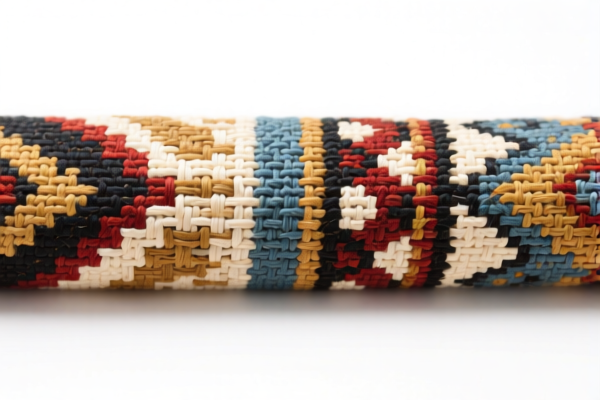


AI分析
🌟 Fine Animal Hair Woven Fabric (Blended with Synthetic Fiber): Lightweight Tapestry Fabric
🌐 HS Code & Tariff Guide | 2026 U.S. Trade Compliance Deep Dive | Strategic Import Planning
📌 One Product, One HS Code — Precision Classification for Zero Risk
✅ Product Name: Fine Animal Hair Woven Fabric (Blended with Synthetic Fiber) – Lightweight Tapestry Fabric
✅ Target Market: United States (US)
✅ Origin: China (CN)
✅ Effective Date: November 10, 2025 (Updated Tariff Regime)
📦 1. HS Code Classification Breakdown (2026 U.S. Harmonized Tariff Schedule)
| HS Code | Product Description | Key Characteristics | Tax Implication |
|---|---|---|---|
5112.20.20.00 |
Fine animal hair with synthetic fibers, lightweight tapestry fabric | - Weave: Tapestry (decorative, often flat-woven) - Fiber blend: Fine animal hair (e.g., cashmere, mohair) + synthetic fibers (e.g., polyester, acrylic) - Weight: Lightweight (typically < 200 g/m²) - Use: Decorative wall hangings, art textiles, interior design |
🔴 High-Tariff Category |
⚠️ Critical Clarification:
- This fabric must not be confused with general woven fabrics or upholstery textiles.
- The "lightweight tapestry" nature and fine animal hair content are decisive for classification.
- Synthetic fiber blending triggers higher tariff exposure under U.S. trade enforcement.
💰 2. 2026 U.S. Tariff Structure – Full Tax Breakdown (China-Origin)
🎯 HS Code: 5112.20.20.00 — Fine Animal Hair & Synthetic Fiber, Lightweight Tapestry Fabric
| Tax Component | Rate | Legal Basis | Explanation |
|---|---|---|---|
| Base Duty (General Tariff) | 7.0% | HTSUS 5112.20.20.00 | Standard duty for this category |
| Section 301 (USITC) Additional Duty | +25.0% | USITC Footnote 9903.88.01 | Imposed under Section 301 of the Trade Act of 1974 for unfair trade practices by China |
| Section 122 (IEEPA) Emergency Tariff | +10.0% | IEEPA: 9903.01.24 | Enacted under the International Emergency Economic Powers Act (IEEPA) to counter national security risks from Chinese imports |
| Total Effective Duty | 42.0% | — | Sum of all three components |
📌 Tax Calculation Example:
- CIF Value: $10,000
- Total Duty = $10,000 × 42.0% = $4,200
- No de minimis exemption applies (denied under IEEPA) → No relief for small shipments
📚 3. Legal & Regulatory Basis – Why These Taxes Apply
🔹 Section 301 (USITC) – 25% Additional Duty
- Authority: U.S. Trade Representative (USTR) – Section 301 of the Trade Act of 1974
- Scope: Targets China’s unfair trade practices, including IP theft, forced technology transfer, and industrial subsidies
- Relevance: Applies to all textile products originating from China that fall under the 301 List, including blended animal hair fabrics
- HTSUS Reference:
FOOTNOTE 9903.88.01— "Additional U.S. tariff on goods from China"
🔹 Section 122 (IEEPA) – 10% Emergency Tariff
- Authority: International Emergency Economic Powers Act (IEEPA), 50 U.S.C. § 1701
- Trigger: National security concerns related to over-reliance on Chinese manufacturing
- Scope: Applies to all imports from China in categories deemed sensitive, including textiles with animal hair content
- HTSUS Reference:
IEEPA: 9903.01.24— "Emergency tariff on certain goods from China"
✅ Combined Impact:
- 42.0% total duty is not arbitrary — it is legally mandated under two separate U.S. statutes. - No appeal or waiver is available unless the product is reclassified under a different HS code.
🛠️ 4. Customs Clearance Best Practices (Proven Strategies)
✅ 1. Documentation Checklist (Mandatory for Smooth Release)
| Document | Required? | Why It Matters |
|---|---|---|
| ✅ Commercial Invoice | ✔️ | Must clearly state: "Lightweight Tapestry Fabric, Blended with Fine Animal Hair & Synthetic Fiber" |
| ✅ Packing List | ✔️ | Include weight, dimensions, and quantity per roll |
| ✅ Bill of Lading / Air Waybill | ✔️ | Proof of shipment and carrier |
| ✅ Product Photos (Front, Back, Edge, Label) | ✔️ | Critical for customs inspection and fiber verification |
| ✅ Material Composition Certificate | ✔️ | Confirm % of animal hair vs. synthetic fibers |
| ✅ Origin Certificate (Form A or CO) | ✔️ | Required for tariff claims; if not from China, may qualify for lower rates |
| ✅ Third-Party Lab Report (e.g., HPLC, FTIR) | ✔️ | Optional but recommended to prove fiber blend accuracy |
✅ 2.申报技巧(申报口诀)
🔥 “名称精准,纤维明示,原产清晰,税率可控!”
(Name precise, fiber declared, origin clear, duty managed!)
| Scenario | Correct HS Code | Common Mistake | Risk |
|---|---|---|---|
| Blended fine animal hair + synthetic fiber, lightweight tapestry | 5112.20.20.00 |
Misclassified as 5801.90.20.90 (looped fabric) |
Higher tax risk |
| Fabric with 80% synthetic, 20% animal hair | 5112.20.20.00 |
Reported as "synthetic fabric" | Rejection or audit |
| Fabric from Vietnam/Mexico (non-China origin) | Apply for IEEPA exemption | Treated as China-origin | 42% duty applied |
✅ 3. Special Cases & Mitigation Strategies
| Situation | Recommended Action |
|---|---|
| Product from Vietnam, Thailand, or Mexico | Apply for IEEPA exemption under 9903.01.24 — Duty drops to 7.0% (base only) |
| Product with >50% synthetic fiber | Still falls under 5112.20.20.00 — no reduction |
| Artistic/Non-Commercial Use (e.g., museum display) | Submit non-commercial import form — may qualify for duty waiver |
| Bulk Export to U.S. with Future Duty Risk | Request Advance Ruling (AR) from U.S. Customs — binding legal certainty |
🌍 5. Global Market Comparison (2026)
| Country | Recommended HS Code | Base Tariff | Additional Duties | Notes |
|---|---|---|---|---|
| 🇺🇸 United States (China Origin) | 5112.20.20.00 |
7.0% | +25% +10% = 42.0% | High risk; no de minimis |
| 🇨🇳 China | 5112.20.20.00 |
5.0% | 0% | No 301/IEEPA tariffs |
| 🇪🇺 European Union | 5112.20.20.00 |
0% (if CE certified) | 0% | No additional duties |
| 🇦🇺 Australia | 5112.20.20.00 |
5.0% | 0% | No 301/IEEPA |
| 🇯🇵 Japan | 5112.20.20.00 |
0% | 0% | No additional tariffs |
📌 Insight:
- U.S. is the only market imposing 42% duty on this product from China. - Vietnam/Mexico-origin products can avoid the 35% extra — consider shifting production.
🚨 6. Common Mistakes & Penalties (Avoid These Traps!)
❌ Mistake 1: Misclassifying as 5801.90.20.90 (looped fabric)
👉 Result: Incorrect tariff, audit, back duty + penalties
❌ Mistake 2: Not declaring animal hair content
👉 Result: Customs may reclassify under higher-risk category → 42% duty applied retroactively
❌ Mistake 3: Using “decorative fabric” as generic name
👉 Result: No traceability → delayed clearance or seizure
❌ Mistake 4: Shipment under $800 (de minimis threshold)
👉 Result: No relief — IEEPA blocks de minimis for China-origin textiles
✅ Correct Declaration Example:
"Lightweight Tapestry Fabric, 100% Woven, 30% Fine Animal Hair (Mohair), 70% Polyester, 180 g/m², for Decorative Wall Hanging, Origin: China"
🎯 7. Final Verdict: Smart Strategy for Success
🔹 HS Code:
5112.20.20.00— Correct & Mandatory
🔹 Total Duty: 42.0% — Not negotiable
🔹 No De Minimis Relief — Even small shipments pay full duty
🔹 China-Origin = High Risk — Plan accordingly
📌 Pro Tips for Importers
🚀 Action Plan: 1. Verify fiber composition with lab test before shipment
2. Use Vietnam/Mexico as production hub to avoid 35% extra tariff
3. Apply for Advance Ruling (AR) to lock in classification
4. Partner with a U.S. customs broker experienced in textile compliance
5. Use ERP/Trade Compliance Software to track HS Code & tariff changes
📣 Don’t Get Caught Off Guard!
💼 Your product’s HS Code isn’t just a number — it’s your duty liability, your risk exposure, and your export strategy.
✨ Professional Compliance Starts Here
💼 Accurate Classification = Lower Risk, Faster Clearance, Higher Profit
📞 Contact a U.S. Customs Broker Today
🚀 Secure Your Supply Chain. Avoid 42% Tariff. Win in Global Trade.
用户评价
关于 HS 编码归类
协调制度(HS)是由世界海关组织(WCO)制定的国际贸易商品分类标准。全球 200 多个国家采用 HS 系统作为海关关税、贸易统计和进出口监管的基础。
每个 HS 编码遵循以下层级结构:
- 章(2 位)——商品大类(例如:第 84 章:机器和机械设备)
- 品目(4 位)——章内的更具体分类
- 子目(6 位)——国际通用细分,所有 WCO 成员国统一使用
- 本国细分(8-10 位)——各国自行扩展的细分编码,如美国 HTSUS 10 位编码
正确的 HS 编码归类对于顺利通关、准确缴纳关税和遵守贸易法规至关重要。错误归类可能导致海关延误、多缴关税或罚款。
从CN进口到US时,适用的关税税率可能包括:
- 最惠国(MFN)税率——适用于 WTO 成员国的标准关税税率
- 普通税率——适用于无贸易协定国家
- 贸易救济关税——附加关税,如 301 条款(反倾销)、232 条款(国家安全)或反补贴税
本页内容仅供参考。如需正式归类,请咨询当地海关或持牌报关代理。