Fine Animal Hair Woven Fabric (Blended with Synthetic Fiber): Lightweight Tapestry Fabric
CN → US| HS Code | Tariff Rate | Origin | Destination | Doc |
|---|---|---|---|---|
| 5112202000 | 42.0% | CN | US | Official Doc |
| 5112302000 | 42.0% | CN | US | Official Doc |
| 5111201000 | 42.0% | CN | US | Official Doc |
| 5111301000 | 42.0% | CN | US | Official Doc |
| 5801100000 | 35.0% | CN | US | Official Doc |
| 5801902090 | 37.7% | CN | US | Official Doc |
Product Images
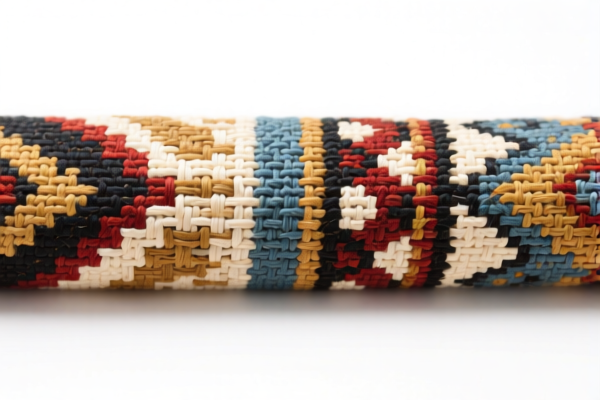


AI Analysis
🌟 Fine Animal Hair Woven Fabric (Blended with Synthetic Fiber): Lightweight Tapestry Fabric
🌐 HS Code & Tariff Guide | 2026 U.S. Trade Compliance Deep Dive | Strategic Import Planning
📌 One Product, One HS Code — Precision Classification for Zero Risk
✅ Product Name: Fine Animal Hair Woven Fabric (Blended with Synthetic Fiber) – Lightweight Tapestry Fabric
✅ Target Market: United States (US)
✅ Origin: China (CN)
✅ Effective Date: November 10, 2025 (Updated Tariff Regime)
📦 1. HS Code Classification Breakdown (2026 U.S. Harmonized Tariff Schedule)
| HS Code | Product Description | Key Characteristics | Tax Implication |
|---|---|---|---|
5112.20.20.00 |
Fine animal hair with synthetic fibers, lightweight tapestry fabric | - Weave: Tapestry (decorative, often flat-woven) - Fiber blend: Fine animal hair (e.g., cashmere, mohair) + synthetic fibers (e.g., polyester, acrylic) - Weight: Lightweight (typically < 200 g/m²) - Use: Decorative wall hangings, art textiles, interior design |
🔴 High-Tariff Category |
⚠️ Critical Clarification:
- This fabric must not be confused with general woven fabrics or upholstery textiles.
- The "lightweight tapestry" nature and fine animal hair content are decisive for classification.
- Synthetic fiber blending triggers higher tariff exposure under U.S. trade enforcement.
💰 2. 2026 U.S. Tariff Structure – Full Tax Breakdown (China-Origin)
🎯 HS Code: 5112.20.20.00 — Fine Animal Hair & Synthetic Fiber, Lightweight Tapestry Fabric
| Tax Component | Rate | Legal Basis | Explanation |
|---|---|---|---|
| Base Duty (General Tariff) | 7.0% | HTSUS 5112.20.20.00 | Standard duty for this category |
| Section 301 (USITC) Additional Duty | +25.0% | USITC Footnote 9903.88.01 | Imposed under Section 301 of the Trade Act of 1974 for unfair trade practices by China |
| Section 122 (IEEPA) Emergency Tariff | +10.0% | IEEPA: 9903.01.24 | Enacted under the International Emergency Economic Powers Act (IEEPA) to counter national security risks from Chinese imports |
| Total Effective Duty | 42.0% | — | Sum of all three components |
📌 Tax Calculation Example:
- CIF Value: $10,000
- Total Duty = $10,000 × 42.0% = $4,200
- No de minimis exemption applies (denied under IEEPA) → No relief for small shipments
📚 3. Legal & Regulatory Basis – Why These Taxes Apply
🔹 Section 301 (USITC) – 25% Additional Duty
- Authority: U.S. Trade Representative (USTR) – Section 301 of the Trade Act of 1974
- Scope: Targets China’s unfair trade practices, including IP theft, forced technology transfer, and industrial subsidies
- Relevance: Applies to all textile products originating from China that fall under the 301 List, including blended animal hair fabrics
- HTSUS Reference:
FOOTNOTE 9903.88.01— "Additional U.S. tariff on goods from China"
🔹 Section 122 (IEEPA) – 10% Emergency Tariff
- Authority: International Emergency Economic Powers Act (IEEPA), 50 U.S.C. § 1701
- Trigger: National security concerns related to over-reliance on Chinese manufacturing
- Scope: Applies to all imports from China in categories deemed sensitive, including textiles with animal hair content
- HTSUS Reference:
IEEPA: 9903.01.24— "Emergency tariff on certain goods from China"
✅ Combined Impact:
- 42.0% total duty is not arbitrary — it is legally mandated under two separate U.S. statutes. - No appeal or waiver is available unless the product is reclassified under a different HS code.
🛠️ 4. Customs Clearance Best Practices (Proven Strategies)
✅ 1. Documentation Checklist (Mandatory for Smooth Release)
| Document | Required? | Why It Matters |
|---|---|---|
| ✅ Commercial Invoice | ✔️ | Must clearly state: "Lightweight Tapestry Fabric, Blended with Fine Animal Hair & Synthetic Fiber" |
| ✅ Packing List | ✔️ | Include weight, dimensions, and quantity per roll |
| ✅ Bill of Lading / Air Waybill | ✔️ | Proof of shipment and carrier |
| ✅ Product Photos (Front, Back, Edge, Label) | ✔️ | Critical for customs inspection and fiber verification |
| ✅ Material Composition Certificate | ✔️ | Confirm % of animal hair vs. synthetic fibers |
| ✅ Origin Certificate (Form A or CO) | ✔️ | Required for tariff claims; if not from China, may qualify for lower rates |
| ✅ Third-Party Lab Report (e.g., HPLC, FTIR) | ✔️ | Optional but recommended to prove fiber blend accuracy |
✅ 2.申报技巧(申报口诀)
🔥 “名称精准,纤维明示,原产清晰,税率可控!”
(Name precise, fiber declared, origin clear, duty managed!)
| Scenario | Correct HS Code | Common Mistake | Risk |
|---|---|---|---|
| Blended fine animal hair + synthetic fiber, lightweight tapestry | 5112.20.20.00 |
Misclassified as 5801.90.20.90 (looped fabric) |
Higher tax risk |
| Fabric with 80% synthetic, 20% animal hair | 5112.20.20.00 |
Reported as "synthetic fabric" | Rejection or audit |
| Fabric from Vietnam/Mexico (non-China origin) | Apply for IEEPA exemption | Treated as China-origin | 42% duty applied |
✅ 3. Special Cases & Mitigation Strategies
| Situation | Recommended Action |
|---|---|
| Product from Vietnam, Thailand, or Mexico | Apply for IEEPA exemption under 9903.01.24 — Duty drops to 7.0% (base only) |
| Product with >50% synthetic fiber | Still falls under 5112.20.20.00 — no reduction |
| Artistic/Non-Commercial Use (e.g., museum display) | Submit non-commercial import form — may qualify for duty waiver |
| Bulk Export to U.S. with Future Duty Risk | Request Advance Ruling (AR) from U.S. Customs — binding legal certainty |
🌍 5. Global Market Comparison (2026)
| Country | Recommended HS Code | Base Tariff | Additional Duties | Notes |
|---|---|---|---|---|
| 🇺🇸 United States (China Origin) | 5112.20.20.00 |
7.0% | +25% +10% = 42.0% | High risk; no de minimis |
| 🇨🇳 China | 5112.20.20.00 |
5.0% | 0% | No 301/IEEPA tariffs |
| 🇪🇺 European Union | 5112.20.20.00 |
0% (if CE certified) | 0% | No additional duties |
| 🇦🇺 Australia | 5112.20.20.00 |
5.0% | 0% | No 301/IEEPA |
| 🇯🇵 Japan | 5112.20.20.00 |
0% | 0% | No additional tariffs |
📌 Insight:
- U.S. is the only market imposing 42% duty on this product from China. - Vietnam/Mexico-origin products can avoid the 35% extra — consider shifting production.
🚨 6. Common Mistakes & Penalties (Avoid These Traps!)
❌ Mistake 1: Misclassifying as 5801.90.20.90 (looped fabric)
👉 Result: Incorrect tariff, audit, back duty + penalties
❌ Mistake 2: Not declaring animal hair content
👉 Result: Customs may reclassify under higher-risk category → 42% duty applied retroactively
❌ Mistake 3: Using “decorative fabric” as generic name
👉 Result: No traceability → delayed clearance or seizure
❌ Mistake 4: Shipment under $800 (de minimis threshold)
👉 Result: No relief — IEEPA blocks de minimis for China-origin textiles
✅ Correct Declaration Example:
"Lightweight Tapestry Fabric, 100% Woven, 30% Fine Animal Hair (Mohair), 70% Polyester, 180 g/m², for Decorative Wall Hanging, Origin: China"
🎯 7. Final Verdict: Smart Strategy for Success
🔹 HS Code:
5112.20.20.00— Correct & Mandatory
🔹 Total Duty: 42.0% — Not negotiable
🔹 No De Minimis Relief — Even small shipments pay full duty
🔹 China-Origin = High Risk — Plan accordingly
📌 Pro Tips for Importers
🚀 Action Plan: 1. Verify fiber composition with lab test before shipment
2. Use Vietnam/Mexico as production hub to avoid 35% extra tariff
3. Apply for Advance Ruling (AR) to lock in classification
4. Partner with a U.S. customs broker experienced in textile compliance
5. Use ERP/Trade Compliance Software to track HS Code & tariff changes
📣 Don’t Get Caught Off Guard!
💼 Your product’s HS Code isn’t just a number — it’s your duty liability, your risk exposure, and your export strategy.
✨ Professional Compliance Starts Here
💼 Accurate Classification = Lower Risk, Faster Clearance, Higher Profit
📞 Contact a U.S. Customs Broker Today
🚀 Secure Your Supply Chain. Avoid 42% Tariff. Win in Global Trade.
Customer Reviews
About HS Code Classification
The Harmonized System (HS) is an internationally standardized nomenclature developed by the World Customs Organization (WCO) to classify traded products. Over 200 countries use the HS system as the basis for customs tariffs, trade statistics, and import/export regulations.
Each HS code follows a hierarchical structure:
- Chapter (2 digits) — Broad category of goods (e.g., Chapter 84: Machinery and Mechanical Appliances)
- Heading (4 digits) — More specific grouping within the chapter
- Subheading (6 digits) — Internationally standardized breakdown, used by all WCO member countries
- National subdivisions (8-10 digits) — Country-specific extensions for further classification, such as US HTSUS 10-digit codes
Correct HS code classification is essential for smooth customs clearance, accurate duty payment, and compliance with trade regulations. Misclassification can lead to customs delays, overpayment of duties, or penalties.
When importing from CN to US, the applicable tariff rates may include:
- Most-Favored-Nation (MFN) rate — The standard duty rate applied to WTO members
- General rate — Applied to countries without trade agreements
- Trade remedy duties — Additional tariffs such as Section 301 (anti-dumping), Section 232 (national security), or countervailing duties
The information provided on this page is for reference purposes only. For official classification, please consult with your local customs authority or a licensed customs broker.