Finger Cot
CN → US| HS编码 | 关税税率 | 原产国 | 目的国 | 文档 |
|---|---|---|---|---|
| 4015195100 | 49.0% | CN | US | 官方文档 |
| 4015191150 | 38.0% | CN | US | 官方文档 |
| 9018390020 | 10.0% | CN | US | 官方文档 |
| 9018390050 | 10.0% | CN | US | 官方文档 |
| 3926201050 | 10.0% | CN | US | 官方文档 |
商品图片
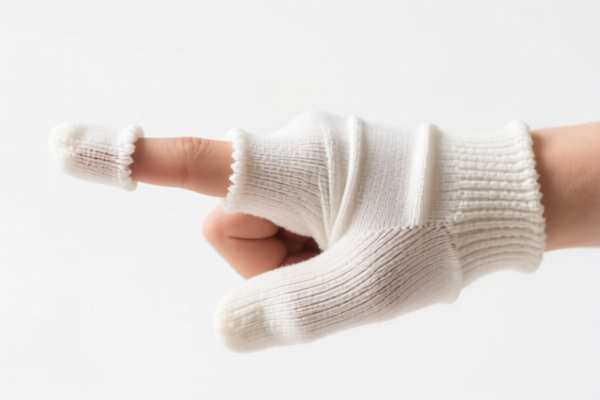
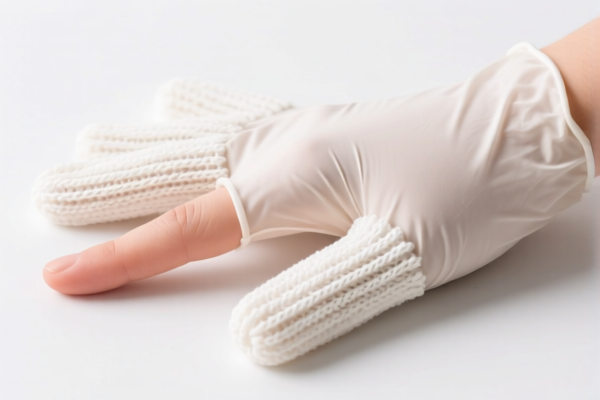
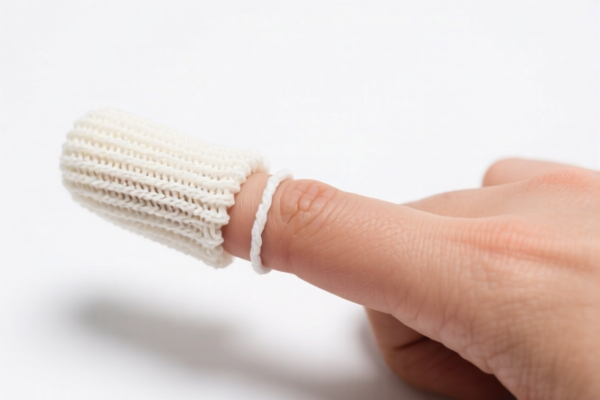
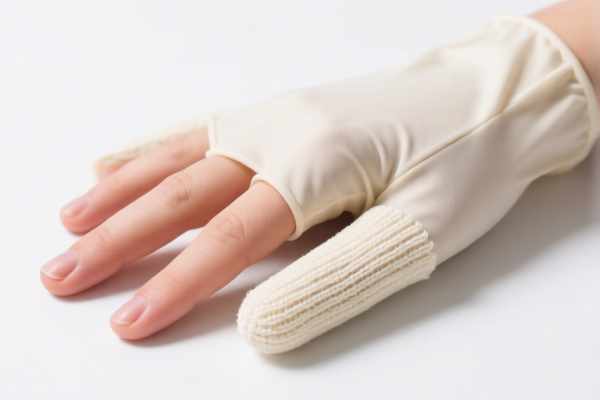
AI分析
🖐️ Finger Cot (Rubber/Medical Finger Cots)
🌐 HS Code Reference & Customs Clearance Guide | 2026 Latest Tariff Analysis | Professional Classification Strategy
📌 I. Product Definition & Classification: What Exactly is a "Finger Cot"?
A Finger Cot is a protective covering worn on the tip of a finger. In international trade, its classification depends entirely on its material, intended use, and construction. It is not a single HS code product but varies across chapters 40 (Rubber), 90 (Medical Apparatus), and 39 (Plastics).
Key Distinctions:
Non-Vulcanized/Natural Rubber Finger Cots (Non-Medical): Often used for grip, protection in industrial settings, or as costume accessories → Chapter 40.
Vulcanized Rubber Finger Cots: Often classified as "Gloves" or "Handwear" depending on specificity → Chapter 40.
Medical/Surgical Finger Cots: Used in healthcare, surgery, or diagnostics → Chapter 90.
Plastic/Polymer Finger Cots: Made from PVC, Nitrile, or other polymers (not natural rubber) → Chapter 39.
⚠️ Critical Classification Point:
- If it’s medical (sterile, surgical use) → 9018.39.00
- If it’s vulcanized rubber (general use, gloves category) → 4015.19.51.00
- If it’s non-vulcanized/natural rubber (accessory/general) → 4015.19.11.50
- If it’s plastic/polymer (not rubber) → 3926.20.10.50
📦 II. HS Code Classification Details (2026 Latest Tariff Authority Cross-Reference)
| HS Code | Product Description | Application Scenario | Tax Rate (Total) |
|---|---|---|---|
4015.19.51.00 |
Vulcanized rubber finger cots, classified under gloves/finger cots/handwear | Industrial protection, non-medical rubber gloves, general handwear | 49.0% |
4015.19.11.50 |
Rubber finger cots, classified as other accessories to apparel (gloves/handwear) | Non-vulcanized rubber, costume accessories, general non-medical use | 38.0% |
9018.39.00.20 |
Medical rubber finger cots, extension of catheters, probes, and similar products | Surgical procedures, medical diagnostics, sterile environments | 10.0% |
9018.39.00.50 |
Medical rubber finger cots, other medical apparatus category | General medical use, non-specific medical protective gear | 10.0% |
3926.20.10.50 |
Polymer-impregnated finger cots, other gloves/boxing gloves/handwear | Plastic-based, non-rubber polymers, industrial non-medical use | 10.0% |
🔍 Key Reminder:
- Medical vs. Non-Medical is the biggest differentiator. Medical finger cots enjoy 0% Base Tariff but are subject to 10% IEEPA surcharge.
- Vulcanized Rubber finger cots are treated as gloves and face high tariffs (49%).
- Non-Vulcanized Rubber finger cots are treated as apparel accessories and face moderate-high tariffs (38%).
- Plastic/Polymer finger cots are not rubber and fall under Chapter 39, with 0% Base Tariff + 10% IEEPA.
💰 III. 2026 Latest Tariff Rate Breakdown (Including Additional Taxes & Policy Surcharges)
✅ Applicable Country: United States (US)
✅ Origin: China (CN)
✅ Effective Date: November 10, 2025 (and subsequent imports)
🎯 1. 4015.19.51.00 —— Vulcanized Rubber Finger Cots (Gloves Category)
| Item | Detail |
|---|---|
| Base Tariff | 14.0% (ad valorem) |
| Section 301 Additional Tariff | +25.0% (USITC Footnote) |
| IEEPA Surcharge | +10.0% (Against China/HK products, effective Nov 10, 2025) |
| Total Tariff Rate | 49.0% |
| Tax Calculation | CIF Value × 49% |
| De Minimis Exemption | ❌ Not Eligible (deny_de_minimis) |
| Legal Basis Path | IEEPA:9903.01.25 → IEEPA:9903.01.24 → USITC:4015.19.51.00 → FOOTNOTE:9903.88.01 |
📌 Explanation:
- This code treats finger cots as gloves, which are heavily taxed under Section 301.
- 49% is a very high tariff, significantly impacting profitability.
- No de minimis exemption applies; all shipments are subject to full taxation.
🎯 2. 4015.19.11.50 —— Rubber Finger Cots (Apparel Accessory Category)
| Item | Detail |
|---|---|
| Base Tariff | 3.0% (ad valorem) |
| Section 301 Additional Tariff | +25.0% |
| IEEPA Surcharge | +10.0% |
| Total Tariff Rate | 38.0% |
| Tax Calculation | CIF Value × 38% |
| De Minimis Exemption | ❌ Not Eligible (deny_de_minimis) |
| Legal Basis Path | IEEPA:9903.01.25 → IEEPA:9903.01.24 → USITC:4015.19.11.50 → FOOTNOTE:9903.88.01 |
📌 Note:
- Lower base tariff (3%) than gloves, but still heavily impacted by Section 301 (25%) and IEEPA (10%).
- Suitable for non-medical, non-vulcanized rubber finger cots.
- 38% is still high, but better than 49%.
🎯 3. 9018.39.00.20 & 9018.39.00.50 —— Medical Rubber Finger Cots
| Item | Detail |
|---|---|
| Base Tariff | 0.0% (ad valorem) |
| Section 301 Additional Tariff | 0.0% |
| IEEPA Surcharge | +10.0% |
| Total Tariff Rate | 10.0% |
| Tax Calculation | CIF Value × 10% |
| De Minimis Exemption | ❌ Not Eligible (deny_de_minimis) |
| Legal Basis Path | IEEPA:9903.01.25 → IEEPA:9903.01.24 → USITC:9018.39.00.20/50 → FOOTNOTE:9903.88.01 |
📌 Critical Advantage:
- Medical finger cots have 0% Base Tariff and 0% Section 301 tariff.
- Only the 10% IEEPA surcharge applies.
- 10% is the lowest possible rate among all classifications.
- Must be certified as medical/surgical (sterile, FDA-cleared, or equivalent).
🎯 4. 3926.20.10.50 —— Polymer-Impregnated Finger Cots (Plastic Category)
| Item | Detail |
|---|---|
| Base Tariff | 0.0% (ad valorem) |
| Section 301 Additional Tariff | 0.0% |
| IEEPA Surcharge | +10.0% |
| Total Tariff Rate | 10.0% |
| Tax Calculation | CIF Value × 10% |
| De Minimis Exemption | ❌ Not Eligible (deny_de_minimis) |
| Legal Basis Path | IEEPA:9903.01.25 → IEEPA:9903.01.24 → USITC:3926.20.10.50 → FOOTNOTE:9903.88.01 |
📌 Note:
- Plastic/Polymer finger cots (e.g., PVC, Nitrile) are not rubber, so they fall under Chapter 39.
- Same low tariff structure as medical rubber finger cots: 10% total.
- Must clearly state material composition (e.g., "PVC," "Nitrile," "Latex-Free") to avoid misclassification as rubber.
🛠️ IV. Customs Clearance Practical Advice (Avoid Pitfalls)
✅ 1. Required Documentation Checklist (Mandatory)
| Document | Required | Explanation |
|---|---|---|
| ✅ Product Specification Sheet | ✔️ | Must specify material (Rubber vs. Plastic), vulcanization status, and medical/non-medical use. |
| ✅ Material Composition Certificate | ✔️ | Proves whether it’s natural rubber, synthetic rubber, or plastic. |
| ✅ Medical Certification (if applicable) | ✔️ | FDA registration, CE Mark, or sterile package indication for 9018 codes. |
| ✅ Product Photos (Clear Labeling) | ✔️ | Show packaging, labeling, and any medical symbols. |
| ✅ Commercial Invoice | ✔️ | Must accurately describe product as "Medical Finger Cot" or "Industrial Finger Cot." |
| ✅ Packing List | ✔️ | Details quantity, weight, and package structure. |
| ✅ Certificate of Origin (CO) | ✔️ | For origin verification; if from non-China origin, IEEPA may not apply. |
✅ 2. Declaration Tips (Key Mnemonics)
🔥 "Material Defines Code, Medical Wins, Rubber Loses!"
| Scenario | Correct Declaration | Incorrect Practice |
|---|---|---|
| Medical Sterile Finger Cots | 9018.39.00.20 or 9018.39.00.50 |
Misdeclare as rubber gloves → 49% tax |
| Industrial Non-Medical Rubber Cots | 4015.19.51.00 or 4015.19.11.50 |
Claim medical status without certification → Penalty & Retention |
| Plastic/Nitrile Finger Cots | 3926.20.10.50 |
Declare as "Rubber" → Misclassification, Delay, Penalty |
| Costumes/Accessories (Rubber) | 4015.19.11.50 |
Declare as medical → 10% vs 38% confusion |
✅ 3. Special Circumstances Handling
| Situation | Recommendation |
|---|---|
| OEM Custom Finger Cots | Provide design specs + material sheet to avoid ambiguity. |
| Mixed Materials | If a product has rubber + plastic parts, declare the primary material or split as separate HS codes. |
| Sterile vs. Non-Sterile | Sterile = Medical (9018); Non-Sterile = Industrial (4015 or 3926). |
| Re-export from Vietnam/Mexico | If re-exported, ensure origin documentation proves non-China origin to avoid IEEPA surcharge. |
🌍 V. Global Customs Clearance Comparison (2026 Latest)
| Country/Region | Recommended HS Code | Tariff | Certification | Notes |
|---|---|---|---|---|
| 🇺🇸 USA | 9018.39.00.20 (Medical) |
10% | FDA/CE | 4015 codes face 38-49% |
| 🇨🇳 China | 4015.19.51.00 |
5-14% | N/A | Lower tariffs, no IEEPA |
| 🇪🇺 EU | 9018.39.00 |
0-6.5% | CE/MDR | No Section 301/IEEPA |
| 🇦🇺 Australia | 9018.39.00 |
5% | TGA | No extra surcharges |
| 🇯🇵 Japan | 9018.39.00 |
0-3% | PMDA | Favorable for medical |
📌 Conclusion:
- USA is the only market with high surcharges (IEEPA 10% + Section 301 for non-medical).
- Medical classification (9018) offers the lowest tariff (10%) in the US.
- Non-medical rubber (4015) faces high tariffs (38-49%).
- Plastic/Polymer (3926) also benefits from low tariffs (10%) if correctly classified.
📌 VI. Common Mistakes & Pitfalls (Lessons Learned)
❌ Mistake 1: Declaring medical finger cots as "Rubber Gloves"
👉 Consequence: Tax jumps from 10% to 49% → Massive cost increase.
❌ Mistake 2: Claiming plastic finger cots are "Rubber"
👉 Consequence: Misclassification, customs inspection, delays, potential fines.
❌ Mistake 3: Failing to prove medical status for 9018 codes
👉 Consequence: Customs reclassifies as industrial (4015), imposing 38-49% tax + penalties.
❌ Mistake 4: Using vague descriptions like "Finger Protective Cover"
👉 Consequence: Customs ambiguous classification, highest possible rate applied.
✅ Correct Practice:
"Sterile Surgical Finger Cots, Natural Rubber, Latex-Free, FDA Cleared, Model XYZ"
OR
"Industrial Nitrile Finger Cots, Non-Sterile, Plastic-Based, Model ABC"
🎯 VII. Conclusion: Precise Classification Saves Money!
🎯 Remember the Mnemonic:
🔹 "Medical Wins (10%), Rubber Loses (38-49%), Plastic Saves (10%)!"
🔹 "HS Code Determines Destiny, Tariff Differs by 39%, Declaration Steps Save Thousands!"
📌 Pro Tip:
If your finger cots are originating from Vietnam, Mexico, Thailand, or Malaysia, you may avoid the 10% IEEPA surcharge, reducing the total tariff to 0% for medical/plastic or 25% for non-medical rubber.
Recommend applying for an Advance Ruling before shipment to avoid clearance risks.
📣 Immediate Action:
📞 Contact a Professional Customs Broker + Provide Product Specs + Apply for HS Code Advance Ruling
🚀 Ensure your finger cots clear customs smoothly, efficiently, and profitably!
✨ Professional Customs Clearance Starts with Accurate Classification!
💼 Every Cent of Your Cost Deserves Precise Calculation!
用户评价
关于 HS 编码归类
协调制度(HS)是由世界海关组织(WCO)制定的国际贸易商品分类标准。全球 200 多个国家采用 HS 系统作为海关关税、贸易统计和进出口监管的基础。
每个 HS 编码遵循以下层级结构:
- 章(2 位)——商品大类(例如:第 84 章:机器和机械设备)
- 品目(4 位)——章内的更具体分类
- 子目(6 位)——国际通用细分,所有 WCO 成员国统一使用
- 本国细分(8-10 位)——各国自行扩展的细分编码,如美国 HTSUS 10 位编码
正确的 HS 编码归类对于顺利通关、准确缴纳关税和遵守贸易法规至关重要。错误归类可能导致海关延误、多缴关税或罚款。
从CN进口到US时,适用的关税税率可能包括:
- 最惠国(MFN)税率——适用于 WTO 成员国的标准关税税率
- 普通税率——适用于无贸易协定国家
- 贸易救济关税——附加关税,如 301 条款(反倾销)、232 条款(国家安全)或反补贴税
本页内容仅供参考。如需正式归类,请咨询当地海关或持牌报关代理。