Finger Cot
CN → US| HS Code | Tariff Rate | Origin | Destination | Doc |
|---|---|---|---|---|
| 4015195100 | 49.0% | CN | US | Official Doc |
| 4015191150 | 38.0% | CN | US | Official Doc |
| 9018390020 | 10.0% | CN | US | Official Doc |
| 9018390050 | 10.0% | CN | US | Official Doc |
| 3926201050 | 10.0% | CN | US | Official Doc |
Product Images
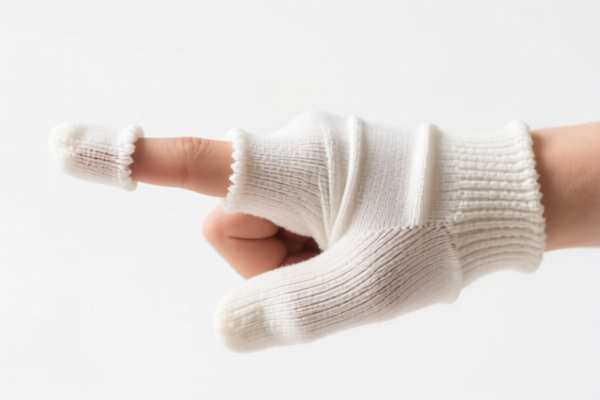
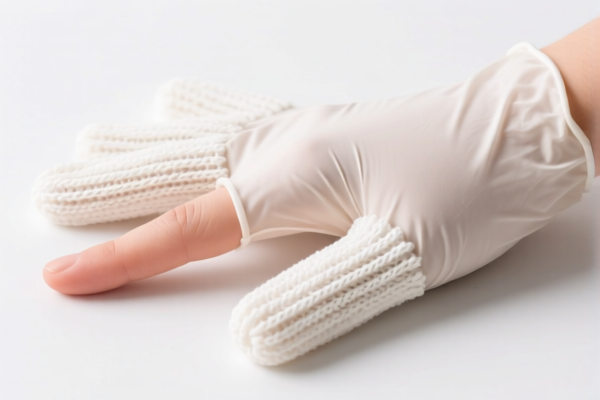
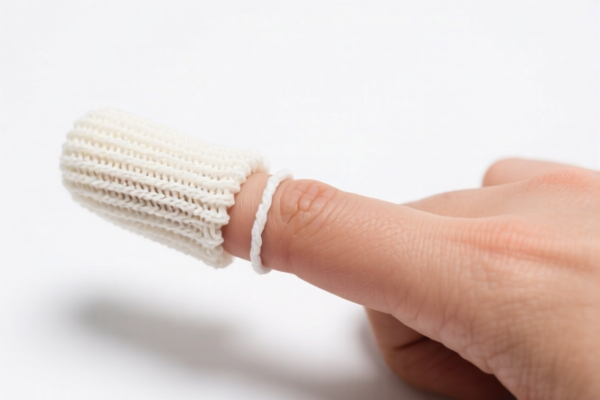
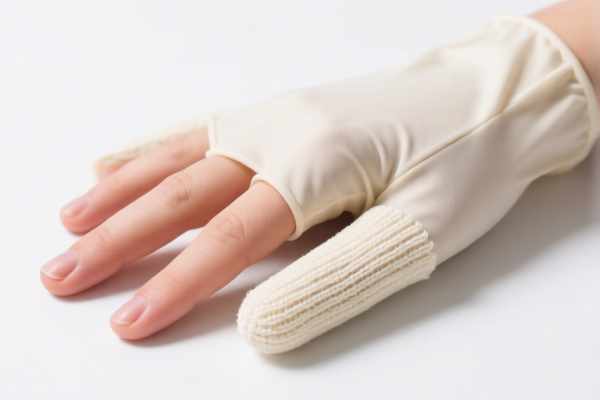
AI Analysis
🖐️ Finger Cot (Rubber/Medical Finger Cots)
🌐 HS Code Reference & Customs Clearance Guide | 2026 Latest Tariff Analysis | Professional Classification Strategy
📌 I. Product Definition & Classification: What Exactly is a "Finger Cot"?
A Finger Cot is a protective covering worn on the tip of a finger. In international trade, its classification depends entirely on its material, intended use, and construction. It is not a single HS code product but varies across chapters 40 (Rubber), 90 (Medical Apparatus), and 39 (Plastics).
Key Distinctions:
Non-Vulcanized/Natural Rubber Finger Cots (Non-Medical): Often used for grip, protection in industrial settings, or as costume accessories → Chapter 40.
Vulcanized Rubber Finger Cots: Often classified as "Gloves" or "Handwear" depending on specificity → Chapter 40.
Medical/Surgical Finger Cots: Used in healthcare, surgery, or diagnostics → Chapter 90.
Plastic/Polymer Finger Cots: Made from PVC, Nitrile, or other polymers (not natural rubber) → Chapter 39.
⚠️ Critical Classification Point:
- If it’s medical (sterile, surgical use) → 9018.39.00
- If it’s vulcanized rubber (general use, gloves category) → 4015.19.51.00
- If it’s non-vulcanized/natural rubber (accessory/general) → 4015.19.11.50
- If it’s plastic/polymer (not rubber) → 3926.20.10.50
📦 II. HS Code Classification Details (2026 Latest Tariff Authority Cross-Reference)
| HS Code | Product Description | Application Scenario | Tax Rate (Total) |
|---|---|---|---|
4015.19.51.00 |
Vulcanized rubber finger cots, classified under gloves/finger cots/handwear | Industrial protection, non-medical rubber gloves, general handwear | 49.0% |
4015.19.11.50 |
Rubber finger cots, classified as other accessories to apparel (gloves/handwear) | Non-vulcanized rubber, costume accessories, general non-medical use | 38.0% |
9018.39.00.20 |
Medical rubber finger cots, extension of catheters, probes, and similar products | Surgical procedures, medical diagnostics, sterile environments | 10.0% |
9018.39.00.50 |
Medical rubber finger cots, other medical apparatus category | General medical use, non-specific medical protective gear | 10.0% |
3926.20.10.50 |
Polymer-impregnated finger cots, other gloves/boxing gloves/handwear | Plastic-based, non-rubber polymers, industrial non-medical use | 10.0% |
🔍 Key Reminder:
- Medical vs. Non-Medical is the biggest differentiator. Medical finger cots enjoy 0% Base Tariff but are subject to 10% IEEPA surcharge.
- Vulcanized Rubber finger cots are treated as gloves and face high tariffs (49%).
- Non-Vulcanized Rubber finger cots are treated as apparel accessories and face moderate-high tariffs (38%).
- Plastic/Polymer finger cots are not rubber and fall under Chapter 39, with 0% Base Tariff + 10% IEEPA.
💰 III. 2026 Latest Tariff Rate Breakdown (Including Additional Taxes & Policy Surcharges)
✅ Applicable Country: United States (US)
✅ Origin: China (CN)
✅ Effective Date: November 10, 2025 (and subsequent imports)
🎯 1. 4015.19.51.00 —— Vulcanized Rubber Finger Cots (Gloves Category)
| Item | Detail |
|---|---|
| Base Tariff | 14.0% (ad valorem) |
| Section 301 Additional Tariff | +25.0% (USITC Footnote) |
| IEEPA Surcharge | +10.0% (Against China/HK products, effective Nov 10, 2025) |
| Total Tariff Rate | 49.0% |
| Tax Calculation | CIF Value × 49% |
| De Minimis Exemption | ❌ Not Eligible (deny_de_minimis) |
| Legal Basis Path | IEEPA:9903.01.25 → IEEPA:9903.01.24 → USITC:4015.19.51.00 → FOOTNOTE:9903.88.01 |
📌 Explanation:
- This code treats finger cots as gloves, which are heavily taxed under Section 301.
- 49% is a very high tariff, significantly impacting profitability.
- No de minimis exemption applies; all shipments are subject to full taxation.
🎯 2. 4015.19.11.50 —— Rubber Finger Cots (Apparel Accessory Category)
| Item | Detail |
|---|---|
| Base Tariff | 3.0% (ad valorem) |
| Section 301 Additional Tariff | +25.0% |
| IEEPA Surcharge | +10.0% |
| Total Tariff Rate | 38.0% |
| Tax Calculation | CIF Value × 38% |
| De Minimis Exemption | ❌ Not Eligible (deny_de_minimis) |
| Legal Basis Path | IEEPA:9903.01.25 → IEEPA:9903.01.24 → USITC:4015.19.11.50 → FOOTNOTE:9903.88.01 |
📌 Note:
- Lower base tariff (3%) than gloves, but still heavily impacted by Section 301 (25%) and IEEPA (10%).
- Suitable for non-medical, non-vulcanized rubber finger cots.
- 38% is still high, but better than 49%.
🎯 3. 9018.39.00.20 & 9018.39.00.50 —— Medical Rubber Finger Cots
| Item | Detail |
|---|---|
| Base Tariff | 0.0% (ad valorem) |
| Section 301 Additional Tariff | 0.0% |
| IEEPA Surcharge | +10.0% |
| Total Tariff Rate | 10.0% |
| Tax Calculation | CIF Value × 10% |
| De Minimis Exemption | ❌ Not Eligible (deny_de_minimis) |
| Legal Basis Path | IEEPA:9903.01.25 → IEEPA:9903.01.24 → USITC:9018.39.00.20/50 → FOOTNOTE:9903.88.01 |
📌 Critical Advantage:
- Medical finger cots have 0% Base Tariff and 0% Section 301 tariff.
- Only the 10% IEEPA surcharge applies.
- 10% is the lowest possible rate among all classifications.
- Must be certified as medical/surgical (sterile, FDA-cleared, or equivalent).
🎯 4. 3926.20.10.50 —— Polymer-Impregnated Finger Cots (Plastic Category)
| Item | Detail |
|---|---|
| Base Tariff | 0.0% (ad valorem) |
| Section 301 Additional Tariff | 0.0% |
| IEEPA Surcharge | +10.0% |
| Total Tariff Rate | 10.0% |
| Tax Calculation | CIF Value × 10% |
| De Minimis Exemption | ❌ Not Eligible (deny_de_minimis) |
| Legal Basis Path | IEEPA:9903.01.25 → IEEPA:9903.01.24 → USITC:3926.20.10.50 → FOOTNOTE:9903.88.01 |
📌 Note:
- Plastic/Polymer finger cots (e.g., PVC, Nitrile) are not rubber, so they fall under Chapter 39.
- Same low tariff structure as medical rubber finger cots: 10% total.
- Must clearly state material composition (e.g., "PVC," "Nitrile," "Latex-Free") to avoid misclassification as rubber.
🛠️ IV. Customs Clearance Practical Advice (Avoid Pitfalls)
✅ 1. Required Documentation Checklist (Mandatory)
| Document | Required | Explanation |
|---|---|---|
| ✅ Product Specification Sheet | ✔️ | Must specify material (Rubber vs. Plastic), vulcanization status, and medical/non-medical use. |
| ✅ Material Composition Certificate | ✔️ | Proves whether it’s natural rubber, synthetic rubber, or plastic. |
| ✅ Medical Certification (if applicable) | ✔️ | FDA registration, CE Mark, or sterile package indication for 9018 codes. |
| ✅ Product Photos (Clear Labeling) | ✔️ | Show packaging, labeling, and any medical symbols. |
| ✅ Commercial Invoice | ✔️ | Must accurately describe product as "Medical Finger Cot" or "Industrial Finger Cot." |
| ✅ Packing List | ✔️ | Details quantity, weight, and package structure. |
| ✅ Certificate of Origin (CO) | ✔️ | For origin verification; if from non-China origin, IEEPA may not apply. |
✅ 2. Declaration Tips (Key Mnemonics)
🔥 "Material Defines Code, Medical Wins, Rubber Loses!"
| Scenario | Correct Declaration | Incorrect Practice |
|---|---|---|
| Medical Sterile Finger Cots | 9018.39.00.20 or 9018.39.00.50 |
Misdeclare as rubber gloves → 49% tax |
| Industrial Non-Medical Rubber Cots | 4015.19.51.00 or 4015.19.11.50 |
Claim medical status without certification → Penalty & Retention |
| Plastic/Nitrile Finger Cots | 3926.20.10.50 |
Declare as "Rubber" → Misclassification, Delay, Penalty |
| Costumes/Accessories (Rubber) | 4015.19.11.50 |
Declare as medical → 10% vs 38% confusion |
✅ 3. Special Circumstances Handling
| Situation | Recommendation |
|---|---|
| OEM Custom Finger Cots | Provide design specs + material sheet to avoid ambiguity. |
| Mixed Materials | If a product has rubber + plastic parts, declare the primary material or split as separate HS codes. |
| Sterile vs. Non-Sterile | Sterile = Medical (9018); Non-Sterile = Industrial (4015 or 3926). |
| Re-export from Vietnam/Mexico | If re-exported, ensure origin documentation proves non-China origin to avoid IEEPA surcharge. |
🌍 V. Global Customs Clearance Comparison (2026 Latest)
| Country/Region | Recommended HS Code | Tariff | Certification | Notes |
|---|---|---|---|---|
| 🇺🇸 USA | 9018.39.00.20 (Medical) |
10% | FDA/CE | 4015 codes face 38-49% |
| 🇨🇳 China | 4015.19.51.00 |
5-14% | N/A | Lower tariffs, no IEEPA |
| 🇪🇺 EU | 9018.39.00 |
0-6.5% | CE/MDR | No Section 301/IEEPA |
| 🇦🇺 Australia | 9018.39.00 |
5% | TGA | No extra surcharges |
| 🇯🇵 Japan | 9018.39.00 |
0-3% | PMDA | Favorable for medical |
📌 Conclusion:
- USA is the only market with high surcharges (IEEPA 10% + Section 301 for non-medical).
- Medical classification (9018) offers the lowest tariff (10%) in the US.
- Non-medical rubber (4015) faces high tariffs (38-49%).
- Plastic/Polymer (3926) also benefits from low tariffs (10%) if correctly classified.
📌 VI. Common Mistakes & Pitfalls (Lessons Learned)
❌ Mistake 1: Declaring medical finger cots as "Rubber Gloves"
👉 Consequence: Tax jumps from 10% to 49% → Massive cost increase.
❌ Mistake 2: Claiming plastic finger cots are "Rubber"
👉 Consequence: Misclassification, customs inspection, delays, potential fines.
❌ Mistake 3: Failing to prove medical status for 9018 codes
👉 Consequence: Customs reclassifies as industrial (4015), imposing 38-49% tax + penalties.
❌ Mistake 4: Using vague descriptions like "Finger Protective Cover"
👉 Consequence: Customs ambiguous classification, highest possible rate applied.
✅ Correct Practice:
"Sterile Surgical Finger Cots, Natural Rubber, Latex-Free, FDA Cleared, Model XYZ"
OR
"Industrial Nitrile Finger Cots, Non-Sterile, Plastic-Based, Model ABC"
🎯 VII. Conclusion: Precise Classification Saves Money!
🎯 Remember the Mnemonic:
🔹 "Medical Wins (10%), Rubber Loses (38-49%), Plastic Saves (10%)!"
🔹 "HS Code Determines Destiny, Tariff Differs by 39%, Declaration Steps Save Thousands!"
📌 Pro Tip:
If your finger cots are originating from Vietnam, Mexico, Thailand, or Malaysia, you may avoid the 10% IEEPA surcharge, reducing the total tariff to 0% for medical/plastic or 25% for non-medical rubber.
Recommend applying for an Advance Ruling before shipment to avoid clearance risks.
📣 Immediate Action:
📞 Contact a Professional Customs Broker + Provide Product Specs + Apply for HS Code Advance Ruling
🚀 Ensure your finger cots clear customs smoothly, efficiently, and profitably!
✨ Professional Customs Clearance Starts with Accurate Classification!
💼 Every Cent of Your Cost Deserves Precise Calculation!
Customer Reviews
About HS Code Classification
The Harmonized System (HS) is an internationally standardized nomenclature developed by the World Customs Organization (WCO) to classify traded products. Over 200 countries use the HS system as the basis for customs tariffs, trade statistics, and import/export regulations.
Each HS code follows a hierarchical structure:
- Chapter (2 digits) — Broad category of goods (e.g., Chapter 84: Machinery and Mechanical Appliances)
- Heading (4 digits) — More specific grouping within the chapter
- Subheading (6 digits) — Internationally standardized breakdown, used by all WCO member countries
- National subdivisions (8-10 digits) — Country-specific extensions for further classification, such as US HTSUS 10-digit codes
Correct HS code classification is essential for smooth customs clearance, accurate duty payment, and compliance with trade regulations. Misclassification can lead to customs delays, overpayment of duties, or penalties.
When importing from CN to US, the applicable tariff rates may include:
- Most-Favored-Nation (MFN) rate — The standard duty rate applied to WTO members
- General rate — Applied to countries without trade agreements
- Trade remedy duties — Additional tariffs such as Section 301 (anti-dumping), Section 232 (national security), or countervailing duties
The information provided on this page is for reference purposes only. For official classification, please consult with your local customs authority or a licensed customs broker.