Fir and Spruce Logs
CN → US| HS编码 | 关税税率 | 原产国 | 目的国 | 文档 |
|---|---|---|---|---|
| 4401110000 | 35.0% | CN | US | 官方文档 |
| 4407120059 | 35.0% | CN | US | 官方文档 |
| 4407120020 | 35.0% | CN | US | 官方文档 |
| 4403240135 | 35.0% | CN | US | 官方文档 |
| 4403230135 | 35.0% | CN | US | 官方文档 |
商品图片
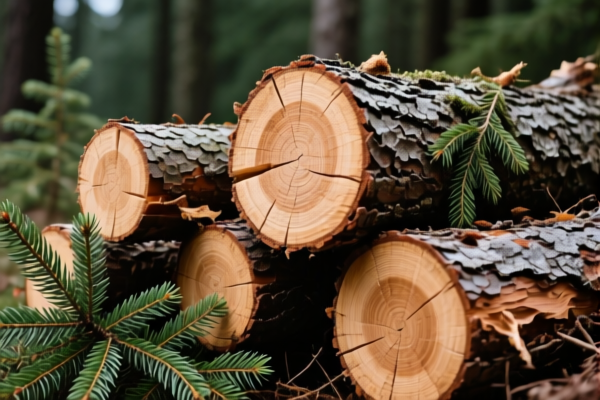
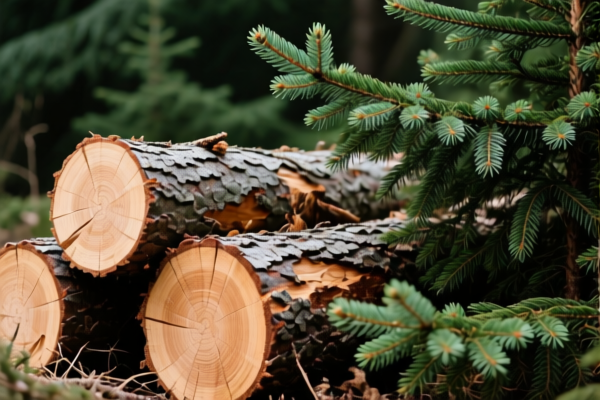
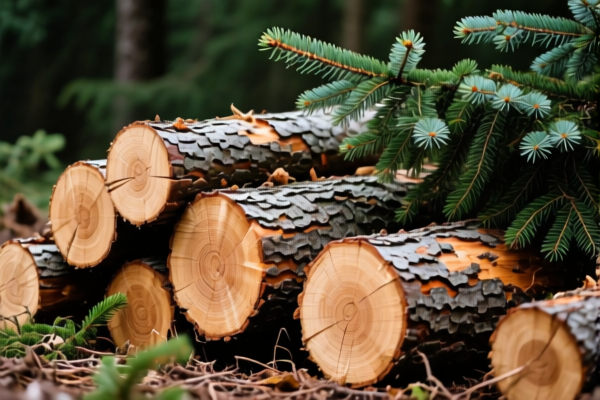
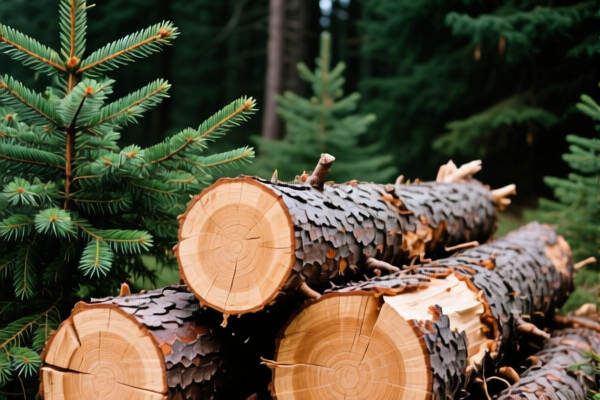
AI分析
🌲 Fir and Spruce Logs (Softwood Rough-Sawn & Raw Timber)
🌐 HS Code Reference & Customs Clearance Guide | 2026 Latest Tariff Analysis | Professional Entry Strategies
📌 I. Product Definition & Classification: What Exactly Are "Fir and Spruce Logs"?
Fir and Spruce logs represent a critical category of softwood timber in international trade. These products are primarily derived from coniferous trees (Abies and Picea genera) and are typically imported in two distinct physical states: 1. Raw Logs (Unprocessed): Trees that have been felled, stripped of branches, and optionally delimbed/squared, retaining their natural cylindrical shape or roughly hewn form. 2. Sawn/Laminated Timber (Processed): Wood that has been longitudinally sawn, chipped, or planed, often referred to as "rough-sawn" timber, used for further manufacturing.
⚠️ Key Distinction Point:
- If the wood is in its natural, raw, or simply delimbed state → Classified under Chapter 44 Heading 4403 or 4401 (Fuel logs).
- If the wood has been sawed, chipped, or planed longitudinally → Classified under Chapter 44 Heading 4407.
- Note: The data provided highlights that both raw logs and processed sawn timber for Fir/Spruce face identical high tariff structures due to their origin (likely China, given the "Section 301/122" references).
📦 II. HS Code Classification Details (2026 Latest Tariff Authority Alignment)
| HS Code | Product Description | Physical Form | Material Specification |
|---|---|---|---|
4401.11.00.00 |
Fir and Spruce Logs for Fuel | Raw logs, round wood | Coniferous (Fir/Spruce), fit for fuel/biomass |
4407.12.00.59 |
Other Coniferous Wood, Sawn/Chipped | Longitudinally sawn or chipped | Other than specific listed types; general softwood |
4407.12.00.20 |
Fir and Spruce Wood, Sawn/Chipped | Longitudinally sawn, planed, or chipped | Specifically Fir (Abies) or Spruce (Picea) |
4403.24.01.35 |
Fir and Spruce Logs, Treated/Uncured | Raw logs, unseasoned | Raw timber, strictly Fir/Spruce, untreated or simply preserved |
4403.23.01.35 |
Fir and Spruce Logs, Other | Raw logs, unseasoned | Raw timber, strictly Fir/Spruce, other than those in 4403.24 |
🔍 Critical Insight:
- The classification hinges on processing depth:4403/4401= Raw/Unprocessed;4407= Sawn/Processed.
- Despite different physical states, all listed codes attract the same high tax burden due to trade policy measures (Section 301/122).
💰 III. 2026 Latest Tariff Rate Breakdown (Including Surtaxes & Policy Levies)
✅ Applicable Country: United States (US)
✅ Origin: China (CN) (Inferred from "122 Clause" and 25% + 10% structure)
✅ Effective Date: 2025/2026 Period (Post-Trade War Levies)
🎯 1. 4401.11.00.00 — Fir and Spruce Logs (Fuel/Raw)
| Item | Content |
|---|---|
| Base Duty Rate | 0.0% (Ad Valorem) |
| Section 301 Surcharge | +25% (Under USITC Footnote 9903.88.01 / Section 301 List 4B) |
| Section 122 (IEEPA) Surcharge | +10% (Under International Emergency Economic Powers Act, targeting specific Chinese goods) |
| Total Effective Rate | 35.0% |
| Calculation Basis | CIF Value × 35% |
| De Minimis Exemption | ❌ Not Eligible (Deny De Minimis applies to these tariff codes) |
| Legal Authority Path | Section 301:9903.88.01 → IEEPA:122 → USITC:4401.11.00.00 → FOOTNOTE:9903.88.01 |
📌 Explanation:
- The 25% is the standard "Section 301" tariff on Chinese wood products.
- The 10% is an additional levy under "Section 122" or similar emergency powers often applied to strategic raw materials.
- Total 35% is extremely high for raw timber, significantly impacting profit margins.
🎯 2. 4407.12.00.59 & 4407.12.00.20 — Sawn Fir/Spruce Timber
| Item | Content |
|---|---|
| Base Duty Rate | 0.0% |
| Section 301 Surcharge | +25% |
| Section 122 (IEEPA) Surcharge | +10% |
| Total Effective Rate | 35.0% |
| Calculation Basis | CIF Value × 35% |
| De Minimis Exemption | ❌ Not Eligible |
| Legal Authority Path | Section 301:9903.88.01 → IEEPA:122 → USITC:4407.12.00.xx |
📌 Note:
- Whether classified as specific Fir/Spruce (...20) or "Other" coniferous wood (...59), the tax rate is identical.
- Processing the wood into sawn timber does not reduce the tariff burden.
🎯 3. 4403.24.01.35 & 4403.23.01.35 — Raw Fir/Spruce Logs (Structural/Lumber Grade)
| Item | Content |
|---|---|
| Base Duty Rate | 0.0% |
| Section 301 Surcharge | +25% |
| Section 122 (IEEPA) Surcharge | +10% |
| Total Effective Rate | 35.0% |
| Calculation Basis | CIF Value × 35% |
| De Minimis Exemption | ❌ Not Eligible |
| Legal Authority Path | Section 301:9903.88.01 → IEEPA:122 → USITC:4403.23/24.xx |
📌 Explanation:
- These codes cover high-quality raw logs intended for construction or furniture making.
- Despite being "raw," they are subject to the same punitive tariffs as processed goods.
🛠️ IV. Customs Clearance Practical Advice (Operational Pitfall Avoidance)
✅ 1. Required Documentation Checklist (Non-Negotiable)
| Document | Mandatory? | Purpose |
|---|---|---|
| ✅ Commercial Invoice | ✔️ | Must clearly state "Fir and Spruce Logs/Timber" and CIF value. |
| ✅ Packing List | ✔️ | Detail weight, volume (CBM), and number of bundles. |
| ✅ Phytosanitary Certificate | ✔️ | Critical for Wood. Issued by origin country's plant protection agency to prove freedom from pests/diseases. |
| ✅ Fumigation Certificate | ✔️ | If required by destination country standards (ISPM 15). |
| ✅ Species Declaration | ✔️ | Explicitly state "Fir (Abies)" or "Spruce (Picea)" to avoid misclassification penalties. |
| ✅ Certificate of Origin (CO) | ✔️ | Needed to verify Chinese origin (triggers the 35% tax). |
✅ 2. Declaration Strategies (Key Mnemonics)
🔥 “Real Species, Real Form, Tax is 35%!”
| Scenario | Correct Declaration | Common Mistake |
|---|---|---|
| Raw Round Logs | 4403.24.01.35 or 4403.23.01.35 |
Misdeclare as "Fuel Wood" (4401.11) if intended for construction |
| Sawn Planks/Beams | 4407.12.00.20 |
Misdeclare as "Plywood" (4412) → Different tax, different rules |
| Fuel Grade Wood | 4401.11.00.00 |
Misdeclare as "Construction Lumber" → Higher scrutiny |
| Mixed Conifers | 4407.12.00.59 |
Claiming specific Fir/Spruce when mixed → Penalties |
📌 Pro Tip:
- Ensure the Scientific Name (e.g., Abies nordmanniana, Picea abies) is included in the description if possible.
- Do not split shipments to avoid de minimis thresholds; wood products are explicitly excluded from small-package exemptions.
✅ 3. Special Handling Cases
| Situation | Recommended Action |
|---|---|
| Bark Presence | If bark is present, ensure it meets ISPM 15 standards to avoid rejection at border. |
| Moisture Content | Declare "Green" (unseasoned) or "Seasoned" accurately. 4403 typically implies green/raw. |
| Origin Tracing | Provide chain-of-custody documents to prove origin. Mislabeling origin to avoid taxes is fraud. |
| End-Use Verification | Clarify if for fuel, construction, or paper pulp. Misuse can lead to anti-dumping duties. |
🌍 V. Global Market Comparison (2026 Update)
| Country/Region | Recommended HS Code | Base Duty | Additional Levies (China Origin) | Total Effective Rate |
|---|---|---|---|---|
| 🇺🇸 USA | 4403/4407/4401 series |
0% | 35% (25% Sec 301 + 10% Sec 122) | 35% |
| 🇨🇳 China | 4403/4407 series |
5-10% | None | 5-10% |
| 🇪🇺 EU | 4403/4407 series |
0-3% | None (if合规) | 0-3% |
| 🇯🇵 Japan | 4403/4407 series |
3-5% | None | 3-5% |
📌 Conclusion:
- The US market is uniquely expensive for Chinese Fir/Spruce timber due to layered tariffs.
- Strategy: If importing to the US, consider sourcing from non-tariff countries (e.g., Canada, Russia, or Southeast Asia) or verify if any specific exemptions apply (though unlikely for general lumber).
📌 VI. Common Errors & Pitfall Guide (Lessons Learned)
❌ Error 1: Declaring "Spruce Logs" as "General Softwood" (4407.12.00.99)
👉 Consequence: While the tax rate might be similar, incorrect species declaration can lead to phytosanitary inspections and delays if the specific pest risks for Fir/Spruce are not documented.
❌ Error 2: Splitting a shipment into multiple small packages to claim De Minimis
👉 Consequence: Strictly prohibited. Wood products are explicitly excluded from Section 321 (De Minimis) exemptions for Chinese goods. Result: Seizure, fines, and forced return.
❌ Error 3: Confusing "Fuel Logs" (4401) with "Construction Logs" (4403)
👉 Consequence: If goods are intended for construction but declared as fuel, customs may classify them as 4403 and apply the same 35% tax, but the misdeclaration flag could lead to audits.
✅ Correct Practice:
"Fir Logs, Unseasoned, Bark On/Off, ISPM 15 Fumigated, CIF $X,HS:4403.24.01.35"
🎯 VII. Conclusion: Precision in Classification Saves Money
🎯 Remember the Rule:
🔹 "Fir and Spruce, Raw or Sawn, 35% is the Cost."
🔹 "No De Minimis for Wood, Split or Not."
🔹 "Phytosanitary Cert is Key, Without It, You're Stuck."
📌 Small Tip:
If you are importing large volumes, consider applying for an HTSUS Exclusion under Section 301 (if available for specific wood products) or work with a licensed customs broker to request a Binding Ruling from US CBP. This provides legal certainty before shipping.
📣 Immediate Action:
📞 Engage a licensed customs broker specializing in forest products.
📄 Ensure Phytosanitary Certificates are issued by the official agency of the country of origin.
🚀 Accurate Classification = Smooth Clearance = Cost Control.
✨ Professional Clearance Starts with Accurate HS Codes!
💼 Your Timber, Your Compliance, Your Profit Margin.
用户评价
关于 HS 编码归类
协调制度(HS)是由世界海关组织(WCO)制定的国际贸易商品分类标准。全球 200 多个国家采用 HS 系统作为海关关税、贸易统计和进出口监管的基础。
每个 HS 编码遵循以下层级结构:
- 章(2 位)——商品大类(例如:第 84 章:机器和机械设备)
- 品目(4 位)——章内的更具体分类
- 子目(6 位)——国际通用细分,所有 WCO 成员国统一使用
- 本国细分(8-10 位)——各国自行扩展的细分编码,如美国 HTSUS 10 位编码
正确的 HS 编码归类对于顺利通关、准确缴纳关税和遵守贸易法规至关重要。错误归类可能导致海关延误、多缴关税或罚款。
从CN进口到US时,适用的关税税率可能包括:
- 最惠国(MFN)税率——适用于 WTO 成员国的标准关税税率
- 普通税率——适用于无贸易协定国家
- 贸易救济关税——附加关税,如 301 条款(反倾销)、232 条款(国家安全)或反补贴税
本页内容仅供参考。如需正式归类,请咨询当地海关或持牌报关代理。