Fir and Spruce Logs
CN → US| HS Code | Tariff Rate | Origin | Destination | Doc |
|---|---|---|---|---|
| 4401110000 | 35.0% | CN | US | Official Doc |
| 4407120059 | 35.0% | CN | US | Official Doc |
| 4407120020 | 35.0% | CN | US | Official Doc |
| 4403240135 | 35.0% | CN | US | Official Doc |
| 4403230135 | 35.0% | CN | US | Official Doc |
Product Images
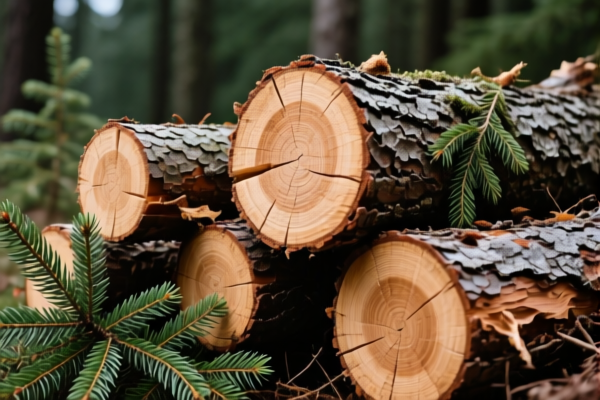
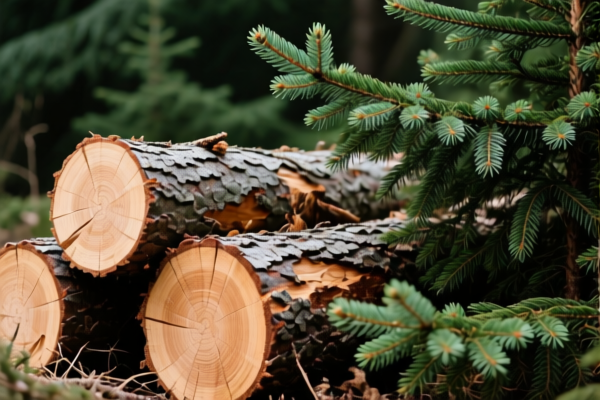
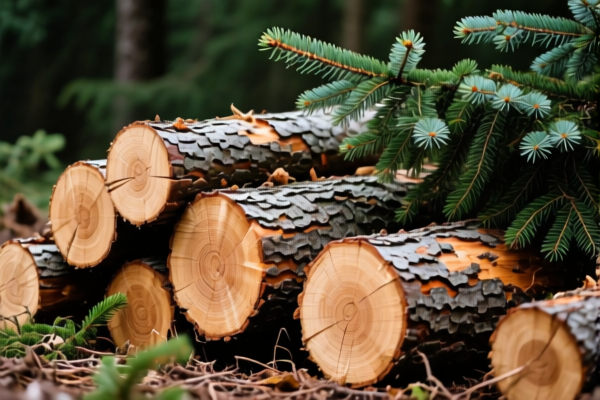
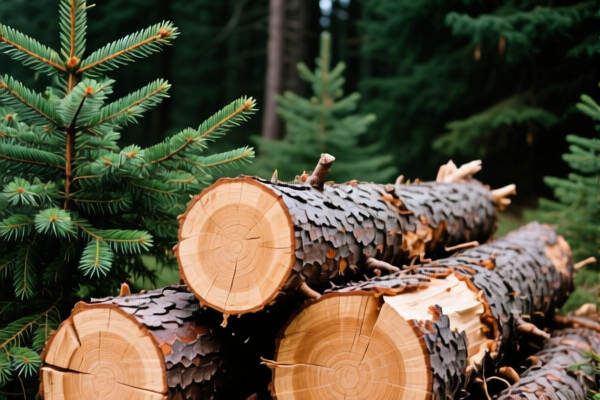
AI Analysis
🌲 Fir and Spruce Logs (Softwood Rough-Sawn & Raw Timber)
🌐 HS Code Reference & Customs Clearance Guide | 2026 Latest Tariff Analysis | Professional Entry Strategies
📌 I. Product Definition & Classification: What Exactly Are "Fir and Spruce Logs"?
Fir and Spruce logs represent a critical category of softwood timber in international trade. These products are primarily derived from coniferous trees (Abies and Picea genera) and are typically imported in two distinct physical states: 1. Raw Logs (Unprocessed): Trees that have been felled, stripped of branches, and optionally delimbed/squared, retaining their natural cylindrical shape or roughly hewn form. 2. Sawn/Laminated Timber (Processed): Wood that has been longitudinally sawn, chipped, or planed, often referred to as "rough-sawn" timber, used for further manufacturing.
⚠️ Key Distinction Point:
- If the wood is in its natural, raw, or simply delimbed state → Classified under Chapter 44 Heading 4403 or 4401 (Fuel logs).
- If the wood has been sawed, chipped, or planed longitudinally → Classified under Chapter 44 Heading 4407.
- Note: The data provided highlights that both raw logs and processed sawn timber for Fir/Spruce face identical high tariff structures due to their origin (likely China, given the "Section 301/122" references).
📦 II. HS Code Classification Details (2026 Latest Tariff Authority Alignment)
| HS Code | Product Description | Physical Form | Material Specification |
|---|---|---|---|
4401.11.00.00 |
Fir and Spruce Logs for Fuel | Raw logs, round wood | Coniferous (Fir/Spruce), fit for fuel/biomass |
4407.12.00.59 |
Other Coniferous Wood, Sawn/Chipped | Longitudinally sawn or chipped | Other than specific listed types; general softwood |
4407.12.00.20 |
Fir and Spruce Wood, Sawn/Chipped | Longitudinally sawn, planed, or chipped | Specifically Fir (Abies) or Spruce (Picea) |
4403.24.01.35 |
Fir and Spruce Logs, Treated/Uncured | Raw logs, unseasoned | Raw timber, strictly Fir/Spruce, untreated or simply preserved |
4403.23.01.35 |
Fir and Spruce Logs, Other | Raw logs, unseasoned | Raw timber, strictly Fir/Spruce, other than those in 4403.24 |
🔍 Critical Insight:
- The classification hinges on processing depth:4403/4401= Raw/Unprocessed;4407= Sawn/Processed.
- Despite different physical states, all listed codes attract the same high tax burden due to trade policy measures (Section 301/122).
💰 III. 2026 Latest Tariff Rate Breakdown (Including Surtaxes & Policy Levies)
✅ Applicable Country: United States (US)
✅ Origin: China (CN) (Inferred from "122 Clause" and 25% + 10% structure)
✅ Effective Date: 2025/2026 Period (Post-Trade War Levies)
🎯 1. 4401.11.00.00 — Fir and Spruce Logs (Fuel/Raw)
| Item | Content |
|---|---|
| Base Duty Rate | 0.0% (Ad Valorem) |
| Section 301 Surcharge | +25% (Under USITC Footnote 9903.88.01 / Section 301 List 4B) |
| Section 122 (IEEPA) Surcharge | +10% (Under International Emergency Economic Powers Act, targeting specific Chinese goods) |
| Total Effective Rate | 35.0% |
| Calculation Basis | CIF Value × 35% |
| De Minimis Exemption | ❌ Not Eligible (Deny De Minimis applies to these tariff codes) |
| Legal Authority Path | Section 301:9903.88.01 → IEEPA:122 → USITC:4401.11.00.00 → FOOTNOTE:9903.88.01 |
📌 Explanation:
- The 25% is the standard "Section 301" tariff on Chinese wood products.
- The 10% is an additional levy under "Section 122" or similar emergency powers often applied to strategic raw materials.
- Total 35% is extremely high for raw timber, significantly impacting profit margins.
🎯 2. 4407.12.00.59 & 4407.12.00.20 — Sawn Fir/Spruce Timber
| Item | Content |
|---|---|
| Base Duty Rate | 0.0% |
| Section 301 Surcharge | +25% |
| Section 122 (IEEPA) Surcharge | +10% |
| Total Effective Rate | 35.0% |
| Calculation Basis | CIF Value × 35% |
| De Minimis Exemption | ❌ Not Eligible |
| Legal Authority Path | Section 301:9903.88.01 → IEEPA:122 → USITC:4407.12.00.xx |
📌 Note:
- Whether classified as specific Fir/Spruce (...20) or "Other" coniferous wood (...59), the tax rate is identical.
- Processing the wood into sawn timber does not reduce the tariff burden.
🎯 3. 4403.24.01.35 & 4403.23.01.35 — Raw Fir/Spruce Logs (Structural/Lumber Grade)
| Item | Content |
|---|---|
| Base Duty Rate | 0.0% |
| Section 301 Surcharge | +25% |
| Section 122 (IEEPA) Surcharge | +10% |
| Total Effective Rate | 35.0% |
| Calculation Basis | CIF Value × 35% |
| De Minimis Exemption | ❌ Not Eligible |
| Legal Authority Path | Section 301:9903.88.01 → IEEPA:122 → USITC:4403.23/24.xx |
📌 Explanation:
- These codes cover high-quality raw logs intended for construction or furniture making.
- Despite being "raw," they are subject to the same punitive tariffs as processed goods.
🛠️ IV. Customs Clearance Practical Advice (Operational Pitfall Avoidance)
✅ 1. Required Documentation Checklist (Non-Negotiable)
| Document | Mandatory? | Purpose |
|---|---|---|
| ✅ Commercial Invoice | ✔️ | Must clearly state "Fir and Spruce Logs/Timber" and CIF value. |
| ✅ Packing List | ✔️ | Detail weight, volume (CBM), and number of bundles. |
| ✅ Phytosanitary Certificate | ✔️ | Critical for Wood. Issued by origin country's plant protection agency to prove freedom from pests/diseases. |
| ✅ Fumigation Certificate | ✔️ | If required by destination country standards (ISPM 15). |
| ✅ Species Declaration | ✔️ | Explicitly state "Fir (Abies)" or "Spruce (Picea)" to avoid misclassification penalties. |
| ✅ Certificate of Origin (CO) | ✔️ | Needed to verify Chinese origin (triggers the 35% tax). |
✅ 2. Declaration Strategies (Key Mnemonics)
🔥 “Real Species, Real Form, Tax is 35%!”
| Scenario | Correct Declaration | Common Mistake |
|---|---|---|
| Raw Round Logs | 4403.24.01.35 or 4403.23.01.35 |
Misdeclare as "Fuel Wood" (4401.11) if intended for construction |
| Sawn Planks/Beams | 4407.12.00.20 |
Misdeclare as "Plywood" (4412) → Different tax, different rules |
| Fuel Grade Wood | 4401.11.00.00 |
Misdeclare as "Construction Lumber" → Higher scrutiny |
| Mixed Conifers | 4407.12.00.59 |
Claiming specific Fir/Spruce when mixed → Penalties |
📌 Pro Tip:
- Ensure the Scientific Name (e.g., Abies nordmanniana, Picea abies) is included in the description if possible.
- Do not split shipments to avoid de minimis thresholds; wood products are explicitly excluded from small-package exemptions.
✅ 3. Special Handling Cases
| Situation | Recommended Action |
|---|---|
| Bark Presence | If bark is present, ensure it meets ISPM 15 standards to avoid rejection at border. |
| Moisture Content | Declare "Green" (unseasoned) or "Seasoned" accurately. 4403 typically implies green/raw. |
| Origin Tracing | Provide chain-of-custody documents to prove origin. Mislabeling origin to avoid taxes is fraud. |
| End-Use Verification | Clarify if for fuel, construction, or paper pulp. Misuse can lead to anti-dumping duties. |
🌍 V. Global Market Comparison (2026 Update)
| Country/Region | Recommended HS Code | Base Duty | Additional Levies (China Origin) | Total Effective Rate |
|---|---|---|---|---|
| 🇺🇸 USA | 4403/4407/4401 series |
0% | 35% (25% Sec 301 + 10% Sec 122) | 35% |
| 🇨🇳 China | 4403/4407 series |
5-10% | None | 5-10% |
| 🇪🇺 EU | 4403/4407 series |
0-3% | None (if合规) | 0-3% |
| 🇯🇵 Japan | 4403/4407 series |
3-5% | None | 3-5% |
📌 Conclusion:
- The US market is uniquely expensive for Chinese Fir/Spruce timber due to layered tariffs.
- Strategy: If importing to the US, consider sourcing from non-tariff countries (e.g., Canada, Russia, or Southeast Asia) or verify if any specific exemptions apply (though unlikely for general lumber).
📌 VI. Common Errors & Pitfall Guide (Lessons Learned)
❌ Error 1: Declaring "Spruce Logs" as "General Softwood" (4407.12.00.99)
👉 Consequence: While the tax rate might be similar, incorrect species declaration can lead to phytosanitary inspections and delays if the specific pest risks for Fir/Spruce are not documented.
❌ Error 2: Splitting a shipment into multiple small packages to claim De Minimis
👉 Consequence: Strictly prohibited. Wood products are explicitly excluded from Section 321 (De Minimis) exemptions for Chinese goods. Result: Seizure, fines, and forced return.
❌ Error 3: Confusing "Fuel Logs" (4401) with "Construction Logs" (4403)
👉 Consequence: If goods are intended for construction but declared as fuel, customs may classify them as 4403 and apply the same 35% tax, but the misdeclaration flag could lead to audits.
✅ Correct Practice:
"Fir Logs, Unseasoned, Bark On/Off, ISPM 15 Fumigated, CIF $X,HS:4403.24.01.35"
🎯 VII. Conclusion: Precision in Classification Saves Money
🎯 Remember the Rule:
🔹 "Fir and Spruce, Raw or Sawn, 35% is the Cost."
🔹 "No De Minimis for Wood, Split or Not."
🔹 "Phytosanitary Cert is Key, Without It, You're Stuck."
📌 Small Tip:
If you are importing large volumes, consider applying for an HTSUS Exclusion under Section 301 (if available for specific wood products) or work with a licensed customs broker to request a Binding Ruling from US CBP. This provides legal certainty before shipping.
📣 Immediate Action:
📞 Engage a licensed customs broker specializing in forest products.
📄 Ensure Phytosanitary Certificates are issued by the official agency of the country of origin.
🚀 Accurate Classification = Smooth Clearance = Cost Control.
✨ Professional Clearance Starts with Accurate HS Codes!
💼 Your Timber, Your Compliance, Your Profit Margin.
Customer Reviews
About HS Code Classification
The Harmonized System (HS) is an internationally standardized nomenclature developed by the World Customs Organization (WCO) to classify traded products. Over 200 countries use the HS system as the basis for customs tariffs, trade statistics, and import/export regulations.
Each HS code follows a hierarchical structure:
- Chapter (2 digits) — Broad category of goods (e.g., Chapter 84: Machinery and Mechanical Appliances)
- Heading (4 digits) — More specific grouping within the chapter
- Subheading (6 digits) — Internationally standardized breakdown, used by all WCO member countries
- National subdivisions (8-10 digits) — Country-specific extensions for further classification, such as US HTSUS 10-digit codes
Correct HS code classification is essential for smooth customs clearance, accurate duty payment, and compliance with trade regulations. Misclassification can lead to customs delays, overpayment of duties, or penalties.
When importing from CN to US, the applicable tariff rates may include:
- Most-Favored-Nation (MFN) rate — The standard duty rate applied to WTO members
- General rate — Applied to countries without trade agreements
- Trade remedy duties — Additional tariffs such as Section 301 (anti-dumping), Section 232 (national security), or countervailing duties
The information provided on this page is for reference purposes only. For official classification, please consult with your local customs authority or a licensed customs broker.