Fir and Spruce Rough Wood Poles 15cm+
CN → US| HS编码 | 关税税率 | 原产国 | 目的国 | 文档 |
|---|---|---|---|---|
| 4403230112 | 35.0% | CN | US | 官方文档 |
| 4403230115 | 35.0% | CN | US | 官方文档 |
| 4404100090 | 35.0% | CN | US | 官方文档 |
| 4403230116 | 35.0% | CN | US | 官方文档 |
| 4407120019 | 35.0% | CN | US | 官方文档 |
商品图片
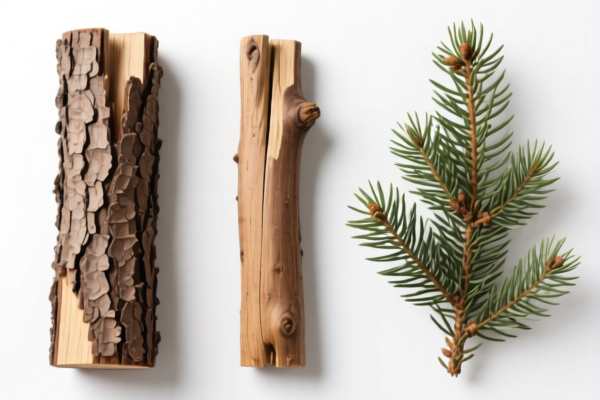
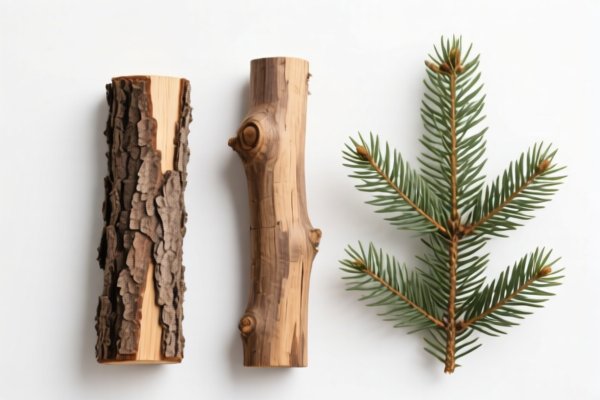
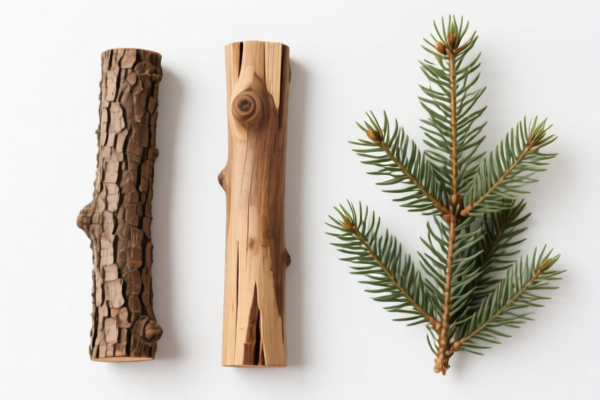
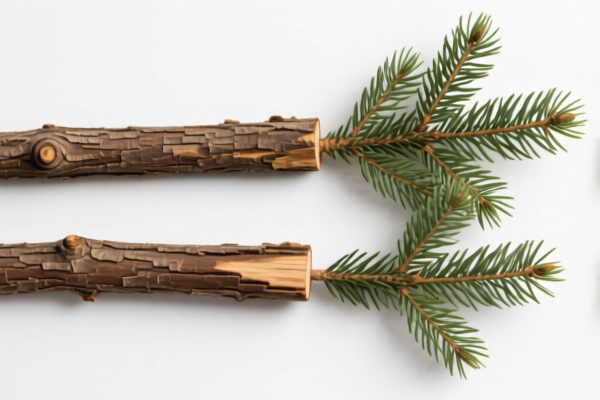
AI分析
🌲 Fir & Spruce Rough Wood Poles (15cm+)
🌐 HS Code Reference & Customs Clearance Guide | 2026 Latest Tariff Analysis | Professional Entry Strategy
📌 I. Product Definition & Classification: Do You Understand "Wooden Poles"?
Fir and Spruce rough wood poles (diameter ≥ 15cm) are critical infrastructure materials used in telecommunications, power transmission, and construction. In international trade, these products are classified under Chapter 44: Wood and articles of wood. They are generally categorized based on their processing level (roughly sawn, peeled, or simply stripped) and species.
⚠️ Key Distinction Point:
- If the wood is roughly sawn, peeled, or simply cleaned (stripped of bark but not finely processed), it falls under 4403 (Wood prepared for construction) or 4404 (Wooden poles/pickets).
- Diameter matters: Poles with a diameter of ≥ 15cm are often treated as structural poles rather than simple timber beams.
- Species: Must be clearly identified as Abies (Fir) or Picea (Spruce) to avoid misclassification under generic "coniferous wood."
📦 II. HS Code Classification Details (2026 Latest Tariff Authority对照)
Based on the provided data, here are the specific HS Codes for Fir and Spruce rough wood poles ≥15cm:
| HS Code | Product Description | Applicable Scenario | Processing Level |
|---|---|---|---|
4403.23.01.12 |
Rough poles/stakes/posts of Fir (Abies) or Spruce (Picea) | Telecommunication poles, utility poles, structural posts | Roughly sawn/cleaned |
4403.23.01.15 |
Rough Fir and Spruce logs/poles/stakes | Similar to above, often used for interchangeable customs filing or specific sub-category | Rough/Unpeeled |
4404.10.00.90 |
Rough wooden poles and pickets of Fir and Spruce (unpeeled) | Poles stripped of bark but not shaped; often used in fencing or light construction | Unpeeled/Rough |
4403.23.01.16 |
Rough unpeeled poles of Fir and Spruce | Same as above, specific subheading for unpeeled structural wood | Unpeeled |
4407.12.00.19 |
Rough unpeeled logs/sawn wood of Fir and Spruce | If the product is still in "log" form but prepared for pole use | Raw Log/Unpeeled |
🔍 Critical Note:
- All listed HS Codes apply to Fir (Abies) and Spruce (Picea).
- "Rough" (粗/粗糙) means the wood has been roughly sawn, peeled, or stripped of bark but has not been planed, smoothed, or machined into finished timber.
- Diameter ≥ 15cm is a key identifier for "poles" (杆/桩) rather than standard lumber.
💰 III. 2026 Latest Tariff Rate Breakdown (Including Surtaxes & Policy Add-ons)
✅ Applicable Country: United States (US)
✅ Origin: China (CN)
✅ Effective Date: Post-2025 (including 2026)
🎯 Common Tax Structure for All Listed HS Codes (4403.23.01.12/15/16, 4404.10.00.90, 4407.12.00.19)
| Item | Content |
|---|---|
| Base Tariff | 0.0% (ad valorem) – MFN rate for many wood products |
| Section 301 Surcharge | +25.0% – Under USITC Footnote 9903.88.01 / 301 Actions |
| Section 122 Tariff | +10.0% – Specific "122 Clause" tariff applied to certain Chinese wood products |
| Total Tax Rate | 35.0% |
| Tax Calculation | CIF Value × 35% |
| De Minimis Exemption | ❌ Not Applicable (deny_de_minimis) – Wood products of this origin/tariff level are excluded from $800 de minimis exemptions |
| Legal Path | Section 301: 9903.88.01 → Section 122: 10% → USITC: 4403/4404/4407 |
📌 Explanation:
- The 25% is the standard "Section 301" penalty for Chinese goods;
- The 10% is an additional "122 Clause" tariff, often applied to specific categories of Chinese imports to restrict unfair competition;
- Total 35% is a high tariff rate, significantly impacting cost competitiveness.
- No de minimis exemption: Small parcels cannot avoid this tax under the $800 rule.
🛠️ IV. Customs Clearance Practical Advice (Avoid Pitfalls)
✅ 1. Required Documentation Checklist
| Document | Mandatory? | Notes |
|---|---|---|
| ✅ Commercial Invoice | ✔️ | Must specify "Fir/Spruce Rough Wood Poles," Diameter (≥15cm), Length, Quantity |
| ✅ Packing List | ✔️ | Clearly state gross/net weight, number of bundles |
| ✅ Origin Certificate (CO) | ✔️ | Essential to prove origin as China (to apply correct tariffs); if from other countries, different rates may apply |
| ✅ ISPM 15 Phytosanitary Certificate | ✔️ | CRITICAL: Wood products must be heat-treated or fumigated to prevent pest spread. Without this, goods will be rejected or re-exported. |
| ✅ Product Specification Sheet | ✔️ | Include species (Abies/Picea), diameter range, length, and whether bark is removed |
| ✅ Bill of Lading/Air Waybill | ✔️ | Must match invoice details |
✅ 2. Declaration Tips (Key Mantras)
🔥 "Species Clear, Diameter Specific, ISPM 15 Attached, 35% Tax Prepared!"
| Scenario | Correct Declaration | Common Mistake |
|---|---|---|
| Rough Poles (≥15cm) | Declare as 4403.23.01.12 or 4404.10.00.90 | Misdeclare as "furniture parts" (lower tariff) → Audit & Penalty |
| With Bark | Specify "Unpeeled" or "Bark On" | Claiming "Peel" when bark is present → Misclassification |
| Without Bark | Specify "Stripped" or "Peel" | Vague description "Wood Poles" → Customs Delay |
| Origin | Clearly state "Made in China" | Ambiguous origin → Loss of Precedence/High Tariff |
✅ 3. Special Handling
| Situation | Recommendation |
|---|---|
| Mixed Species | If Fir and Spruce are mixed, declare the predominant species or use a general code if allowed, but better to split for accuracy |
| Preservative Treatment | If poles are treated with chemicals, add "Chemically Treated" to description. May require additional MSDS |
| Bark Presence | Clearly state if bark is removed. Bark removal affects HS Code (4403 vs 4404) |
| Small Quantities | Even for small shipments, 35% tax applies. No de minimis exemption. |
🌍 V. Global Market Comparison (2026 Latest)
| Country/Region | Recommended HS Code | Tariff (China Origin) | Certification | Notes |
|---|---|---|---|---|
| 🇺🇸 USA | 4403.23.01.12 / 4404.10.00.90 |
35% (25% + 10%) | ISPM 15 + Fumigation | High tariff; no de minimis |
| 🇨🇳 China | 4403.23.01.12 / 4404.10.00.90 |
~5-10% (Import) | ISPM 15 | Lower import duty |
| 🇪🇺 EU | 4403.23.00 / 4404.10.00 |
0% (if no trade barriers) | ISPM 15 + FSC/PEFC | No Section 301 tax |
| 🇯🇵 Japan | 4403.23.00 / 4404.10.00 |
0-5% | ISPM 15 | No surtaxes |
| 🇲🇽 Mexico | 4403.23.00 / 4404.10.00 |
0-5% | ISPM 15 | Check USMCA rules |
📌 Conclusion:
- USA imposes the highest tariff (35%) due to Section 301 and 122 Clause.
- ISPM 15 is mandatory globally for wood products to prevent pest entry.
- European and Asian markets have significantly lower tariffs, making them more cost-effective for Chinese wood products.
📌 VI. Common Errors & Pitfalls (Lessons Learned)
❌ Error 1: Missing ISPM 15 Certificate
👉 Consequence: Goods quarantined, destroyed, or re-exported at owner's expense.
❌ Error 2: Misdeclaring Species (e.g., calling Spruce "General Softwood")
👉 Consequence: Customs may reject or reassess, leading to delays and penalties.
❌ Error 3: Assuming De Minimis Exemption Applies
👉 Consequence: Even for small shipments, 35% tax is collected. No $800 exemption.
❌ Error 4: Incorrect Diameter Declaration
👉 Consequence: If diameter <15cm, it may be classified differently (e.g., as lumber), leading to tax discrepancies.
✅ Correct Practice:
"Fir/Spruce Rough Wood Poles, Diameter 15-20cm, Length 3-6m, ISPM 15 Treated, Unpeeled, Made in China"
🎯 VII. Conclusion: Professional Declaration Saves Costs!
🎯 Remember:
🔹 "ISPM 15 is non-negotiable for wood."
🔹 "35% Tax in USA is fixed; plan your supply chain accordingly."
🔹 "Accurate species and diameter declaration prevent customs headaches."
📌 Pro Tip:
If you are shipping to the USA, consider third-party logistics in Canada or Mexico for transshipment (if rules of origin allow), but be cautious of circumvention laws.
For non-US markets, enjoy lower tariffs (0-5%) by exporting directly to EU, Asia, etc.
📣 Take Action Now:
📞 Consult a licensed customs broker + Ensure ISPM 15 certification + Prepare detailed invoice
🚀 Ensure your Fir/Spruce poles clear customs smoothly and efficiently!
✨ Professional Customs Clearance Starts with Accurate Classification!
💼 Every Percent of Tariff Counts in Wood Trade!
用户评价
关于 HS 编码归类
协调制度(HS)是由世界海关组织(WCO)制定的国际贸易商品分类标准。全球 200 多个国家采用 HS 系统作为海关关税、贸易统计和进出口监管的基础。
每个 HS 编码遵循以下层级结构:
- 章(2 位)——商品大类(例如:第 84 章:机器和机械设备)
- 品目(4 位)——章内的更具体分类
- 子目(6 位)——国际通用细分,所有 WCO 成员国统一使用
- 本国细分(8-10 位)——各国自行扩展的细分编码,如美国 HTSUS 10 位编码
正确的 HS 编码归类对于顺利通关、准确缴纳关税和遵守贸易法规至关重要。错误归类可能导致海关延误、多缴关税或罚款。
从CN进口到US时,适用的关税税率可能包括:
- 最惠国(MFN)税率——适用于 WTO 成员国的标准关税税率
- 普通税率——适用于无贸易协定国家
- 贸易救济关税——附加关税,如 301 条款(反倾销)、232 条款(国家安全)或反补贴税
本页内容仅供参考。如需正式归类,请咨询当地海关或持牌报关代理。