Fir and Spruce Rough Wood Poles 15cm+
CN → US| HS Code | Tariff Rate | Origin | Destination | Doc |
|---|---|---|---|---|
| 4403230112 | 35.0% | CN | US | Official Doc |
| 4403230115 | 35.0% | CN | US | Official Doc |
| 4404100090 | 35.0% | CN | US | Official Doc |
| 4403230116 | 35.0% | CN | US | Official Doc |
| 4407120019 | 35.0% | CN | US | Official Doc |
Product Images

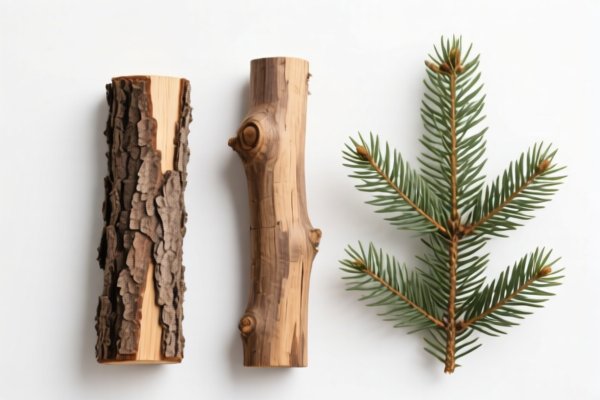
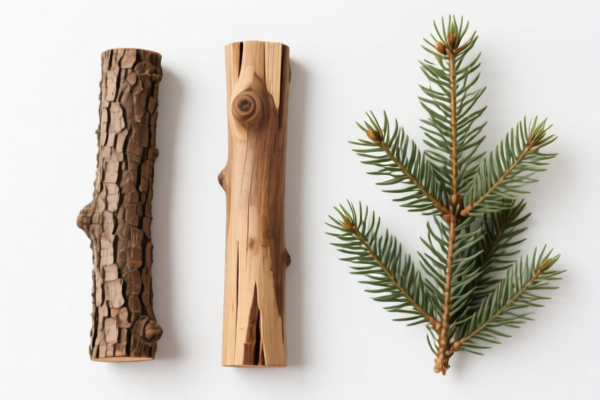
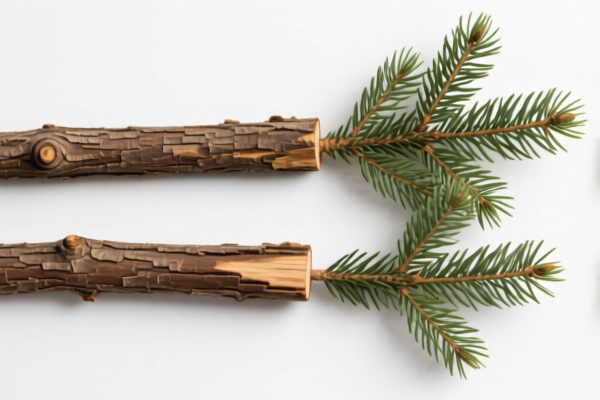
AI Analysis
🌲 Fir & Spruce Rough Wood Poles (15cm+)
🌐 HS Code Reference & Customs Clearance Guide | 2026 Latest Tariff Analysis | Professional Entry Strategy
📌 I. Product Definition & Classification: Do You Understand "Wooden Poles"?
Fir and Spruce rough wood poles (diameter ≥ 15cm) are critical infrastructure materials used in telecommunications, power transmission, and construction. In international trade, these products are classified under Chapter 44: Wood and articles of wood. They are generally categorized based on their processing level (roughly sawn, peeled, or simply stripped) and species.
⚠️ Key Distinction Point:
- If the wood is roughly sawn, peeled, or simply cleaned (stripped of bark but not finely processed), it falls under 4403 (Wood prepared for construction) or 4404 (Wooden poles/pickets).
- Diameter matters: Poles with a diameter of ≥ 15cm are often treated as structural poles rather than simple timber beams.
- Species: Must be clearly identified as Abies (Fir) or Picea (Spruce) to avoid misclassification under generic "coniferous wood."
📦 II. HS Code Classification Details (2026 Latest Tariff Authority对照)
Based on the provided data, here are the specific HS Codes for Fir and Spruce rough wood poles ≥15cm:
| HS Code | Product Description | Applicable Scenario | Processing Level |
|---|---|---|---|
4403.23.01.12 |
Rough poles/stakes/posts of Fir (Abies) or Spruce (Picea) | Telecommunication poles, utility poles, structural posts | Roughly sawn/cleaned |
4403.23.01.15 |
Rough Fir and Spruce logs/poles/stakes | Similar to above, often used for interchangeable customs filing or specific sub-category | Rough/Unpeeled |
4404.10.00.90 |
Rough wooden poles and pickets of Fir and Spruce (unpeeled) | Poles stripped of bark but not shaped; often used in fencing or light construction | Unpeeled/Rough |
4403.23.01.16 |
Rough unpeeled poles of Fir and Spruce | Same as above, specific subheading for unpeeled structural wood | Unpeeled |
4407.12.00.19 |
Rough unpeeled logs/sawn wood of Fir and Spruce | If the product is still in "log" form but prepared for pole use | Raw Log/Unpeeled |
🔍 Critical Note:
- All listed HS Codes apply to Fir (Abies) and Spruce (Picea).
- "Rough" (粗/粗糙) means the wood has been roughly sawn, peeled, or stripped of bark but has not been planed, smoothed, or machined into finished timber.
- Diameter ≥ 15cm is a key identifier for "poles" (杆/桩) rather than standard lumber.
💰 III. 2026 Latest Tariff Rate Breakdown (Including Surtaxes & Policy Add-ons)
✅ Applicable Country: United States (US)
✅ Origin: China (CN)
✅ Effective Date: Post-2025 (including 2026)
🎯 Common Tax Structure for All Listed HS Codes (4403.23.01.12/15/16, 4404.10.00.90, 4407.12.00.19)
| Item | Content |
|---|---|
| Base Tariff | 0.0% (ad valorem) – MFN rate for many wood products |
| Section 301 Surcharge | +25.0% – Under USITC Footnote 9903.88.01 / 301 Actions |
| Section 122 Tariff | +10.0% – Specific "122 Clause" tariff applied to certain Chinese wood products |
| Total Tax Rate | 35.0% |
| Tax Calculation | CIF Value × 35% |
| De Minimis Exemption | ❌ Not Applicable (deny_de_minimis) – Wood products of this origin/tariff level are excluded from $800 de minimis exemptions |
| Legal Path | Section 301: 9903.88.01 → Section 122: 10% → USITC: 4403/4404/4407 |
📌 Explanation:
- The 25% is the standard "Section 301" penalty for Chinese goods;
- The 10% is an additional "122 Clause" tariff, often applied to specific categories of Chinese imports to restrict unfair competition;
- Total 35% is a high tariff rate, significantly impacting cost competitiveness.
- No de minimis exemption: Small parcels cannot avoid this tax under the $800 rule.
🛠️ IV. Customs Clearance Practical Advice (Avoid Pitfalls)
✅ 1. Required Documentation Checklist
| Document | Mandatory? | Notes |
|---|---|---|
| ✅ Commercial Invoice | ✔️ | Must specify "Fir/Spruce Rough Wood Poles," Diameter (≥15cm), Length, Quantity |
| ✅ Packing List | ✔️ | Clearly state gross/net weight, number of bundles |
| ✅ Origin Certificate (CO) | ✔️ | Essential to prove origin as China (to apply correct tariffs); if from other countries, different rates may apply |
| ✅ ISPM 15 Phytosanitary Certificate | ✔️ | CRITICAL: Wood products must be heat-treated or fumigated to prevent pest spread. Without this, goods will be rejected or re-exported. |
| ✅ Product Specification Sheet | ✔️ | Include species (Abies/Picea), diameter range, length, and whether bark is removed |
| ✅ Bill of Lading/Air Waybill | ✔️ | Must match invoice details |
✅ 2. Declaration Tips (Key Mantras)
🔥 "Species Clear, Diameter Specific, ISPM 15 Attached, 35% Tax Prepared!"
| Scenario | Correct Declaration | Common Mistake |
|---|---|---|
| Rough Poles (≥15cm) | Declare as 4403.23.01.12 or 4404.10.00.90 | Misdeclare as "furniture parts" (lower tariff) → Audit & Penalty |
| With Bark | Specify "Unpeeled" or "Bark On" | Claiming "Peel" when bark is present → Misclassification |
| Without Bark | Specify "Stripped" or "Peel" | Vague description "Wood Poles" → Customs Delay |
| Origin | Clearly state "Made in China" | Ambiguous origin → Loss of Precedence/High Tariff |
✅ 3. Special Handling
| Situation | Recommendation |
|---|---|
| Mixed Species | If Fir and Spruce are mixed, declare the predominant species or use a general code if allowed, but better to split for accuracy |
| Preservative Treatment | If poles are treated with chemicals, add "Chemically Treated" to description. May require additional MSDS |
| Bark Presence | Clearly state if bark is removed. Bark removal affects HS Code (4403 vs 4404) |
| Small Quantities | Even for small shipments, 35% tax applies. No de minimis exemption. |
🌍 V. Global Market Comparison (2026 Latest)
| Country/Region | Recommended HS Code | Tariff (China Origin) | Certification | Notes |
|---|---|---|---|---|
| 🇺🇸 USA | 4403.23.01.12 / 4404.10.00.90 |
35% (25% + 10%) | ISPM 15 + Fumigation | High tariff; no de minimis |
| 🇨🇳 China | 4403.23.01.12 / 4404.10.00.90 |
~5-10% (Import) | ISPM 15 | Lower import duty |
| 🇪🇺 EU | 4403.23.00 / 4404.10.00 |
0% (if no trade barriers) | ISPM 15 + FSC/PEFC | No Section 301 tax |
| 🇯🇵 Japan | 4403.23.00 / 4404.10.00 |
0-5% | ISPM 15 | No surtaxes |
| 🇲🇽 Mexico | 4403.23.00 / 4404.10.00 |
0-5% | ISPM 15 | Check USMCA rules |
📌 Conclusion:
- USA imposes the highest tariff (35%) due to Section 301 and 122 Clause.
- ISPM 15 is mandatory globally for wood products to prevent pest entry.
- European and Asian markets have significantly lower tariffs, making them more cost-effective for Chinese wood products.
📌 VI. Common Errors & Pitfalls (Lessons Learned)
❌ Error 1: Missing ISPM 15 Certificate
👉 Consequence: Goods quarantined, destroyed, or re-exported at owner's expense.
❌ Error 2: Misdeclaring Species (e.g., calling Spruce "General Softwood")
👉 Consequence: Customs may reject or reassess, leading to delays and penalties.
❌ Error 3: Assuming De Minimis Exemption Applies
👉 Consequence: Even for small shipments, 35% tax is collected. No $800 exemption.
❌ Error 4: Incorrect Diameter Declaration
👉 Consequence: If diameter <15cm, it may be classified differently (e.g., as lumber), leading to tax discrepancies.
✅ Correct Practice:
"Fir/Spruce Rough Wood Poles, Diameter 15-20cm, Length 3-6m, ISPM 15 Treated, Unpeeled, Made in China"
🎯 VII. Conclusion: Professional Declaration Saves Costs!
🎯 Remember:
🔹 "ISPM 15 is non-negotiable for wood."
🔹 "35% Tax in USA is fixed; plan your supply chain accordingly."
🔹 "Accurate species and diameter declaration prevent customs headaches."
📌 Pro Tip:
If you are shipping to the USA, consider third-party logistics in Canada or Mexico for transshipment (if rules of origin allow), but be cautious of circumvention laws.
For non-US markets, enjoy lower tariffs (0-5%) by exporting directly to EU, Asia, etc.
📣 Take Action Now:
📞 Consult a licensed customs broker + Ensure ISPM 15 certification + Prepare detailed invoice
🚀 Ensure your Fir/Spruce poles clear customs smoothly and efficiently!
✨ Professional Customs Clearance Starts with Accurate Classification!
💼 Every Percent of Tariff Counts in Wood Trade!
Customer Reviews
About HS Code Classification
The Harmonized System (HS) is an internationally standardized nomenclature developed by the World Customs Organization (WCO) to classify traded products. Over 200 countries use the HS system as the basis for customs tariffs, trade statistics, and import/export regulations.
Each HS code follows a hierarchical structure:
- Chapter (2 digits) — Broad category of goods (e.g., Chapter 84: Machinery and Mechanical Appliances)
- Heading (4 digits) — More specific grouping within the chapter
- Subheading (6 digits) — Internationally standardized breakdown, used by all WCO member countries
- National subdivisions (8-10 digits) — Country-specific extensions for further classification, such as US HTSUS 10-digit codes
Correct HS code classification is essential for smooth customs clearance, accurate duty payment, and compliance with trade regulations. Misclassification can lead to customs delays, overpayment of duties, or penalties.
When importing from CN to US, the applicable tariff rates may include:
- Most-Favored-Nation (MFN) rate — The standard duty rate applied to WTO members
- General rate — Applied to countries without trade agreements
- Trade remedy duties — Additional tariffs such as Section 301 (anti-dumping), Section 232 (national security), or countervailing duties
The information provided on this page is for reference purposes only. For official classification, please consult with your local customs authority or a licensed customs broker.