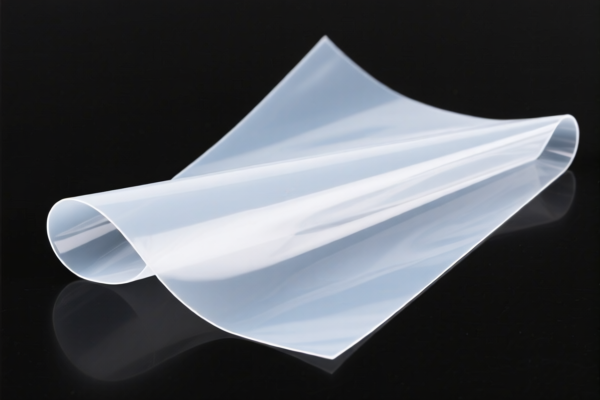
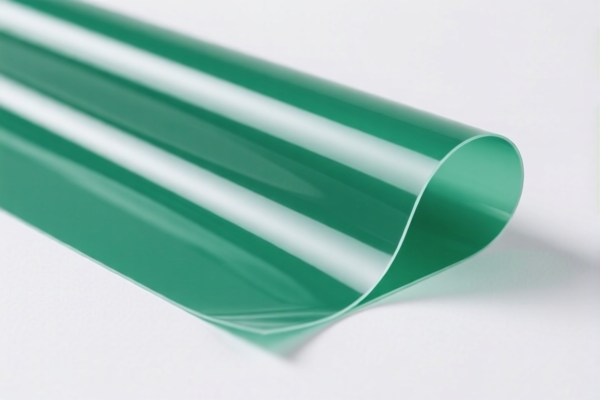
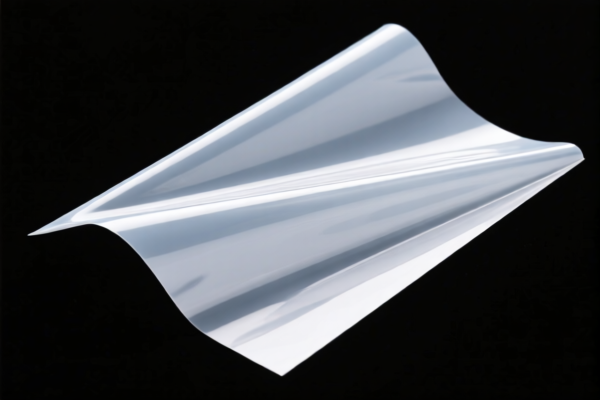
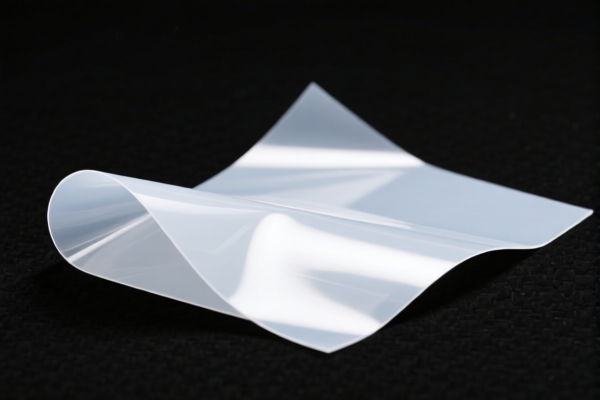
Flexible plastic thin sheet
CN → US| HS编码 | 关税税率 | 原产国 | 目的国 | 文档 |
|---|---|---|---|---|
| 3920591000 | 41.0% | CN | US | 官方文档 |
| 3919905060 | 40.8% | CN | US | 官方文档 |
| 3919905040 | 40.8% | CN | US | 官方文档 |
| 3920992000 | 39.2% | CN | US | 官方文档 |
| 3920991000 | 41.0% | CN | US | 官方文档 |
商品图片
AI分析
🧊 Flexible Plastic Thin Sheet (Non-Foamed, Non-Reinforced)
🌐 HS Code Reference & Clearance Guide | 2026 Latest Tariff Breakdown | Professional Strategy
📌 I. Product Definition & Classification: Do You Know "Flexible Plastic Sheets"?
"Flexible plastic thin sheets" refer to polymeric films, sheets, and strips that are non-foamed and non-reinforced. In international trade, these materials are critical for packaging, insulation, construction, and industrial applications.
Key Distinctions: * Foamed vs. Non-Foamed: Foamed plastics (lightweight, bubble-filled) fall under different subheadings (e.g., 3921). The data provided strictly covers non-foamed products. * Reinforced vs. Non-Reinforced: Sheets layered with glass fiber, metal, or other reinforcing materials have different HS codes. The data provided covers non-reinforced plastics. * Self-Adhesive vs. Non-Adhesive: Some films are pre-coated with adhesive (tapes/stickers), while others are plain films.
⚠️ Critical Classification Point:
- If the product is a self-adhesive film (like sticky tape rolls without backing paper) →归入 3919.90.50.x
- If the product is a plain flexible film/sheet (not self-adhesive) →归入 3920.x
- Shape: Must be flat (sheets, films, strips). Not molded into specific articles.
📦 II. HS Code Classification Details (2026 Latest Tariff Authority Match)
The following HS Codes are derived strictly from the provided <DATA>. All items are subject to significant additional tariffs for Chinese-origin goods entering the US.
| HS Code | Product Description (Summary) | Material/State | Total Tax Rate | Key Tax Components |
|---|---|---|---|---|
3920.59.10.00 |
Plastic non-foamed, non-reinforced sheets/films, flexible, UV resistant | Plastic, Flexible | 41.0% | Base: 6.0% + Sec 301: 25.0% + Section 122: 10% |
3919.90.50.60 |
Plastic self-adhesive films & flat shapes | Plastic, Self-Adhesive | 40.8% | Base: 5.8% + Sec 301: 25.0% + Section 122: 10% |
3919.90.50.40 |
Plastic flat shape articles (films), no material conflict | Plastic, Flat | 40.8% | Base: 5.8% + Sec 301: 25.0% + Section 122: 10% |
3920.99.20.00 |
Non-cellular plastic, flexible films/strips/sheets | Plastic, Flexible | 39.2% | Base: 4.2% + Sec 301: 25.0% + Section 122: 10% |
3920.99.10.00 |
Non-cellular plastic films, stretched/extensible | Plastic, Stretched | 41.0% | Base: 6.0% + Sec 301: 25.0% + Section 122: 10% |
🔍 Focus Reminder:
- All listed HS codes include "Section 122 Tariff 10%", a specific additional duty often applied to certain Chinese imports.
- Section 301 (加征关税) is 25% for almost all plastic sheets/films from China.
- Base Duties vary between 4.2% and 6.0% depending on the specific type (e.g., UV-resistant, stretched, or self-adhesive).
💰 III. 2026 Latest Tariff Rate Breakdown (Including Add-Ons)
✅ Applicable Country: United States (US)
✅ Origin: China (CN) (Inferred from "122条款" and typical 25% Sec 301 rates)
✅ Effective Time: Current applicable rates (2025-2026)
🎯 1. 3920.59.10.00 —— UV-Resistant Plastic Sheets (Non-Foamed)
| Item | Content |
|---|---|
| Base Duty Rate | 6.0% |
| Section 301 Additional Duty | +25.0% |
| Section 122 Additional Duty | +10.0% |
| Total Tax Rate | 41.0% |
| Tax Calculation | CIF Value × 41.0% |
| De Minimis Exemption | ❌ Not Applicable (Valued over $800 threshold generally, and Section 301/122 apply) |
| Legal Basis Path | HTSUS:3920.59.10.00 → USITC Footnote: Sec 301 → Customs Ruling: Sec 122 |
📌 Explanation:
- "UV Resistant" (防紫外线): This is a specific functional classification. If your film has UV inhibitors, it falls here.
- Total 41.0%: High cost. Ensure the UV resistance claim is scientifically backed if challenged by CBP.
🎯 2. 3919.90.50.60 & 3919.90.50.40 —— Self-Adhesive Plastic Films
| Item | Content |
|---|---|
| Base Duty Rate | 5.8% |
| Section 301 Additional Duty | +25.0% |
| Section 122 Additional Duty | +10.0% |
| Total Tax Rate | 40.8% |
| Tax Calculation | CIF Value × 40.8% |
| De Minimis Exemption | ❌ Not Applicable |
| Legal Basis Path | HTSUS:3919.90.50.x → USITC Footnote: Sec 301 |
📌 Note:
- Self-Adhesive (自粘): If the plastic film has adhesive on one side (like stickers, masking tape without fabric backing), it goes to 3919.
- Difference between.60and.40is minor sub-classification;.40is a general catch-all for "no material conflict," while.60may refer to specific adhesion types.
- Savings: Slightly cheaper (40.8%) than non-adhesive UV sheets (41.0%) due to lower base duty (5.8% vs 6.0%).
🎯 3. 3920.99.20.00 —— General Flexible Non-Cellular Films
| Item | Content |
|---|---|
| Base Duty Rate | 4.2% |
| Section 301 Additional Duty | +25.0% |
| Section 122 Additional Duty | +10.0% |
| Total Tax Rate | 39.2% |
| Tax Calculation | CIF Value × 39.2% |
| De Minimis Exemption | ❌ Not Applicable |
| Legal Basis Path | HTSUS:3920.99.20.00 |
📌 Best Value Option:
- This HS code has the lowest total tax rate (39.2%).
- Use this for general-purpose flexible plastic films that are NOT self-adhesive, NOT UV-resistant, and NOT stretched.
- Warning: Do not misdeclare UV-resistant films as "general flexible films" to save 1.8%. CBP may audit and penalize.
🎯 4. 3920.99.10.00 —— Stretched/Extensible Plastic Films
| Item | Content |
|---|---|
| Base Duty Rate | 6.0% |
| Section 301 Additional Duty | +25.0% |
| Section 122 Additional Duty | +10.0% |
| Total Tax Rate | 41.0% |
| Tax Calculation | CIF Value × 41.0% |
| De Minimis Exemption | ❌ Not Applicable |
| Legal Basis Path | HTSUS:3920.99.10.00 |
📌 Technical Note:
- "Stretched" (拉伸材料): Refers to bi-axially oriented films (like BOPP, BOPET) that have been mechanically stretched to increase strength.
- If your film is stretched, you must use this code or3920.59if UV-resistant.
- Rate is high (41.0%) due to higher base duty.
🛠️ IV. Clearance Practical Advice (Battle-Tested Pitfall Guide)
✅ 1. Documentation Checklist (Non-Negotiable)
| Document | Required | Explanation |
|---|---|---|
| ✅ Product Specification Sheet | ✔️ | Must detail: Material (PE, PP, PET, etc.), Thickness, Width, Roll Length, Foamed? Yes/No, Reinforced? Yes/No. |
| ✅ Technical Data Sheet (TDS) | ✔️ | To prove "UV Resistant" or "Stretched" claims if using specific HS codes. |
| ✅ Commercial Invoice | ✔️ | Clearly state: "Flexible Plastic Film, Non-Foamed, Non-Reinforced, Material: [Polymer Type]". |
| ✅ Bill of Lading | ✔️ | Show gross weight and net weight accurately. |
| ✅ Certificate of Origin | ✔️ | Essential for proving Chinese origin (and thus applying/avoiding tariffs). |
✅ 2. Declaration Tips (Key Mantra)
🔥 “Material First, Foam Check, Adhesive Yes/No, UV/Stretched Claim?”
| Situation | Correct HS Code | Wrong Action | Consequence |
|---|---|---|---|
| Plain, Flexible, No Adhesive, Not UV, Not Stretched | 3920.99.20.00 (39.2%) |
Declaring as UV-Resistant (3920.59.10.00) |
Overpay 1.8% tax |
| Self-Adhesive Film | 3919.90.50.60/40 (40.8%) |
Declaring as Plain Film (3920...) |
Underpay tax → CBP Audit + Penalties |
| UV-Resistant Film | 3920.59.10.00 (41.0%) |
Declaring as General Film | Tax Evasion Risk |
| Stretched Film (BOPP/BOPET) | 3920.99.10.00 (41.0%) |
Declaring as General Film | Misclassification |
| Foamed Plastic (e.g., EPE) | ❌ Not in Data | Using any of above | Wrong HS Code → Goods held |
✅ 3. Special Handling
| Scenario | Handling Advice |
|---|---|
| Multi-Layer Laminates | If layers include non-plastic materials (e.g., aluminum foil), it may move to Chapter 76 or 84/85. Check with CBP. |
| Custom Size Rolls | Ensure dimensions are stated. CBP checks if "sheet" or "film" definition is met (usually thickness < certain mm). |
| Sample Shipments | Even samples are subject to full tariffs (40%+). Do not use "Gift" or "No Value" to avoid tax. |
| Section 122 Impact | This 10% tax is specific. Ensure your broker applies it correctly to avoid double taxation or missed payments. |
🌍 V. Global Market Comparison (2026 Latest)
| Country/Region | Recommended HS Code | Tariff (China Origin) | Key Certification | Note |
|---|---|---|---|---|
| 🇺🇸 USA | 3920.99.20.00 |
39.2% (Lowest in Data) | N/A (General) | Highest Tariff due to Sec 301 + Sec 122 |
| 🇨🇳 China | 3920.99.20.00 |
~5-7% (Import) | N/A | Low tax for domestic import |
| 🇪🇺 EU | 3920.99.20.00 |
~6-8% | REACH, RoHS | No Sec 301/122 |
| 🇬🇧 UK | 3920.99.20.00 |
~6-8% | UKCA | Post-Brexit rules apply |
| 🇦🇺 Australia | 3920.99.20.00 |
~5% | ACCC | Free Trade Agreement benefits may apply |
📌 Conclusion:
- USA is the most expensive market for plastic sheets due to Section 301 (25%) and Section 122 (10%).
- Total duty ranges from 39.2% to 41.0%.
- China, EU, UK, Australia do NOT have these additional punitive tariffs.
📌 VI. Common Mistakes & Pitfall Guide (Lessons Learned)
❌ Mistake 1: Declaring Self-Adhesive film as General Plastic Sheet
👉 Result: Base duty is lower for adhesive (5.8%) vs non-adhesive (6.0% or 4.2%), but Sec 301 applies to both. If CBP finds it's adhesive, you owe back taxes + penalties.
👉 Fix: Check for tack/adhesive on one side.
❌ Mistake 2: Ignoring "Non-Foamed" requirement
👉 Result: If it's foam (like EPE), it belongs to 3921. Using 3920 codes is misclassification.
👉 Fix: Press the material. If it compresses and doesn't spring back, it's likely foamed.
❌ Mistake 3: Overlooking Section 122 (10%)
👉 Result: Underestimating total landed cost.
👉 Fix: Always include 10% in your cost model for US imports of these goods.
❌ Mistake 4: Misdeclaring UV-Resistant features
👉 Result: Claiming UV resistance to match a different HS code when it doesn't exist.
👉 Fix: Only use 3920.59.10.00 if UV inhibitors are added and certified.
✅ Correct Declaration Example:
"Plastic Film, Non-Foamed, Non-Reinforced, Material: Polyethylene (PE), Flexible, Width: 1.2m, Thickness: 0.1mm, No Adhesive, Not UV-Treated"
🎯 VII. Conclusion: Precision in Classification, Savings in Cost!
🎯 Remember the Mantra:
🔹 "Adhesive? Go to 3919. Plain? Go to 3920."
🔹 "UV or Stretched? Higher Base Duty (6%). General? Lower Base (4.2%)."
🔹 "US Tariff is ~40%: 6% Base + 25% Sec301 + 10% Sec122."
📌 Pro Tip:
- If you are exporting to the USA, calculate your landed cost with ~40% duty.
- If you are exporting to EU/Asia, you can save ~35% in tariffs.
- Apply for a Binding Ruling with US CBP if your product is complex (e.g., multi-layer, unclear adhesive status).
📣 Immediate Action:
📞 Contact your customs broker with the Product Specification Sheet.
📋 Verify: Is it adhesive? Foamed? UV-resistant? Stretched?
🚀 Optimize: Use3920.99.20.00(39.2%) if it's general flexible film to save the maximum possible tax under current US rules.
✨ Professional Clearance Starts with Accurate Classification!
💼 Your Every Cent of Cost is Worth Calculating Precisely!
用户评价
关于 HS 编码归类
协调制度(HS)是由世界海关组织(WCO)制定的国际贸易商品分类标准。全球 200 多个国家采用 HS 系统作为海关关税、贸易统计和进出口监管的基础。
每个 HS 编码遵循以下层级结构:
- 章(2 位)——商品大类(例如:第 84 章:机器和机械设备)
- 品目(4 位)——章内的更具体分类
- 子目(6 位)——国际通用细分,所有 WCO 成员国统一使用
- 本国细分(8-10 位)——各国自行扩展的细分编码,如美国 HTSUS 10 位编码
正确的 HS 编码归类对于顺利通关、准确缴纳关税和遵守贸易法规至关重要。错误归类可能导致海关延误、多缴关税或罚款。
从CN进口到US时,适用的关税税率可能包括:
- 最惠国(MFN)税率——适用于 WTO 成员国的标准关税税率
- 普通税率——适用于无贸易协定国家
- 贸易救济关税——附加关税,如 301 条款(反倾销)、232 条款(国家安全)或反补贴税
本页内容仅供参考。如需正式归类,请咨询当地海关或持牌报关代理。