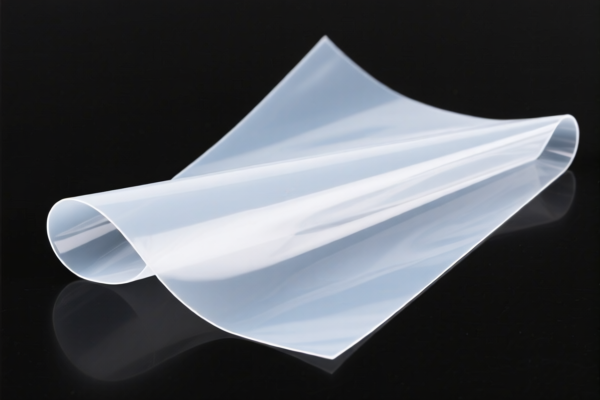
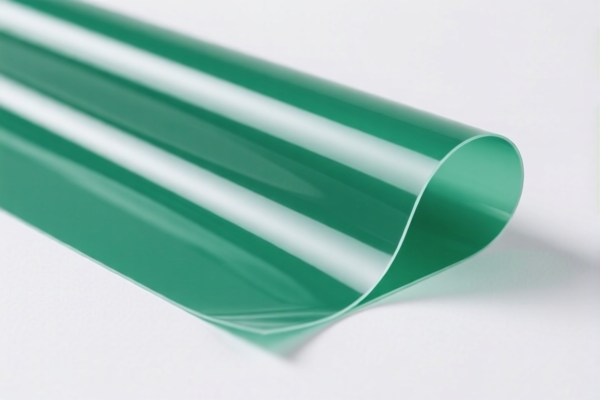
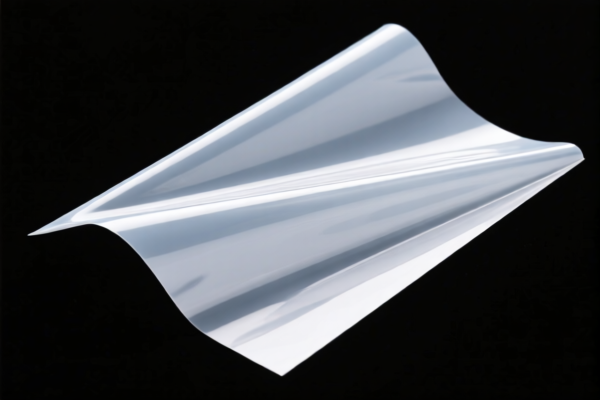
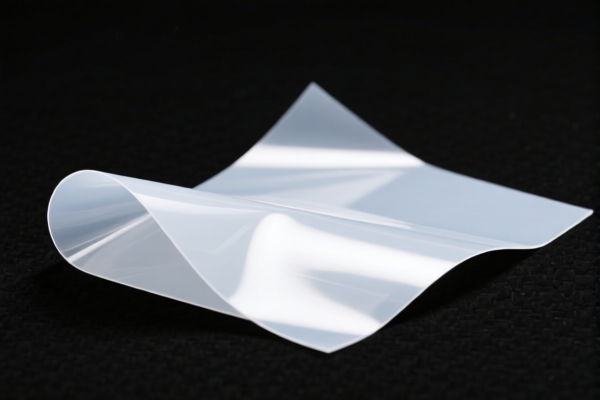
Flexible plastic thin sheet
CN → US| HS Code | Tariff Rate | Origin | Destination | Doc |
|---|---|---|---|---|
| 3920591000 | 41.0% | CN | US | Official Doc |
| 3919905060 | 40.8% | CN | US | Official Doc |
| 3919905040 | 40.8% | CN | US | Official Doc |
| 3920992000 | 39.2% | CN | US | Official Doc |
| 3920991000 | 41.0% | CN | US | Official Doc |
Product Images
AI Analysis
🧊 Flexible Plastic Thin Sheet (Non-Foamed, Non-Reinforced)
🌐 HS Code Reference & Clearance Guide | 2026 Latest Tariff Breakdown | Professional Strategy
📌 I. Product Definition & Classification: Do You Know "Flexible Plastic Sheets"?
"Flexible plastic thin sheets" refer to polymeric films, sheets, and strips that are non-foamed and non-reinforced. In international trade, these materials are critical for packaging, insulation, construction, and industrial applications.
Key Distinctions: * Foamed vs. Non-Foamed: Foamed plastics (lightweight, bubble-filled) fall under different subheadings (e.g., 3921). The data provided strictly covers non-foamed products. * Reinforced vs. Non-Reinforced: Sheets layered with glass fiber, metal, or other reinforcing materials have different HS codes. The data provided covers non-reinforced plastics. * Self-Adhesive vs. Non-Adhesive: Some films are pre-coated with adhesive (tapes/stickers), while others are plain films.
⚠️ Critical Classification Point:
- If the product is a self-adhesive film (like sticky tape rolls without backing paper) →归入 3919.90.50.x
- If the product is a plain flexible film/sheet (not self-adhesive) →归入 3920.x
- Shape: Must be flat (sheets, films, strips). Not molded into specific articles.
📦 II. HS Code Classification Details (2026 Latest Tariff Authority Match)
The following HS Codes are derived strictly from the provided <DATA>. All items are subject to significant additional tariffs for Chinese-origin goods entering the US.
| HS Code | Product Description (Summary) | Material/State | Total Tax Rate | Key Tax Components |
|---|---|---|---|---|
3920.59.10.00 |
Plastic non-foamed, non-reinforced sheets/films, flexible, UV resistant | Plastic, Flexible | 41.0% | Base: 6.0% + Sec 301: 25.0% + Section 122: 10% |
3919.90.50.60 |
Plastic self-adhesive films & flat shapes | Plastic, Self-Adhesive | 40.8% | Base: 5.8% + Sec 301: 25.0% + Section 122: 10% |
3919.90.50.40 |
Plastic flat shape articles (films), no material conflict | Plastic, Flat | 40.8% | Base: 5.8% + Sec 301: 25.0% + Section 122: 10% |
3920.99.20.00 |
Non-cellular plastic, flexible films/strips/sheets | Plastic, Flexible | 39.2% | Base: 4.2% + Sec 301: 25.0% + Section 122: 10% |
3920.99.10.00 |
Non-cellular plastic films, stretched/extensible | Plastic, Stretched | 41.0% | Base: 6.0% + Sec 301: 25.0% + Section 122: 10% |
🔍 Focus Reminder:
- All listed HS codes include "Section 122 Tariff 10%", a specific additional duty often applied to certain Chinese imports.
- Section 301 (加征关税) is 25% for almost all plastic sheets/films from China.
- Base Duties vary between 4.2% and 6.0% depending on the specific type (e.g., UV-resistant, stretched, or self-adhesive).
💰 III. 2026 Latest Tariff Rate Breakdown (Including Add-Ons)
✅ Applicable Country: United States (US)
✅ Origin: China (CN) (Inferred from "122条款" and typical 25% Sec 301 rates)
✅ Effective Time: Current applicable rates (2025-2026)
🎯 1. 3920.59.10.00 —— UV-Resistant Plastic Sheets (Non-Foamed)
| Item | Content |
|---|---|
| Base Duty Rate | 6.0% |
| Section 301 Additional Duty | +25.0% |
| Section 122 Additional Duty | +10.0% |
| Total Tax Rate | 41.0% |
| Tax Calculation | CIF Value × 41.0% |
| De Minimis Exemption | ❌ Not Applicable (Valued over $800 threshold generally, and Section 301/122 apply) |
| Legal Basis Path | HTSUS:3920.59.10.00 → USITC Footnote: Sec 301 → Customs Ruling: Sec 122 |
📌 Explanation:
- "UV Resistant" (防紫外线): This is a specific functional classification. If your film has UV inhibitors, it falls here.
- Total 41.0%: High cost. Ensure the UV resistance claim is scientifically backed if challenged by CBP.
🎯 2. 3919.90.50.60 & 3919.90.50.40 —— Self-Adhesive Plastic Films
| Item | Content |
|---|---|
| Base Duty Rate | 5.8% |
| Section 301 Additional Duty | +25.0% |
| Section 122 Additional Duty | +10.0% |
| Total Tax Rate | 40.8% |
| Tax Calculation | CIF Value × 40.8% |
| De Minimis Exemption | ❌ Not Applicable |
| Legal Basis Path | HTSUS:3919.90.50.x → USITC Footnote: Sec 301 |
📌 Note:
- Self-Adhesive (自粘): If the plastic film has adhesive on one side (like stickers, masking tape without fabric backing), it goes to 3919.
- Difference between.60and.40is minor sub-classification;.40is a general catch-all for "no material conflict," while.60may refer to specific adhesion types.
- Savings: Slightly cheaper (40.8%) than non-adhesive UV sheets (41.0%) due to lower base duty (5.8% vs 6.0%).
🎯 3. 3920.99.20.00 —— General Flexible Non-Cellular Films
| Item | Content |
|---|---|
| Base Duty Rate | 4.2% |
| Section 301 Additional Duty | +25.0% |
| Section 122 Additional Duty | +10.0% |
| Total Tax Rate | 39.2% |
| Tax Calculation | CIF Value × 39.2% |
| De Minimis Exemption | ❌ Not Applicable |
| Legal Basis Path | HTSUS:3920.99.20.00 |
📌 Best Value Option:
- This HS code has the lowest total tax rate (39.2%).
- Use this for general-purpose flexible plastic films that are NOT self-adhesive, NOT UV-resistant, and NOT stretched.
- Warning: Do not misdeclare UV-resistant films as "general flexible films" to save 1.8%. CBP may audit and penalize.
🎯 4. 3920.99.10.00 —— Stretched/Extensible Plastic Films
| Item | Content |
|---|---|
| Base Duty Rate | 6.0% |
| Section 301 Additional Duty | +25.0% |
| Section 122 Additional Duty | +10.0% |
| Total Tax Rate | 41.0% |
| Tax Calculation | CIF Value × 41.0% |
| De Minimis Exemption | ❌ Not Applicable |
| Legal Basis Path | HTSUS:3920.99.10.00 |
📌 Technical Note:
- "Stretched" (拉伸材料): Refers to bi-axially oriented films (like BOPP, BOPET) that have been mechanically stretched to increase strength.
- If your film is stretched, you must use this code or3920.59if UV-resistant.
- Rate is high (41.0%) due to higher base duty.
🛠️ IV. Clearance Practical Advice (Battle-Tested Pitfall Guide)
✅ 1. Documentation Checklist (Non-Negotiable)
| Document | Required | Explanation |
|---|---|---|
| ✅ Product Specification Sheet | ✔️ | Must detail: Material (PE, PP, PET, etc.), Thickness, Width, Roll Length, Foamed? Yes/No, Reinforced? Yes/No. |
| ✅ Technical Data Sheet (TDS) | ✔️ | To prove "UV Resistant" or "Stretched" claims if using specific HS codes. |
| ✅ Commercial Invoice | ✔️ | Clearly state: "Flexible Plastic Film, Non-Foamed, Non-Reinforced, Material: [Polymer Type]". |
| ✅ Bill of Lading | ✔️ | Show gross weight and net weight accurately. |
| ✅ Certificate of Origin | ✔️ | Essential for proving Chinese origin (and thus applying/avoiding tariffs). |
✅ 2. Declaration Tips (Key Mantra)
🔥 “Material First, Foam Check, Adhesive Yes/No, UV/Stretched Claim?”
| Situation | Correct HS Code | Wrong Action | Consequence |
|---|---|---|---|
| Plain, Flexible, No Adhesive, Not UV, Not Stretched | 3920.99.20.00 (39.2%) |
Declaring as UV-Resistant (3920.59.10.00) |
Overpay 1.8% tax |
| Self-Adhesive Film | 3919.90.50.60/40 (40.8%) |
Declaring as Plain Film (3920...) |
Underpay tax → CBP Audit + Penalties |
| UV-Resistant Film | 3920.59.10.00 (41.0%) |
Declaring as General Film | Tax Evasion Risk |
| Stretched Film (BOPP/BOPET) | 3920.99.10.00 (41.0%) |
Declaring as General Film | Misclassification |
| Foamed Plastic (e.g., EPE) | ❌ Not in Data | Using any of above | Wrong HS Code → Goods held |
✅ 3. Special Handling
| Scenario | Handling Advice |
|---|---|
| Multi-Layer Laminates | If layers include non-plastic materials (e.g., aluminum foil), it may move to Chapter 76 or 84/85. Check with CBP. |
| Custom Size Rolls | Ensure dimensions are stated. CBP checks if "sheet" or "film" definition is met (usually thickness < certain mm). |
| Sample Shipments | Even samples are subject to full tariffs (40%+). Do not use "Gift" or "No Value" to avoid tax. |
| Section 122 Impact | This 10% tax is specific. Ensure your broker applies it correctly to avoid double taxation or missed payments. |
🌍 V. Global Market Comparison (2026 Latest)
| Country/Region | Recommended HS Code | Tariff (China Origin) | Key Certification | Note |
|---|---|---|---|---|
| 🇺🇸 USA | 3920.99.20.00 |
39.2% (Lowest in Data) | N/A (General) | Highest Tariff due to Sec 301 + Sec 122 |
| 🇨🇳 China | 3920.99.20.00 |
~5-7% (Import) | N/A | Low tax for domestic import |
| 🇪🇺 EU | 3920.99.20.00 |
~6-8% | REACH, RoHS | No Sec 301/122 |
| 🇬🇧 UK | 3920.99.20.00 |
~6-8% | UKCA | Post-Brexit rules apply |
| 🇦🇺 Australia | 3920.99.20.00 |
~5% | ACCC | Free Trade Agreement benefits may apply |
📌 Conclusion:
- USA is the most expensive market for plastic sheets due to Section 301 (25%) and Section 122 (10%).
- Total duty ranges from 39.2% to 41.0%.
- China, EU, UK, Australia do NOT have these additional punitive tariffs.
📌 VI. Common Mistakes & Pitfall Guide (Lessons Learned)
❌ Mistake 1: Declaring Self-Adhesive film as General Plastic Sheet
👉 Result: Base duty is lower for adhesive (5.8%) vs non-adhesive (6.0% or 4.2%), but Sec 301 applies to both. If CBP finds it's adhesive, you owe back taxes + penalties.
👉 Fix: Check for tack/adhesive on one side.
❌ Mistake 2: Ignoring "Non-Foamed" requirement
👉 Result: If it's foam (like EPE), it belongs to 3921. Using 3920 codes is misclassification.
👉 Fix: Press the material. If it compresses and doesn't spring back, it's likely foamed.
❌ Mistake 3: Overlooking Section 122 (10%)
👉 Result: Underestimating total landed cost.
👉 Fix: Always include 10% in your cost model for US imports of these goods.
❌ Mistake 4: Misdeclaring UV-Resistant features
👉 Result: Claiming UV resistance to match a different HS code when it doesn't exist.
👉 Fix: Only use 3920.59.10.00 if UV inhibitors are added and certified.
✅ Correct Declaration Example:
"Plastic Film, Non-Foamed, Non-Reinforced, Material: Polyethylene (PE), Flexible, Width: 1.2m, Thickness: 0.1mm, No Adhesive, Not UV-Treated"
🎯 VII. Conclusion: Precision in Classification, Savings in Cost!
🎯 Remember the Mantra:
🔹 "Adhesive? Go to 3919. Plain? Go to 3920."
🔹 "UV or Stretched? Higher Base Duty (6%). General? Lower Base (4.2%)."
🔹 "US Tariff is ~40%: 6% Base + 25% Sec301 + 10% Sec122."
📌 Pro Tip:
- If you are exporting to the USA, calculate your landed cost with ~40% duty.
- If you are exporting to EU/Asia, you can save ~35% in tariffs.
- Apply for a Binding Ruling with US CBP if your product is complex (e.g., multi-layer, unclear adhesive status).
📣 Immediate Action:
📞 Contact your customs broker with the Product Specification Sheet.
📋 Verify: Is it adhesive? Foamed? UV-resistant? Stretched?
🚀 Optimize: Use3920.99.20.00(39.2%) if it's general flexible film to save the maximum possible tax under current US rules.
✨ Professional Clearance Starts with Accurate Classification!
💼 Your Every Cent of Cost is Worth Calculating Precisely!
Customer Reviews
About HS Code Classification
The Harmonized System (HS) is an internationally standardized nomenclature developed by the World Customs Organization (WCO) to classify traded products. Over 200 countries use the HS system as the basis for customs tariffs, trade statistics, and import/export regulations.
Each HS code follows a hierarchical structure:
- Chapter (2 digits) — Broad category of goods (e.g., Chapter 84: Machinery and Mechanical Appliances)
- Heading (4 digits) — More specific grouping within the chapter
- Subheading (6 digits) — Internationally standardized breakdown, used by all WCO member countries
- National subdivisions (8-10 digits) — Country-specific extensions for further classification, such as US HTSUS 10-digit codes
Correct HS code classification is essential for smooth customs clearance, accurate duty payment, and compliance with trade regulations. Misclassification can lead to customs delays, overpayment of duties, or penalties.
When importing from CN to US, the applicable tariff rates may include:
- Most-Favored-Nation (MFN) rate — The standard duty rate applied to WTO members
- General rate — Applied to countries without trade agreements
- Trade remedy duties — Additional tariffs such as Section 301 (anti-dumping), Section 232 (national security), or countervailing duties
The information provided on this page is for reference purposes only. For official classification, please consult with your local customs authority or a licensed customs broker.