Fluoropolymer Sintered Compound
CN → US商品图片
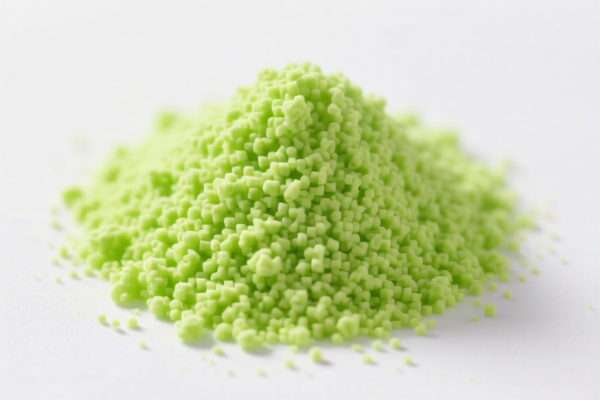
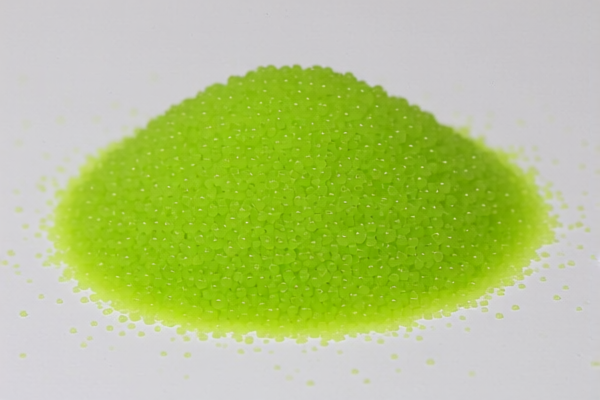
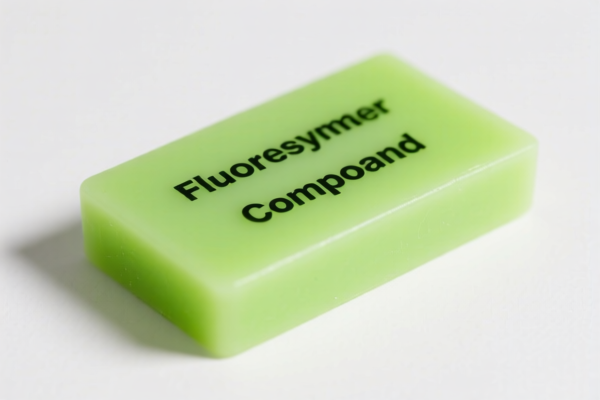
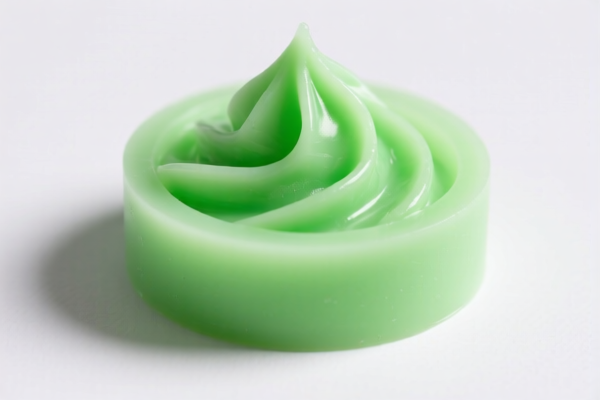
AI分析
🧪 Fluoropolymer Sintered Compound (PTFE/PFA/CFO)
🌐 HS Code Reference & Customs Clearance Guide | 2026 Tariff Structure | Professional Classification Strategy
📌 I. Product Definition & Classification: What Exactly is "Sintered Fluoropolymer"?
Fluoropolymer Sintered Compounds are high-performance polymer materials produced by compressing and heating fluoropolymer powders (such as PTFE, FEP, or PFA) below their melting point to form a porous, solid mass. Unlike extruded or molded plastics, sintered products retain a distinct microstructure and are primarily used for: - Sealing materials: Gaskets, tapes, packing rings (used in plumbing, chemical processing). - Filters/Membranes: Porous filtration discs or breathable membranes. - Industrial Linings: Non-stick coatings or corrosion-resistant layers for tanks/pipes.
⚠️ Critical Distinction for Classification: - Raw Sintered Shapes (Bars/Sheets/Rods): If sold as semi-finished goods for further machining → Chapter 39. - Ready-to-use Seals/Packing: If processed into specific shapes (rings, tapes) for immediate sealing use → Chapter 39 (generally) but often scrutinized under Chapter 84/85 if specifically identifiable as parts for machinery. - Insulation/Coating: If used specifically as electrical insulation → Chapter 85.
⚠️ Key Classification Point:
- If the product is a raw sintered block, sheet, or rod (unmachined): It is a Plastic Article → HS 3901–3914.
- If it is a finished seal/gasket specifically for a machine: It may still be classified under 3926 (Other plastic articles) unless explicitly defined as a part of a specific machine under 8483 or 8414. Most sintered compounds are classified as plastics first.
- Do NOT classify as "Chemical Product" (Chapter 29/38) unless it is a pure chemical compound in raw form, not a polymer compound.
📦 II. HS Code Classification Details (2026最新税则权威对照)
| HS Code | Product Description | Application Scenario | Material Type | Sintered Status |
|---|---|---|---|---|
| 3904.61.00 | Polytetrafluoroethylene (PTFE) in primary forms (sintered blocks/sheets) | Raw material for machining into bushings, seals, pipes | PTFE (Fluoropolymer) | ✅ Yes (Sintered Powder Compact) |
| 3904.69.00 | Other fluoropolymers (e.g., PFA, FEP) in primary forms | Raw material for specialized high-temp applications | PFA/FEP/CFO | ✅ Yes (Sintered) |
| 3926.90.89.00 | Other plastic articles (e.g., sintered sealing rings, tapes, gaskets) | Finished or semi-finished seals, gaskets, packing | Any Fluoropolymer | ✅ Yes (Machined from Sintered Block) |
| 3917.39.00 | Tubes, pipes, and hoses, with self-reinforcing material, other | If the sintered compound is used as a liner for specific pipes | PTFE/PFA | ✅ Yes (If pre-formed tubular sintered) |
| 8545.19.00 | Graphite or other carbon articles (if sintered with graphite) | Electrical brushes, contacts | Carbon-Fluoropolymer Composite | ❌ No (Composite) |
| 8414.90 | Parts of air pumps/compressors (if sintered valve plates) | Specific machine parts | Any Material | ✅ Yes (If identifiable as parts) |
🔍 Key Reminder:
- Primary Forms (3904/3904): If you are importing raw sintered blocks, sheets, or rods for your own factory to machine later, use 3904.61 (PTFE) or 3904.69 (Other).
- Finished Articles (3926): If you are importing pre-cut sintered gaskets, O-rings, or packing tapes ready for installation, use 3926.90.89.00 (Other plastic articles).
- ⚠️ Do Not Misclassify: Do not classify sintered PTFE as "Chemical Product" (Chapter 38). It is a Plastic (Chapter 39).
💰 III. 2026 Latest Tariff Rate Breakdown (US Market Focus)
✅ Applicable Country: United States (US)
✅ Origin: China (CN)
✅ Effective Date: November 10, 2025 onwards (including subsequent imports)
🎯 1. 3904.61.00.00 — PTFE (Politetrafluoroethylene) in Primary Forms (Sintered)
| Item | Content |
|---|---|
| Base Rate | 0% (ad valorem) |
| USITC Additional Duty (Section 301) | +25% |
| IEEPA Additional Duty (China/HK Products) | +10% (Effective Nov 10, 2025) |
| Total Rate | 35% |
| Tax Calculation | CIF Value × 35% |
| De Minimis Exemption | ❌ Not Eligible (deny_de_minimis) |
| Legal Basis Path | IEEPA:9903.01.25 → IEEPA:9903.01.24 → USITC:3904.61.00.00 → FOOTNOTE:9903.88.01 |
📌 Explanation:
- PTFE in primary forms is considered a strategic industrial material.
- The 25% Section 301 tariff applies because PTFE is on the "China Tariff List 4B" (or relevant list for plastics).
- The 10% IEEPA surcharge is a new additional layer for Chinese-sourced plastics.
- Total 35% is significant. If you are importing raw sintered PTFE from China, this is a high-cost input.
🎯 2. 3904.69.00.00 — Other Fluoropolymers (PFA, FEP, etc.) in Primary Forms
| Item | Content |
|---|---|
| Base Rate | 0% |
| USITC Additional Duty (Section 301) | +25% |
| IEEPA Additional Duty (China/HK Products) | +10% |
| Total Rate | 35% |
| Tax Calculation | CIF Value × 35% |
| De Minimis Exemption | ❌ Not Eligible |
| Legal Basis Path | IEEPA:9903.01.25 → IEEPA:9903.01.24 → USITC:3904.69.00.00 → FOOTNOTE:9903.88.01 |
📌 Note:
- PFA, FEP, and ETFE sintered compounds are taxed identically to PTFE.
- These materials are often used in semiconductor and aerospace industries. Customs may require strict proof of composition.
🎯 3. 3926.90.89.00 — Other Plastic Articles (e.g., Sintered Gaskets/Seals)
| Item | Content |
|---|---|
| Base Rate | 5.3% (standard) |
| USITC Additional Duty (Section 301) | +25% |
| IEEPA Additional Duty (China/HK Products) | +10% |
| Total Rate | 40.3% |
| Tax Calculation | CIF Value × 40.3% |
| De Minimis Exemption | ❌ Not Eligible |
| Legal Basis Path | IEEPA:9903.01.25 → IEEPA:9903.01.24 → USITC:3926.90.89.00 → FOOTNOTE:9903.88.01 |
📌 Warning:
- If you import finished sintered seals/gaskets from China, the rate is higher (40.3%) than raw materials (35%) because "Other Plastic Articles" often face additional scrutiny under Section 301.
- Recommendation: Import raw sintered blocks (3904) and machine them domestically if possible to save 5.3% base duty, though Section 301/IEEPA still apply.
🛠️ IV. Customs Clearance Practical Advice (Real-World Pitfall Guide)
✅ 1. Documentation Checklist (Non-negotiable)
| Document | Required? | Explanation |
|---|---|---|
| ✅ Product Specification Sheet | ✔️ | Must specify: Polymer Type (PTFE/PFA), Density, Porosity %, Sintering Temperature. |
| ✅ Certificate of Composition | ✔️ | Must confirm no other materials (e.g., glass fiber, carbon) unless declared. Pure PTFE vs. Composite. |
| ✅ Commercial Invoice | ✔️ | Must clearly state: "Sintered PTFE Block/Sheet" or "Sintered PTFE Gasket". Avoid vague terms like "Plastic Part". |
| ✅ Bill of Lading | ✔️ | Ensure weight matches invoice. |
| ✅ FCC/ROHS Compliance | ❌ (Usually Not Required for Raw Materials) | Only required if finished electrical components. |
| ✅ Country of Origin Certificate | ✔️ | Critical for Section 301/IEEPA application. Must state "Made in China". |
✅ 2. Declaration Tips (Key Mnemonic)
🔥 “Pure PTFE 35%, Composite 40%, Name Matters, Section 301 Applies!”
| Situation | Correct Declaration | Wrong Practice |
|---|---|---|
| Raw Sintered PTFE Block | HS 3904.61.00.00 | Misdeclare as "Chemical" → 35% Base + Penalties |
| Sintered PTFE Gasket (Finished) | HS 3926.90.89.00 | Misdeclare as "Part of Machine" → 89.5% |
| PTFE Coated Fabric | HS 5903.20.00.00 | Misdeclare as "Plastic Sheet" → Different Duty |
| Sintered PTFE with Carbon Fiber | HS 3904.69.00.00 (or 3926) | Must declare as Composite, not Pure PTFE |
✅ 3. Special Cases & Handling
| Situation | Handling Advice |
|---|---|
| Sintered PTFE + Glass Fiber | Classified as Composite Plastic. Use 3904.69 or 3926. Must declare fiber content. |
| Sintered PTFE Membrane for Filtration | If for industrial filters → 3926.90.89.00. If for water treatment → Same HS, but ensure "Filtration" is stated. |
| OEM Custom Shapes | If machined from imported block → Declare as Parts only if ready for specific machine. Otherwise, declare as Plastic Articles. |
| Samples for Testing | If value < $800, may be exempt under de minimis, but Section 301/IEEPA still apply. |
🌍 V. Global Market Clearance Comparison (2026 Latest)
| Country/Region | Recommended HS Code | Tariff (China Origin) | Certification Required | Notes |
|---|---|---|---|---|
| 🇺🇸 USA | 3904.61.00.00 |
35% (Raw) / 40.3% (Finished) | None (Standard) | High tariff due to Section 301 + IEEPA |
| 🇨🇳 China | 3904.61.00.00 |
0% (Imported Raw) | None | China exports PTFE globally |
| 🇪🇺 EU | 3904.61.00.00 |
0% (MFN Rate) | REACH Registration | No Section 301 equivalent, but REACH compliance required |
| 🇯🇵 Japan | 3904.61.00.00 |
0% | JIS Standard | Low tariff, high quality standards |
| 🇮🇳 India | 3904.61.00.00 |
7.5% – 10% | BIS Certification | Higher base rate, no Section 301 |
📌 Conclusion:
- USA is the most expensive market for fluoropolymer imports due to 35–40.3% total duties.
- EU, Japan, and India have significantly lower tariffs (0–10%).
- Strategy: Consider shifting sourcing from China to Vietnam, Thailand, or India for US-bound goods to avoid Section 301/IEEPA.
📌 VI. Common Errors & Pitfall Guide (Lessons Learned)
❌ Error 1: Classifying sintered PTFE as "Chemical Product" (Chapter 38)
👉 Consequence: Incorrect HS Code → 100% Penalty + Back Taxes. PTFE is a Plastic (Chapter 39).
❌ Error 2: Not declaring "Sintered" Process
👉 Consequence: Customs may assume it’s "Molded" or "Extruded". Sintered materials have different density and porosity, affecting valuation.
❌ Error 3: Missing "Pure" vs. "Composite" Declaration
👉 Consequence: If PTFE contains carbon/glass fiber, it must be declared as Composite. Misdeclaration leads to seizure.
❌ Error 4: Ignoring IEEPA 10% Surcharge
👉 Consequence: Underpayment of duties by 10% → Interest + Penalties upon audit.
✅ Correct Practice:
"Sintered PTFE Block, Pure, Unmachined, Density 2.15 g/cm³, For Machining into Seals, HS 3904.61.00.00"
🎯 VII. Conclusion: Professional Declaration, Cost Optimization!
🎯 Remember the Mnemonic:
🔹 "Raw Sintered 35%, Finished 40.3%, Name Matters, Section 301 Applies!"
🔹 "PTFE is Plastic, Not Chemical, Chapter 39 is Key!"
🔹 "Avoid China Sourcing for US, Shift to Vietnam/India!"
📌 Pro Tip:
If your fluoropolymer compound contains special additives (e.g., conductive carbon, anti-static agents), the HS Code may change to 3926.90.89.00 or even 8545 (if highly conductive). Always disclose additives.
📣 Immediate Action:
📞 Contact your customs broker + Provide Material Safety Data Sheet (MSDS) + Apply for Advance Ruling if unsure.
🚀 Optimize your supply chain to avoid the 35–40.3% US tariff burden!
✨ Professional Clearance, Starting with Accurate Classification!
💼 Every cent saved in duty is pure profit!
用户评价
关于 HS 编码归类
协调制度(HS)是由世界海关组织(WCO)制定的国际贸易商品分类标准。全球 200 多个国家采用 HS 系统作为海关关税、贸易统计和进出口监管的基础。
每个 HS 编码遵循以下层级结构:
- 章(2 位)——商品大类(例如:第 84 章:机器和机械设备)
- 品目(4 位)——章内的更具体分类
- 子目(6 位)——国际通用细分,所有 WCO 成员国统一使用
- 本国细分(8-10 位)——各国自行扩展的细分编码,如美国 HTSUS 10 位编码
正确的 HS 编码归类对于顺利通关、准确缴纳关税和遵守贸易法规至关重要。错误归类可能导致海关延误、多缴关税或罚款。
从CN进口到US时,适用的关税税率可能包括:
- 最惠国(MFN)税率——适用于 WTO 成员国的标准关税税率
- 普通税率——适用于无贸易协定国家
- 贸易救济关税——附加关税,如 301 条款(反倾销)、232 条款(国家安全)或反补贴税
本页内容仅供参考。如需正式归类,请咨询当地海关或持牌报关代理。