Fluoropolymer Sintered Compound
CN → USProduct Images
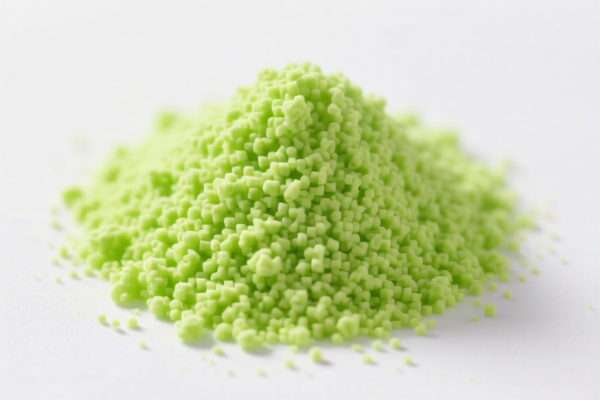
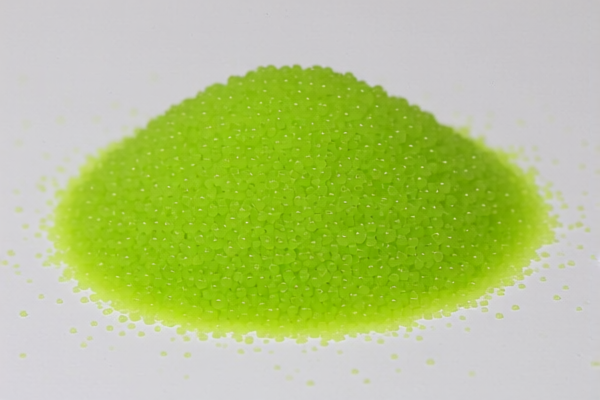
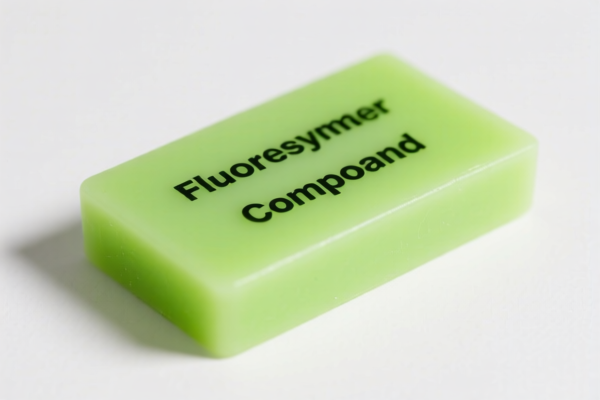
AI Analysis
🧪 Fluoropolymer Sintered Compound (PTFE/PFA/CFO)
🌐 HS Code Reference & Customs Clearance Guide | 2026 Tariff Structure | Professional Classification Strategy
📌 I. Product Definition & Classification: What Exactly is "Sintered Fluoropolymer"?
Fluoropolymer Sintered Compounds are high-performance polymer materials produced by compressing and heating fluoropolymer powders (such as PTFE, FEP, or PFA) below their melting point to form a porous, solid mass. Unlike extruded or molded plastics, sintered products retain a distinct microstructure and are primarily used for: - Sealing materials: Gaskets, tapes, packing rings (used in plumbing, chemical processing). - Filters/Membranes: Porous filtration discs or breathable membranes. - Industrial Linings: Non-stick coatings or corrosion-resistant layers for tanks/pipes.
⚠️ Critical Distinction for Classification: - Raw Sintered Shapes (Bars/Sheets/Rods): If sold as semi-finished goods for further machining → Chapter 39. - Ready-to-use Seals/Packing: If processed into specific shapes (rings, tapes) for immediate sealing use → Chapter 39 (generally) but often scrutinized under Chapter 84/85 if specifically identifiable as parts for machinery. - Insulation/Coating: If used specifically as electrical insulation → Chapter 85.
⚠️ Key Classification Point:
- If the product is a raw sintered block, sheet, or rod (unmachined): It is a Plastic Article → HS 3901–3914.
- If it is a finished seal/gasket specifically for a machine: It may still be classified under 3926 (Other plastic articles) unless explicitly defined as a part of a specific machine under 8483 or 8414. Most sintered compounds are classified as plastics first.
- Do NOT classify as "Chemical Product" (Chapter 29/38) unless it is a pure chemical compound in raw form, not a polymer compound.
📦 II. HS Code Classification Details (2026最新税则权威对照)
| HS Code | Product Description | Application Scenario | Material Type | Sintered Status |
|---|---|---|---|---|
| 3904.61.00 | Polytetrafluoroethylene (PTFE) in primary forms (sintered blocks/sheets) | Raw material for machining into bushings, seals, pipes | PTFE (Fluoropolymer) | ✅ Yes (Sintered Powder Compact) |
| 3904.69.00 | Other fluoropolymers (e.g., PFA, FEP) in primary forms | Raw material for specialized high-temp applications | PFA/FEP/CFO | ✅ Yes (Sintered) |
| 3926.90.89.00 | Other plastic articles (e.g., sintered sealing rings, tapes, gaskets) | Finished or semi-finished seals, gaskets, packing | Any Fluoropolymer | ✅ Yes (Machined from Sintered Block) |
| 3917.39.00 | Tubes, pipes, and hoses, with self-reinforcing material, other | If the sintered compound is used as a liner for specific pipes | PTFE/PFA | ✅ Yes (If pre-formed tubular sintered) |
| 8545.19.00 | Graphite or other carbon articles (if sintered with graphite) | Electrical brushes, contacts | Carbon-Fluoropolymer Composite | ❌ No (Composite) |
| 8414.90 | Parts of air pumps/compressors (if sintered valve plates) | Specific machine parts | Any Material | ✅ Yes (If identifiable as parts) |
🔍 Key Reminder:
- Primary Forms (3904/3904): If you are importing raw sintered blocks, sheets, or rods for your own factory to machine later, use 3904.61 (PTFE) or 3904.69 (Other).
- Finished Articles (3926): If you are importing pre-cut sintered gaskets, O-rings, or packing tapes ready for installation, use 3926.90.89.00 (Other plastic articles).
- ⚠️ Do Not Misclassify: Do not classify sintered PTFE as "Chemical Product" (Chapter 38). It is a Plastic (Chapter 39).
💰 III. 2026 Latest Tariff Rate Breakdown (US Market Focus)
✅ Applicable Country: United States (US)
✅ Origin: China (CN)
✅ Effective Date: November 10, 2025 onwards (including subsequent imports)
🎯 1. 3904.61.00.00 — PTFE (Politetrafluoroethylene) in Primary Forms (Sintered)
| Item | Content |
|---|---|
| Base Rate | 0% (ad valorem) |
| USITC Additional Duty (Section 301) | +25% |
| IEEPA Additional Duty (China/HK Products) | +10% (Effective Nov 10, 2025) |
| Total Rate | 35% |
| Tax Calculation | CIF Value × 35% |
| De Minimis Exemption | ❌ Not Eligible (deny_de_minimis) |
| Legal Basis Path | IEEPA:9903.01.25 → IEEPA:9903.01.24 → USITC:3904.61.00.00 → FOOTNOTE:9903.88.01 |
📌 Explanation:
- PTFE in primary forms is considered a strategic industrial material.
- The 25% Section 301 tariff applies because PTFE is on the "China Tariff List 4B" (or relevant list for plastics).
- The 10% IEEPA surcharge is a new additional layer for Chinese-sourced plastics.
- Total 35% is significant. If you are importing raw sintered PTFE from China, this is a high-cost input.
🎯 2. 3904.69.00.00 — Other Fluoropolymers (PFA, FEP, etc.) in Primary Forms
| Item | Content |
|---|---|
| Base Rate | 0% |
| USITC Additional Duty (Section 301) | +25% |
| IEEPA Additional Duty (China/HK Products) | +10% |
| Total Rate | 35% |
| Tax Calculation | CIF Value × 35% |
| De Minimis Exemption | ❌ Not Eligible |
| Legal Basis Path | IEEPA:9903.01.25 → IEEPA:9903.01.24 → USITC:3904.69.00.00 → FOOTNOTE:9903.88.01 |
📌 Note:
- PFA, FEP, and ETFE sintered compounds are taxed identically to PTFE.
- These materials are often used in semiconductor and aerospace industries. Customs may require strict proof of composition.
🎯 3. 3926.90.89.00 — Other Plastic Articles (e.g., Sintered Gaskets/Seals)
| Item | Content |
|---|---|
| Base Rate | 5.3% (standard) |
| USITC Additional Duty (Section 301) | +25% |
| IEEPA Additional Duty (China/HK Products) | +10% |
| Total Rate | 40.3% |
| Tax Calculation | CIF Value × 40.3% |
| De Minimis Exemption | ❌ Not Eligible |
| Legal Basis Path | IEEPA:9903.01.25 → IEEPA:9903.01.24 → USITC:3926.90.89.00 → FOOTNOTE:9903.88.01 |
📌 Warning:
- If you import finished sintered seals/gaskets from China, the rate is higher (40.3%) than raw materials (35%) because "Other Plastic Articles" often face additional scrutiny under Section 301.
- Recommendation: Import raw sintered blocks (3904) and machine them domestically if possible to save 5.3% base duty, though Section 301/IEEPA still apply.
🛠️ IV. Customs Clearance Practical Advice (Real-World Pitfall Guide)
✅ 1. Documentation Checklist (Non-negotiable)
| Document | Required? | Explanation |
|---|---|---|
| ✅ Product Specification Sheet | ✔️ | Must specify: Polymer Type (PTFE/PFA), Density, Porosity %, Sintering Temperature. |
| ✅ Certificate of Composition | ✔️ | Must confirm no other materials (e.g., glass fiber, carbon) unless declared. Pure PTFE vs. Composite. |
| ✅ Commercial Invoice | ✔️ | Must clearly state: "Sintered PTFE Block/Sheet" or "Sintered PTFE Gasket". Avoid vague terms like "Plastic Part". |
| ✅ Bill of Lading | ✔️ | Ensure weight matches invoice. |
| ✅ FCC/ROHS Compliance | ❌ (Usually Not Required for Raw Materials) | Only required if finished electrical components. |
| ✅ Country of Origin Certificate | ✔️ | Critical for Section 301/IEEPA application. Must state "Made in China". |
✅ 2. Declaration Tips (Key Mnemonic)
🔥 “Pure PTFE 35%, Composite 40%, Name Matters, Section 301 Applies!”
| Situation | Correct Declaration | Wrong Practice |
|---|---|---|
| Raw Sintered PTFE Block | HS 3904.61.00.00 | Misdeclare as "Chemical" → 35% Base + Penalties |
| Sintered PTFE Gasket (Finished) | HS 3926.90.89.00 | Misdeclare as "Part of Machine" → 89.5% |
| PTFE Coated Fabric | HS 5903.20.00.00 | Misdeclare as "Plastic Sheet" → Different Duty |
| Sintered PTFE with Carbon Fiber | HS 3904.69.00.00 (or 3926) | Must declare as Composite, not Pure PTFE |
✅ 3. Special Cases & Handling
| Situation | Handling Advice |
|---|---|
| Sintered PTFE + Glass Fiber | Classified as Composite Plastic. Use 3904.69 or 3926. Must declare fiber content. |
| Sintered PTFE Membrane for Filtration | If for industrial filters → 3926.90.89.00. If for water treatment → Same HS, but ensure "Filtration" is stated. |
| OEM Custom Shapes | If machined from imported block → Declare as Parts only if ready for specific machine. Otherwise, declare as Plastic Articles. |
| Samples for Testing | If value < $800, may be exempt under de minimis, but Section 301/IEEPA still apply. |
🌍 V. Global Market Clearance Comparison (2026 Latest)
| Country/Region | Recommended HS Code | Tariff (China Origin) | Certification Required | Notes |
|---|---|---|---|---|
| 🇺🇸 USA | 3904.61.00.00 |
35% (Raw) / 40.3% (Finished) | None (Standard) | High tariff due to Section 301 + IEEPA |
| 🇨🇳 China | 3904.61.00.00 |
0% (Imported Raw) | None | China exports PTFE globally |
| 🇪🇺 EU | 3904.61.00.00 |
0% (MFN Rate) | REACH Registration | No Section 301 equivalent, but REACH compliance required |
| 🇯🇵 Japan | 3904.61.00.00 |
0% | JIS Standard | Low tariff, high quality standards |
| 🇮🇳 India | 3904.61.00.00 |
7.5% – 10% | BIS Certification | Higher base rate, no Section 301 |
📌 Conclusion:
- USA is the most expensive market for fluoropolymer imports due to 35–40.3% total duties.
- EU, Japan, and India have significantly lower tariffs (0–10%).
- Strategy: Consider shifting sourcing from China to Vietnam, Thailand, or India for US-bound goods to avoid Section 301/IEEPA.
📌 VI. Common Errors & Pitfall Guide (Lessons Learned)
❌ Error 1: Classifying sintered PTFE as "Chemical Product" (Chapter 38)
👉 Consequence: Incorrect HS Code → 100% Penalty + Back Taxes. PTFE is a Plastic (Chapter 39).
❌ Error 2: Not declaring "Sintered" Process
👉 Consequence: Customs may assume it’s "Molded" or "Extruded". Sintered materials have different density and porosity, affecting valuation.
❌ Error 3: Missing "Pure" vs. "Composite" Declaration
👉 Consequence: If PTFE contains carbon/glass fiber, it must be declared as Composite. Misdeclaration leads to seizure.
❌ Error 4: Ignoring IEEPA 10% Surcharge
👉 Consequence: Underpayment of duties by 10% → Interest + Penalties upon audit.
✅ Correct Practice:
"Sintered PTFE Block, Pure, Unmachined, Density 2.15 g/cm³, For Machining into Seals, HS 3904.61.00.00"
🎯 VII. Conclusion: Professional Declaration, Cost Optimization!
🎯 Remember the Mnemonic:
🔹 "Raw Sintered 35%, Finished 40.3%, Name Matters, Section 301 Applies!"
🔹 "PTFE is Plastic, Not Chemical, Chapter 39 is Key!"
🔹 "Avoid China Sourcing for US, Shift to Vietnam/India!"
📌 Pro Tip:
If your fluoropolymer compound contains special additives (e.g., conductive carbon, anti-static agents), the HS Code may change to 3926.90.89.00 or even 8545 (if highly conductive). Always disclose additives.
📣 Immediate Action:
📞 Contact your customs broker + Provide Material Safety Data Sheet (MSDS) + Apply for Advance Ruling if unsure.
🚀 Optimize your supply chain to avoid the 35–40.3% US tariff burden!
✨ Professional Clearance, Starting with Accurate Classification!
💼 Every cent saved in duty is pure profit!
Customer Reviews
About HS Code Classification
The Harmonized System (HS) is an internationally standardized nomenclature developed by the World Customs Organization (WCO) to classify traded products. Over 200 countries use the HS system as the basis for customs tariffs, trade statistics, and import/export regulations.
Each HS code follows a hierarchical structure:
- Chapter (2 digits) — Broad category of goods (e.g., Chapter 84: Machinery and Mechanical Appliances)
- Heading (4 digits) — More specific grouping within the chapter
- Subheading (6 digits) — Internationally standardized breakdown, used by all WCO member countries
- National subdivisions (8-10 digits) — Country-specific extensions for further classification, such as US HTSUS 10-digit codes
Correct HS code classification is essential for smooth customs clearance, accurate duty payment, and compliance with trade regulations. Misclassification can lead to customs delays, overpayment of duties, or penalties.
When importing from CN to US, the applicable tariff rates may include:
- Most-Favored-Nation (MFN) rate — The standard duty rate applied to WTO members
- General rate — Applied to countries without trade agreements
- Trade remedy duties — Additional tariffs such as Section 301 (anti-dumping), Section 232 (national security), or countervailing duties
The information provided on this page is for reference purposes only. For official classification, please consult with your local customs authority or a licensed customs broker.