Foam Edge Banding Strip
CN → US| HS编码 | 关税税率 | 原产国 | 目的国 | 文档 |
|---|---|---|---|---|
| 4016100000 | 35.0% | CN | US | 官方文档 |
| 3916200020 | 40.8% | CN | US | 官方文档 |
| 3916905000 | 40.8% | CN | US | 官方文档 |
| 3925900000 | 40.3% | CN | US | 官方文档 |
| 3925305000 | 22.8% | CN | US | 官方文档 |
商品图片
AI分析
📦 Foam & Board Edge Banding Strips (泡沫/板材封边条)
🌐 HS Code Reference & Customs Clearance Guide | 2026 Latest Tariff Analysis | Professional Clearance Strategy
📌 I. Product Definition & Classification: Do You Really Understand "Edge Banding"?
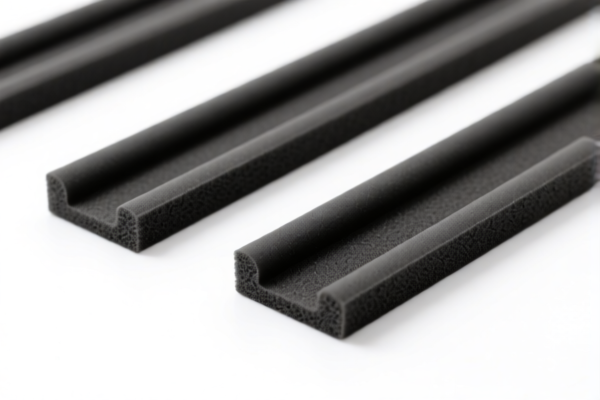
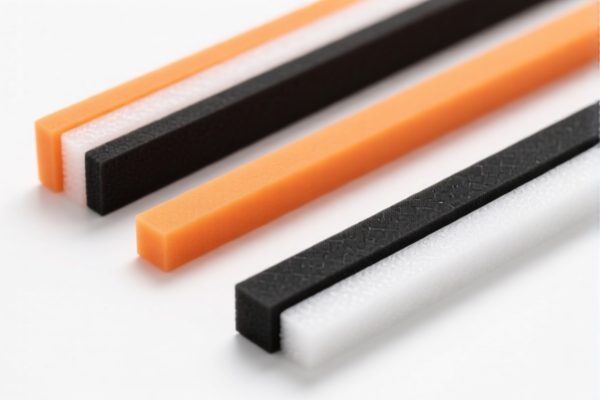
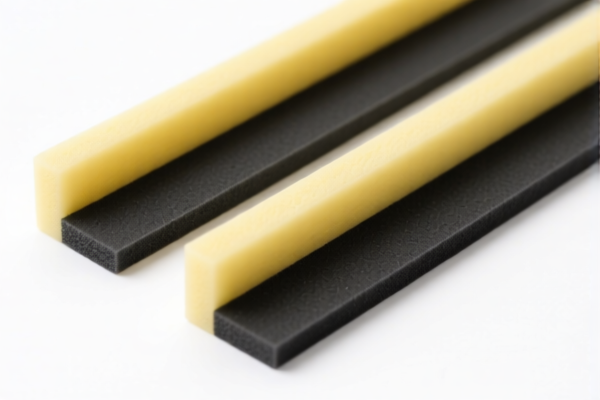
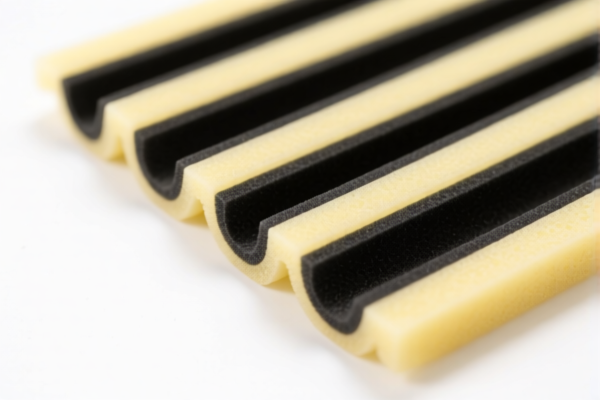
Edge banding strips are critical auxiliary components in the furniture and construction industries, used to cover the exposed edges of wood-based panels (such as particleboard, MDF, plywood) to improve aesthetics, seal moisture, and protect the substrate.
In international trade, these strips are classified based on two key factors: 1. Material Composition: Is it Rubber/Plastic? 2. Physical Form & Processing: Is it in a basic extruded shape (profile) or a finished accessory?
⚠️ Key Distinction Points: - Rubber-based Foam Strips: If made from vulcanized rubber or synthetic rubber → Falls under Chapter 40. - Plastic-based Foam/Extruded Strips: If made from PVC, ABS, EVA, PE, or other polymers in profile form → Falls under Chapter 39 (3916/3925). - Finished Accessories: If considered a specific construction/furniture accessory rather than a raw profile → May fall under 3925.
📦 II. HS Code Classification Details (2026 Latest Tariff Authoritative Comparison)
| HS Code | Product Description | Application Scenario | Material/Form Characteristic |
|---|---|---|---|
4016.10.00.00 |
Other articles of vulcanized rubber or synthetic rubber | Foam edge strips made of rubber compounds | ✅ Rubber-based |
3916.20.00.20 |
Profiles of plastics, not reinforced, laminated, etc. | Foam edge strips made of plastics/polymers in profile form | ✅ Plastic Profile |
3916.90.50.00 |
Other articles of plastics, in primary forms or semi-finished products | Foam strips (EVA/PE) considered as plastic profiles/semi-finished | ✅ Plastic Profile/General |
3925.90.00.00 |
Builders' joinery and carpentry, of plastics; Panels, boards, etc. | Board edge strips (PVC/ABS) classified as plastic construction accessories | ✅ Plastic Construction Accessory |
3925.30.50.00 |
Other builders' joinery and carpentry, of plastics | Plastic building/furniture accessories, specific sub-category | ✅ Plastic Building Accessory |
🔍 Important Reminder: - If the strip is made of Rubber, it must be declared under 4016.10.00.00. Misclassifying rubber as plastic will lead to severe penalties. - If the strip is made of Plastic (PVC, EVA, PE, ABS), the classification depends on whether it is viewed as a raw profile (3916) or a finished accessory (3925). - 3916 is generally preferred for "extruded profiles" ready for further processing. - 3925 is used for "builders' joinery" or accessories that are more finished goods.
💰 III. 2026 Latest Tariff Rate Breakdown (Including Surcharges & Policy Add-ons)
✅ Applicable Country: United States (US)
✅ Origin: China (CN)
✅ Effective Time: Current tariffs apply (including 301 & 122 Section surcharges)
🎯 1. 4016.10.00.00 —— Rubber-based Foam Edge Strips
| Item | Content |
|---|---|
| Base Tariff | 0.0% (ad valorem) |
| Section 301 Surcharge | +25.0% |
| Section 122 Surcharge | +10.0% |
| Total Tariff Rate | 35.0% |
| Tax Calculation | CIF Value × 35% |
| De Minimis Exemption | ❌ Not Eligible (deny_de_minimis) |
| Legal Basis Path | Base: 0.0% → Sec301: +25.0% → Sec122: +10.0% |
📌 Explanation: - Although the base tariff for rubber articles is low (0%), the Section 301 (25%) and Section 122 (10%) surcharges stack up significantly. - Total 35% is a high cost for rubber-based edge banding. Ensure the material is indeed rubber and not a polymer/plastic hybrid, as plastic classifications may offer different rates.
🎯 2. 3916.20.00.20 —— Plastic Foam Edge Strips (Profiles)
| Item | Content |
|---|---|
| Base Tariff | 5.8% |
| Section 301 Surcharge | +25.0% |
| Section 122 Surcharge | +10.0% |
| Total Tariff Rate | 40.8% |
| Tax Calculation | CIF Value × 40.8% |
| De Minimis Exemption | ❌ Not Eligible (deny_de_minimis) |
| Legal Basis Path | Base: 5.8% → Sec301: +25.0% → Sec122: +10.0% |
📌 Note: - This code applies to polymer/plastic strips in profile form. - The base tariff is higher than rubber (5.8% vs 0%), and the surcharges remain the same, leading to the highest total rate (40.8%) among plastic options.
🎯 3. 3916.90.50.00 —— Other Plastic Profiles (EVA/PE Foam)
| Item | Content |
|---|---|
| Base Tariff | 5.8% |
| Section 301 Surcharge | +25.0% |
| Section 122 Surcharge | +10.0% |
| Total Tariff Rate | 40.8% |
| Tax Calculation | CIF Value × 40.8% |
| De Minimis Exemption | ❌ Not Eligible (deny_de_minimis) |
| Legal Basis Path | Base: 5.8% → Sec301: +25.0% → Sec122: +10.0% |
📌 Note: - Similar to
3916.20.00.20, this covers other plastic materials (like EVA, PE) in profile form. - Total 40.8% applies. This is a critical cost factor for furniture manufacturers using PVC/PE edge banding.
🎯 4. 3925.90.00.00 —— Plastic Board Edge Strips (Construction/Furniture Accessories)
| Item | Content |
|---|---|
| Base Tariff | 5.3% |
| Section 301 Surcharge | +25.0% |
| Section 122 Surcharge | +10.0% |
| Total Tariff Rate | 40.3% |
| Tax Calculation | CIF Value × 40.3% |
| De Minimis Exemption | ❌ Not Eligible (deny_de_minimis) |
| Legal Basis Path | Base: 5.3% → Sec301: +25.0% → Sec122: +10.0% |
📌 Note: - This classification treats the edge strip as a "plastic construction accessory" or "joinery." - Slightly lower base tariff (5.3%) compared to 3916 items, resulting in 40.3% total. Still high due to surcharges.
🎯 5. 3925.30.50.00 —— Plastic Building Accessories (Specific Sub-category)
| Item | Content |
|---|---|
| Base Tariff | 5.3% |
| Section 301 Surcharge | +7.5% (Reduced 301 Rate) |
| Section 122 Surcharge | +10.0% |
| Total Tariff Rate | 22.8% |
| Tax Calculation | CIF Value × 22.8% |
| De Minimis Exemption | ❌ Not Eligible (deny_de_minimis) |
| Legal Basis Path | Base: 5.3% → Sec301: +7.5% → Sec122: +10.0% |
📌 Critical Insight: - This is the most cost-effective classification! - The Section 301 surcharge is reduced to 7.5% (instead of 25%) for this specific sub-category of plastic building accessories. - Total 22.8% is significantly lower than the 3916 codes (40.8%) and even the rubber code (35.0%). - Strategy: If your product can be legally argued as a "plastic building accessory" (e.g., for construction panel joining) rather than a raw "plastic profile," this code offers massive savings.
🛠️ IV. Customs Clearance Practical Advice (Battle-Tested Pitfall Avoidance)
✅ 1. Documentation Checklist (All Required)
| Document | Mandatory? | Description |
|---|---|---|
| ✅ Product Specification Sheet | ✔️ | Must specify material (Rubber vs. PVC/EVA/PE), density, thickness, and width. |
| ✅ Material Composition Report | ✔️ | Crucial for distinguishing between Rubber (Ch 40) and Plastic (Ch 39). Lab test may be required. |
| ✅ Product Photos | ✔️ | Clear images of the strip, packaging, and any branding. |
| ✅ Commercial Invoice | ✔️ | Must accurately describe the item as "Foam Edge Banding Strip" or "Board Edge Strip." |
| ✅ Packing List | ✔️ | Detail net/gross weight and dimensions. |
| ✅ Origin Certificate | ✔️ | Standard for US imports from China. |
✅ 2. Declaration Strategy (Key Mantra)
🔥 "Material First, Form Second, Tariff Optimization is Key!"
| Scenario | Recommended HS Code | Tax Rate | Risk Level |
|---|---|---|---|
| Rubber Foam Strip | 4016.10.00.00 |
35.0% | Medium (Must prove it's rubber) |
| Plastic Profile (PVC/EVA) | 3916.20.00.20 / 3916.90.50.00 |
40.8% | High (Highest tax burden) |
| Plastic Accessory (Generic) | 3925.90.00.00 |
40.3% | Medium |
| Plastic Building Accessory | 3925.30.50.00 |
22.8% | Low (Optimal Strategy) |
✅ 3. Special Handling for Tax Optimization
| Situation | Recommendation |
|---|---|
| Is it Plastic or Rubber? | If ambiguous, provide material safety data sheets (MSDS) proving it is a polymer/plastic. If it's rubber, you face 35%. If plastic, you may qualify for 22.8%. |
| Profile vs. Accessory | Argue that the edge strip is a "finished accessory for construction/furniture" (Ch 3925) rather than a "raw plastic profile" (Ch 3916) to avoid the 25% Section 301 surcharge. The 7.5% surcharge for 3925.30.50.00 is a major advantage. |
| De Minimis | ❌ No Exemption. All these codes are subject to deny_de_minimis. Even small shipments (under $800) will be taxed. Plan for high landed costs. |
🌍 V. Global Market Customs Comparison (2026 Latest)
| Country/Region | Recommended HS Code | Tariff (China Origin) | Certification Requirements | Remarks |
|---|---|---|---|---|
| 🇺🇸 USA | 3925.30.50.00 (Optimal) |
22.8% | None specific for customs | High tariff burden; 3916 codes are 40.8% |
| 🇨🇳 China | 3916.20.00.00 / 3925.90.00.00 |
5.8% - 6.5% | None | Lower base rates; no Section 301 |
| 🇪🇺 EU | 3916.20.00 / 3925.90.00 |
6.5% - 7.5% | REACH Compliance | No US-style surcharges |
| 🇬🇧 UK | 3916.20.00 / 3925.90.00 |
6.5% - 7.5% | UKCA (post-Brexit) | Similar to EU |
| 🇨🇦 Canada | 3916.20.00 / 3925.90.00 |
5% - 6.5% | Health Canada (if food contact) | No Section 301 equivalent |
📌 Conclusion: - USA is the most challenging market due to Section 301 and 122 surcharges. - Optimization is possible: Using
3925.30.50.00saves ~18% compared to3916classifications. - Material verification is critical: Misclassifying rubber as plastic can lead to fraud accusations.
📌 VI. Common Mistakes & Pitfall Guide (Blood & Tears Lessons)
❌ Mistake 1: Declaring a Rubber strip as Plastic (3925.30.50.00) to save tax. 👉 Consequence: Customs audit reveals rubber content → Back taxes + 20% Penalty + Possible seizure.
❌ Mistake 2: Declaring as a Raw Profile (3916) when it is a Finished Accessory. 👉 Consequence: Tax increases from 22.8% to 40.8% → Loss of profit margin.
❌ Mistake 3: Ignoring Section 122 (10%). 👉 Consequence: All these codes are subject to an additional 10% surcharge. Failing to account for this leads to underpayment.
✅ Correct Practice:
"Plastic Foam Edge Banding Strip, PVC/EVA Material, Width 22mm, Thickness 1mm, for Furniture Panel Edges, Country of Origin: China" Recommended HS Code:
3925.30.50.00(If argument for "Building Accessory" holds) or3916.20.00.20(If clearly a profile).
🎯 VII. Conclusion: Professional Declaration, Cost Control, Efficiency!
🎯 Remember the Mantra:
🔹 "Rubber is 35%, Plastic Profile is 40.8%, Plastic Accessory is 22.8%!" 🔹 "Material definition is life; Form definition is profit!" 🔹 "No De Minimis for these goods; Plan your shipping volume wisely!"
📌 Tips:
- If your product is EVA or PE foam, it is plastic. Ensure you have material certificates.
- Consider Advance Ruling (Pre-classification) with US Customs (CBP) if the line between "Profile" and "Accessory" is blurred in your specific product design.
- For High-Volume Imports, the 18% difference between 3916 (40.8%) and 3925.30.50.00 (22.8%) can amount to hundreds of thousands of dollars.
📣 Immediate Action:
📞 Contact your customs broker with material composition reports. 📝 Request a CBP Ruling for
3925.30.50.00if your product fits the "building/furniture accessory" description. 🚀 Optimize your HS Code, Protect Your Margins!
✨ Professional Clearance Starts with Accurate Classification! 💼 Every Cent Saved is Pure Profit!
用户评价
关于 HS 编码归类
协调制度(HS)是由世界海关组织(WCO)制定的国际贸易商品分类标准。全球 200 多个国家采用 HS 系统作为海关关税、贸易统计和进出口监管的基础。
每个 HS 编码遵循以下层级结构:
- 章(2 位)——商品大类(例如:第 84 章:机器和机械设备)
- 品目(4 位)——章内的更具体分类
- 子目(6 位)——国际通用细分,所有 WCO 成员国统一使用
- 本国细分(8-10 位)——各国自行扩展的细分编码,如美国 HTSUS 10 位编码
正确的 HS 编码归类对于顺利通关、准确缴纳关税和遵守贸易法规至关重要。错误归类可能导致海关延误、多缴关税或罚款。
从CN进口到US时,适用的关税税率可能包括:
- 最惠国(MFN)税率——适用于 WTO 成员国的标准关税税率
- 普通税率——适用于无贸易协定国家
- 贸易救济关税——附加关税,如 301 条款(反倾销)、232 条款(国家安全)或反补贴税
本页内容仅供参考。如需正式归类,请咨询当地海关或持牌报关代理。