Foam Edge Banding Strip
CN → US| HS Code | Tariff Rate | Origin | Destination | Doc |
|---|---|---|---|---|
| 4016100000 | 35.0% | CN | US | Official Doc |
| 3916200020 | 40.8% | CN | US | Official Doc |
| 3916905000 | 40.8% | CN | US | Official Doc |
| 3925900000 | 40.3% | CN | US | Official Doc |
| 3925305000 | 22.8% | CN | US | Official Doc |
Product Images
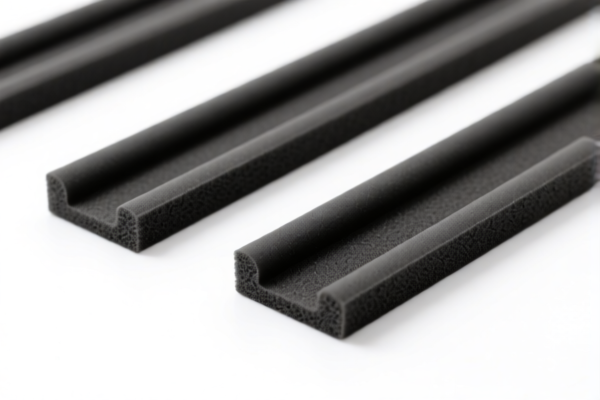
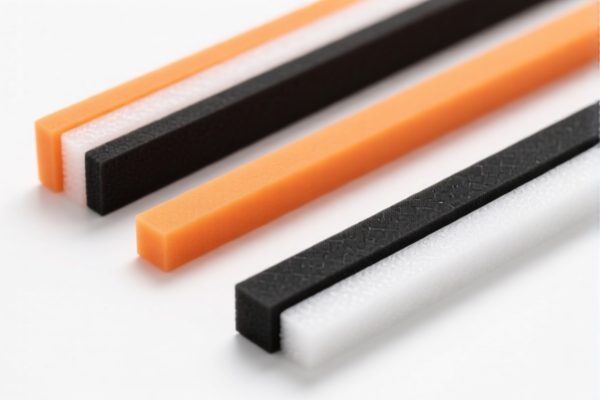
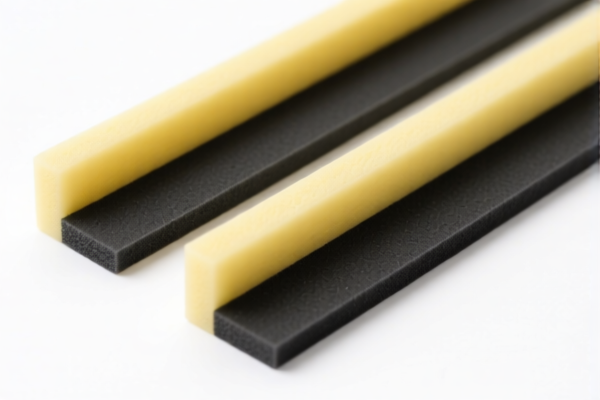
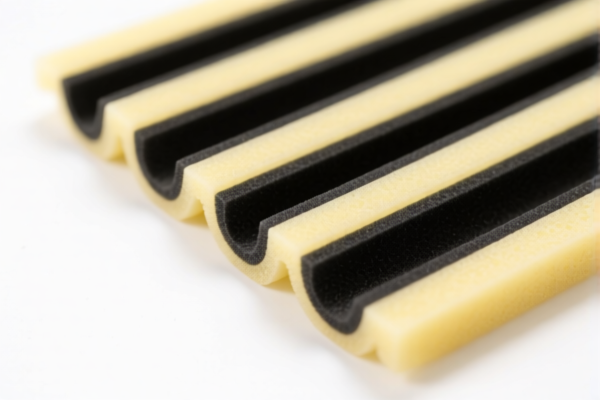
AI Analysis
📦 Foam & Board Edge Banding Strips (泡沫/板材封边条)
🌐 HS Code Reference & Customs Clearance Guide | 2026 Latest Tariff Analysis | Professional Clearance Strategy
📌 I. Product Definition & Classification: Do You Really Understand "Edge Banding"?
Edge banding strips are critical auxiliary components in the furniture and construction industries, used to cover the exposed edges of wood-based panels (such as particleboard, MDF, plywood) to improve aesthetics, seal moisture, and protect the substrate.
In international trade, these strips are classified based on two key factors: 1. Material Composition: Is it Rubber/Plastic? 2. Physical Form & Processing: Is it in a basic extruded shape (profile) or a finished accessory?
⚠️ Key Distinction Points: - Rubber-based Foam Strips: If made from vulcanized rubber or synthetic rubber → Falls under Chapter 40. - Plastic-based Foam/Extruded Strips: If made from PVC, ABS, EVA, PE, or other polymers in profile form → Falls under Chapter 39 (3916/3925). - Finished Accessories: If considered a specific construction/furniture accessory rather than a raw profile → May fall under 3925.
📦 II. HS Code Classification Details (2026 Latest Tariff Authoritative Comparison)
| HS Code | Product Description | Application Scenario | Material/Form Characteristic |
|---|---|---|---|
4016.10.00.00 |
Other articles of vulcanized rubber or synthetic rubber | Foam edge strips made of rubber compounds | ✅ Rubber-based |
3916.20.00.20 |
Profiles of plastics, not reinforced, laminated, etc. | Foam edge strips made of plastics/polymers in profile form | ✅ Plastic Profile |
3916.90.50.00 |
Other articles of plastics, in primary forms or semi-finished products | Foam strips (EVA/PE) considered as plastic profiles/semi-finished | ✅ Plastic Profile/General |
3925.90.00.00 |
Builders' joinery and carpentry, of plastics; Panels, boards, etc. | Board edge strips (PVC/ABS) classified as plastic construction accessories | ✅ Plastic Construction Accessory |
3925.30.50.00 |
Other builders' joinery and carpentry, of plastics | Plastic building/furniture accessories, specific sub-category | ✅ Plastic Building Accessory |
🔍 Important Reminder: - If the strip is made of Rubber, it must be declared under 4016.10.00.00. Misclassifying rubber as plastic will lead to severe penalties. - If the strip is made of Plastic (PVC, EVA, PE, ABS), the classification depends on whether it is viewed as a raw profile (3916) or a finished accessory (3925). - 3916 is generally preferred for "extruded profiles" ready for further processing. - 3925 is used for "builders' joinery" or accessories that are more finished goods.
💰 III. 2026 Latest Tariff Rate Breakdown (Including Surcharges & Policy Add-ons)
✅ Applicable Country: United States (US)
✅ Origin: China (CN)
✅ Effective Time: Current tariffs apply (including 301 & 122 Section surcharges)
🎯 1. 4016.10.00.00 —— Rubber-based Foam Edge Strips
| Item | Content |
|---|---|
| Base Tariff | 0.0% (ad valorem) |
| Section 301 Surcharge | +25.0% |
| Section 122 Surcharge | +10.0% |
| Total Tariff Rate | 35.0% |
| Tax Calculation | CIF Value × 35% |
| De Minimis Exemption | ❌ Not Eligible (deny_de_minimis) |
| Legal Basis Path | Base: 0.0% → Sec301: +25.0% → Sec122: +10.0% |
📌 Explanation: - Although the base tariff for rubber articles is low (0%), the Section 301 (25%) and Section 122 (10%) surcharges stack up significantly. - Total 35% is a high cost for rubber-based edge banding. Ensure the material is indeed rubber and not a polymer/plastic hybrid, as plastic classifications may offer different rates.
🎯 2. 3916.20.00.20 —— Plastic Foam Edge Strips (Profiles)
| Item | Content |
|---|---|
| Base Tariff | 5.8% |
| Section 301 Surcharge | +25.0% |
| Section 122 Surcharge | +10.0% |
| Total Tariff Rate | 40.8% |
| Tax Calculation | CIF Value × 40.8% |
| De Minimis Exemption | ❌ Not Eligible (deny_de_minimis) |
| Legal Basis Path | Base: 5.8% → Sec301: +25.0% → Sec122: +10.0% |
📌 Note: - This code applies to polymer/plastic strips in profile form. - The base tariff is higher than rubber (5.8% vs 0%), and the surcharges remain the same, leading to the highest total rate (40.8%) among plastic options.
🎯 3. 3916.90.50.00 —— Other Plastic Profiles (EVA/PE Foam)
| Item | Content |
|---|---|
| Base Tariff | 5.8% |
| Section 301 Surcharge | +25.0% |
| Section 122 Surcharge | +10.0% |
| Total Tariff Rate | 40.8% |
| Tax Calculation | CIF Value × 40.8% |
| De Minimis Exemption | ❌ Not Eligible (deny_de_minimis) |
| Legal Basis Path | Base: 5.8% → Sec301: +25.0% → Sec122: +10.0% |
📌 Note: - Similar to
3916.20.00.20, this covers other plastic materials (like EVA, PE) in profile form. - Total 40.8% applies. This is a critical cost factor for furniture manufacturers using PVC/PE edge banding.
🎯 4. 3925.90.00.00 —— Plastic Board Edge Strips (Construction/Furniture Accessories)
| Item | Content |
|---|---|
| Base Tariff | 5.3% |
| Section 301 Surcharge | +25.0% |
| Section 122 Surcharge | +10.0% |
| Total Tariff Rate | 40.3% |
| Tax Calculation | CIF Value × 40.3% |
| De Minimis Exemption | ❌ Not Eligible (deny_de_minimis) |
| Legal Basis Path | Base: 5.3% → Sec301: +25.0% → Sec122: +10.0% |
📌 Note: - This classification treats the edge strip as a "plastic construction accessory" or "joinery." - Slightly lower base tariff (5.3%) compared to 3916 items, resulting in 40.3% total. Still high due to surcharges.
🎯 5. 3925.30.50.00 —— Plastic Building Accessories (Specific Sub-category)
| Item | Content |
|---|---|
| Base Tariff | 5.3% |
| Section 301 Surcharge | +7.5% (Reduced 301 Rate) |
| Section 122 Surcharge | +10.0% |
| Total Tariff Rate | 22.8% |
| Tax Calculation | CIF Value × 22.8% |
| De Minimis Exemption | ❌ Not Eligible (deny_de_minimis) |
| Legal Basis Path | Base: 5.3% → Sec301: +7.5% → Sec122: +10.0% |
📌 Critical Insight: - This is the most cost-effective classification! - The Section 301 surcharge is reduced to 7.5% (instead of 25%) for this specific sub-category of plastic building accessories. - Total 22.8% is significantly lower than the 3916 codes (40.8%) and even the rubber code (35.0%). - Strategy: If your product can be legally argued as a "plastic building accessory" (e.g., for construction panel joining) rather than a raw "plastic profile," this code offers massive savings.
🛠️ IV. Customs Clearance Practical Advice (Battle-Tested Pitfall Avoidance)
✅ 1. Documentation Checklist (All Required)
| Document | Mandatory? | Description |
|---|---|---|
| ✅ Product Specification Sheet | ✔️ | Must specify material (Rubber vs. PVC/EVA/PE), density, thickness, and width. |
| ✅ Material Composition Report | ✔️ | Crucial for distinguishing between Rubber (Ch 40) and Plastic (Ch 39). Lab test may be required. |
| ✅ Product Photos | ✔️ | Clear images of the strip, packaging, and any branding. |
| ✅ Commercial Invoice | ✔️ | Must accurately describe the item as "Foam Edge Banding Strip" or "Board Edge Strip." |
| ✅ Packing List | ✔️ | Detail net/gross weight and dimensions. |
| ✅ Origin Certificate | ✔️ | Standard for US imports from China. |
✅ 2. Declaration Strategy (Key Mantra)
🔥 "Material First, Form Second, Tariff Optimization is Key!"
| Scenario | Recommended HS Code | Tax Rate | Risk Level |
|---|---|---|---|
| Rubber Foam Strip | 4016.10.00.00 |
35.0% | Medium (Must prove it's rubber) |
| Plastic Profile (PVC/EVA) | 3916.20.00.20 / 3916.90.50.00 |
40.8% | High (Highest tax burden) |
| Plastic Accessory (Generic) | 3925.90.00.00 |
40.3% | Medium |
| Plastic Building Accessory | 3925.30.50.00 |
22.8% | Low (Optimal Strategy) |
✅ 3. Special Handling for Tax Optimization
| Situation | Recommendation |
|---|---|
| Is it Plastic or Rubber? | If ambiguous, provide material safety data sheets (MSDS) proving it is a polymer/plastic. If it's rubber, you face 35%. If plastic, you may qualify for 22.8%. |
| Profile vs. Accessory | Argue that the edge strip is a "finished accessory for construction/furniture" (Ch 3925) rather than a "raw plastic profile" (Ch 3916) to avoid the 25% Section 301 surcharge. The 7.5% surcharge for 3925.30.50.00 is a major advantage. |
| De Minimis | ❌ No Exemption. All these codes are subject to deny_de_minimis. Even small shipments (under $800) will be taxed. Plan for high landed costs. |
🌍 V. Global Market Customs Comparison (2026 Latest)
| Country/Region | Recommended HS Code | Tariff (China Origin) | Certification Requirements | Remarks |
|---|---|---|---|---|
| 🇺🇸 USA | 3925.30.50.00 (Optimal) |
22.8% | None specific for customs | High tariff burden; 3916 codes are 40.8% |
| 🇨🇳 China | 3916.20.00.00 / 3925.90.00.00 |
5.8% - 6.5% | None | Lower base rates; no Section 301 |
| 🇪🇺 EU | 3916.20.00 / 3925.90.00 |
6.5% - 7.5% | REACH Compliance | No US-style surcharges |
| 🇬🇧 UK | 3916.20.00 / 3925.90.00 |
6.5% - 7.5% | UKCA (post-Brexit) | Similar to EU |
| 🇨🇦 Canada | 3916.20.00 / 3925.90.00 |
5% - 6.5% | Health Canada (if food contact) | No Section 301 equivalent |
📌 Conclusion: - USA is the most challenging market due to Section 301 and 122 surcharges. - Optimization is possible: Using
3925.30.50.00saves ~18% compared to3916classifications. - Material verification is critical: Misclassifying rubber as plastic can lead to fraud accusations.
📌 VI. Common Mistakes & Pitfall Guide (Blood & Tears Lessons)
❌ Mistake 1: Declaring a Rubber strip as Plastic (3925.30.50.00) to save tax. 👉 Consequence: Customs audit reveals rubber content → Back taxes + 20% Penalty + Possible seizure.
❌ Mistake 2: Declaring as a Raw Profile (3916) when it is a Finished Accessory. 👉 Consequence: Tax increases from 22.8% to 40.8% → Loss of profit margin.
❌ Mistake 3: Ignoring Section 122 (10%). 👉 Consequence: All these codes are subject to an additional 10% surcharge. Failing to account for this leads to underpayment.
✅ Correct Practice:
"Plastic Foam Edge Banding Strip, PVC/EVA Material, Width 22mm, Thickness 1mm, for Furniture Panel Edges, Country of Origin: China" Recommended HS Code:
3925.30.50.00(If argument for "Building Accessory" holds) or3916.20.00.20(If clearly a profile).
🎯 VII. Conclusion: Professional Declaration, Cost Control, Efficiency!
🎯 Remember the Mantra:
🔹 "Rubber is 35%, Plastic Profile is 40.8%, Plastic Accessory is 22.8%!" 🔹 "Material definition is life; Form definition is profit!" 🔹 "No De Minimis for these goods; Plan your shipping volume wisely!"
📌 Tips:
- If your product is EVA or PE foam, it is plastic. Ensure you have material certificates.
- Consider Advance Ruling (Pre-classification) with US Customs (CBP) if the line between "Profile" and "Accessory" is blurred in your specific product design.
- For High-Volume Imports, the 18% difference between 3916 (40.8%) and 3925.30.50.00 (22.8%) can amount to hundreds of thousands of dollars.
📣 Immediate Action:
📞 Contact your customs broker with material composition reports. 📝 Request a CBP Ruling for
3925.30.50.00if your product fits the "building/furniture accessory" description. 🚀 Optimize your HS Code, Protect Your Margins!
✨ Professional Clearance Starts with Accurate Classification! 💼 Every Cent Saved is Pure Profit!
Customer Reviews
About HS Code Classification
The Harmonized System (HS) is an internationally standardized nomenclature developed by the World Customs Organization (WCO) to classify traded products. Over 200 countries use the HS system as the basis for customs tariffs, trade statistics, and import/export regulations.
Each HS code follows a hierarchical structure:
- Chapter (2 digits) — Broad category of goods (e.g., Chapter 84: Machinery and Mechanical Appliances)
- Heading (4 digits) — More specific grouping within the chapter
- Subheading (6 digits) — Internationally standardized breakdown, used by all WCO member countries
- National subdivisions (8-10 digits) — Country-specific extensions for further classification, such as US HTSUS 10-digit codes
Correct HS code classification is essential for smooth customs clearance, accurate duty payment, and compliance with trade regulations. Misclassification can lead to customs delays, overpayment of duties, or penalties.
When importing from CN to US, the applicable tariff rates may include:
- Most-Favored-Nation (MFN) rate — The standard duty rate applied to WTO members
- General rate — Applied to countries without trade agreements
- Trade remedy duties — Additional tariffs such as Section 301 (anti-dumping), Section 232 (national security), or countervailing duties
The information provided on this page is for reference purposes only. For official classification, please consult with your local customs authority or a licensed customs broker.