Foam Rubber Sheet
CN → US| HS编码 | 关税税率 | 原产国 | 目的国 | 文档 |
|---|---|---|---|---|
| 4008111000 | 35.0% | CN | US | 官方文档 |
| 4008115000 | 38.3% | CN | US | 官方文档 |
| 4006901000 | 35.0% | CN | US | 官方文档 |
| 4006905000 | 37.7% | CN | US | 官方文档 |
| 4016100000 | 35.0% | CN | US | 官方文档 |
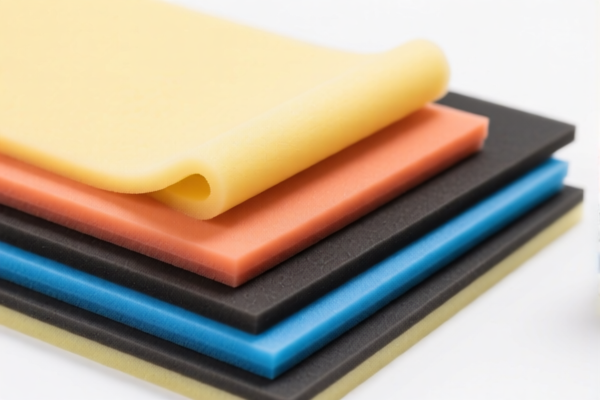
商品图片



AI分析
🧱 Foam Rubber Sheet (Sponge Rubber Slabs)
🌐 HS Code Reference & Customs Clearance Guide | 2026 Latest Tariff Analysis | Professional Entry Strategy for US Imports
📌 I. Product Definition & Classification: Do You Really Understand "Foam Rubber"?
Foam Rubber Sheets are elastic, porous rubber products characterized by a network of air pockets within a rubber matrix. They are widely used in packaging, gaskets, seals, insulation, and cushioning.
In international trade (specifically US Customs and Border Protection contexts), classification hinges on two critical factors: 1. State of Vulcanization: Is it Vulcanized (hardened, stable, elastic) or Unvulcanized (soft, sticky, needs further processing)? 2. Physical Form: Is it explicitly defined as a Sheet/Board or another shape?
⚠️ Key Distinction Point:
- If the material is elastic, non-adhesive, and stable → It is likely Vulcanized (Chapter 40.08/4016).
- If the material is soft, tacky, and requires further molding/vulcanization → It is Unvulcanized (Chapter 40.06).
📦 II. HS Code Classification Details (2026 Latest Tariff Authority Comparison)
Based on the provided <DATA>, here are the four potential classifications for Foam Rubber Sheets, differentiated by vulcanization status and specific tax brackets.
| HS Code | Product Description | Application Scenario | Vulcanization Status | Total Tax Rate (US/CN) |
|---|---|---|---|---|
| 4008.11.10.00 | Rubber Foam Sheets, Form: Slab/Board | Vulcanized foam rubber plates, stable, non-adhesive | ✅ Vulcanized | 35.0% |
| 4008.11.50.00 | Vulcanized Rubber Foam Sheets | Specific subtype of vulcanized foam, often thicker or specific density | ✅ Vulcanized | 38.3% |
| 4006.90.10.00 | Unvulcanized Rubber Articles, Form: Slab | Raw/unprocessed foam rubber, sticky, needs curing | ❌ Unvulcanized | 35.0% |
| 4006.90.50.00 | Unvulcanized Rubber Articles, Form: Other | General unvulcanized rubber shapes, including slab-like forms | ❌ Unvulcanized | 37.7% |
🔍 Critical Reminder:
- Vulcanized vs. Unvulcanized: This is the primary classifier. Vulcanized (4008) implies the product is finished and ready for use. Unvulcanized (4006) implies it is a raw material for further manufacturing. - Tax Variance: Even within the same physical form (Sheet), a difference in HS code (e.g., .10 vs .50) can shift the tax rate by 3.3%. Precision in material specification is key.
💰 III. 2026 Latest Tariff Rate Breakdown (Including Surtaxes & Policy Add-ons)
✅ Applicable Country: United States (US)
✅ Origin: China (CN)
✅ Effective Time: Post-2025 Trade Policies (Section 301 + IEEPA)
The tax structure for these rubber products consists of three components: 1. Base Tariff (MFN Rate): The standard WTO rate. 2. Section 301 Surtax: The "Trade War" tariff (+25%). 3. IEEPA Section 122 Tariff: The new "122-Clause" tariff (+10% for specific Chinese goods).
🎯 1. 4008.11.10.00 —— Vulcanized Rubber Foam Sheets (Base Tariff: 0%)
| Item | Content |
|---|---|
| Base Tariff | 0.0% (MFN Rate for certain rubber foams) |
| Section 301 Surtax | +25.0% (USITC Footnote for Chinese Origin) |
| IEEPA Section 122 Tariff | +10.0% (Specific to Chinese imports under Executive Order) |
| Total Tax Rate | 35.0% |
| Tax Calculation | CIF Value × 35% |
| De Minimis Eligibility | ❌ No (Denied for Section 301/122 goods) |
| Legal Basis Path | USITC:4008.11.10.00 → Section 301: Footnote 9903.88 → IEEPA: Section 122 |
📌 Explanation:
- Despite a 0% base tariff, the total burden is 35% due to punitive tariffs. - This code is optimal for finished, stable foam rubber sheets (e.g., for packaging, insulation).
🎯 2. 4008.11.50.00 —— Vulcanized Rubber Foam Sheets (Base Tariff: 3.3%)
| Item | Content |
|---|---|
| Base Tariff | 3.3% (MFN Rate for specific vulcanized foams) |
| Section 301 Surtax | +25.0% |
| IEEPA Section 122 Tariff | +10.0% |
| Total Tax Rate | 38.3% |
| Tax Calculation | CIF Value × 38.3% |
| De Minimis Eligibility | ❌ No |
| Legal Basis Path | USITC:4008.11.50.00 → Section 301 → IEEPA |
📌 Note:
- This code applies to vulcanized foams that fall into the "Other" or specific sub-category of 4008.11. - 3.3% higher than code .10 due to the base tariff difference. Ensure your product description matches the specific duty paragraph of .50 to avoid misclassification penalties.
🎯 3. 4006.90.10.00 —— Unvulcanized Rubber Articles, Slab Form (Base Tariff: 0%)
| Item | Content |
|---|---|
| Base Tariff | 0.0% |
| Section 301 Surtax | +25.0% |
| IEEPA Section 122 Tariff | +10.0% |
| Total Tax Rate | 35.0% |
| Tax Calculation | CIF Value × 35% |
| De Minimis Eligibility | ❌ No |
| Legal Basis Path | USITC:4006.90.10.00 → Section 301 → IEEPA |
📌 Explanation:
- Use this code ONLY if the rubber is unvulcanized (sticky, raw, must be molded/cured by the importer). - Common Mistake: Importing finished foam pads but declaring them as "unvulcanized" to save base duty (if any). This is fraud and leads to severe penalties.
🎯 4. 4006.90.50.00 —— Unvulcanized Rubber Articles, Other Shapes (Base Tariff: 2.7%)
| Item | Content |
|---|---|
| Base Tariff | 2.7% |
| Section 301 Surtax | +25.0% |
| IEEPA Section 122 Tariff | +10.0% |
| Total Tax Rate | 37.7% |
| Tax Calculation | CIF Value × 37.7% |
| De Minimis Eligibility | ❌ No |
| Legal Basis Path | USITC:4006.90.50.00 → Section 301 → IEEPA |
📌 Note:
- This is the "catch-all" for unvulcanized rubber not elsewhere specified. - If your product is a simple slab, .10 (0% base) is more common. Use .50 only if the form is irregular or not strictly a "slab."
🛠️ IV. Customs Clearance Practical Advice (Battle-Tested Pitfall Guide)
✅ 1. Preparation Checklist (Non-Negotiable)
| Document | Must Provide | Explanation |
|---|---|---|
| ✅ Product Spec Sheet | ✔️ | Must state: Vulcanization Status (Vulcanized/Unvulcanized), Density, Thickness, Color. |
| ✅ Material Safety Data Sheet (MSDS) | ✔️ | Proves chemical composition and stability. Critical for determining vulcanization. |
| ✅ Product Photos | ✔️ | Clear shots of cross-section (to show foam structure) and surface (to show texture). |
| ✅ Commercial Invoice | ✔️ | Clearly state "Vulcanized Foam Rubber Sheet" or "Unvulcanized Raw Rubber Slab." |
| ✅ Certificate of Origin | ✔️ | Essential for applying Section 301 and IEEPA exemptions (if any applicable to specific entities). |
| ✅ Bill of Lading/Air Waybill | ✔️ | Consistent weight and dimensions with invoice. |
✅ 2. Declaration Tips (Key Mantras)
🔥 "Vulcanized vs. Raw, State Determines Rate!"
| Scenario | Correct HS Code | Wrong Approach | Consequence |
|---|---|---|---|
| Finished Foam Padding (e.g., for car seats, packaging) | 4008.11.10.00 or .50 |
Declare as "Unvulcanized" | Severe Penalty: Misdeclaration, fines, seizure. |
| Raw Rubber Slab (for custom molding) | 4006.90.10.00 or .50 |
Declare as "Vulcanized" | Delay: Customs lab test to determine vulcanization status. |
| Foam with Metal/Plastic Inserts | Depends on Main Character | Split line items | Audit Risk: If foam is minor, may be classified under metal/plastic code with different rates. |
| Hybrid Products (Rubam + Foams) | Check Essential Character | Declare as "Rubber Sheet" | Misclassification: If fabric/plastic is primary material, it’s not Chapter 40. |
✅ 3. Special Situations Handling
| Situation | Handling Advice |
|---|---|
| OEM Custom Colors | Provide Pantone codes and batch numbers. Ensure spec sheet matches the physical goods. |
| Recycled Foam Rubber | May still fall under 4008/4006 if rubber content is primary. Provide recycling certificate. |
| Antistatic/Antimicrobial Foam | Disclose additives. May require additional compliance certs (e.g., UL, FDA if food contact). |
| Partial Vulcanization | High Risk: If partially cured, customs may classify as unvulcanized. Ensure full vulcanization before shipment. |
🌍 V. Global Market Comparison (2026 Overview)
| Country/Region | Recommended HS Code (Example) | Total Tax (CN Origin) | Key Certification | Notes |
|---|---|---|---|---|
| 🇺🇸 USA | 4008.11.10.00 |
35.0% | None specific | High punitive tariffs; strict vulcanization check. |
| 🇨🇳 China | 4008.11.10.00 |
~6-10% | CCC (if applicable) | Lower base duties; favorable for domestic consumption. |
| 🇪🇺 EU | 4008.11 |
0-4% | REACH, RoHS | Generally low tariffs for rubber foam; strict environmental rules. |
| 🇬🇧 UK | 4008.11 |
0-4% | UKCA | Post-Brexit alignment with EU standards. |
| 🇯🇵 Japan | 4008.11 |
0-3% | JIS | Low tariffs; high quality standards. |
📌 Conclusion:
- The US market is the most expensive for Chinese foam rubber due to Section 301 + IEEPA surcharges. - Duty Planning: Consider transshipment (not circumvention) or supply chain diversification if volume is high. - Pre-Ruling: Strongly recommended to obtain an Advance Ruling from US CBP to confirm HS Code and tax liability before shipment.
📌 VI. Common Errors & Pitfall Guide (Blood Lessons)
❌ Error 1: Declaring "Vulcanized" foam as "Unvulcanized" to avoid specific sub-code scrutiny.
👉 Consequence: Customs samples the goods, performs a lab test, finds it vulcanized, reassesses tax + penalties.
❌ Error 2: Ignoring the IEEPA 122-Clause tariff.
👉 Consequence: Underpayment by 10%. CBP audits catch this in retrospective reviews. Total tax is 35%+, not just 25%.
❌ Error 3: Using vague descriptions like "Rubber Sheet" in the invoice.
👉 Consequence: Customs may assign the highest duty rate or require detailed description, causing delays.
❌ Error 4: Assuming "Foam Plastic" (EPS/PU) falls under rubber.
👉 Consequence: Completely wrong chapter. Rubber is Chapter 40; Plastic Foam is Chapter 39. Do not confuse them.
✅ Correct Approach:
"Vulcanized Sponge Rubber Sheet, Closed Cell, Density 30kg/m³, Thickness 10mm, Color Black, Model XYZ, For Packaging Use."
🎯 VII. Conclusion: Professional Declaration, Cost Control
🎯 Remember the Mantra:
🔹 "Vulcanized = 4008, Unvulcanized = 4006. Base Duty Zero, but Surtax 35%! IEEPA 10% is mandatory!"
🔹 "HS Code 101: State of Matter Dictates Fate. Tax Difference 3.3%, Claim Difference Thousands!"
📌 Pro Tip:
If your rubber sheets are blended with other materials (e.g., fiberglass backing, adhesive tape), the classification may shift to the essential character component.
Recommendation:
📞 Contact a licensed customs broker + Provide technical datasheet + Apply for CBP Ruling (Header 9, Part 177) for your specific product.
🚀 Ensure your foam rubber sheets pass through US customs smoothly, avoid audit traps, and protect your margin.
✨ Professional Customs Clearance Starts with Precise Classification!
💼 Your Bottom Line Depends on Accurate Duty Calculation!
用户评价
关于 HS 编码归类
协调制度(HS)是由世界海关组织(WCO)制定的国际贸易商品分类标准。全球 200 多个国家采用 HS 系统作为海关关税、贸易统计和进出口监管的基础。
每个 HS 编码遵循以下层级结构:
- 章(2 位)——商品大类(例如:第 84 章:机器和机械设备)
- 品目(4 位)——章内的更具体分类
- 子目(6 位)——国际通用细分,所有 WCO 成员国统一使用
- 本国细分(8-10 位)——各国自行扩展的细分编码,如美国 HTSUS 10 位编码
正确的 HS 编码归类对于顺利通关、准确缴纳关税和遵守贸易法规至关重要。错误归类可能导致海关延误、多缴关税或罚款。
从CN进口到US时,适用的关税税率可能包括:
- 最惠国(MFN)税率——适用于 WTO 成员国的标准关税税率
- 普通税率——适用于无贸易协定国家
- 贸易救济关税——附加关税,如 301 条款(反倾销)、232 条款(国家安全)或反补贴税
本页内容仅供参考。如需正式归类,请咨询当地海关或持牌报关代理。