Foam Rubber Sheet
CN → US| HS Code | Tariff Rate | Origin | Destination | Doc |
|---|---|---|---|---|
| 4008111000 | 35.0% | CN | US | Official Doc |
| 4008115000 | 38.3% | CN | US | Official Doc |
| 4006901000 | 35.0% | CN | US | Official Doc |
| 4006905000 | 37.7% | CN | US | Official Doc |
| 4016100000 | 35.0% | CN | US | Official Doc |
Product Images



AI Analysis
🧱 Foam Rubber Sheet (Sponge Rubber Slabs)
🌐 HS Code Reference & Customs Clearance Guide | 2026 Latest Tariff Analysis | Professional Entry Strategy for US Imports
📌 I. Product Definition & Classification: Do You Really Understand "Foam Rubber"?
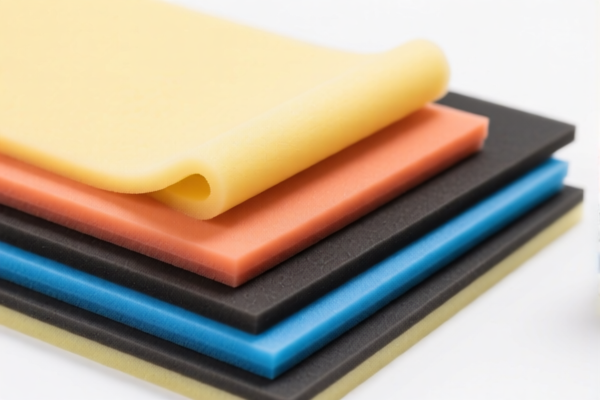
Foam Rubber Sheets are elastic, porous rubber products characterized by a network of air pockets within a rubber matrix. They are widely used in packaging, gaskets, seals, insulation, and cushioning.
In international trade (specifically US Customs and Border Protection contexts), classification hinges on two critical factors: 1. State of Vulcanization: Is it Vulcanized (hardened, stable, elastic) or Unvulcanized (soft, sticky, needs further processing)? 2. Physical Form: Is it explicitly defined as a Sheet/Board or another shape?
⚠️ Key Distinction Point:
- If the material is elastic, non-adhesive, and stable → It is likely Vulcanized (Chapter 40.08/4016).
- If the material is soft, tacky, and requires further molding/vulcanization → It is Unvulcanized (Chapter 40.06).
📦 II. HS Code Classification Details (2026 Latest Tariff Authority Comparison)
Based on the provided <DATA>, here are the four potential classifications for Foam Rubber Sheets, differentiated by vulcanization status and specific tax brackets.
| HS Code | Product Description | Application Scenario | Vulcanization Status | Total Tax Rate (US/CN) |
|---|---|---|---|---|
| 4008.11.10.00 | Rubber Foam Sheets, Form: Slab/Board | Vulcanized foam rubber plates, stable, non-adhesive | ✅ Vulcanized | 35.0% |
| 4008.11.50.00 | Vulcanized Rubber Foam Sheets | Specific subtype of vulcanized foam, often thicker or specific density | ✅ Vulcanized | 38.3% |
| 4006.90.10.00 | Unvulcanized Rubber Articles, Form: Slab | Raw/unprocessed foam rubber, sticky, needs curing | ❌ Unvulcanized | 35.0% |
| 4006.90.50.00 | Unvulcanized Rubber Articles, Form: Other | General unvulcanized rubber shapes, including slab-like forms | ❌ Unvulcanized | 37.7% |
🔍 Critical Reminder:
- Vulcanized vs. Unvulcanized: This is the primary classifier. Vulcanized (4008) implies the product is finished and ready for use. Unvulcanized (4006) implies it is a raw material for further manufacturing. - Tax Variance: Even within the same physical form (Sheet), a difference in HS code (e.g., .10 vs .50) can shift the tax rate by 3.3%. Precision in material specification is key.
💰 III. 2026 Latest Tariff Rate Breakdown (Including Surtaxes & Policy Add-ons)
✅ Applicable Country: United States (US)
✅ Origin: China (CN)
✅ Effective Time: Post-2025 Trade Policies (Section 301 + IEEPA)
The tax structure for these rubber products consists of three components: 1. Base Tariff (MFN Rate): The standard WTO rate. 2. Section 301 Surtax: The "Trade War" tariff (+25%). 3. IEEPA Section 122 Tariff: The new "122-Clause" tariff (+10% for specific Chinese goods).
🎯 1. 4008.11.10.00 —— Vulcanized Rubber Foam Sheets (Base Tariff: 0%)
| Item | Content |
|---|---|
| Base Tariff | 0.0% (MFN Rate for certain rubber foams) |
| Section 301 Surtax | +25.0% (USITC Footnote for Chinese Origin) |
| IEEPA Section 122 Tariff | +10.0% (Specific to Chinese imports under Executive Order) |
| Total Tax Rate | 35.0% |
| Tax Calculation | CIF Value × 35% |
| De Minimis Eligibility | ❌ No (Denied for Section 301/122 goods) |
| Legal Basis Path | USITC:4008.11.10.00 → Section 301: Footnote 9903.88 → IEEPA: Section 122 |
📌 Explanation:
- Despite a 0% base tariff, the total burden is 35% due to punitive tariffs. - This code is optimal for finished, stable foam rubber sheets (e.g., for packaging, insulation).
🎯 2. 4008.11.50.00 —— Vulcanized Rubber Foam Sheets (Base Tariff: 3.3%)
| Item | Content |
|---|---|
| Base Tariff | 3.3% (MFN Rate for specific vulcanized foams) |
| Section 301 Surtax | +25.0% |
| IEEPA Section 122 Tariff | +10.0% |
| Total Tax Rate | 38.3% |
| Tax Calculation | CIF Value × 38.3% |
| De Minimis Eligibility | ❌ No |
| Legal Basis Path | USITC:4008.11.50.00 → Section 301 → IEEPA |
📌 Note:
- This code applies to vulcanized foams that fall into the "Other" or specific sub-category of 4008.11. - 3.3% higher than code .10 due to the base tariff difference. Ensure your product description matches the specific duty paragraph of .50 to avoid misclassification penalties.
🎯 3. 4006.90.10.00 —— Unvulcanized Rubber Articles, Slab Form (Base Tariff: 0%)
| Item | Content |
|---|---|
| Base Tariff | 0.0% |
| Section 301 Surtax | +25.0% |
| IEEPA Section 122 Tariff | +10.0% |
| Total Tax Rate | 35.0% |
| Tax Calculation | CIF Value × 35% |
| De Minimis Eligibility | ❌ No |
| Legal Basis Path | USITC:4006.90.10.00 → Section 301 → IEEPA |
📌 Explanation:
- Use this code ONLY if the rubber is unvulcanized (sticky, raw, must be molded/cured by the importer). - Common Mistake: Importing finished foam pads but declaring them as "unvulcanized" to save base duty (if any). This is fraud and leads to severe penalties.
🎯 4. 4006.90.50.00 —— Unvulcanized Rubber Articles, Other Shapes (Base Tariff: 2.7%)
| Item | Content |
|---|---|
| Base Tariff | 2.7% |
| Section 301 Surtax | +25.0% |
| IEEPA Section 122 Tariff | +10.0% |
| Total Tax Rate | 37.7% |
| Tax Calculation | CIF Value × 37.7% |
| De Minimis Eligibility | ❌ No |
| Legal Basis Path | USITC:4006.90.50.00 → Section 301 → IEEPA |
📌 Note:
- This is the "catch-all" for unvulcanized rubber not elsewhere specified. - If your product is a simple slab, .10 (0% base) is more common. Use .50 only if the form is irregular or not strictly a "slab."
🛠️ IV. Customs Clearance Practical Advice (Battle-Tested Pitfall Guide)
✅ 1. Preparation Checklist (Non-Negotiable)
| Document | Must Provide | Explanation |
|---|---|---|
| ✅ Product Spec Sheet | ✔️ | Must state: Vulcanization Status (Vulcanized/Unvulcanized), Density, Thickness, Color. |
| ✅ Material Safety Data Sheet (MSDS) | ✔️ | Proves chemical composition and stability. Critical for determining vulcanization. |
| ✅ Product Photos | ✔️ | Clear shots of cross-section (to show foam structure) and surface (to show texture). |
| ✅ Commercial Invoice | ✔️ | Clearly state "Vulcanized Foam Rubber Sheet" or "Unvulcanized Raw Rubber Slab." |
| ✅ Certificate of Origin | ✔️ | Essential for applying Section 301 and IEEPA exemptions (if any applicable to specific entities). |
| ✅ Bill of Lading/Air Waybill | ✔️ | Consistent weight and dimensions with invoice. |
✅ 2. Declaration Tips (Key Mantras)
🔥 "Vulcanized vs. Raw, State Determines Rate!"
| Scenario | Correct HS Code | Wrong Approach | Consequence |
|---|---|---|---|
| Finished Foam Padding (e.g., for car seats, packaging) | 4008.11.10.00 or .50 |
Declare as "Unvulcanized" | Severe Penalty: Misdeclaration, fines, seizure. |
| Raw Rubber Slab (for custom molding) | 4006.90.10.00 or .50 |
Declare as "Vulcanized" | Delay: Customs lab test to determine vulcanization status. |
| Foam with Metal/Plastic Inserts | Depends on Main Character | Split line items | Audit Risk: If foam is minor, may be classified under metal/plastic code with different rates. |
| Hybrid Products (Rubam + Foams) | Check Essential Character | Declare as "Rubber Sheet" | Misclassification: If fabric/plastic is primary material, it’s not Chapter 40. |
✅ 3. Special Situations Handling
| Situation | Handling Advice |
|---|---|
| OEM Custom Colors | Provide Pantone codes and batch numbers. Ensure spec sheet matches the physical goods. |
| Recycled Foam Rubber | May still fall under 4008/4006 if rubber content is primary. Provide recycling certificate. |
| Antistatic/Antimicrobial Foam | Disclose additives. May require additional compliance certs (e.g., UL, FDA if food contact). |
| Partial Vulcanization | High Risk: If partially cured, customs may classify as unvulcanized. Ensure full vulcanization before shipment. |
🌍 V. Global Market Comparison (2026 Overview)
| Country/Region | Recommended HS Code (Example) | Total Tax (CN Origin) | Key Certification | Notes |
|---|---|---|---|---|
| 🇺🇸 USA | 4008.11.10.00 |
35.0% | None specific | High punitive tariffs; strict vulcanization check. |
| 🇨🇳 China | 4008.11.10.00 |
~6-10% | CCC (if applicable) | Lower base duties; favorable for domestic consumption. |
| 🇪🇺 EU | 4008.11 |
0-4% | REACH, RoHS | Generally low tariffs for rubber foam; strict environmental rules. |
| 🇬🇧 UK | 4008.11 |
0-4% | UKCA | Post-Brexit alignment with EU standards. |
| 🇯🇵 Japan | 4008.11 |
0-3% | JIS | Low tariffs; high quality standards. |
📌 Conclusion:
- The US market is the most expensive for Chinese foam rubber due to Section 301 + IEEPA surcharges. - Duty Planning: Consider transshipment (not circumvention) or supply chain diversification if volume is high. - Pre-Ruling: Strongly recommended to obtain an Advance Ruling from US CBP to confirm HS Code and tax liability before shipment.
📌 VI. Common Errors & Pitfall Guide (Blood Lessons)
❌ Error 1: Declaring "Vulcanized" foam as "Unvulcanized" to avoid specific sub-code scrutiny.
👉 Consequence: Customs samples the goods, performs a lab test, finds it vulcanized, reassesses tax + penalties.
❌ Error 2: Ignoring the IEEPA 122-Clause tariff.
👉 Consequence: Underpayment by 10%. CBP audits catch this in retrospective reviews. Total tax is 35%+, not just 25%.
❌ Error 3: Using vague descriptions like "Rubber Sheet" in the invoice.
👉 Consequence: Customs may assign the highest duty rate or require detailed description, causing delays.
❌ Error 4: Assuming "Foam Plastic" (EPS/PU) falls under rubber.
👉 Consequence: Completely wrong chapter. Rubber is Chapter 40; Plastic Foam is Chapter 39. Do not confuse them.
✅ Correct Approach:
"Vulcanized Sponge Rubber Sheet, Closed Cell, Density 30kg/m³, Thickness 10mm, Color Black, Model XYZ, For Packaging Use."
🎯 VII. Conclusion: Professional Declaration, Cost Control
🎯 Remember the Mantra:
🔹 "Vulcanized = 4008, Unvulcanized = 4006. Base Duty Zero, but Surtax 35%! IEEPA 10% is mandatory!"
🔹 "HS Code 101: State of Matter Dictates Fate. Tax Difference 3.3%, Claim Difference Thousands!"
📌 Pro Tip:
If your rubber sheets are blended with other materials (e.g., fiberglass backing, adhesive tape), the classification may shift to the essential character component.
Recommendation:
📞 Contact a licensed customs broker + Provide technical datasheet + Apply for CBP Ruling (Header 9, Part 177) for your specific product.
🚀 Ensure your foam rubber sheets pass through US customs smoothly, avoid audit traps, and protect your margin.
✨ Professional Customs Clearance Starts with Precise Classification!
💼 Your Bottom Line Depends on Accurate Duty Calculation!
Customer Reviews
About HS Code Classification
The Harmonized System (HS) is an internationally standardized nomenclature developed by the World Customs Organization (WCO) to classify traded products. Over 200 countries use the HS system as the basis for customs tariffs, trade statistics, and import/export regulations.
Each HS code follows a hierarchical structure:
- Chapter (2 digits) — Broad category of goods (e.g., Chapter 84: Machinery and Mechanical Appliances)
- Heading (4 digits) — More specific grouping within the chapter
- Subheading (6 digits) — Internationally standardized breakdown, used by all WCO member countries
- National subdivisions (8-10 digits) — Country-specific extensions for further classification, such as US HTSUS 10-digit codes
Correct HS code classification is essential for smooth customs clearance, accurate duty payment, and compliance with trade regulations. Misclassification can lead to customs delays, overpayment of duties, or penalties.
When importing from CN to US, the applicable tariff rates may include:
- Most-Favored-Nation (MFN) rate — The standard duty rate applied to WTO members
- General rate — Applied to countries without trade agreements
- Trade remedy duties — Additional tariffs such as Section 301 (anti-dumping), Section 232 (national security), or countervailing duties
The information provided on this page is for reference purposes only. For official classification, please consult with your local customs authority or a licensed customs broker.