Folding Mirror
CN → US| HS编码 | 关税税率 | 原产国 | 目的国 | 文档 |
|---|---|---|---|---|
| 7009911090 | 42.8% | CN | US | 官方文档 |
| 9013809100 | 22.0% | CN | US | 官方文档 |
| 9013105000 | 22.8% | CN | US | 官方文档 |
商品图片

AI分析
🪞 Folding Mirror: Global HS Code Classification & Duty Strategy 2026
🌐 HS Code Reference & Clearance Guide | 2026 Latest Tariff Analysis | Professional通关 Strategy
📌 I. Product Definition & Classification: Do You Really Know the "Folding Mirror"?
The Folding Mirror is a versatile optical instrument widely used in personal grooming, medical examinations, industrial inspection, and photography. In international trade, its classification depends entirely on its primary function and optical composition:
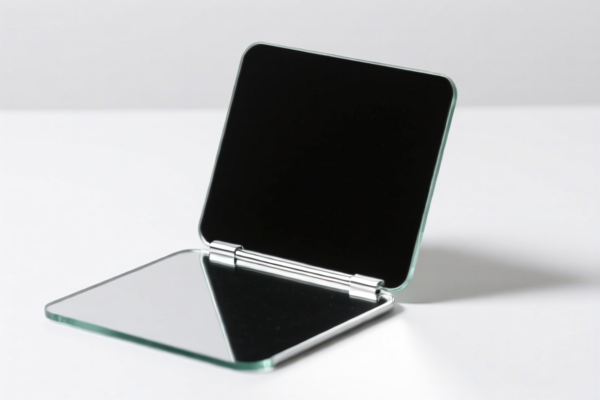
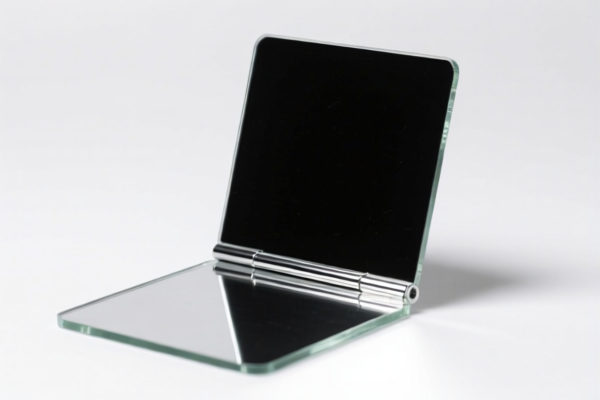
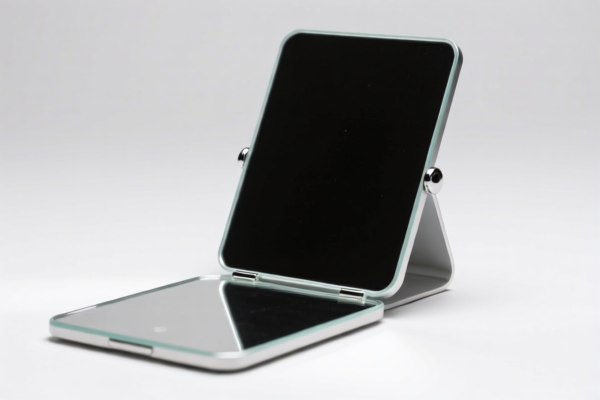
- Glass Mirror Assembly: If the product is primarily a reflective glass object with a folding mechanism (e.g., double-sided vanity mirror), it falls under glassware categories.
- Optical Instrument: If the product is a precision folding telescope, periscope, or specialized optical sight, it falls under optical instruments categories.
⚠️ Critical Distinction:
- If it is a standard vanity/cosmetic mirror → HS 7009.91.10.90 (Glassware).
- If it is a precision optical device (e.g., field scope, telescope) → HS 9013.80.91.00 or 9013.10.50.00 (Optical Instruments).
📦 II. HS Code Classification Details (2026 Tariff Authority对照)
Based on the specific product configuration, here are the three possible classifications for a "Folding Mirror":
| HS Code | Product Description | Application Scenario | Tax Category |
|---|---|---|---|
| 7009.91.10.90 | Glass Mirrors (Folding) | Standard cosmetic, dressing, or decorative folding mirrors made of glass. | Glassware Category |
| 9013.80.91.00 | Other Optical Instruments | Precision folding optical devices (e.g., compact periscopes, specialized optical sights). | Optical Device Category |
| 9013.10.50.00 | Other Optical Instruments (Unspecified) | Folding mirrors not explicitly listed elsewhere, classified under general optical apparatus. | Optical Device Category |
🔍 Key Insight:
- 7009.91.10.90 is the "catch-all" for glass material mirrors that don't fit specific medical or decorative sub-categories.
- 9013 series applies when the mirror is part of a complex optical system (not just a reflective surface).
💰 III. 2026 Tariff Rate Breakdown (Including Additional Duties & Policy Surcharges)
✅ Applicable Country: United States (US)
✅ Country of Origin: China (CN)
✅ Effective Date: Current regulations apply (including Section 301 & Section 122 additions).
🎯 1. HS Code 7009.91.10.90 — Folding Glass Mirrors
| Item | Content |
|---|---|
| Base Duty Rate | 7.8% (Standard Most-Favored-Nation Rate) |
| Section 301 Surcharge | 25.0% (USITC "Add-on" Tariff on Chinese Goods) |
| Section 122 Tariff | 10.0% (Specific policy surcharge for glassware/optics) |
| Total Duty Rate | 42.8% |
| Tax Calculation | CIF Value × 42.8% |
| De Minimis Exemption | ❌ No (Denied for this category) |
| Legal Basis Path | HTS:7009.91.10.90 → USITC:Footnote 301 → Sec 122 Policy |
📌 Explanation:
- The 25.0% is the standard Section 301 punitive tariff on Chinese-origin goods.
- The 10.0% is a specific Section 122 surcharge often applied to glass-related optical products under specific trade measures.
- Total Burden: 42.8% is extremely high for low-value items; this significantly impacts pricing competitiveness.
🎯 2. HS Code 9013.80.91.00 — Other Optical Instruments (Folding)
| Item | Content |
|---|---|
| Base Duty Rate | 4.5% (Optical Instruments Base Rate) |
| Section 301 Surcharge | 7.5% (Reduced Section 301 rate for specific optics) |
| Section 122 Tariff | 10.0% (Applies to optical apparatus) |
| Total Duty Rate | 22.0% |
| Tax Calculation | CIF Value × 22.0% |
| De Minimis Exemption | ❌ No |
| Legal Basis Path | HTS:9013.80.91.00 → Sec 301 List → Sec 122 Optics |
📌 Note:
- While the Base Rate (4.5%) is lower than glass mirrors, the Section 122 surcharge (10%) remains heavy.
- Total 22.0% is significantly better than the glass classification (42.8%), making this a preferred code if the product qualifies as a precision optical instrument.
🎯 3. HS Code 9013.10.50.00 — Unspecified Optical Instruments
| Item | Content |
|---|---|
| Base Duty Rate | 5.3% (General Optical Category) |
| Section 301 Surcharge | 7.5% |
| Section 122 Tariff | 10.0% |
| Total Duty Rate | 22.8% |
| Tax Calculation | CIF Value × 22.8% |
| De Minimis Exemption | ❌ No |
| Legal Basis Path | HTS:9013.10.50.00 → General Optics Clause |
📌 Note:
- This code applies to folding mirrors that are optical instruments but do not fit the specific "other" category (9013.80).
- The rate is slightly higher than9013.80due to a slightly higher base duty.
🛠️ IV. Clearance Practical Advice (Pitfall Avoidance Guide)
✅ 1. Preparation Checklist (Must Have)
| Document | Required? | Purpose |
|---|---|---|
| Product Specifications | ✅ | Define material (Glass vs. Optical Prism), mechanism, and intended use. |
| Technical Diagrams | ✅ | Prove if it is a simple reflective glass (HS 7009) or a complex optical system (HS 9013). |
| Product Photos | ✅ | Show folding mechanism, lens quality, and branding. |
| Commercial Invoice | ✅ | Must clearly state: "Folding Mirror" + HS Code + "Made in China". |
| Origin Certificate (CO) | ✅ | Confirm CN origin for Section 301/122 application. |
| Packaging List | ✅ | Confirm if it includes accessories (e.g., tripod, case). |
✅ 2. Declaration Strategy (Crucial Tips)
🔥 Golden Rule: "Material Defines Code, Function Defines Tax!"
| Scenario | Correct Declaration | Wrong Declaration | Consequence |
|---|---|---|---|
| Cosmetic Folding Mirror (Glass) | 7009.91.10.90 (42.8%) |
9013... |
❌ Misclassification Risk (If claimed as optical but is just glass) |
| Precision Optical Telescope | 9013.80.91.00 (22.0%) |
7009... |
❌ Under-declaration (If claimed as glass but is optical) |
| Generic Optical Device | 9013.10.50.00 (22.8%) |
7009... |
❌ Higher Tax Risk |
💡 Strategic Insight:
- If your folding mirror is purely decorative/cosmetic, you must accept the 42.8% tax on 7009.91.10.90. There is no loophole.
- If your product has prisms, lenses, or precision alignment, aggressively argue for 9013 codes to reduce tax from 42.8% to ~22%.
✅ 3. Special Handling Cases
| Situation | Recommendation |
|---|---|
| OEM Custom Mirrors | Provide design specs proving optical precision to justify 9013 classification. |
| Mirrors with Electronic Components | If it includes a light/shutter, it may be classified as 8536 or 8541, not 7009/9013. |
| Military/Industrial Use | May qualify for different duties; require specific end-use certification. |
🌍 V. Global Market Comparison (2026)
| Market | Recommended HS Code | Estimated Total Duty | Notes |
|---|---|---|---|
| 🇺🇸 USA | 7009.91.10.90 |
42.8% | High Section 301 + Section 122. |
| 🇺🇸 USA | 9013.80.91.00 |
22.0% | Only if proven as precision optical. |
| 🇨🇳 China | 7009.91.10.90 |
Low | Domestic tax varies; no US surcharges. |
| 🇪🇺 EU | 7009.91.10.90 |
Low | No Section 301/122; standard MFN applies. |
📌 Conclusion:
- The US market is the most expensive for folding mirrors due to the "Glass + 301 + 122" penalty stack.
- Optical classification (9013) is the only way to mitigate costs for high-tech folding mirrors.
📌 VI. Common Mistakes & Solutions (Lessons Learned)
❌ Mistake 1: Classifying a glass vanity mirror as an optical instrument to avoid tax.
👉 Result: US Customs will audit the "optical precision" claim → Seizure + Penalty + 22% or 42.8% back-tax.
❌ Mistake 2: Ignoring the Section 122 surcharge.
👉 Result: Unexpected 10% extra cost on top of Section 301 duties.
❌ Mistake 3: Using generic names like "Reflector" or "Mirror" without HS Code.
👉 Result: Customs will default to the highest possible duty rate (42.8%).
✅ Best Practice:
"Folding Mirror, Glass Material, Cosmetic Use, Model XYZ, Made in China. HS 7009.91.10.90."
OR
"Folding Optical Telescope, Precision Prism, Model ABC, Made in China. HS 9013.80.91.00."
🎯 VII. Conclusion: Smart Classification, Smart Profit!
🎯 Key Takeaway:
🔹 Glass Vanity Mirror = 42.8% (Hard truth).
🔹 Precision Optical Folding Device = ~22.0% (Strategic opportunity).
🔹 Do not guess: Provide technical drawings to prove optical function if you want to pay less.
📌 Pro Tip:
If you are shipping high-value optical folding mirrors to the US, consider a Pre-Ruling (Advance Ruling) from US Customs to secure the 9013 classification and avoid post-arrival disputes.
📣 Action Plan:
📞 Contact your logistics partner + Submit Technical Specs + Apply for Pre-Ruling
🚀 Optimize your duty cost, clear your customs, and maximize your profit!
✨ Professional Classification Starts with Precision!
💼 Every percentage of duty counts in your bottom line!
用户评价
关于 HS 编码归类
协调制度(HS)是由世界海关组织(WCO)制定的国际贸易商品分类标准。全球 200 多个国家采用 HS 系统作为海关关税、贸易统计和进出口监管的基础。
每个 HS 编码遵循以下层级结构:
- 章(2 位)——商品大类(例如:第 84 章:机器和机械设备)
- 品目(4 位)——章内的更具体分类
- 子目(6 位)——国际通用细分,所有 WCO 成员国统一使用
- 本国细分(8-10 位)——各国自行扩展的细分编码,如美国 HTSUS 10 位编码
正确的 HS 编码归类对于顺利通关、准确缴纳关税和遵守贸易法规至关重要。错误归类可能导致海关延误、多缴关税或罚款。
从CN进口到US时,适用的关税税率可能包括:
- 最惠国(MFN)税率——适用于 WTO 成员国的标准关税税率
- 普通税率——适用于无贸易协定国家
- 贸易救济关税——附加关税,如 301 条款(反倾销)、232 条款(国家安全)或反补贴税
本页内容仅供参考。如需正式归类,请咨询当地海关或持牌报关代理。