Folding Mirror
CN → US| HS Code | Tariff Rate | Origin | Destination | Doc |
|---|---|---|---|---|
| 7009911090 | 42.8% | CN | US | Official Doc |
| 9013809100 | 22.0% | CN | US | Official Doc |
| 9013105000 | 22.8% | CN | US | Official Doc |
Product Images

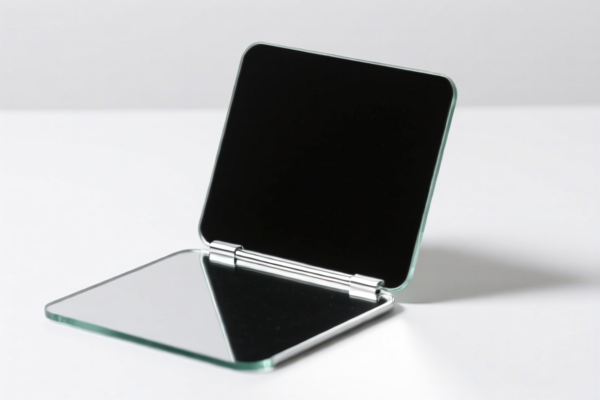
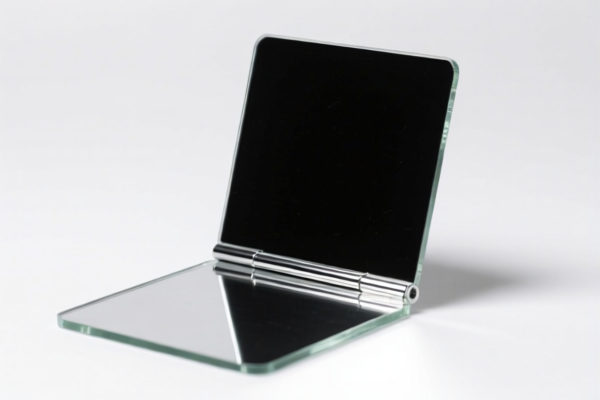
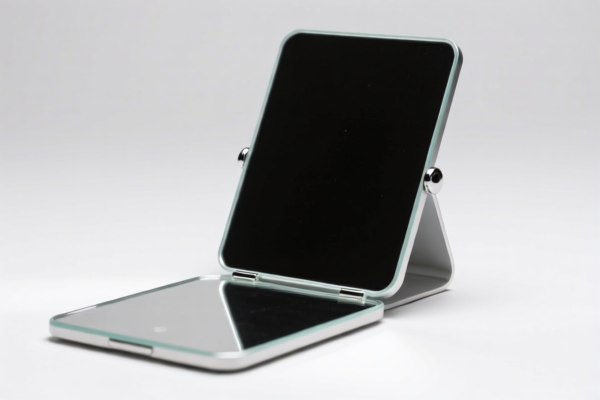
AI Analysis
🪞 Folding Mirror: Global HS Code Classification & Duty Strategy 2026
🌐 HS Code Reference & Clearance Guide | 2026 Latest Tariff Analysis | Professional通关 Strategy
📌 I. Product Definition & Classification: Do You Really Know the "Folding Mirror"?
The Folding Mirror is a versatile optical instrument widely used in personal grooming, medical examinations, industrial inspection, and photography. In international trade, its classification depends entirely on its primary function and optical composition:
- Glass Mirror Assembly: If the product is primarily a reflective glass object with a folding mechanism (e.g., double-sided vanity mirror), it falls under glassware categories.
- Optical Instrument: If the product is a precision folding telescope, periscope, or specialized optical sight, it falls under optical instruments categories.
⚠️ Critical Distinction:
- If it is a standard vanity/cosmetic mirror → HS 7009.91.10.90 (Glassware).
- If it is a precision optical device (e.g., field scope, telescope) → HS 9013.80.91.00 or 9013.10.50.00 (Optical Instruments).
📦 II. HS Code Classification Details (2026 Tariff Authority对照)
Based on the specific product configuration, here are the three possible classifications for a "Folding Mirror":
| HS Code | Product Description | Application Scenario | Tax Category |
|---|---|---|---|
| 7009.91.10.90 | Glass Mirrors (Folding) | Standard cosmetic, dressing, or decorative folding mirrors made of glass. | Glassware Category |
| 9013.80.91.00 | Other Optical Instruments | Precision folding optical devices (e.g., compact periscopes, specialized optical sights). | Optical Device Category |
| 9013.10.50.00 | Other Optical Instruments (Unspecified) | Folding mirrors not explicitly listed elsewhere, classified under general optical apparatus. | Optical Device Category |
🔍 Key Insight:
- 7009.91.10.90 is the "catch-all" for glass material mirrors that don't fit specific medical or decorative sub-categories.
- 9013 series applies when the mirror is part of a complex optical system (not just a reflective surface).
💰 III. 2026 Tariff Rate Breakdown (Including Additional Duties & Policy Surcharges)
✅ Applicable Country: United States (US)
✅ Country of Origin: China (CN)
✅ Effective Date: Current regulations apply (including Section 301 & Section 122 additions).
🎯 1. HS Code 7009.91.10.90 — Folding Glass Mirrors
| Item | Content |
|---|---|
| Base Duty Rate | 7.8% (Standard Most-Favored-Nation Rate) |
| Section 301 Surcharge | 25.0% (USITC "Add-on" Tariff on Chinese Goods) |
| Section 122 Tariff | 10.0% (Specific policy surcharge for glassware/optics) |
| Total Duty Rate | 42.8% |
| Tax Calculation | CIF Value × 42.8% |
| De Minimis Exemption | ❌ No (Denied for this category) |
| Legal Basis Path | HTS:7009.91.10.90 → USITC:Footnote 301 → Sec 122 Policy |
📌 Explanation:
- The 25.0% is the standard Section 301 punitive tariff on Chinese-origin goods.
- The 10.0% is a specific Section 122 surcharge often applied to glass-related optical products under specific trade measures.
- Total Burden: 42.8% is extremely high for low-value items; this significantly impacts pricing competitiveness.
🎯 2. HS Code 9013.80.91.00 — Other Optical Instruments (Folding)
| Item | Content |
|---|---|
| Base Duty Rate | 4.5% (Optical Instruments Base Rate) |
| Section 301 Surcharge | 7.5% (Reduced Section 301 rate for specific optics) |
| Section 122 Tariff | 10.0% (Applies to optical apparatus) |
| Total Duty Rate | 22.0% |
| Tax Calculation | CIF Value × 22.0% |
| De Minimis Exemption | ❌ No |
| Legal Basis Path | HTS:9013.80.91.00 → Sec 301 List → Sec 122 Optics |
📌 Note:
- While the Base Rate (4.5%) is lower than glass mirrors, the Section 122 surcharge (10%) remains heavy.
- Total 22.0% is significantly better than the glass classification (42.8%), making this a preferred code if the product qualifies as a precision optical instrument.
🎯 3. HS Code 9013.10.50.00 — Unspecified Optical Instruments
| Item | Content |
|---|---|
| Base Duty Rate | 5.3% (General Optical Category) |
| Section 301 Surcharge | 7.5% |
| Section 122 Tariff | 10.0% |
| Total Duty Rate | 22.8% |
| Tax Calculation | CIF Value × 22.8% |
| De Minimis Exemption | ❌ No |
| Legal Basis Path | HTS:9013.10.50.00 → General Optics Clause |
📌 Note:
- This code applies to folding mirrors that are optical instruments but do not fit the specific "other" category (9013.80).
- The rate is slightly higher than9013.80due to a slightly higher base duty.
🛠️ IV. Clearance Practical Advice (Pitfall Avoidance Guide)
✅ 1. Preparation Checklist (Must Have)
| Document | Required? | Purpose |
|---|---|---|
| Product Specifications | ✅ | Define material (Glass vs. Optical Prism), mechanism, and intended use. |
| Technical Diagrams | ✅ | Prove if it is a simple reflective glass (HS 7009) or a complex optical system (HS 9013). |
| Product Photos | ✅ | Show folding mechanism, lens quality, and branding. |
| Commercial Invoice | ✅ | Must clearly state: "Folding Mirror" + HS Code + "Made in China". |
| Origin Certificate (CO) | ✅ | Confirm CN origin for Section 301/122 application. |
| Packaging List | ✅ | Confirm if it includes accessories (e.g., tripod, case). |
✅ 2. Declaration Strategy (Crucial Tips)
🔥 Golden Rule: "Material Defines Code, Function Defines Tax!"
| Scenario | Correct Declaration | Wrong Declaration | Consequence |
|---|---|---|---|
| Cosmetic Folding Mirror (Glass) | 7009.91.10.90 (42.8%) |
9013... |
❌ Misclassification Risk (If claimed as optical but is just glass) |
| Precision Optical Telescope | 9013.80.91.00 (22.0%) |
7009... |
❌ Under-declaration (If claimed as glass but is optical) |
| Generic Optical Device | 9013.10.50.00 (22.8%) |
7009... |
❌ Higher Tax Risk |
💡 Strategic Insight:
- If your folding mirror is purely decorative/cosmetic, you must accept the 42.8% tax on 7009.91.10.90. There is no loophole.
- If your product has prisms, lenses, or precision alignment, aggressively argue for 9013 codes to reduce tax from 42.8% to ~22%.
✅ 3. Special Handling Cases
| Situation | Recommendation |
|---|---|
| OEM Custom Mirrors | Provide design specs proving optical precision to justify 9013 classification. |
| Mirrors with Electronic Components | If it includes a light/shutter, it may be classified as 8536 or 8541, not 7009/9013. |
| Military/Industrial Use | May qualify for different duties; require specific end-use certification. |
🌍 V. Global Market Comparison (2026)
| Market | Recommended HS Code | Estimated Total Duty | Notes |
|---|---|---|---|
| 🇺🇸 USA | 7009.91.10.90 |
42.8% | High Section 301 + Section 122. |
| 🇺🇸 USA | 9013.80.91.00 |
22.0% | Only if proven as precision optical. |
| 🇨🇳 China | 7009.91.10.90 |
Low | Domestic tax varies; no US surcharges. |
| 🇪🇺 EU | 7009.91.10.90 |
Low | No Section 301/122; standard MFN applies. |
📌 Conclusion:
- The US market is the most expensive for folding mirrors due to the "Glass + 301 + 122" penalty stack.
- Optical classification (9013) is the only way to mitigate costs for high-tech folding mirrors.
📌 VI. Common Mistakes & Solutions (Lessons Learned)
❌ Mistake 1: Classifying a glass vanity mirror as an optical instrument to avoid tax.
👉 Result: US Customs will audit the "optical precision" claim → Seizure + Penalty + 22% or 42.8% back-tax.
❌ Mistake 2: Ignoring the Section 122 surcharge.
👉 Result: Unexpected 10% extra cost on top of Section 301 duties.
❌ Mistake 3: Using generic names like "Reflector" or "Mirror" without HS Code.
👉 Result: Customs will default to the highest possible duty rate (42.8%).
✅ Best Practice:
"Folding Mirror, Glass Material, Cosmetic Use, Model XYZ, Made in China. HS 7009.91.10.90."
OR
"Folding Optical Telescope, Precision Prism, Model ABC, Made in China. HS 9013.80.91.00."
🎯 VII. Conclusion: Smart Classification, Smart Profit!
🎯 Key Takeaway:
🔹 Glass Vanity Mirror = 42.8% (Hard truth).
🔹 Precision Optical Folding Device = ~22.0% (Strategic opportunity).
🔹 Do not guess: Provide technical drawings to prove optical function if you want to pay less.
📌 Pro Tip:
If you are shipping high-value optical folding mirrors to the US, consider a Pre-Ruling (Advance Ruling) from US Customs to secure the 9013 classification and avoid post-arrival disputes.
📣 Action Plan:
📞 Contact your logistics partner + Submit Technical Specs + Apply for Pre-Ruling
🚀 Optimize your duty cost, clear your customs, and maximize your profit!
✨ Professional Classification Starts with Precision!
💼 Every percentage of duty counts in your bottom line!
Customer Reviews
About HS Code Classification
The Harmonized System (HS) is an internationally standardized nomenclature developed by the World Customs Organization (WCO) to classify traded products. Over 200 countries use the HS system as the basis for customs tariffs, trade statistics, and import/export regulations.
Each HS code follows a hierarchical structure:
- Chapter (2 digits) — Broad category of goods (e.g., Chapter 84: Machinery and Mechanical Appliances)
- Heading (4 digits) — More specific grouping within the chapter
- Subheading (6 digits) — Internationally standardized breakdown, used by all WCO member countries
- National subdivisions (8-10 digits) — Country-specific extensions for further classification, such as US HTSUS 10-digit codes
Correct HS code classification is essential for smooth customs clearance, accurate duty payment, and compliance with trade regulations. Misclassification can lead to customs delays, overpayment of duties, or penalties.
When importing from CN to US, the applicable tariff rates may include:
- Most-Favored-Nation (MFN) rate — The standard duty rate applied to WTO members
- General rate — Applied to countries without trade agreements
- Trade remedy duties — Additional tariffs such as Section 301 (anti-dumping), Section 232 (national security), or countervailing duties
The information provided on this page is for reference purposes only. For official classification, please consult with your local customs authority or a licensed customs broker.