Folding Toilet Seat
CN → US| HS编码 | 关税税率 | 原产国 | 目的国 | 文档 |
|---|---|---|---|---|
| 3922200000 | 23.8% | CN | US | 官方文档 |
| 6307909891 | 24.5% | CN | US | 官方文档 |
| 6307908995 | 17.0% | CN | US | 官方文档 |
| 3922900000 | 41.3% | CN | US | 官方文档 |
| 4014905000 | 14.2% | CN | US | 官方文档 |
商品图片
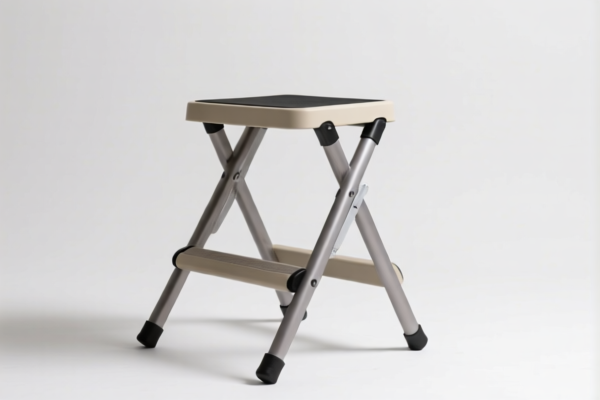
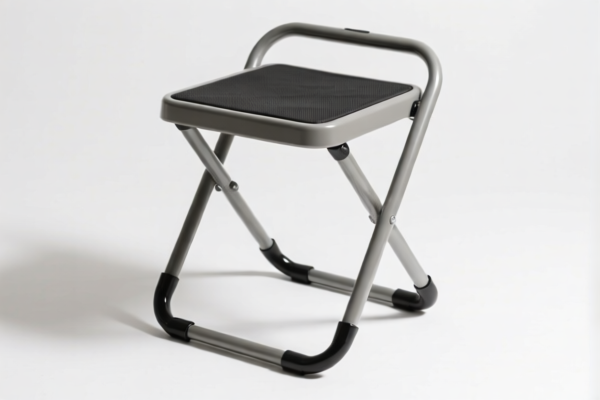
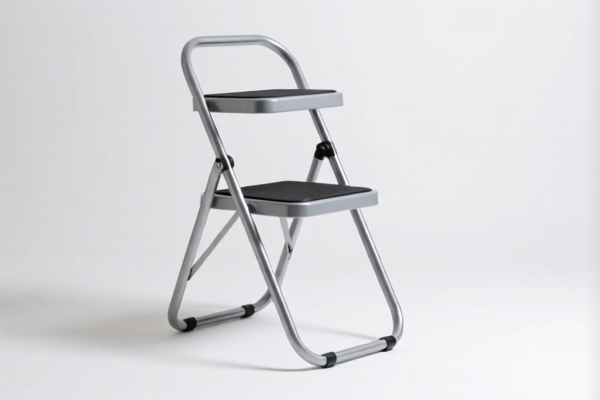
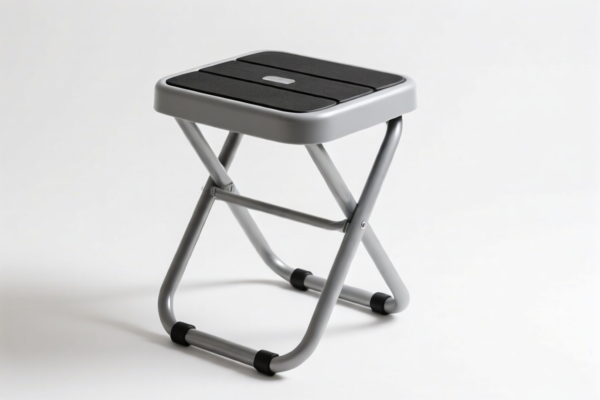
AI分析
🚽 Folding Toilet Seat (Bidet Seats & Covers)
🌐 HS Code Reference & Customs Clearance Guide | 2026 Latest Tariff Analysis | Professional Clearance Strategy
📌 I. Product Definition & Classification: What Exactly is a "Folding Toilet Seat"?
A folding toilet seat (often referring to bidet seats, heated seats, or simple plastic covers) is a sanitary ware accessory. In international trade, its classification depends heavily on material composition and whether it is a finished product or a component part. The data reveals five distinct HS Code possibilities, ranging from plastic components to rubber accessories.
⚠️ Key Distinction Points:
- Plastic Material: Likely falls under Chapter 39 (Plastics). Is it a specific part of a toilet (3922.20) or a general plastic article (3922.90)?
- Rubber Material: Falls under Chapter 40 (Rubber). Specifically, vulcanized rubber parts (4014.90).
- Textile/Soft Material: Falls under Chapter 63 (Other Made-up Articles). Likely fabric-covered or cushioned (6307.90).
- Finished vs. Component: Is it a standalone product sold as a "seat cover" or a replaceable part for a toilet?
📦 II. HS Code Classification Details (2026 Latest Tariff Authority Cross-Reference)
| HS Code | Product Description (Summary from Data) | Material/Type | Key Logic for Classification |
|---|---|---|---|
3922.20.00.00 |
Toilet seat cushions/covers; parts of toilet seats/covers | Plastic | Classified specifically as parts/components of toilet seats/covers. |
6307.90.98.91 |
Other made-up articles; accessories/fillers | Textile/Soft | Classified as accessories or filler products within "other made-up articles." |
6307.90.89.95 |
Other made-up articles; inferred textile or soft cushion | Textile/Soft | Inferred as textile or soft cushion products under other made-up articles. |
3922.90.00.00 |
Other plastic sanitary ware; inferred plastic material | Plastic | Classified as general plastic sanitary ware, not specifically a seat part. |
4014.90.50.00 |
Other rubber articles; parts/accessories | Vulcanized Rubber | Classified as parts/accessories made of vulcanized rubber. |
🔍 Important Note:
- Plastic Seats: The distinction between3922.20(specific parts) and3922.90(general plastic sanitary) is critical for tariff rates.3922.20is often preferred for specific seat components.
- Non-Plastic Seats: If the seat is upholstered (fabric), it likely falls under6307.90. If made of rubber (e.g., non-slip mats or specific ergonomic grips), it falls under4014.90.
💰 III. 2026 Latest Tariff Rate Details (Detailed Breakdown)
✅ Applicable Country: United States (US)
✅ Origin: China (CN)
✅ Effective Time: Current trade policies (Includes Section 301 and IEEPA surcharges)
🎯 1. 3922.20.00.00 – Plastic Parts of Toilet Seats/Covers
| Item | Content |
|---|---|
| Base Tariff | 6.3% (ad valorem) |
| Section 301 Surcharge | 7.5% |
| Section 122 Surcharge | 10.0% |
| Total Tariff | 23.8% |
| Tax Calculation | CIF Value × 23.8% |
| De Minimis Eligibility | ❌ No (High tariff rate typically excludes small package exemptions) |
| Legal Basis Path | USITC:3922.20.00.00 → Footnote 122 → Section 301 |
📌 Explanation:
- This is a mid-range tariff option.
- The "Section 122" tariff (10%) applies to certain steel, aluminum, or specific consumer goods, but in this data context, it is applied to this plastic category.
- Risk: Ensure the product is clearly defined as a "part" of a toilet seat. If customs views it as a general plastic household item, it might shift to3922.90(41.3%).
🎯 2. 6307.90.98.91 – Other Made-Up Articles (Textile/Accessory)
| Item | Content |
|---|---|
| Base Tariff | 7.0% |
| Section 301 Surcharge | 7.5% |
| Section 122 Surcharge | 10.0% |
| Total Tariff | 24.5% |
| Tax Calculation | CIF Value × 24.5% |
| De Minimis Eligibility | ❌ No |
| Legal Basis Path | USITC:6307.90.98.91 → Footnote 122 → Section 301 |
📌 Explanation:
- This code is for textile or fabric-covered seats or accessories.
- Highest Total Tariff among the options.
- Use this only if the product is explicitly made of textile materials and classified as an "accessory" or "made-up article."
🎯 3. 6307.90.89.95 – Other Made-Up Articles (Soft Cushion)
| Item | Content |
|---|---|
| Base Tariff | 7.0% |
| Section 301 Surcharge | 0.0% |
| Section 122 Surcharge | 10.0% |
| Total Tariff | 17.0% |
| Tax Calculation | CIF Value × 17.0% |
| De Minimis Eligibility | ❌ No |
| Legal Basis Path | USITC:6307.90.89.95 → Footnote 122 (No Section 301) |
📌 Explanation:
- Most Cost-Effective Option in the dataset.
- Crucial Detail: This code has 0% Section 301 surcharge.
- Applies to soft, textile-based cushions or covers that do not fall under the specific "accessory" definition of6307.90.98.91.
- Strategy: If your folding seat has a fabric cover or is a soft cushion, investigate if it qualifies for this lower-rate subheading.
🎯 4. 3922.90.00.00 – Other Plastic Sanitary Ware
| Item | Content |
|---|---|
| Base Tariff | 6.3% |
| Section 301 Surcharge | 25.0% |
| Section 122 Surcharge | 10.0% |
| Total Tariff | 41.3% |
| Tax Calculation | CIF Value × 41.3% |
| De Minimis Eligibility | ❌ No |
| Legal Basis Path | USITC:3922.90.00.00 → Footnote 122 → Section 301 (25%) |
📌 Explanation:
- Highest Risk Code.
- If customs determines the product is a general plastic sanitary ware (not a specific seat part), it applies the 25% Section 301 tariff.
- Avoid this classification if possible. Always aim for3922.20(specific parts) to avoid the 25% surcharge.
🎯 5. 4014.90.50.00 – Rubber Parts/Accessories
| Item | Content |
|---|---|
| Base Tariff | 4.2% |
| Section 301 Surcharge | 0.0% |
| Section 122 Surcharge | 10.0% |
| Total Tariff | 14.2% |
| Tax Calculation | CIF Value × 14.2% |
| De Minimis Eligibility | ❌ No |
| Legal Basis Path | USITC:4014.90.50.00 → Footnote 122 (No Section 301) |
📌 Explanation:
- Lowest Total Tariff in the dataset.
- Applies only if the folding toilet seat is made of vulcanized rubber (e.g., flexible hinges, rubber-coated seats).
- Strategy: If your product has significant rubber components or is primarily rubber, this is the most cost-effective classification.
🛠️ IV. Customs Clearance Operational Advice (Practical Pitfall Avoidance)
✅ 1. Preparation Checklist (Non-Negotiable)
| Document | Required | Notes |
|---|---|---|
| ✅ Product Material Declaration | ✔️ | Must specify: 100% Plastic, Rubber, Textile, or Composite. |
| ✅ HS Code Justification | ✔️ | Explain why it is a "part" (3922.20) vs. "general article" (3922.90). |
| ✅ Product Photos | ✔️ | Show hinges, folding mechanism, and material texture. |
| ✅ Commercial Invoice | ✔️ | Clear description: "Folding Plastic Toilet Seat Cover" or "Rubber Toilet Seat Hinge." |
| ✅ Certificate of Origin | ✔️ | To prove Chinese origin for surcharge calculation. |
✅ 2. Declaration Strategy (Key Mantras)
🔥 "Material Defines Code, Function Defines Rate!"
| Scenario | Recommended HS Code | Reason |
|---|---|---|
| Plastic Seat, Specific Part | 3922.20.00.00 |
Lower tariff (23.8%) than general plastic (41.3%). |
| Fabric/Soft Seat | 6307.90.89.95 |
Lowest tariff among textiles (17.0%) due to no Section 301. |
| Rubber Seat | 4014.90.50.00 |
Lowest overall tariff (14.2%) due to no Section 301. |
| General Plastic Sanitary Ware | 3922.90.00.00 |
AVOID if possible. High tariff (41.3%) due to 25% Section 301. |
| Textile Accessory | 6307.90.98.91 |
Higher tariff (24.5%) than soft cushions (17.0%). Use only if classified as accessory. |
📌 Critical Warning:
- Do not misclassify rubber as plastic or vice versa. Customs uses physical inspections and material tests.
- If the seat is a "Complete Set" (Seat + Lid + Hinges), ensure it is described as a set, not just a "cover."
✅ 3. Special Handling for Folding Mechanisms
| Feature | Clearance Tip |
|---|---|
| Hinges (Plastic) | If sold separately, classify as 3922.20. |
| Hinges (Rubber) | If sold separately, classify as 4014.90. |
| Soft Cushion Cover | Ensure it is not considered a "furniture pad" (which may have different duties). |
| Bidet Seats (Electric) | NOT COVERED IN THIS DATA. Electric bidet seats likely fall under 8508 or 9018 and have different tariffs. This data applies to non-electric, mechanical folding seats. |
🌍 V. Market Comparison & Tariff Optimization (2026)
| Classification | Total Tariff (US) | Section 301 | Section 122 | Optimization Strategy |
|---|---|---|---|---|
4014.90.50.00 (Rubber) |
14.2% | 0% | 10% | ✅ Best if Rubber. |
6307.90.89.95 (Soft Textile) |
17.0% | 0% | 10% | ✅ Best if Fabric/Cushion. |
3922.20.00.00 (Plastic Part) |
23.8% | 7.5% | 10% | ⚠️ Standard for Plastic. |
6307.90.98.91 (Textile Accessory) |
24.5% | 7.5% | 10% | ❌ Higher than soft cushion. |
3922.90.00.00 (General Plastic) |
41.3% | 25% | 10% | ❌ Avoid if possible. |
📌 Conclusion:
- Material is King: Rubber (4014) and Soft Textile (6307.89) avoid the 25% Section 301 tariff, resulting in much lower total duties.
- Plastic is Tricky:3922.20is preferred over3922.90to avoid the 25% surcharge.
📌 VI. Common Errors & Pitfalls (Lessons Learned)
❌ Error 1: Classifying a plastic seat as 3922.90 (General Plastic)
👉 Result: Tariff jumps from 23.8% to 41.3% due to 25% Section 301.
👉 Fix: Prove it is a "part of a toilet seat" (3922.20).
❌ Error 2: Claiming "Section 301 Exemption" for Plastic Seats
👉 Result: Denied. Section 301 applies to most plastic sanitary ware.
👉 Fix: Only rubber (4014) and specific soft textiles (6307.89) may benefit from 0% Section 301 in this dataset.
❌ Error 3: Misidentifying Material
👉 Result: Customs reclassifies rubber as plastic (41.3%) or plastic as textile (24.5%).
👉 Fix: Provide clear material specifications and samples.
✅ Correct Declaration Example:
"Folding Plastic Toilet Seat Cover, Part of Toilet Sanitary Ware, 100% PP Plastic, Model XYZ" →
3922.20.00.00
🎯 VII. Conclusion: Professional Declaration for Cost Savings
🎯 Remember the Mantra:
🔹 "Rubber & Soft Textile: No 301, Low Tariff!"
🔹 "Plastic: Specify 'Part' (3922.20), Avoid 'General' (3922.90)."
🔹 "Tariff Gap: 14.2% vs. 41.3% – The Difference is Profit!"
📌 Pro Tip:
If your product is 100% Rubber or Soft Fabric, pursue 4014.90.50.00 or 6307.90.89.95 for maximum savings.
For Plastic Seats, ensure documentation explicitly states "Part of Toilet Seat" to justify 3922.20.00.00.
📣 Action Required:
📞 Consult a customs broker for Advance Ruling on material classification.
🚀 Declare Accurately, Save Up to 27% in Duties!
✨ Professional Clearance Starts with Precise Classification!
💼 Your Cost Efficiency Depends on the First 8 Digits of the HS Code!
用户评价
关于 HS 编码归类
协调制度(HS)是由世界海关组织(WCO)制定的国际贸易商品分类标准。全球 200 多个国家采用 HS 系统作为海关关税、贸易统计和进出口监管的基础。
每个 HS 编码遵循以下层级结构:
- 章(2 位)——商品大类(例如:第 84 章:机器和机械设备)
- 品目(4 位)——章内的更具体分类
- 子目(6 位)——国际通用细分,所有 WCO 成员国统一使用
- 本国细分(8-10 位)——各国自行扩展的细分编码,如美国 HTSUS 10 位编码
正确的 HS 编码归类对于顺利通关、准确缴纳关税和遵守贸易法规至关重要。错误归类可能导致海关延误、多缴关税或罚款。
从CN进口到US时,适用的关税税率可能包括:
- 最惠国(MFN)税率——适用于 WTO 成员国的标准关税税率
- 普通税率——适用于无贸易协定国家
- 贸易救济关税——附加关税,如 301 条款(反倾销)、232 条款(国家安全)或反补贴税
本页内容仅供参考。如需正式归类,请咨询当地海关或持牌报关代理。