Food grade Roll Packaging Material
CN → US| HS编码 | 关税税率 | 原产国 | 目的国 | 文档 |
|---|---|---|---|---|
| 3923290000 | 38.0% | CN | US | 官方文档 |
| 4819300040 | 35.0% | CN | US | 官方文档 |
| 4819400040 | 35.0% | CN | US | 官方文档 |
商品图片
AI分析
📦 Food Grade Roll Packaging Material
🌐 HS Code Reference & Customs Clearance Guide | 2026 Latest Tariff Analysis | Professional Clearance Strategy
📌 I. Product Definition & Classification: What is "Food Grade Roll Packaging Material"?
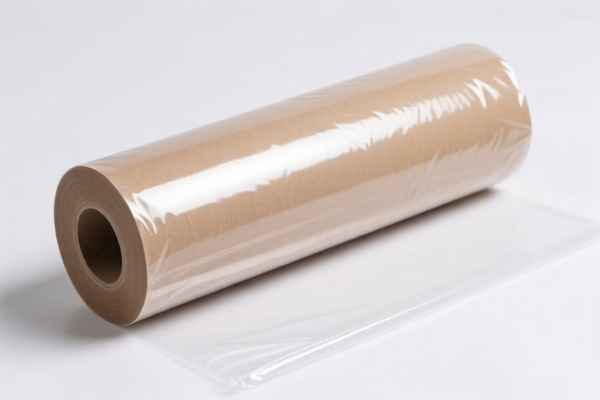
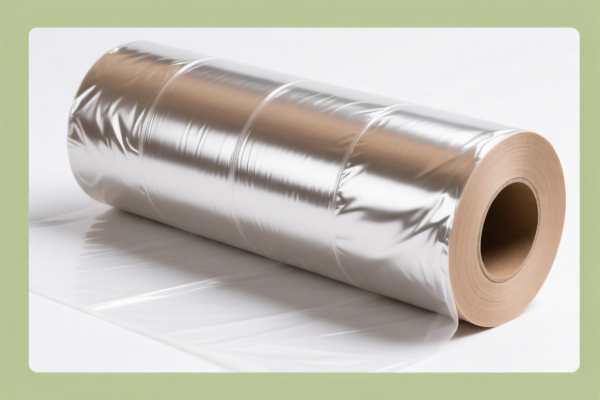
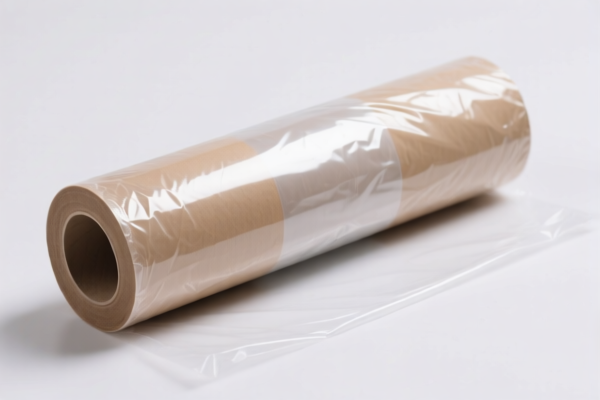
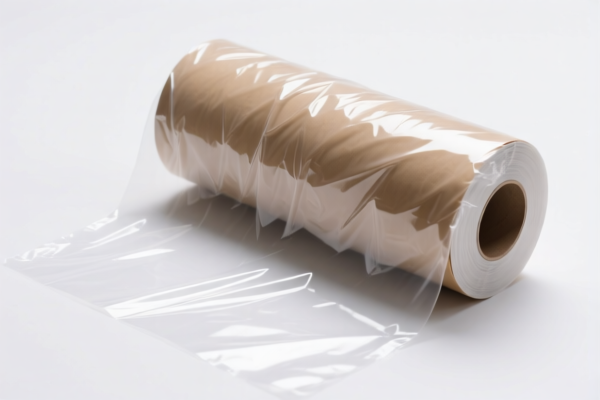
"Food Grade Roll Packaging Material" generally refers to flexible materials supplied in rolls, intended for packaging food products. Key characteristics include: 1. Form: Rolls (flexible, not rigid containers like bottles). 2. Material: Commonly plastic (polyethylene, polypropylene, laminates) or paper-based materials suitable for food contact. 3. Usage: Used for wrapping, bagging, or forming packages for food items.
⚠️ Key Distinction Point:
- If the material is Plastic-based (e.g., PE, PP, PVC films): It falls under Chapter 39.
- If the material is Paper/Cardboard-based (e.g., kraft paper, laminated paper): It falls under Chapter 48.
- The term "Ref" in the data suggests a "Other/Remaining" category within these chapters.
📦 II. HS Code Classification Details (2026 Latest Tariff Authority)
Based on the provided data, there are three primary HS Codes with identical tax structures but different material/usage nuances.
| HS Code | Product Description | Material Inference | Usage/Feature | Total Tax Rate |
|---|---|---|---|---|
3923.29.00.00 |
Plastic Goods for Transport or Packaging | Plastic (Inferred) | Flexible packaging, films, sacks, bags | 38.0% |
4819.30.00.40 |
Cartons, Folders, and Similar Articles of Paper | Paper/Cellulose (Inferred) | Folded cartons, paper rolls, other paper packaging | 35.0% |
4819.40.00.40 |
Other Folding Cardboard, Cartons, Paper, or Paperboard Boxes | Paper/Cellulose (Inferred) | Roll-formed paper bags, other paper pouches/bags | 35.0% |
🔍 Critical Analysis:
- 3923.29.00.00: Applies if the roll is plastic (e.g., shrink wrap, PE bags). The summary confirms "Plastic Goods for Transport/Packaging" matches the use case.
- 4819.30.00.40 & 4819.40.00.40: Apply if the roll is paper-based. The summary notes that "Roll-shaped packaging materials" are inferred to be paper/cellulose. These fall under "Other"兜底 (catch-all) categories within Chapter 48.
- Tax Difference: Plastic packaging incurs a 3.0% Base Tariff, while Paper packaging has a 0.0% Base Tariff, leading to a 3% total difference (38% vs. 35%).
💰 III. 2026 Latest Tariff Rate Breakdown (Including Additional Taxes & Policy Surcharges)
✅ Applicable Country: United States (US)
✅ Origin: China (CN)
✅ Effective Date: From November 10, 2025 (including subsequent imports)
🎯 1. 3923.29.00.00 —— Plastic Packaging Materials (Rolls/Films)
| Item | Detail |
|---|---|
| Base Tariff | 3.0% (ad valorem) |
| Section 301 Tariff (USITC) | +25% |
| Section 122 Tariff (IEEPA) | +10% (Specific to China/HK products) |
| Total Effective Tax Rate | 38.0% |
| Calculation Basis | CIF Value × 38.0% |
| De Minimis Exemption | ❌ Not Eligible (deny_de_minimis) |
| Legal Authority Path | IEEPA:9903.01.25 → IEEPA:9903.01.24 → USITC:3923.29.00.00 → FOOTNOTE:9903.88.01 |
📌 Explanation:
- The 3.0% base rate is the standard MFN rate for plastic packaging goods.
- The 25% Section 301 tariff is applied under US Trade Law for Chinese-origin plastic packaging.
- The 10% Section 122 tariff is an additional surcharge under the International Emergency Economic Powers Act (IEEPA) targeting specific Chinese imports.
- Total: 38%. This is a significant cost burden.
🎯 2. 4819.30.00.40 & 4819.40.00.40 —— Paper/Carton Packaging Materials (Rolls)
| Item | Detail |
|---|---|
| Base Tariff | 0.0% (ad valorem) |
| Section 301 Tariff (USITC) | +25% |
| Section 122 Tariff (IEEPA) | +10% (Specific to China/HK products) |
| Total Effective Tax Rate | 35.0% |
| Calculation Basis | CIF Value × 35.0% |
| De Minimis Exemption | ❌ Not Eligible (deny_de_minimis) |
| Legal Authority Path | IEEPA:9903.01.25 → IEEPA:9903.01.24 → USITC:4819.xx.xx.xx → FOOTNOTE:9903.88.01 |
📌 Explanation:
- Paper packaging benefits from a 0.0% base rate, making it 3% cheaper than plastic equivalents.
- However, it is still subject to the full 35% additional tariff (25% + 10%).
- Total: 35%. While lower than plastic, it remains high due to geopolitical trade policies.
🛠️ IV. Customs Clearance Practical Advice (Actionable Pitfall Avoidance Guide)
✅ 1. Preparation Checklist (Non-negotiable)
| Document | Required | Notes |
|---|---|---|
| ✅ Product Specification Sheet | ✔️ | Must specify Material Composition (e.g., "100% PE" vs. "Paper/Laminate") to determine HS Code. |
| ✅ Food Contact Certification | ✔️ | FDA Compliance, LFGB, or equivalent food-grade certification is mandatory for "Food Grade" claims. |
| ✅ Commercial Invoice | ✔️ | Clearly state: "Roll Packaging Material, Food Grade, [Material Type], For Packaging of Food Products." |
| ✅ Certificate of Origin (CO) | ✔️ | Proof of Chinese origin is required for tariff assessment. |
| ✅ Packaging List | ✔️ | Detail roll dimensions, weight, and number of rolls. |
✅ 2. Classification Strategy (Key Mantra)
🔥 "Material Determines HS, Tax Rate Follows Suit!"
| Scenario | Correct HS Code | Risk of Misclassification |
|---|---|---|
| Plastic Film/Roll (e.g., PE, PP, BOPP) | 3923.29.00.00 |
Misclassifying as paper → 3% Penalty + Back Taxes |
| Paper Roll (e.g., Kraft, Wax Paper) | 4819.30.00.40 or 4819.40.00.40 |
Misclassifying as plastic → 3% Overpayment (Recoverable but costly) |
| Laminated Material (Plastic + Paper) | Usually 3923.29.00.00 |
Complex; may require expert ruling if plastic layer is dominant. |
| Pre-printed Food Bags | Check 4202 or 6305? |
If "Roll" form, 3923 or 4819 is more likely unless pre-made bags. |
📌 Warning:
- Do NOT use vague terms like "Packaging Material" in the invoice.
- Must specify "Plastic" or "Paper" explicitly to avoid customs delays.
- "Food Grade" is a regulatory claim, not a tariff classifier. It does not change the HS Code but requires extra documentation (FDA compliance).
✅ 3. Special Cases & Mitigation
| Situation | Advice |
|---|---|
| Laminated Roll (e.g., Paper + Plastic Foil) | The tariff classification often follows the dominant material or the last processing step. Seek an Advance Ruling if unclear. |
| Small Shipment (< $800) | ❌ De Minimis Exemption Denied: Even small shipments are subject to the 35-38% tariff due to deny_de_minimis status for these HS codes. |
| Origin Diversification | If shipped from Vietnam, Mexico, or Thailand, you may qualify for lower/zero tariffs under USMCA or other FTAs. Verify country of origin carefully. |
🌍 V. Global Market Comparison (2026 Latest)
| Country/Region | Recommended HS Code | Base Tariff | Additional Tariffs (China Origin) | Total Tax | Notes |
|---|---|---|---|---|---|
| 🇺🇸 USA | 3923.29.00.00 (Plastic) / 4819.x (Paper) |
0-3% | +35% (301 + 122) | 35-38% | High barrier due to trade war. |
| 🇨🇳 China | 3923.29.00.00 / 4819.x |
6-10% | None | 6-10% | Lower cost for domestic sale. |
| 🇪🇺 EU | 3923.29.00.00 / 4819.x |
6.5% | None (usually) | 6.5% | No Section 301 equivalent. |
| 🇬🇧 UK | 3923.29.00.00 / 4819.x |
6.5% | None (usually) | 6.5% | Post-Brexit rules apply. |
📌 Conclusion:
- The US market is the most expensive for Chinese-origin packaging materials due to the 35-38% effective tariff.
- Paper packaging (4819) is slightly more cost-effective than Plastic (3923) by 3%.
- Consider supply chain relocation if targeting the US market heavily.
📌 VI. Common Mistakes & Pitfalls (Lessons Learned)
❌ Mistake 1: Ignoring the "Food Grade" certification.
👉 Consequence: Customs or FDA may block entry for not meeting food safety standards.
✅ Solution: Always include FDA compliance docs.
❌ Mistake 2: Vague Description "Packaging Rolls".
👉 Consequence: Customs officer may classify under a generic or wrong HS Code, leading to audits or penalties.
✅ Solution: Specify "Roll of Polyethylene Film, Food Grade" or "Roll of Paper, Food Grade".
❌ Mistake 3: Assuming De Minimis Exemption Applies.
👉 Consequence: Unexpected 35-38% bill for small parcels.
✅ Solution: Budget for full tariffs regardless of shipment size.
❌ Mistake 4: Misidentifying Material.
👉 Consequence: 3% tax difference + potential classification error.
✅ Solution: Get a material test report if unsure.
🎯 VII. Conclusion: Professional Classification, Cost Optimization!
🎯 Key Takeaways:
🔹 Plastic Rolls: HS
3923.29.00.00, 38% Total Tax.
🔹 Paper Rolls: HS4819.30.00.40/4819.40.00.40, 35% Total Tax.
🔹 No De Minimis Exemption: All shipments are taxed.
🔹 Food Grade: Requires FDA/Compliance Docs, but doesn't change HS Code.
📌 Pro Tip:
If your packaging material is laminated (e.g., Paper + Plastic), the classification can be complex. Apply for a Pre-Ruling with US Customs (CBP) to avoid surprises.
Consider shifting production to non-China origins (e.g., Vietnam) to bypass the 25% Section 301 tariff if targeting the US market.
📣 Immediate Action:
📞 Consult a licensed customs broker.
📄 Provide Material Safety Data Sheets (MSDS) and Food Contact Compliance Certificates.
🚀 Ensure smooth clearance, minimize duties, and protect your margin!
✨ Professional Customs Clearance Starts with Accurate Classification!
💼 Every Percent of Tariff Saved is Pure Profit!
用户评价
关于 HS 编码归类
协调制度(HS)是由世界海关组织(WCO)制定的国际贸易商品分类标准。全球 200 多个国家采用 HS 系统作为海关关税、贸易统计和进出口监管的基础。
每个 HS 编码遵循以下层级结构:
- 章(2 位)——商品大类(例如:第 84 章:机器和机械设备)
- 品目(4 位)——章内的更具体分类
- 子目(6 位)——国际通用细分,所有 WCO 成员国统一使用
- 本国细分(8-10 位)——各国自行扩展的细分编码,如美国 HTSUS 10 位编码
正确的 HS 编码归类对于顺利通关、准确缴纳关税和遵守贸易法规至关重要。错误归类可能导致海关延误、多缴关税或罚款。
从CN进口到US时,适用的关税税率可能包括:
- 最惠国(MFN)税率——适用于 WTO 成员国的标准关税税率
- 普通税率——适用于无贸易协定国家
- 贸易救济关税——附加关税,如 301 条款(反倾销)、232 条款(国家安全)或反补贴税
本页内容仅供参考。如需正式归类,请咨询当地海关或持牌报关代理。