Four layer curtain fabric
CN → US| HS编码 | 关税税率 | 原产国 | 目的国 | 文档 |
|---|---|---|---|---|
| 5801260020 | 35.0% | CN | US | 官方文档 |
| 6001920040 | 52.2% | CN | US | 官方文档 |
| 6001910020 | 53.5% | CN | US | 官方文档 |
| 5801360020 | 27.3% | CN | US | 官方文档 |
| 5806101000 | 42.8% | CN | US | 官方文档 |
| 5806102800 | 43.4% | CN | US | 官方文档 |
商品图片
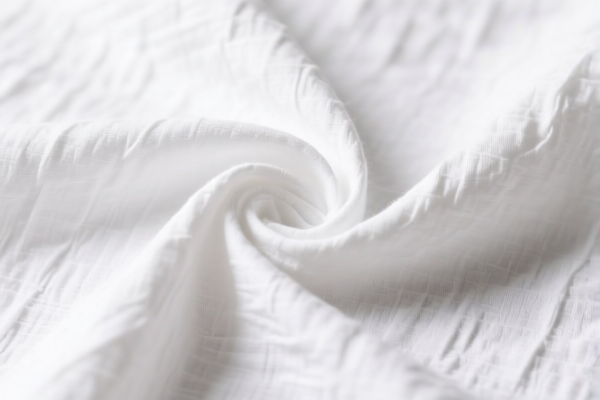
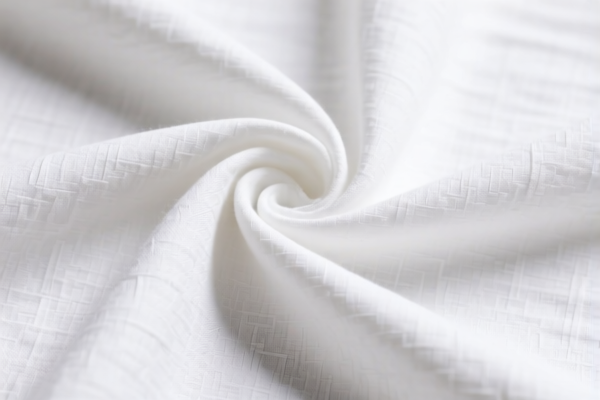
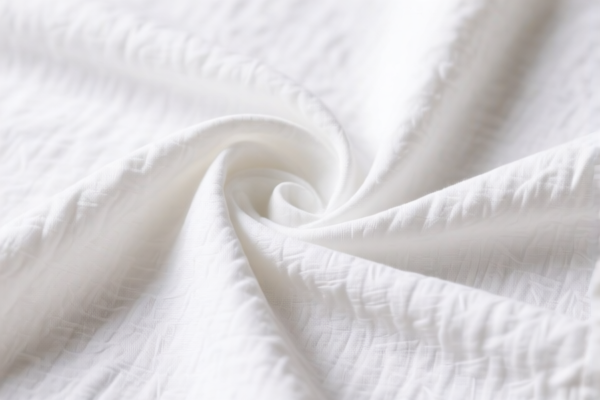
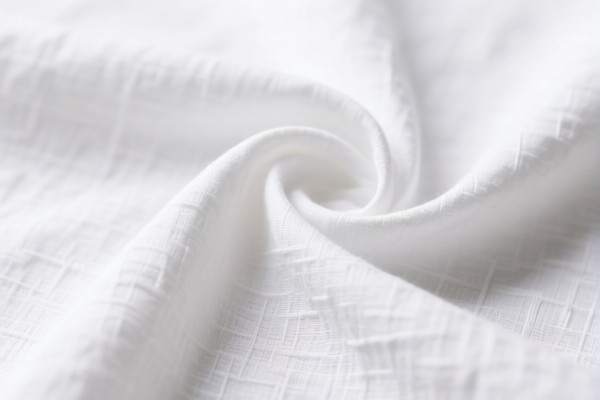
AI分析
🧵 Four-Layer Curtain Fabric (Textiles)
🌐 HS Code Reference & Customs Clearance Guide | 2026 Latest Tariff Analysis | Professional Strategy for Complex Textiles
📌 One, Product Definition & Classification: What is “Four-Layer Curtain Fabric”?
Four-layer curtain fabric is a specialized composite textile product, primarily used in home decor and interior design. It typically consists of multiple layers (e.g., a decorative face, a blackout layer, a thermal insulation layer, and a backing) laminated or woven together to enhance functionality (light blocking, noise reduction, thermal efficiency).
In international trade, this product falls under Chapter 58 (Special Woven Fabrics; Tufted Textiles; Lace; Tapestry; Trimmings; Netting) or Chapter 60 (Knitted or Crocheted Fabrics), depending on whether it is woven or knitted. Given the typical structure of high-end multi-layer curtains, they are predominantly woven fabrics (Chapter 58) or specialty tufted/laminated fabrics.
⚠️ Key Classification Point:
- If the fabric is woven and made of man-made fibers or cotton blends, it often falls under Chapter 58 (Special Woven Fabrics like chenille, terry, or other pile fabrics) or Chapter 60 (if knitted).
- The number of layers alone does not define the HS Code; the material composition (cotton vs. synthetic) and the technique (woven, knitted, tufted) are critical.
📦 Two, HS Code Classification Details (2026 Latest Tariff Authority Comparison)
Based on the provided , here are the six possible HS Code classifications for "Four-Layer Curtain Fabric," with detailed tax breakdowns for US imports from China.
| HS Code | Product Description & Summary | Material & Form | Total Tax Rate | Tax Detail Breakdown |
|---|---|---|---|---|
5801.26.00.20 |
Cotton/Blend Piled Woven Fabric Inferred material is cotton or mixed fibers, form is woven fabric, matches the fabric category, no material conflict. |
Cotton or Blend | 35.0% | Base: 0.0% Section 301: 25.0% Section 122: 10.0% |
6001.92.00.40 |
Synthetic Fiber Tufted Fabric Form matches "cloth"; material usually made of synthetic or natural fibers, fits the "other" category under cloth characteristics. |
Synthetic Fiber | 52.2% | Base: 17.2% Section 301: 25.0% Section 122: 10.0% |
6001.91.00.20 |
Natural Fiber Tufted Fabric Form is woven/tufted; inferred material is fiber/cotton, meets material requirements for "other," no obvious conflict. |
Natural Fiber/Cotton | 53.5% | Base: 18.5% Section 301: 25.0% Section 122: 10.0% |
5801.36.00.20 |
Synthetic Chenille/Pile Fabric Product is fabric, inferred as synthetic or natural fiber woven fabric, reasonable coverage for chenille fabrics (other). |
Synthetic/Chenille | 27.3% | Base: 9.8% Section 301: 7.5% Section 122: 10.0% |
5806.10.10.00 |
Woven Pile Fabric (Other) Form is fabric (woven category), inferred as woven fabric, consistent with woven pile/display fabric form, no material conflict. |
Mixed/Woven | 42.8% | Base: 7.8% Section 301: 25.0% Section 122: 10.0% |
5806.10.28.00 |
Man-Made Fiber Pile Fabric Form matches woven; inferred material is synthetic fiber or mixed fiber, no conflict with "man-made fiber other piled woven fabric." |
Man-Made Fiber | 43.4% | Base: 8.4% Section 301: 25.0% Section 122: 10.0% |
🔍 Key Insight:
- The lowest tariff (27.3%) applies to5801.36.00.20(Chenille/Pile fabric with lower base and Section 301 rates). - The highest tariff (53.5%) applies to6001.91.00.20(Tufted fabric with high base rate). - The choice of HS Code drastically impacts cost, ranging from 27.3% to 53.5%.
💰 Three, 2026 Latest Tariff Rate Details (Including Surcharge, Policy Additions)
✅ Applicable Country: United States (US)
✅ Country of Origin: China (CN)
✅ Effective Date: 2025/2026 (Current Trade Policies)
🎯 1. 5801.26.00.20 — Cotton/Blend Piled Woven Fabric (Best Value Option?)
| Item | Content |
|---|---|
| Base Tariff | 0.0% |
| Section 301 Tariff | +25.0% |
| Section 122 Tariff | +10.0% |
| Total Rate | 35.0% |
| Calculation | CIF Value × 35.0% |
| De Minimis Eligibility | ❌ No (High tariff goods excluded) |
📌 Explanation:
- This code assumes the fabric is cotton-based or a blend.
- Section 301 (25%) is the standard US tariff on Chinese textiles.
- Section 122 (10%) is an additional surcharge often applied to textile imports from China.
- Low Base Rate (0%) makes this significantly cheaper than synthetic options.
🎯 2. 6001.92.00.40 — Synthetic Fiber Tufted Fabric
| Item | Content |
|---|---|
| Base Tariff | 17.2% |
| Section 301 Tariff | +25.0% |
| Section 122 Tariff | +10.0% |
| Total Rate | 52.2% |
| Calculation | CIF Value × 52.2% |
| De Minimis Eligibility | ❌ No |
📌 Explanation:
- Synthetic fibers carry a higher base tariff (17.2%) compared to cotton.
- Combined with 301 and 122 surcharges, this is a high-cost classification.
- Suitable if the fabric is tufted and made entirely of synthetics (e.g., polyester).
🎯 3. 6001.91.00.20 — Natural Fiber Tufted Fabric
| Item | Content |
|---|---|
| Base Tariff | 18.5% |
| Section 301 Tariff | +25.0% |
| Section 122 Tariff | +10.0% |
| Total Rate | 53.5% |
| Calculation | CIF Value × 53.5% |
| De Minimis Eligibility | ❌ No |
📌 Explanation:
- The highest total rate in the dataset.
- High base rate (18.5%) due to the specific tufted natural fiber classification.
- Avoid this code unless the fabric is explicitly tufted natural fiber and no other option fits.
🎯 4. 5801.36.00.20 — Synthetic Chenille/Pile Fabric (Lowest Tariff)
| Item | Content |
|---|---|
| Base Tariff | 9.8% |
| Section 301 Tariff | +7.5% |
| Section 122 Tariff | +10.0% |
| Total Rate | 27.3% |
| Calculation | CIF Value × 27.3% |
| De Minimis Eligibility | ❌ No |
📌 Explanation:
- Most cost-effective option if the fabric qualifies as chenille or a specific pile fabric.
- Section 301 rate is reduced to 7.5% (instead of 25%) for this subcategory.
- Ideal if the four-layer fabric has a chenille texture or is woven as a special pile fabric.
🎯 5. 5806.10.10.00 — Woven Pile Fabric (Other)
| Item | Content |
|---|---|
| Base Tariff | 7.8% |
| Section 301 Tariff | +25.0% |
| Section 122 Tariff | +10.0% |
| Total Rate | 42.8% |
| Calculation | CIF Value × 42.8% |
| De Minimis Eligibility | ❌ No |
📌 Explanation:
- Moderate tariff.
- Fits generic woven pile fabrics that don’t fit specific chenille or tufted categories.
- High Section 301 rate (25%) drives the total up.
🎯 6. 5806.10.28.00 — Man-Made Fiber Pile Fabric
| Item | Content |
|---|---|
| Base Tariff | 8.4% |
| Section 301 Tariff | +25.0% |
| > Section 122 Tariff** | +10.0% |
| Total Rate | 43.4% |
| Calculation | CIF Value × 43.4% |
| De Minimis Eligibility | ❌ No |
📌 Explanation:
- Similar to the previous code but for man-made fibers.
- Slightly higher total rate due to the 25% Section 301 surcharge.
🛠️ Four, Customs Clearance Practical Advice (Battle-Tested Pitfall Guide)
✅ 1. Documentation Checklist (Mandatory)
| Document | Required | Description |
|---|---|---|
| ✅ Product Specification Sheet | ✔️ | Detail the 4 layers: e.g., Face (polyester), Blackout (PVC/foil), Thermal (fleece), Backing (cotton). |
| ✅ Material Composition Label | ✔️ | Clear percentage breakdown (e.g., 60% Poly, 40% Cotton). |
| ✅ Technical Diagram | ✔️ | Cross-section view showing layer bonding (laminated vs. woven). |
| ✅ Commercial Invoice | ✔️ | Must state "Four-Layer Woven Curtain Fabric" with HS Code. |
| ✅ Country of Origin Certificate | ✔️ | For Section 301/122 determination. |
| ✅ Third-Party Test Report | ✔️ | Flame retardancy, colorfastness, and material composition analysis. |
✅ 2. Declaration Tips (Key Mantra)
🔥 "Layering doesn't define HS, Material and Weave do!"
| Scenario | Correct Declaration | Wrong Practice |
|---|---|---|
| Fabric is Chenille or Special Pile | 5801.36.00.20 (27.3%) |
Declaring as generic "Curtain" → Higher rate |
| Fabric is Tufted | 6001.91.00.20 or 6001.92.00.40 |
Declaring as "Woven" → Misclassification |
| Fabric is Laminated (not woven/tufted) | May fall under 5903 (Textile coated with plastic/rubber) | Declaring under Chapter 58/60 → Rejection |
| Mixed Material | Declare ** predominant material** | Vague description "Mixed Fabric" → Audit Risk |
✅ 3. Special Cases & Strategies
| Situation | Handling Advice |
|---|---|
| Laminated vs. Woven | If the 4 layers are laminated (glued), it may be 5903 (Coated fabric). Check if it qualifies as "Special Woven" (5801/5806) or "Tufted" (6001). |
| Blackout Coating | If one layer is PVC-coated, it might be 5903. However, if it's a woven blackout fabric, it stays in 5801/6001. |
| Custom Composite | Provide a cross-section sample to Customs Broker for pre-classification. |
| Section 122 Exemption | Check if the fabric qualifies for any exclusions under Section 122 (rare for textiles, but verify). |
🌍 Five, Global Market Comparison (2026 Latest)
| Country/Region | Recommended HS Code | Tariff (China Origin) | Key Requirement | Notes |
|---|---|---|---|---|
| 🇺🇸 USA | 5801.36.00.20 |
27.3% (Best) | FCC/RoHS (if applicable) | Highest risk due to 301/122. |
| 🇨🇳 China | 5801.36.00.20 |
~5-10% | CCC (if textile) | No 301/122. |
| 🇪🇺 EU | 5801.36.00.20 |
0-12% | CE/REACH | No Section 301/122. |
| 🇬🇧 UK | 5801.36.00.20 |
0-12% | UKCA | Post-Brexit tariffs apply. |
| 🇨🇦 Canada | 5801.36.00.20 |
0-12% | NAFTA/USMCA (if applicable) | Lower tariffs than US. |
📌 Conclusion:
- USA is the most challenging market due to Section 301 (25%) and Section 122 (10%).
- EU/UK/Canada offer significantly lower tariffs if the fabric is classified under favorable codes.
- Strategic Tip: If targeting the US, try to classify under5801.36.00.20(Chenille/Pile) to save 26%+ in taxes compared to synthetic tufted options.
📌 Six, Common Errors & Pitfalls (Blood-Ledger Lessons)
❌ Error 1: Declaring "Four-Layer Curtain" as a Finished Product (e.g., Curtain Panels)
👉 Consequence: Finished curtains have different HS Codes (e.g., 6303.99.00.15) and potentially different tariffs.
✅ Fix: Declare as Raw Fabric if not cut/sewn.
❌ Error 2: Ignoring Section 122 surcharge
👉 Consequence: Underpaying 10% on every shipment.
✅ Fix: Ensure 10% is added to all calculations for China-origin textiles.
❌ Error 3: Misclassifying Laminated Fabric as Woven
👉 Consequence: Customs may reclassify to 5903 (Coated Fabric) with different duties.
✅ Fix: Clearly describe the lamination process and material layers.
❌ Error 4: Vague Material Description ("Mixed Fabric")
👉 Consequence: Customs assigns highest possible duty based on ambiguous data.
✅ Fix: Provide exact fiber percentages (e.g., 50% Polyester, 50% Cotton).
🎯 Seven, Conclusion: Professional Declaration, Cost Optimization!
🎯 Key Takeaway:
🔹 "Material Dictates HS, Weave Defines Category, Tariff Saves Millions."
🔹 "For 4-Layer Curtains, Aim for5801.36.00.20(27.3%) if possible."
🔹 "Avoid6001.91.00.20(53.5%) unless necessary."
📌 Pro Tip:
- If your fabric is not chenille or tufted, but a simple woven laminate, consult a broker for Chapter 59 (Coated/Impregnated Fabrics) which may have different rules.
- Pre-classification with US CBP is highly recommended for high-value textile shipments.
📣 Immediate Action:
📞 Contact a Customs Broker → Provide Layer Details → Request Pre-Ruling.
🚀 Optimize Your Tariff, Clear Customs Faster, Maximize Profit!
✨ Professional Customs Clearance Starts with Accurate Classification!
💼 Every Percent of Duty Matters!
用户评价
关于 HS 编码归类
协调制度(HS)是由世界海关组织(WCO)制定的国际贸易商品分类标准。全球 200 多个国家采用 HS 系统作为海关关税、贸易统计和进出口监管的基础。
每个 HS 编码遵循以下层级结构:
- 章(2 位)——商品大类(例如:第 84 章:机器和机械设备)
- 品目(4 位)——章内的更具体分类
- 子目(6 位)——国际通用细分,所有 WCO 成员国统一使用
- 本国细分(8-10 位)——各国自行扩展的细分编码,如美国 HTSUS 10 位编码
正确的 HS 编码归类对于顺利通关、准确缴纳关税和遵守贸易法规至关重要。错误归类可能导致海关延误、多缴关税或罚款。
从CN进口到US时,适用的关税税率可能包括:
- 最惠国(MFN)税率——适用于 WTO 成员国的标准关税税率
- 普通税率——适用于无贸易协定国家
- 贸易救济关税——附加关税,如 301 条款(反倾销)、232 条款(国家安全)或反补贴税
本页内容仅供参考。如需正式归类,请咨询当地海关或持牌报关代理。