Freeze dried Cellulose
CN → US| HS编码 | 关税税率 | 原产国 | 目的国 | 文档 |
|---|---|---|---|---|
| 2106909995 | 16.4% | CN | US | 官方文档 |
| 3304995000 | 35.0% | CN | US | 官方文档 |
| 3304910050 | 35.0% | CN | US | 官方文档 |
| 2106909998 | 16.4% | CN | US | 官方文档 |
商品图片
AI分析
❄️ Freeze Dried Cellulose (Lyophilized Cellulose)
🌐 HS Code Reference & Customs Clearance Guide | 2026 Latest Tariff Analysis | Professional Compliance Strategy
📌 I. Product Definition & Classification: What is "Freeze Dried Cellulose"?
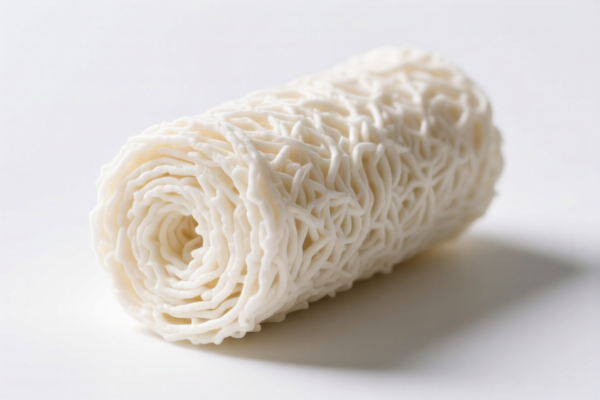
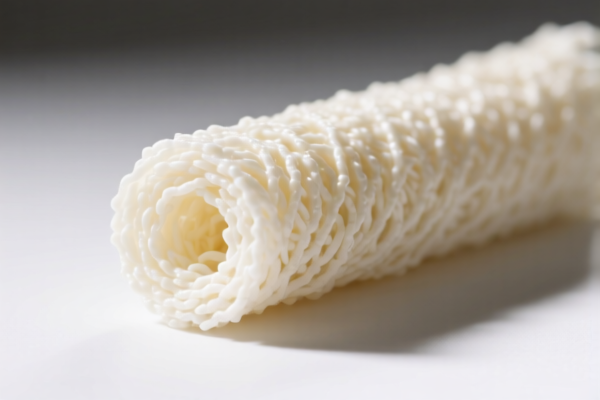
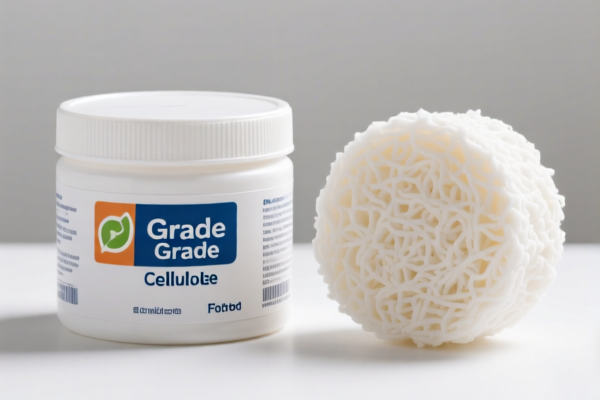
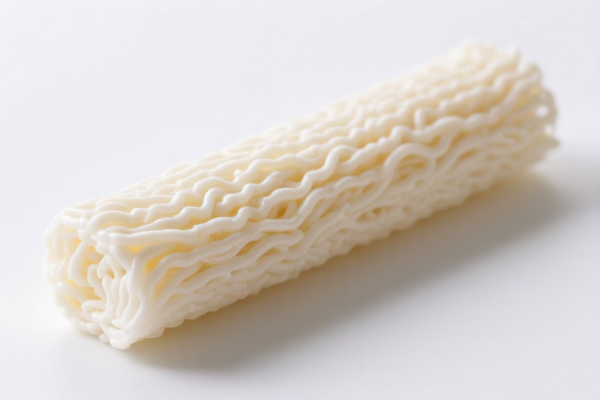
Freeze-dried cellulose (often referred to as Lyophilized Cellulose or Microcrystalline Cellulose in freeze-dried form) is a versatile material derived from plant fibers. Its international trade classification depends entirely on its intended use and formulation:
- As a Food Ingredient/Additive: Used as a stabilizer, thickener, or nutritional supplement in the food industry.
- As a Cosmetics/Skincare Ingredient: Used in beauty masks, serums, or topical skin care preparations.
⚠️ Key Distinction Point:
- If the product is marketed as a dietary supplement, food additive, or raw food material → It falls under Chapter 21 (Miscellaneous Edible Preparations).
- If the product is marketed as a cosmetic, beauty mask, or skin care preparation → It falls under Chapter 33 (Essential Oils and Perfumery; Cosmetic or Toilet Preparations).
📦 II. HS Code Classification Details (2026 Latest Tariff Authority对照)
| HS Code | Product Description | Application Scenario | Tax Category |
|---|---|---|---|
2106.90.99.95 |
Freeze-dried powder as a food preparation (specifically for food use) | Food additives, functional food ingredients, dietary supplement bases | Food Classification |
2106.90.99.98 |
Freeze-dried powder as a food raw material or preparation (general food use) | General food ingredient, unbranded food base | Food Classification |
3304.99.50.00 |
Freeze-dried powder as a beauty or skin care preparation (general cosmetic use) | Cosmetic masks, beauty blends, general skincare powders | Cosmetic Classification |
3304.91.00.50 |
Freeze-dried powder as a powdered preparation for beauty/skin care | Specific powdered cosmetics, face masks, professional cosmetic powders | Cosmetic Classification |
🔍 Important Note:
- Food vs. Cosmetic: The boundary is often determined by the Labeling, Marketing Claims, and Certifications provided. If it claims "skin whitening" or "anti-aging," it is likely classified as Cosmetic (Ch 33). If it claims "nutritional support" or is sold in bulk for food manufacturing, it is Food (Ch 21). - Form Factor: Since it is "freeze-dried powder," it cannot be classified as a "liquid" or "paste" cosmetic. It must fit into Powdered Preparations (3304.91) or Other Cosmetics (3304.99) depending on specific compositional rules.
💰 III. 2026 Latest Tariff Rate Breakdown (Including Additional Duties & Policy Add-ons)
✅ Applicable Country: USA (US)
✅ Country of Origin: China (CN)
✅ Effective Date: From November 10, 2025 (including subsequent imports)
🎯 1. 2106.90.99.95 & 2106.90.99.98 —— Freeze Dried Cellulose as Food Preparation
| Item | Detail |
|---|---|
| Base Tariff | 6.4% (ad valorem) |
| Additional Tariff (Section 301) | 0.0% (No Section 301 additional duty for this specific subheading in some contexts, but check specific trade wars status) |
| IEEPA Additional Tariff | +10% (Under Section 122, targeting Chinese products) |
| Total Tariff Rate | 16.4% |
| Tax Calculation | CIF Value × 16.4% |
| De Minimis Exemption | ❌ Not Applicable (Deny de minimis for Section 122 goods) |
| Legal Basis Path | IEEPA:122 → USITC:2106.90.99.95 |
📌 Explanation:
- "Base Tariff 6.4%": Standard Most Favored Nation (MFN) rate for miscellaneous edible preparations. - "IEEPA 10%": Refers to the Section 122 tariffs under the International Emergency Economic Powers Act, specifically applied to certain consumer goods from China. - "Total 16.4%": This is the landed duty cost. Compared to cosmetics, this is significantly lower.
🎯 2. 3304.99.50.00 & 3304.91.00.50 —— Freeze Dried Cellulose as Cosmetic/Skincare
| Item | Detail |
|---|---|
| Base Tariff | 0.0% |
| Additional Tariff (Section 301) | +25% (Under USITC Footnote for Section 301 goods) |
| IEEPA Additional Tariff | +10% (Under Section 122, targeting Chinese products) |
| Total Tariff Rate | 35.0% |
| Tax Calculation | CIF Value × 35.0% |
| De Minimis Exemption | ❌ Not Applicable (Deny de minimis) |
| Legal Basis Path | IEEPA:122 → IEEPA:9903.01.25 → USITC:3304.99.50.00 |
📌 Explanation:
- "Base Tariff 0%": Most cosmetics have a low or zero base duty under MFN. - "Section 301 25%": Cosmetics from China are heavily targeted by Section 301 tariffs. - "IEEPA 10%": Additional 122 tariff applies. - "Total 35%": This is a high barrier for entry. If your product is marketed as a "beauty mask" or "skincare ingredient," you pay more than double the tax compared to the food classification.
🛠️ IV. Customs Clearance Practical Advice (Battle-Tested Pitfall Avoidance)
✅ 1. Required Documentation Checklist (Must-Haves)
| Document | Required | Description |
|---|---|---|
| ✅ Product Specification Sheet | ✔️ | Must clearly state composition (e.g., "100% Microcrystalline Cellulose") and physical form ("Freeze-dried powder"). |
| ✅ FDA Registration (if Food/Cosmetic) | ✔️ | Food facilities or cosmetic establishments must be registered with the FDA. |
| ✅ COA (Certificate of Analysis) | ✔️ | Proving purity, moisture content, and heavy metal limits. |
| ✅ Commercial Invoice | ✔️ | Critical: The description MUST match the HS Code intent. - For Food: "Food Grade Microcrystalline Cellulose Powder" - For Cosmetic: "Cosmetic Grade Freeze-Dried Cellulose for Skin Care" |
| ✅ Usage Statement/Letter of Intent | ✔️ | A letter from the importer stating the intended use (e.g., "For blending into protein powder" vs. "For making face masks"). This helps customs distinguish between Ch 21 and Ch 33. |
| ✅ Safety Data Sheet (SDS) | ✔️ | Required for chemical handling and safety classification. |
✅ 2. Declaration Strategy (Key Mnemonics)
🔥 "Food is Cheaper, Cosmetic is Higher; Describe the Use, Not Just the Material!"
| Scenario | Correct Declaration | Wrong Approach | Consequence |
|---|---|---|---|
| Sold as Food Ingredient | 2106.90.99.95 + "For Food Use Only" |
Labeled "Beauty Powder" | Customs may reclassify to Cosmetic (35%) + Penalty |
| Sold as Cosmetic Base | 3304.99.50.00 + "Cosmetic Grade" |
Labeled "Protein Supplement" | Risk of Food Safety (FDA) compliance issues |
| Bulk Industrial Use | Verify if it fits 2106.90.99.98 |
Using specific subheadings incorrectly | Potential audit |
| Mixed Packaging | Separate Food & Cosmetic items | Mixed in one box without clear separation | Delayed clearance |
📌 Pro Tip:
- If the cellulose is unflavored and uncolored, and sold in bulk to manufacturers, emphasize "Food Raw Material" to secure the 16.4% rate. - If it is packaged for end-users (e.g., single-serve masks) with beauty claims, you must accept the 35% rate. There is no legal way to "downgrade" a cosmetic to food if the marketing says otherwise.
✅ 3. Special Cases & Handling
| Situation | Handling Advice |
|---|---|
| OEM Private Label | Ensure the brand owner's marketing materials do not contradict the HS Code. If selling B2B, include a contract stating "For Food Processing Use Only." |
| Imported by a Cosmetics Brand | They are responsible for the 35% tariff. No exemption. |
| Imported by a Food Manufacturer | They benefit from the 16.4% tariff. Keep documentation strict to prove food intent. |
| Section 122 Exemptions? | Currently, no general exemption for Section 122 goods from China. Plan for the +10% surcharge. |
🌍 V. Global Market Comparison (2026 Latest)
| Country/Region | Recommended HS Code (Food) | Tax (Food) | Recommended HS Code (Cosmetic) | Tax (Cosmetic) | Note |
|---|---|---|---|---|---|
| 🇺🇸 USA | 2106.90.99.95 |
16.4% | 3304.99.50.00 |
35.0% | High divergence; choose wisely based on end-use. |
| 🇨🇳 China | 2106.90.99.95 |
~9% (Import Duty) | 3304.99.50.00 |
~9% (Import Duty) | China tariffs are generally lower and stable. |
| 🇪🇺 EU | 2106.90.95 |
6.5% | 3304.99 |
6.5% | EU treats both similarly; VAT differs. |
| 🇬🇧 UK | 2106.90.95 |
6.5% | 3304.99 |
6.5% | Post-Brexit rules apply. |
📌 Conclusion:
- USA is the most critical market for this distinction due to the 18.6% difference in total tax burden (35% vs 16.4%). - Misclassification is the biggest risk. If you declare as food but customs finds cosmetic packaging/claims, you will face back taxes, penalties, and potential seizure.
📌 VI. Common Mistakes & Pitfall Guide (Blood & Tears Lessons)
❌ Mistake 1: Using "Freeze Dried Powder" as the only description.
👉 Result: Customs officer decides based on packaging. If it looks like a beauty product, they apply 35%.
👉 Fix: Always include "Intended Use: [Food/Cosmetic]" in the commercial invoice.
❌ Mistake 2: Assuming "Cellulose" is always chemical (3906.90 or 3912).
👉 Result: Food/Cosmetic grade cellulose is excluded from Chapter 39. Misclassification leads to complex chemical testing delays.
👉 Fix: Know that Food/Cosmetic grade stays in Chapter 21 or 33.
❌ Mistake 3: Ignoring Section 122 (IEEPA).
👉 Result: Budgeting for 6.4% but paying 16.4%. Profit margin evaporates.
👉 Fix: Always add the 10% IEEPA surcharge to your cost model for Chinese-origin goods entering the US.
✅ Correct Declaration Example (For Food):
"Microcrystalline Cellulose, Freeze-Dried Powder, Food Grade. Intended Use: As a thickening agent in dietary supplements. HS Code: 2106.90.99.95"
✅ Correct Declaration Example (For Cosmetic):
"Cellulose-Based Cosmetic Powder, Freeze-Dried. Intended Use: Ingredient for skin care masks. HS Code: 3304.99.50.00"
🎯 VII. Conclusion: Professional Declaration, Save Money, Ensure Compliance!
🎯 Remember the Key Takeaways:
🔹 "Food Use = 16.4% | Cosmetic Use = 35%"
🔹 "Labels Define the Code" – Your marketing determines your tax.
🔹 "Section 122 is Real" – Don't forget the extra 10% for Chinese goods.
📌 Tip:
If you are unsure, consider applying for an Advance Ruling (CBP Ruling) before shipping. It provides legal certainty and protects you from future audits.
📣 Immediate Action:
📞 Review your product packaging and marketing claims today.
📄 Ensure your Commercial Invoice matches the HS Code intent perfectly.
🚀 Optimize your supply chain to maximize profit through correct classification!
✨ Professional Customs Clearance Starts with Accurate Classification!
💼 Every percentage point of tax difference is a point of profit or loss!
用户评价
关于 HS 编码归类
协调制度(HS)是由世界海关组织(WCO)制定的国际贸易商品分类标准。全球 200 多个国家采用 HS 系统作为海关关税、贸易统计和进出口监管的基础。
每个 HS 编码遵循以下层级结构:
- 章(2 位)——商品大类(例如:第 84 章:机器和机械设备)
- 品目(4 位)——章内的更具体分类
- 子目(6 位)——国际通用细分,所有 WCO 成员国统一使用
- 本国细分(8-10 位)——各国自行扩展的细分编码,如美国 HTSUS 10 位编码
正确的 HS 编码归类对于顺利通关、准确缴纳关税和遵守贸易法规至关重要。错误归类可能导致海关延误、多缴关税或罚款。
从CN进口到US时,适用的关税税率可能包括:
- 最惠国(MFN)税率——适用于 WTO 成员国的标准关税税率
- 普通税率——适用于无贸易协定国家
- 贸易救济关税——附加关税,如 301 条款(反倾销)、232 条款(国家安全)或反补贴税
本页内容仅供参考。如需正式归类,请咨询当地海关或持牌报关代理。