Freeze dried Cellulose
CN → US| HS Code | Tariff Rate | Origin | Destination | Doc |
|---|---|---|---|---|
| 2106909995 | 16.4% | CN | US | Official Doc |
| 3304995000 | 35.0% | CN | US | Official Doc |
| 3304910050 | 35.0% | CN | US | Official Doc |
| 2106909998 | 16.4% | CN | US | Official Doc |
Product Images
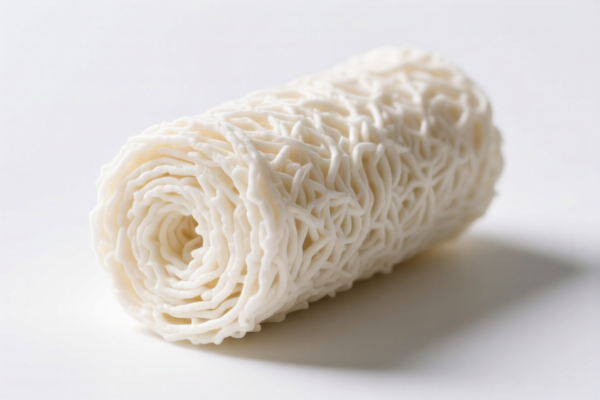
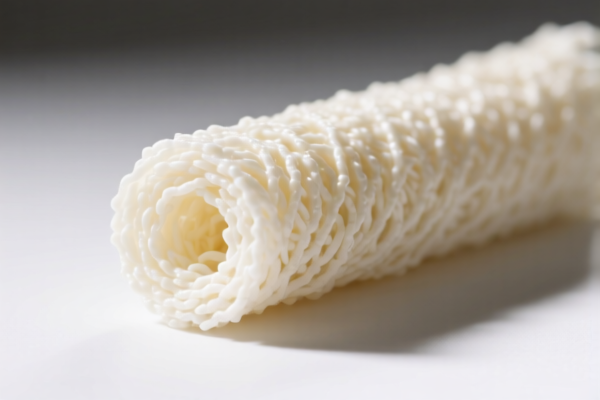
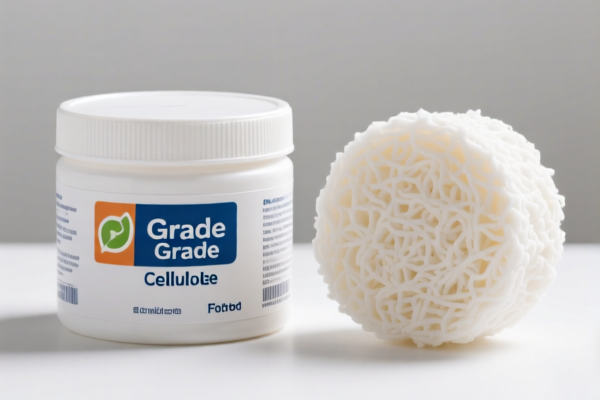
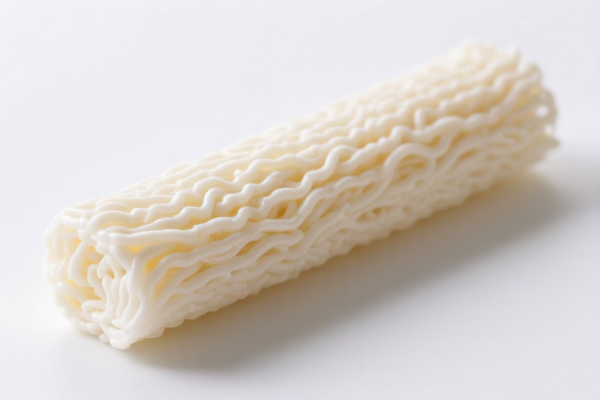
AI Analysis
❄️ Freeze Dried Cellulose (Lyophilized Cellulose)
🌐 HS Code Reference & Customs Clearance Guide | 2026 Latest Tariff Analysis | Professional Compliance Strategy
📌 I. Product Definition & Classification: What is "Freeze Dried Cellulose"?
Freeze-dried cellulose (often referred to as Lyophilized Cellulose or Microcrystalline Cellulose in freeze-dried form) is a versatile material derived from plant fibers. Its international trade classification depends entirely on its intended use and formulation:
- As a Food Ingredient/Additive: Used as a stabilizer, thickener, or nutritional supplement in the food industry.
- As a Cosmetics/Skincare Ingredient: Used in beauty masks, serums, or topical skin care preparations.
⚠️ Key Distinction Point:
- If the product is marketed as a dietary supplement, food additive, or raw food material → It falls under Chapter 21 (Miscellaneous Edible Preparations).
- If the product is marketed as a cosmetic, beauty mask, or skin care preparation → It falls under Chapter 33 (Essential Oils and Perfumery; Cosmetic or Toilet Preparations).
📦 II. HS Code Classification Details (2026 Latest Tariff Authority对照)
| HS Code | Product Description | Application Scenario | Tax Category |
|---|---|---|---|
2106.90.99.95 |
Freeze-dried powder as a food preparation (specifically for food use) | Food additives, functional food ingredients, dietary supplement bases | Food Classification |
2106.90.99.98 |
Freeze-dried powder as a food raw material or preparation (general food use) | General food ingredient, unbranded food base | Food Classification |
3304.99.50.00 |
Freeze-dried powder as a beauty or skin care preparation (general cosmetic use) | Cosmetic masks, beauty blends, general skincare powders | Cosmetic Classification |
3304.91.00.50 |
Freeze-dried powder as a powdered preparation for beauty/skin care | Specific powdered cosmetics, face masks, professional cosmetic powders | Cosmetic Classification |
🔍 Important Note:
- Food vs. Cosmetic: The boundary is often determined by the Labeling, Marketing Claims, and Certifications provided. If it claims "skin whitening" or "anti-aging," it is likely classified as Cosmetic (Ch 33). If it claims "nutritional support" or is sold in bulk for food manufacturing, it is Food (Ch 21). - Form Factor: Since it is "freeze-dried powder," it cannot be classified as a "liquid" or "paste" cosmetic. It must fit into Powdered Preparations (3304.91) or Other Cosmetics (3304.99) depending on specific compositional rules.
💰 III. 2026 Latest Tariff Rate Breakdown (Including Additional Duties & Policy Add-ons)
✅ Applicable Country: USA (US)
✅ Country of Origin: China (CN)
✅ Effective Date: From November 10, 2025 (including subsequent imports)
🎯 1. 2106.90.99.95 & 2106.90.99.98 —— Freeze Dried Cellulose as Food Preparation
| Item | Detail |
|---|---|
| Base Tariff | 6.4% (ad valorem) |
| Additional Tariff (Section 301) | 0.0% (No Section 301 additional duty for this specific subheading in some contexts, but check specific trade wars status) |
| IEEPA Additional Tariff | +10% (Under Section 122, targeting Chinese products) |
| Total Tariff Rate | 16.4% |
| Tax Calculation | CIF Value × 16.4% |
| De Minimis Exemption | ❌ Not Applicable (Deny de minimis for Section 122 goods) |
| Legal Basis Path | IEEPA:122 → USITC:2106.90.99.95 |
📌 Explanation:
- "Base Tariff 6.4%": Standard Most Favored Nation (MFN) rate for miscellaneous edible preparations. - "IEEPA 10%": Refers to the Section 122 tariffs under the International Emergency Economic Powers Act, specifically applied to certain consumer goods from China. - "Total 16.4%": This is the landed duty cost. Compared to cosmetics, this is significantly lower.
🎯 2. 3304.99.50.00 & 3304.91.00.50 —— Freeze Dried Cellulose as Cosmetic/Skincare
| Item | Detail |
|---|---|
| Base Tariff | 0.0% |
| Additional Tariff (Section 301) | +25% (Under USITC Footnote for Section 301 goods) |
| IEEPA Additional Tariff | +10% (Under Section 122, targeting Chinese products) |
| Total Tariff Rate | 35.0% |
| Tax Calculation | CIF Value × 35.0% |
| De Minimis Exemption | ❌ Not Applicable (Deny de minimis) |
| Legal Basis Path | IEEPA:122 → IEEPA:9903.01.25 → USITC:3304.99.50.00 |
📌 Explanation:
- "Base Tariff 0%": Most cosmetics have a low or zero base duty under MFN. - "Section 301 25%": Cosmetics from China are heavily targeted by Section 301 tariffs. - "IEEPA 10%": Additional 122 tariff applies. - "Total 35%": This is a high barrier for entry. If your product is marketed as a "beauty mask" or "skincare ingredient," you pay more than double the tax compared to the food classification.
🛠️ IV. Customs Clearance Practical Advice (Battle-Tested Pitfall Avoidance)
✅ 1. Required Documentation Checklist (Must-Haves)
| Document | Required | Description |
|---|---|---|
| ✅ Product Specification Sheet | ✔️ | Must clearly state composition (e.g., "100% Microcrystalline Cellulose") and physical form ("Freeze-dried powder"). |
| ✅ FDA Registration (if Food/Cosmetic) | ✔️ | Food facilities or cosmetic establishments must be registered with the FDA. |
| ✅ COA (Certificate of Analysis) | ✔️ | Proving purity, moisture content, and heavy metal limits. |
| ✅ Commercial Invoice | ✔️ | Critical: The description MUST match the HS Code intent. - For Food: "Food Grade Microcrystalline Cellulose Powder" - For Cosmetic: "Cosmetic Grade Freeze-Dried Cellulose for Skin Care" |
| ✅ Usage Statement/Letter of Intent | ✔️ | A letter from the importer stating the intended use (e.g., "For blending into protein powder" vs. "For making face masks"). This helps customs distinguish between Ch 21 and Ch 33. |
| ✅ Safety Data Sheet (SDS) | ✔️ | Required for chemical handling and safety classification. |
✅ 2. Declaration Strategy (Key Mnemonics)
🔥 "Food is Cheaper, Cosmetic is Higher; Describe the Use, Not Just the Material!"
| Scenario | Correct Declaration | Wrong Approach | Consequence |
|---|---|---|---|
| Sold as Food Ingredient | 2106.90.99.95 + "For Food Use Only" |
Labeled "Beauty Powder" | Customs may reclassify to Cosmetic (35%) + Penalty |
| Sold as Cosmetic Base | 3304.99.50.00 + "Cosmetic Grade" |
Labeled "Protein Supplement" | Risk of Food Safety (FDA) compliance issues |
| Bulk Industrial Use | Verify if it fits 2106.90.99.98 |
Using specific subheadings incorrectly | Potential audit |
| Mixed Packaging | Separate Food & Cosmetic items | Mixed in one box without clear separation | Delayed clearance |
📌 Pro Tip:
- If the cellulose is unflavored and uncolored, and sold in bulk to manufacturers, emphasize "Food Raw Material" to secure the 16.4% rate. - If it is packaged for end-users (e.g., single-serve masks) with beauty claims, you must accept the 35% rate. There is no legal way to "downgrade" a cosmetic to food if the marketing says otherwise.
✅ 3. Special Cases & Handling
| Situation | Handling Advice |
|---|---|
| OEM Private Label | Ensure the brand owner's marketing materials do not contradict the HS Code. If selling B2B, include a contract stating "For Food Processing Use Only." |
| Imported by a Cosmetics Brand | They are responsible for the 35% tariff. No exemption. |
| Imported by a Food Manufacturer | They benefit from the 16.4% tariff. Keep documentation strict to prove food intent. |
| Section 122 Exemptions? | Currently, no general exemption for Section 122 goods from China. Plan for the +10% surcharge. |
🌍 V. Global Market Comparison (2026 Latest)
| Country/Region | Recommended HS Code (Food) | Tax (Food) | Recommended HS Code (Cosmetic) | Tax (Cosmetic) | Note |
|---|---|---|---|---|---|
| 🇺🇸 USA | 2106.90.99.95 |
16.4% | 3304.99.50.00 |
35.0% | High divergence; choose wisely based on end-use. |
| 🇨🇳 China | 2106.90.99.95 |
~9% (Import Duty) | 3304.99.50.00 |
~9% (Import Duty) | China tariffs are generally lower and stable. |
| 🇪🇺 EU | 2106.90.95 |
6.5% | 3304.99 |
6.5% | EU treats both similarly; VAT differs. |
| 🇬🇧 UK | 2106.90.95 |
6.5% | 3304.99 |
6.5% | Post-Brexit rules apply. |
📌 Conclusion:
- USA is the most critical market for this distinction due to the 18.6% difference in total tax burden (35% vs 16.4%). - Misclassification is the biggest risk. If you declare as food but customs finds cosmetic packaging/claims, you will face back taxes, penalties, and potential seizure.
📌 VI. Common Mistakes & Pitfall Guide (Blood & Tears Lessons)
❌ Mistake 1: Using "Freeze Dried Powder" as the only description.
👉 Result: Customs officer decides based on packaging. If it looks like a beauty product, they apply 35%.
👉 Fix: Always include "Intended Use: [Food/Cosmetic]" in the commercial invoice.
❌ Mistake 2: Assuming "Cellulose" is always chemical (3906.90 or 3912).
👉 Result: Food/Cosmetic grade cellulose is excluded from Chapter 39. Misclassification leads to complex chemical testing delays.
👉 Fix: Know that Food/Cosmetic grade stays in Chapter 21 or 33.
❌ Mistake 3: Ignoring Section 122 (IEEPA).
👉 Result: Budgeting for 6.4% but paying 16.4%. Profit margin evaporates.
👉 Fix: Always add the 10% IEEPA surcharge to your cost model for Chinese-origin goods entering the US.
✅ Correct Declaration Example (For Food):
"Microcrystalline Cellulose, Freeze-Dried Powder, Food Grade. Intended Use: As a thickening agent in dietary supplements. HS Code: 2106.90.99.95"
✅ Correct Declaration Example (For Cosmetic):
"Cellulose-Based Cosmetic Powder, Freeze-Dried. Intended Use: Ingredient for skin care masks. HS Code: 3304.99.50.00"
🎯 VII. Conclusion: Professional Declaration, Save Money, Ensure Compliance!
🎯 Remember the Key Takeaways:
🔹 "Food Use = 16.4% | Cosmetic Use = 35%"
🔹 "Labels Define the Code" – Your marketing determines your tax.
🔹 "Section 122 is Real" – Don't forget the extra 10% for Chinese goods.
📌 Tip:
If you are unsure, consider applying for an Advance Ruling (CBP Ruling) before shipping. It provides legal certainty and protects you from future audits.
📣 Immediate Action:
📞 Review your product packaging and marketing claims today.
📄 Ensure your Commercial Invoice matches the HS Code intent perfectly.
🚀 Optimize your supply chain to maximize profit through correct classification!
✨ Professional Customs Clearance Starts with Accurate Classification!
💼 Every percentage point of tax difference is a point of profit or loss!
Customer Reviews
About HS Code Classification
The Harmonized System (HS) is an internationally standardized nomenclature developed by the World Customs Organization (WCO) to classify traded products. Over 200 countries use the HS system as the basis for customs tariffs, trade statistics, and import/export regulations.
Each HS code follows a hierarchical structure:
- Chapter (2 digits) — Broad category of goods (e.g., Chapter 84: Machinery and Mechanical Appliances)
- Heading (4 digits) — More specific grouping within the chapter
- Subheading (6 digits) — Internationally standardized breakdown, used by all WCO member countries
- National subdivisions (8-10 digits) — Country-specific extensions for further classification, such as US HTSUS 10-digit codes
Correct HS code classification is essential for smooth customs clearance, accurate duty payment, and compliance with trade regulations. Misclassification can lead to customs delays, overpayment of duties, or penalties.
When importing from CN to US, the applicable tariff rates may include:
- Most-Favored-Nation (MFN) rate — The standard duty rate applied to WTO members
- General rate — Applied to countries without trade agreements
- Trade remedy duties — Additional tariffs such as Section 301 (anti-dumping), Section 232 (national security), or countervailing duties
The information provided on this page is for reference purposes only. For official classification, please consult with your local customs authority or a licensed customs broker.