Freeze proof liquid for casting
CN → US| HS编码 | 关税税率 | 原产国 | 目的国 | 文档 |
|---|---|---|---|---|
| 3814005090 | 41.0% | CN | US | 官方文档 |
| 3814002000 | 41.5% | CN | US | 官方文档 |
| 3824999397 | 40.0% | CN | US | 官方文档 |
| 3820000000 | 24.0% | CN | US | 官方文档 |
商品图片
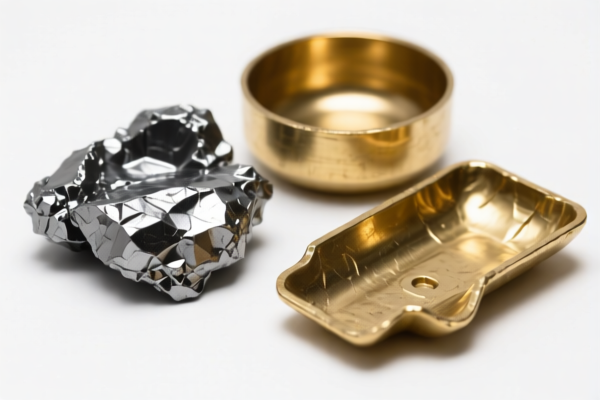
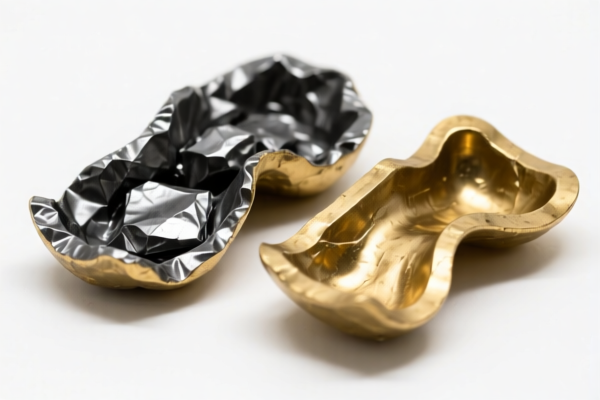
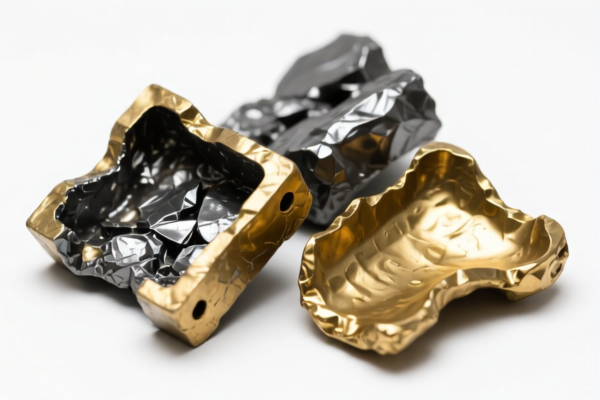
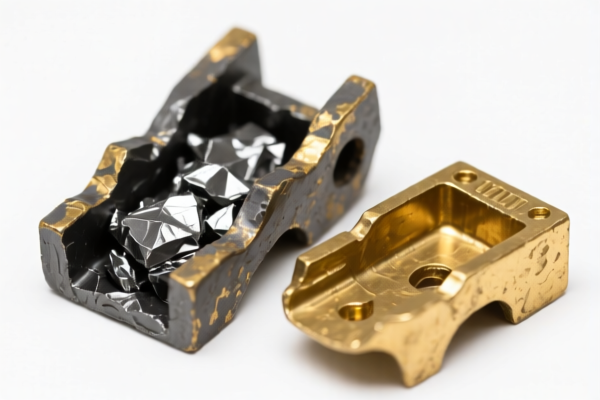
AI分析
🧊 Freeze Proof Liquid for Casting (Mold Release/Anti-Freeze Agents)
🌐 HS Code Reference & Customs Clearance Guide | 2026 Latest Tariff Breakdown | Professional Clearance Strategy
📌 1. Product Definition and Classification: Do You Really Understand "Casting Freeze-Proof Liquid"?
"Casting Freeze-Proof Liquid" (often referred to as mold release agents with anti-freeze properties, or chemical mixtures for cold-weather casting operations) is a specialized chemical preparation used in foundries and casting industries. It prevents water-based molds or coolants from freezing during low-temperature storage or operation.
In international trade, the classification depends heavily on its chemical composition and primary function. It is generally categorized under Chapter 38 (Miscellaneous Chemical Products) or Chapter 39/34 if it acts primarily as a solvent or surface treatment.
⚠️ Key Classification Points:
- If it is an organic compound mixture containing aromatic substances → Often falls under 3814.00.20.00.
- If it is a general organic solvent/diluent without specific aromatic claims → Often falls under 3814.00.50.90.
- If it is a complex chemical mixture categorized as "other chemical products" → Often falls under 3824.99.93.97.
- If classified broadly as anti-freeze/defrosting preparations → May fall under 3820.00.00.00.
📦 2. HS Code Classification Details (2026 Latest Tariff Authority对照)
| HS Code | Product Description | Applicability | Key Chemical Feature |
|---|---|---|---|
3814.00.50.90 |
Other organic composite solvents and diluents, excluding those containing methyl chloroform or carbon tetrachloride | General-purpose casting fluids that are organic solvents | ✅ Organic composite, no specified aromatic content |
3814.00.20.00 |
Organic compounds containing aromatic substances or modified aromatic substances, in liquid solvent/diluent form | Specific organic freeze-proof liquids with aromatic components | ✅ Contains aromatic or modified aromatic substances |
3824.99.93.97 |
Other chemical products and preparations (n.e.c.), chemical mixtures | Chemical mixtures where specific solvent classification doesn't fit | ✅ General chemical mixture, "other" category |
3820.00.00.00 |
De-icing or anti-freezing preparations and other prepared road de-icing products | Matches "anti-freeze" function explicitly | ✅ Function-focused: Anti-freeze/De-icing |
🔍 Important Note:
- 3814 series focuses on solvents and diluents.
- 3824 series is a catch-all for chemical mixtures not elsewhere specified.
- 3820 series is specific to anti-freeze/de-icing functions.
- The choice depends on the exact ingredient list provided by the manufacturer.
💰 3. 2026 Latest Tariff Rate Breakdown (Including Supplementary Taxes & Policy Surcharges)
✅ Applicable Country: United States (US)
✅ Origin: China (CN)
✅ Effective Date: November 10, 2025 (and subsequent imports)
🎯 1. 3814.00.50.90 —— Organic Composite Solvents and Diluents (Other)
| Item | Details |
|---|---|
| Base Tariff | 6.0% |
| Section 301 Tariff | +25.0% |
| Section 122 Tariff | +10.0% |
| Total Effective Tax Rate | 41.0% |
| Tax Calculation | CIF Value × 41.0% |
| De Minimis Exemption | ❌ Not Eligible (deny_de_minimis) |
| Legal Basis Path | USITC:3814.00.50.90 → FOOTNOTE:301 → SECTION122 |
📌 Explanation:
- This classification applies to organic solvents that do not contain prohibited chemicals like methyl chloroform.
- The 25% Section 301 tariff is applied to most Chinese-origin chemical goods.
- The 10% Section 122 tariff is an additional surcharge on specific chemical imports.
- Total 41% is a significant cost factor; accurate documentation is critical.
🎯 2. 3814.00.20.00 —— Aromatic-Based Organic Solvents
| Item | Details |
|---|---|
| Base Tariff | 6.5% |
| Section 301 Tariff | +25.0% |
| Section 122 Tariff | +10.0% |
| Total Effective Tax Rate | 41.5% |
| Tax Calculation | CIF Value × 41.5% |
| De Minimis Exemption | ❌ Not Eligible (deny_de_minimis) |
| Legal Basis Path | USITC:3814.00.20.00 → FOOTNOTE:301 → SECTION122 |
📌 Note:
- Slightly higher base tariff (6.5% vs 6.0%) due to specific aromatic content.
- Applies to fluids explicitly containing aromatic or modified aromatic substances.
- Must provide Material Safety Data Sheet (MSDS) to confirm aromatic composition.
🎯 3. 3824.99.93.97 —— Other Chemical Mixtures
| Item | Details |
|---|---|
| Base Tariff | 5.0% |
| Section 301 Tariff | +25.0% |
| Section 122 Tariff | +10.0% |
| Total Effective Tax Rate | 40.0% |
| Tax Calculation | CIF Value × 40.0% |
| De Minimis Exemption | ❌ Not Eligible (deny_de_minimis) |
| Legal Basis Path | USITC:3824.99.93.97 → FOOTNOTE:301 → SECTION122 |
📌 Note:
- This is a catch-all category for chemical mixtures that don't fit neatly into specific solvent categories.
- Offers the lowest base tariff (5.0%) among the 38xx options listed.
- Useful if the product is a complex proprietary mixture.
🎯 4. 3820.00.00.00 —— De-Icing or Anti-Freezing Preparations
| Item | Details |
|---|---|
| Base Tariff | 6.5% |
| Section 301 Tariff | +7.5% |
| Section 122 Tariff | +10.0% |
| Total Effective Tax Rate | 24.0% |
| Tax Calculation | CIF Value × 24.0% |
| De Minimis Exemption | ❌ Not Eligible (deny_de_minimis) |
| Legal Basis Path | USITC:3820.00.00.00 → FOOTNOTE:301 → SECTION122 |
📌 Note:
- Significant Cost Savings: This classification offers the lowest total tax rate (24.0%).
- Applicable if the product is explicitly marketed and formulated as an anti-freeze or de-icing preparation.
- Critical: Must provide evidence that the primary function is anti-freezing/de-icing, not just general solvent use.
🛠️ 4. Customs Clearance Practical Advice (Real-World Pitfall Guide)
✅ 1. Required Documentation Checklist (Mandatory)
| Document | Required | Explanation |
|---|---|---|
| ✅ Material Safety Data Sheet (MSDS) | ✔️ | Crucial for determining chemical composition (aromatic vs. non-aromatic, mixture type). |
| ✅ Product Specification Sheet | ✔️ | Details active ingredients, CAS numbers, and primary function (anti-freeze vs. solvent). |
| ✅ Commercial Invoice | ✔️ | Must clearly state "Freeze Proof Liquid for Casting" or "Anti-Freezing Chemical Preparation". |
| ✅ Certificate of Origin (CO) | ✔️ | Required for China-origin goods; must match the declared HS Code. |
| ✅ Packing List | ✔️ | Shows net/gross weight, volume, and packaging details. |
| ✅ Third-Party Test Report | ✔️ | Optional but recommended: Confirms chemical composition if disputed by customs. |
✅ 2. Declaration Strategy (Key Tips)
🔥 "Function First, Composition Second: Choose 3820 for Low Tax!"
| Scenario | Correct Declaration | Wrong Approach |
|---|---|---|
| Product is primarily an anti-freeze additive | 3820.00.00.00 (24% tax) |
Declare as generic solvent → 41% tax |
| Product contains aromatic compounds | 3814.00.20.00 (41.5% tax) |
Declare as non-aromatic → Misclassification risk |
| Product is a general organic solvent | 3814.00.50.90 (41% tax) |
Declare as anti-freeze without proof → Audit risk |
| Product is a complex mixture | 3824.99.93.97 (40% tax) |
Force fit into 3814 → Incorrect chemistry |
✅ 3. Special Cases Handling
| Scenario | Handling Advice |
|---|---|
| OEM/Custom Formulation | Provide formula breakdown to customs broker to support 3824 or 3814 classification. |
| Multi-Function Product | If it acts as both solvent and anti-freeze, argue for primary function (anti-freeze) to claim 3820. |
| Contains Prohibited Chemicals | If it contains methyl chloroform or carbon tetrachloride, it may be prohibited or require special licenses. |
| Mixed Containers | If shipping with other chemicals, ensure no cross-contamination that alters classification. |
🌍 5. Global Market Customs Comparison (2026 Latest)
| Country/Region | Recommended HS Code | Tariff Rate | Certification Requirements | Notes |
|---|---|---|---|---|
| 🇺🇸 USA | 3820.00.00.00 |
24.0% (Best Case) | None specific | 41% for solvent-based (3814) |
| 🇨🇳 China | 3824.99.93.97 |
~5-6% | None | Low import duty |
| 🇪🇺 EU | 3824.99.93 |
~6.5% | REACH Registration | No Section 301/122 |
| 🇬🇧 UK | 3820.00.00 |
~6.5% | UK REACH | Post-Brexit rules apply |
| 🇨🇦 Canada | 3820.00.00 |
~5-7% | None | NAFTA/USMCA may apply |
📌 Conclusion:
- USA is the most challenging market due to Section 301 and 122 tariffs.
- China-origin goods face 24-41% tariffs in the US, depending on classification.
- EU/UK/Canada have no equivalent Section 301/122 surcharges, making them more cost-effective.
📌 6. Common Mistakes & Pitfalls (Lessons Learned)
❌ Mistake 1: Declaring as generic "chemical liquid" without specifying function
👉 Consequence: Customs may reclassify to highest applicable tariff (41.5%) → Overpayment + Penalties.
❌ Mistake 2: Using "Solvent" as the primary descriptor for an anti-freeze product
👉 Consequence: Missed opportunity to use 3820 (24% tax) → 17% higher tax burden.
❌ Mistake 3: Failing to provide MSDS
👉 Consequence: Customs cannot verify composition → Hold up in detention, potential seizure.
❌ Mistake 4: Ignoring Section 122 tariff
👉 Consequence: Unexpected 10% surcharge → Budget overrun.
✅ Best Practice:
“Anti-Freezing Chemical Preparation for Casting Molds, Liquid, Aromatic-Based (or Non-Aromatic), CAS No. XXXXX, MSDS Attached”
🎯 7. Conclusion: Smart Classification, Smart Savings!
🎯 Remember the Key Takeaway:
🔹 “If it’s Anti-Freeze, Claim 3820! If Solvent, Use 3814/3824.”
🔹 “24% vs 41%: The difference is 17%! Don’t leave money on the table.”
📌 Pro Tip:
- If your product can be classified under 3820.00.00.00, always choose it for the lowest tariff (24%).
- Provide strong evidence (MSDS, marketing materials) that the primary function is anti-freezing/de-icing.
- For US imports, consider pre-ruling with CBP to confirm classification.
📣 Action Plan:
📞 Consult with a customs broker + Provide MSDS + Apply for CBP Pre-Ruling
🚀 Ensure smooth clearance, minimize taxes, and maximize profit!
✨ Professional Classification, Seamless Clearance!
💼 Every Percent Matters in Global Trade!
用户评价
关于 HS 编码归类
协调制度(HS)是由世界海关组织(WCO)制定的国际贸易商品分类标准。全球 200 多个国家采用 HS 系统作为海关关税、贸易统计和进出口监管的基础。
每个 HS 编码遵循以下层级结构:
- 章(2 位)——商品大类(例如:第 84 章:机器和机械设备)
- 品目(4 位)——章内的更具体分类
- 子目(6 位)——国际通用细分,所有 WCO 成员国统一使用
- 本国细分(8-10 位)——各国自行扩展的细分编码,如美国 HTSUS 10 位编码
正确的 HS 编码归类对于顺利通关、准确缴纳关税和遵守贸易法规至关重要。错误归类可能导致海关延误、多缴关税或罚款。
从CN进口到US时,适用的关税税率可能包括:
- 最惠国(MFN)税率——适用于 WTO 成员国的标准关税税率
- 普通税率——适用于无贸易协定国家
- 贸易救济关税——附加关税,如 301 条款(反倾销)、232 条款(国家安全)或反补贴税
本页内容仅供参考。如需正式归类,请咨询当地海关或持牌报关代理。