Furniture Textile Reinforced Plastic Board
CN → US| HS编码 | 关税税率 | 原产国 | 目的国 | 文档 |
|---|---|---|---|---|
| 6815190000 | 35.0% | CN | US | 官方文档 |
| 3921905010 | 39.8% | CN | US | 官方文档 |
| 3921904010 | 39.2% | CN | US | 官方文档 |
| 3926905700 | 41.5% | CN | US | 官方文档 |
| 3921905010 | 39.8% | CN | US | 官方文档 |
商品图片
AI分析
🪑 Furniture: Textile Reinforced Plastic (TRP) Board
🌐 HS Code Reference & Customs Clearance Guide | 2026 Latest Tariff Analysis | Professional-Level Clearance Strategy
📌 I. Product Definition & Classification: What Exactly is "Textile Reinforced Plastic Board"?
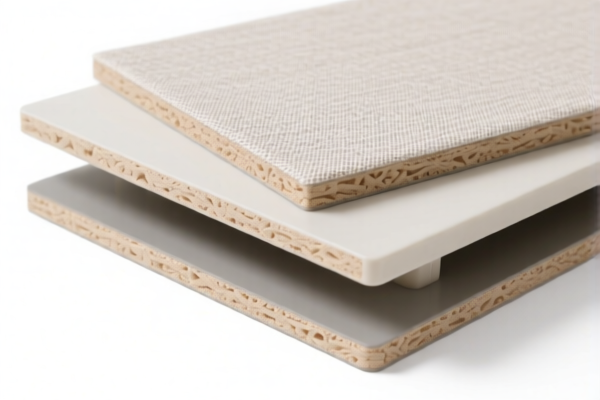
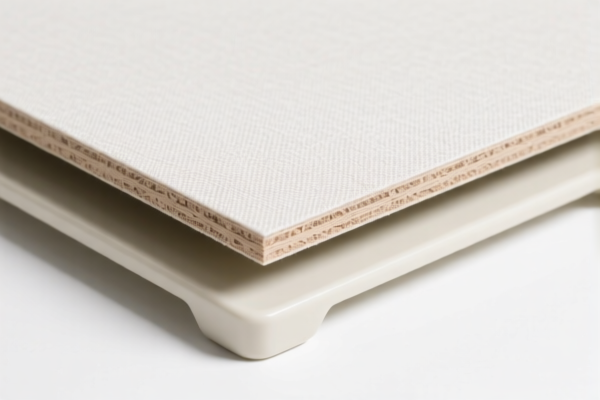
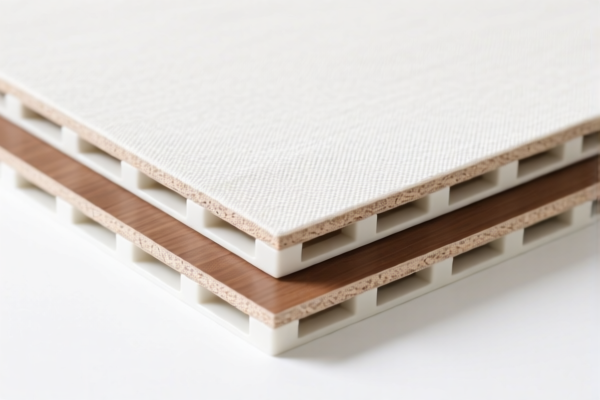
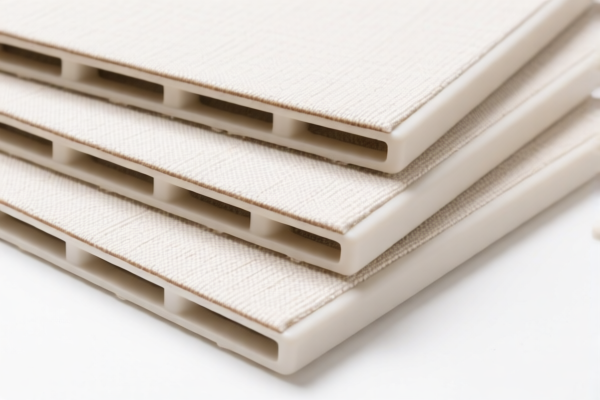
"Textile Reinforced Plastic (TRP) Board" is a high-performance composite material widely used in modern furniture design, architectural interiors, and light industrial applications. It combines the strength of textile fibers (such as fiberglass, carbon fiber, or aramid) with a plastic matrix (resin), forming a rigid "board" structure.
In international trade, classification hinges on three critical factors: 1. Material Composition: Is the primary component plastic (Chapter 39) or another base material like carbon fiber (Chapter 68)? 2. Form Factor: It is a flat, rigid "board" or panel. 3. Reinforcement Type: The presence of "textile reinforcement" implies a composite structure, which often triggers specific "other" or "decorative laminate" subheadings.
⚠️ Key Classification Distinction:
- If the product is primarily a decorative surface layer bonded to a substrate (like MDF or wood), it often falls under Chapter 39 (Plastics) as a laminate.
- If the product is a structural composite panel where the plastic/resin matrix is dominant and serves as the binding agent for the textile, it may still fall under Chapter 39 or potentially Chapter 68 if considered a "mineral product" composite (rare for plastic-based TRP).
- Crucial Note: The provided data suggests four distinct potential HS Codes, ranging from 6815 (Mineral/Non-electrical) to 3926 (Other Plastics), reflecting ambiguity in how customs authorities view the "textile" vs. "plastic" primary material balance.
📦 II. HS Code Classification Details (Based on Provided Data)
| HS Code | Product Description & Matching Logic | Key Attributes |
|---|---|---|
6815.19.00.00 |
Other Products of Stone or of Other Mineral Substances (Specifically: Carbon Fiber/Composite Boards) | Matching Logic: The item contains "textile reinforcement" and is inferred as a non-electric carbon fiber-like fiber reinforced composite product in "board" form, fitting the "Other" category. |
3921.90.50.10 |
Other Plates, Sheets, Film, Foil and Strip, of Plastics (Specifically: Decorative High-Pressure Laminate) | Matching Logic: "Plastic" fits the material; "Decorative Board" aligns with "Decorative High-Pressure Paper-Enhanced Decorative Laminates" in form and usage; "Textile Reinforcement" is reasonably inferred as an enhancing layer material. |
3921.90.40.10 |
Other Plates, Sheets, Film, Foil and Strip, of Plastics (Specifically: Other Plastic Boards) | Matching Logic: The product is in plastic board form; "Textile Reinforcement" is viewed as a variant of plastic sheets/films, logically fitting under "Other" categories. |
3926.90.57.00 |
Other Articles of Plastics and Articles of Other Materials of Heading 3901-3914 | Matching Logic: Contains "plastic" and "board" shape, fitting plastic product characteristics; "Textile Reinforcement" attributes align with textile fiber features in reference classifications. |
🔍 Critical Insight:
The divergence in HS Codes (3921vs.3926vs.6815) depends heavily on whether customs classifies the item as a Laminated Plastic Board (3921) or a General Plastic Article (3926), or potentially misclassifies it as a Mineral/Carbon Composite (6815) due to the "fiber" mention.
- 3921 Codes are typically for layered/plated products.
- 3926 Codes are for finished plastic articles (like furniture parts).
- 6815 Code is risky and likely incorrect unless the product is purely a carbon-fiber structural panel with no traditional plastic resin matrix recognized as the primary binder.
💰 III. 2026 Latest Tariff Rate Details (Including Additional Taxes & Policy Surcharges)
✅ Applicable Country: United States (US)
✅ Country of Origin: China (CN)
✅ Effective Date: From November 10, 2025 (and onwards)
🎯 1. 6815.19.00.00 —— Other Mineral Products / Carbon Fiber Composites
| Item | Detail |
|---|---|
| Base Tariff | 0.0% |
| Section 301 Additional Tariff | +25.0% |
| IEEPA Additional Tariff | +10.0% (Section 122 Provisions) |
| Total Tax Rate | 35.0% |
| Tax Calculation | CIF Value × 35% |
| De Minimis Exemption | ❌ Not Eligible |
| Legal Basis | USITC Section 301 + IEEPA 122 Provisions |
📌 Explanation:
- Although the base tariff is 0%, the 35% total rate is significant.
- This classification is often used for high-tech composite panels. If your product is truly a "plastic board," this code might be challenged by customs as misclassified.
🎯 2. 3921.90.50.10 —— Other Plastic Plates, Sheets, etc. (Decorative Laminates)
| Item | Detail |
|---|---|
| Base Tariff | 4.8% |
| Section 301 Additional Tariff | +25.0% |
| IEEPA Additional Tariff | +10.0% (Section 122 Provisions) |
| Total Tax Rate | 39.8% |
| Tax Calculation | CIF Value × 39.8% |
| De Minimis Exemption | ❌ Not Eligible |
| Legal Basis | USITC Section 301 + IEEPA 122 Provisions |
📌 Note:
- This is the most likely correct classification for "Decorative Boards" used in furniture.
- The base rate is higher (4.8%), but the total is competitive compared to other plastic article codes.
- "Textile Reinforcement" is treated as part of the decorative laminate structure.
🎯 3. 3921.90.40.10 —— Other Plastic Plates, Sheets, etc. (Other)
| Item | Detail |
|---|---|
| Base Tariff | 4.2% |
| Section 301 Additional Tariff | +25.0% |
| IEEPA Additional Tariff | +10.0% (Section 122 Provisions) |
| Total Tax Rate | 39.2% |
| Tax Calculation | CIF Value × 39.2% |
| De Minimis Exemption | ❌ Not Eligible |
| Legal Basis | USITC Section 301 + IEEPA 122 Provisions |
📌 Note:
- Slightly lower total rate (39.2%) than3921.90.50.10.
- Applicable if the board is not specifically "decorative" or "high-pressure," but a generic plastic composite board.
- Customs may require proof that it is not a "finished article" to avoid3926.
🎯 4. 3926.90.57.00 —— Other Plastic Articles (e.g., Furniture Parts)
| Item | Detail |
|---|---|
| Base Tariff | 6.5% |
| Section 301 Additional Tariff | +25.0% |
| IEEPA Additional Tariff | +10.0% (Section 122 Provisions) |
| Total Tax Rate | 41.5% |
| Tax Calculation | CIF Value × 41.5% |
| De Minimis Exemption | ❌ Not Eligible |
| Legal Basis | USITC Section 301 + IEEPA 122 Provisions |
📌 Note:
- Highest total rate (41.5%) among the options.
- This code is for "Other Articles," implying the board is a finished product or component (like a furniture part) rather than a raw material/panel.
- If you are importing raw boards for further processing,3921is preferred. If importing finished furniture panels,3926might be forced.
🛠️ IV. Customs Clearance Practical Advice (Battle-Tested Pitfall Guide)
✅ 1. Documentation Checklist (Non-Negotiable)
| Document | Required | Description |
|---|---|---|
| ✅ Product Specification Sheet | ✔️ | Must detail material composition (% plastic, % textile), thickness, dimensions, and resin type. |
| ✅ Material Safety Data Sheet (MSDS) | ✔️ | Proves the chemical nature of the plastic/resin. |
| ✅ Product Photos (Clear & Detailed) | ✔️ | Show cross-section to prove "layered" structure (supports 3921) or monolithic form (supports 3926). |
| ✅ Commercial Invoice | ✔️ | Description must be precise: "Textile Reinforced Plastic Decorative Board" or "Composite Plastic Panel." Avoid vague terms like "Furniture Part" if it's a raw panel. |
| ✅ Packing List | ✔️ | Clearly state dimensions, weight, and number of panels. |
| ✅ Certificate of Origin (CO) | ✔️ | Required to prove Chinese origin for 301/IEEPA tax calculation. |
✅ 2. Declaration Strategy (Key Mnemonics)
🔥 "Structure Defines Code: Layered = 3921, Finished = 3926, Mineral? Be Careful!"
| Scenario | Correct Declaration | Risk if Wrong |
|---|---|---|
| Raw/Unfinished Composite Board (for further cutting/shaping) | 3921.90.50.10 or 3921.90.40.10 |
Declaring as 3926 → Higher tax (41.5% vs 39.2-39.8%). Declaring as 6815 → High risk of audit/penalty if not mineral. |
| Finished Furniture Part (e.g., pre-cut shelf, table top) | 3926.90.57.00 |
Declaring as 3921 → Customs may reclassify as "Article" → Higher tax. |
| High-Pressure Decorative Laminate (surface layer only) | 3921.90.50.10 |
Misclassifying as "Textile Product" (Chapter 50-63) → Incorrect chapter, significant penalties. |
📌 Pro Tip:
- Emphasize "Plastic Matrix" and "Laminate Structure" in your description to support3921codes.
- Avoid using the term "Carbon Fiber Board" unless it is strictly a structural composite with no decorative plastic layer, as this may push it toward6815or specialized carbon codes, inviting intense scrutiny.
- If the product is decorative, explicitly state "Decorative Laminated Board" to align with3921.90.50.10.
✅ 3. Special Case Handling
| Scenario | Handling Advice |
|---|---|
| Mixed Shipment (Boards + Furniture Parts) | Separate shipments or clearly distinguish HS Codes on invoice. Mixing 3921 and 3926 in one line item is a red flag. |
| Small Samples (De Minimis) | ❌ Not Eligible. All provided codes have IEEPA/301 taxes that exceed the de minimis threshold ($800). Even small shipments will incur taxes. |
| Re-export | If re-exporting from a free trade zone, ensure proper documentation to avoid domestic entry taxes. |
🌍 V. Global Market Comparison (2026 Latest)
| Country/Region | Recommended HS Code | Total Tax Rate (China Origin) | Certification | Notes |
|---|---|---|---|---|
| 🇺🇸 USA | 3921.90.50.10 (Likely Best) |
39.8% | N/A (Focus on Tariff) | High tariffs apply. 6815 is risky. |
| 🇪🇺 EU | 3921.90 or 3926.90 |
~4-6% + 10% (if applicable) | CE, REACH | No 301/IEEPA equivalent, but carbon border tax (CBAM) may apply depending on resin. |
| 🇨🇳 China | 3921.90 or 3926.90 |
5-10% | CCC (if applicable) | Lower base tariffs, no 301 taxes. |
| 🇬🇧 UK | 3921.90 or 3926.90 |
~4-6% | UKCA | Similar to EU post-Brexit. |
📌 Conclusion:
- USA is the most challenging market due to the 39.2% - 41.5% total tariff range.
- EU/UK are significantly cheaper but require strict environmental compliance (REACH).
📌 VI. Common Errors & Pitfalls (Lessons Learned)
❌ Error 1: Classifying as "Textile Product" (Chapter 50-63)
👉 Consequence: Wrong chapter. Customs will reclassify to Chapter 39. Penalty for misdeclaration.
❌ Error 2: Using 6815.19.00.00 for standard Plastic Composite Boards
👉 Consequence: High audit risk. If not a mineral/carbon structure, customs will reject it. Only use if you have lab reports proving non-plastic matrix.
❌ Error 3: Claiming De Minimis Exemption for Samples
👉 Consequence: Shipment held at border. Taxes collected upon release. Delayed delivery.
❌ Error 4: Vague Description ("Plastic Board")
👉 Consequence: Customs assigns highest default rate or requests additional info. Delays clearance by days/weeks.
✅ Correct Approach:
"Decorative Textile Reinforced Plastic Board, Laminate Structure, Plastic Matrix, for Furniture Use, Model XYZ, 12mm Thick"
🎯 VII. Conclusion: Precision in Classification Saves Money!
🎯 Remember the Golden Rule:
🔹 "Laminate = 3921 (Lower Tax), Finished = 3926 (Higher Tax), Mineral = 6815 (High Risk)."
🔹 "Total Tax ~39-41% for China Origin. Plan Your Pricing Accordingly!"
🔹 "Describe the Layered Structure to Support 3921!"
📌 Tip:
If your TRP board is imported for further manufacturing (e.g., you cut it into shelves), insist on 3921 classification.
If you are importing pre-finished furniture parts, you may be forced into 3926.
Always apply for an Advance Ruling with CBP if the product structure is complex.
📣 Immediate Action:
📞 Contact a licensed US Customs Broker.
📄 Provide detailed material composition reports.
🚀 Optimize your HS Code to3921.90.50.10or3921.90.40.10to save up to 2.3% vs.3926!
✨ Professional Clearance Starts with Accurate Classification!
💼 Every Percentage Point Counts in the Age of Trade Wars!
用户评价
关于 HS 编码归类
协调制度(HS)是由世界海关组织(WCO)制定的国际贸易商品分类标准。全球 200 多个国家采用 HS 系统作为海关关税、贸易统计和进出口监管的基础。
每个 HS 编码遵循以下层级结构:
- 章(2 位)——商品大类(例如:第 84 章:机器和机械设备)
- 品目(4 位)——章内的更具体分类
- 子目(6 位)——国际通用细分,所有 WCO 成员国统一使用
- 本国细分(8-10 位)——各国自行扩展的细分编码,如美国 HTSUS 10 位编码
正确的 HS 编码归类对于顺利通关、准确缴纳关税和遵守贸易法规至关重要。错误归类可能导致海关延误、多缴关税或罚款。
从CN进口到US时,适用的关税税率可能包括:
- 最惠国(MFN)税率——适用于 WTO 成员国的标准关税税率
- 普通税率——适用于无贸易协定国家
- 贸易救济关税——附加关税,如 301 条款(反倾销)、232 条款(国家安全)或反补贴税
本页内容仅供参考。如需正式归类,请咨询当地海关或持牌报关代理。