Furniture Textile Reinforced Plastic Board
CN → US| HS Code | Tariff Rate | Origin | Destination | Doc |
|---|---|---|---|---|
| 6815190000 | 35.0% | CN | US | Official Doc |
| 3921905010 | 39.8% | CN | US | Official Doc |
| 3921904010 | 39.2% | CN | US | Official Doc |
| 3926905700 | 41.5% | CN | US | Official Doc |
| 3921905010 | 39.8% | CN | US | Official Doc |
Product Images
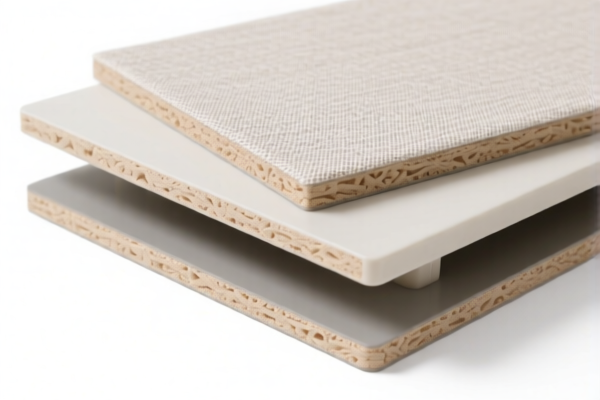
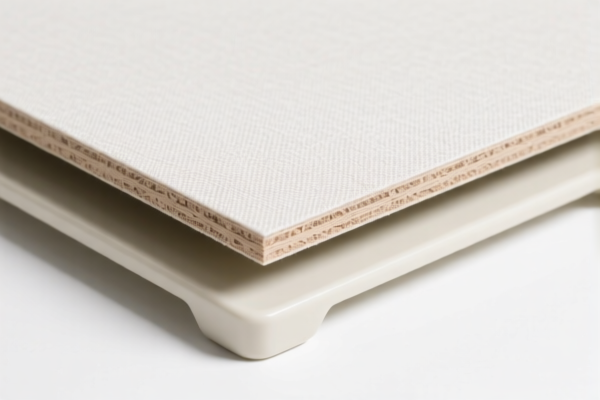
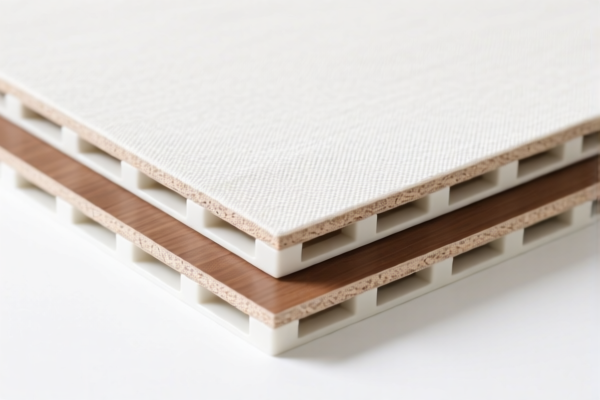
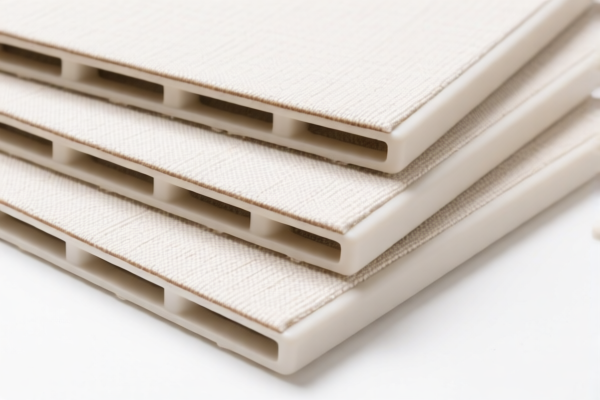
AI Analysis
🪑 Furniture: Textile Reinforced Plastic (TRP) Board
🌐 HS Code Reference & Customs Clearance Guide | 2026 Latest Tariff Analysis | Professional-Level Clearance Strategy
📌 I. Product Definition & Classification: What Exactly is "Textile Reinforced Plastic Board"?
"Textile Reinforced Plastic (TRP) Board" is a high-performance composite material widely used in modern furniture design, architectural interiors, and light industrial applications. It combines the strength of textile fibers (such as fiberglass, carbon fiber, or aramid) with a plastic matrix (resin), forming a rigid "board" structure.
In international trade, classification hinges on three critical factors: 1. Material Composition: Is the primary component plastic (Chapter 39) or another base material like carbon fiber (Chapter 68)? 2. Form Factor: It is a flat, rigid "board" or panel. 3. Reinforcement Type: The presence of "textile reinforcement" implies a composite structure, which often triggers specific "other" or "decorative laminate" subheadings.
⚠️ Key Classification Distinction:
- If the product is primarily a decorative surface layer bonded to a substrate (like MDF or wood), it often falls under Chapter 39 (Plastics) as a laminate.
- If the product is a structural composite panel where the plastic/resin matrix is dominant and serves as the binding agent for the textile, it may still fall under Chapter 39 or potentially Chapter 68 if considered a "mineral product" composite (rare for plastic-based TRP).
- Crucial Note: The provided data suggests four distinct potential HS Codes, ranging from 6815 (Mineral/Non-electrical) to 3926 (Other Plastics), reflecting ambiguity in how customs authorities view the "textile" vs. "plastic" primary material balance.
📦 II. HS Code Classification Details (Based on Provided Data)
| HS Code | Product Description & Matching Logic | Key Attributes |
|---|---|---|
6815.19.00.00 |
Other Products of Stone or of Other Mineral Substances (Specifically: Carbon Fiber/Composite Boards) | Matching Logic: The item contains "textile reinforcement" and is inferred as a non-electric carbon fiber-like fiber reinforced composite product in "board" form, fitting the "Other" category. |
3921.90.50.10 |
Other Plates, Sheets, Film, Foil and Strip, of Plastics (Specifically: Decorative High-Pressure Laminate) | Matching Logic: "Plastic" fits the material; "Decorative Board" aligns with "Decorative High-Pressure Paper-Enhanced Decorative Laminates" in form and usage; "Textile Reinforcement" is reasonably inferred as an enhancing layer material. |
3921.90.40.10 |
Other Plates, Sheets, Film, Foil and Strip, of Plastics (Specifically: Other Plastic Boards) | Matching Logic: The product is in plastic board form; "Textile Reinforcement" is viewed as a variant of plastic sheets/films, logically fitting under "Other" categories. |
3926.90.57.00 |
Other Articles of Plastics and Articles of Other Materials of Heading 3901-3914 | Matching Logic: Contains "plastic" and "board" shape, fitting plastic product characteristics; "Textile Reinforcement" attributes align with textile fiber features in reference classifications. |
🔍 Critical Insight:
The divergence in HS Codes (3921vs.3926vs.6815) depends heavily on whether customs classifies the item as a Laminated Plastic Board (3921) or a General Plastic Article (3926), or potentially misclassifies it as a Mineral/Carbon Composite (6815) due to the "fiber" mention.
- 3921 Codes are typically for layered/plated products.
- 3926 Codes are for finished plastic articles (like furniture parts).
- 6815 Code is risky and likely incorrect unless the product is purely a carbon-fiber structural panel with no traditional plastic resin matrix recognized as the primary binder.
💰 III. 2026 Latest Tariff Rate Details (Including Additional Taxes & Policy Surcharges)
✅ Applicable Country: United States (US)
✅ Country of Origin: China (CN)
✅ Effective Date: From November 10, 2025 (and onwards)
🎯 1. 6815.19.00.00 —— Other Mineral Products / Carbon Fiber Composites
| Item | Detail |
|---|---|
| Base Tariff | 0.0% |
| Section 301 Additional Tariff | +25.0% |
| IEEPA Additional Tariff | +10.0% (Section 122 Provisions) |
| Total Tax Rate | 35.0% |
| Tax Calculation | CIF Value × 35% |
| De Minimis Exemption | ❌ Not Eligible |
| Legal Basis | USITC Section 301 + IEEPA 122 Provisions |
📌 Explanation:
- Although the base tariff is 0%, the 35% total rate is significant.
- This classification is often used for high-tech composite panels. If your product is truly a "plastic board," this code might be challenged by customs as misclassified.
🎯 2. 3921.90.50.10 —— Other Plastic Plates, Sheets, etc. (Decorative Laminates)
| Item | Detail |
|---|---|
| Base Tariff | 4.8% |
| Section 301 Additional Tariff | +25.0% |
| IEEPA Additional Tariff | +10.0% (Section 122 Provisions) |
| Total Tax Rate | 39.8% |
| Tax Calculation | CIF Value × 39.8% |
| De Minimis Exemption | ❌ Not Eligible |
| Legal Basis | USITC Section 301 + IEEPA 122 Provisions |
📌 Note:
- This is the most likely correct classification for "Decorative Boards" used in furniture.
- The base rate is higher (4.8%), but the total is competitive compared to other plastic article codes.
- "Textile Reinforcement" is treated as part of the decorative laminate structure.
🎯 3. 3921.90.40.10 —— Other Plastic Plates, Sheets, etc. (Other)
| Item | Detail |
|---|---|
| Base Tariff | 4.2% |
| Section 301 Additional Tariff | +25.0% |
| IEEPA Additional Tariff | +10.0% (Section 122 Provisions) |
| Total Tax Rate | 39.2% |
| Tax Calculation | CIF Value × 39.2% |
| De Minimis Exemption | ❌ Not Eligible |
| Legal Basis | USITC Section 301 + IEEPA 122 Provisions |
📌 Note:
- Slightly lower total rate (39.2%) than3921.90.50.10.
- Applicable if the board is not specifically "decorative" or "high-pressure," but a generic plastic composite board.
- Customs may require proof that it is not a "finished article" to avoid3926.
🎯 4. 3926.90.57.00 —— Other Plastic Articles (e.g., Furniture Parts)
| Item | Detail |
|---|---|
| Base Tariff | 6.5% |
| Section 301 Additional Tariff | +25.0% |
| IEEPA Additional Tariff | +10.0% (Section 122 Provisions) |
| Total Tax Rate | 41.5% |
| Tax Calculation | CIF Value × 41.5% |
| De Minimis Exemption | ❌ Not Eligible |
| Legal Basis | USITC Section 301 + IEEPA 122 Provisions |
📌 Note:
- Highest total rate (41.5%) among the options.
- This code is for "Other Articles," implying the board is a finished product or component (like a furniture part) rather than a raw material/panel.
- If you are importing raw boards for further processing,3921is preferred. If importing finished furniture panels,3926might be forced.
🛠️ IV. Customs Clearance Practical Advice (Battle-Tested Pitfall Guide)
✅ 1. Documentation Checklist (Non-Negotiable)
| Document | Required | Description |
|---|---|---|
| ✅ Product Specification Sheet | ✔️ | Must detail material composition (% plastic, % textile), thickness, dimensions, and resin type. |
| ✅ Material Safety Data Sheet (MSDS) | ✔️ | Proves the chemical nature of the plastic/resin. |
| ✅ Product Photos (Clear & Detailed) | ✔️ | Show cross-section to prove "layered" structure (supports 3921) or monolithic form (supports 3926). |
| ✅ Commercial Invoice | ✔️ | Description must be precise: "Textile Reinforced Plastic Decorative Board" or "Composite Plastic Panel." Avoid vague terms like "Furniture Part" if it's a raw panel. |
| ✅ Packing List | ✔️ | Clearly state dimensions, weight, and number of panels. |
| ✅ Certificate of Origin (CO) | ✔️ | Required to prove Chinese origin for 301/IEEPA tax calculation. |
✅ 2. Declaration Strategy (Key Mnemonics)
🔥 "Structure Defines Code: Layered = 3921, Finished = 3926, Mineral? Be Careful!"
| Scenario | Correct Declaration | Risk if Wrong |
|---|---|---|
| Raw/Unfinished Composite Board (for further cutting/shaping) | 3921.90.50.10 or 3921.90.40.10 |
Declaring as 3926 → Higher tax (41.5% vs 39.2-39.8%). Declaring as 6815 → High risk of audit/penalty if not mineral. |
| Finished Furniture Part (e.g., pre-cut shelf, table top) | 3926.90.57.00 |
Declaring as 3921 → Customs may reclassify as "Article" → Higher tax. |
| High-Pressure Decorative Laminate (surface layer only) | 3921.90.50.10 |
Misclassifying as "Textile Product" (Chapter 50-63) → Incorrect chapter, significant penalties. |
📌 Pro Tip:
- Emphasize "Plastic Matrix" and "Laminate Structure" in your description to support3921codes.
- Avoid using the term "Carbon Fiber Board" unless it is strictly a structural composite with no decorative plastic layer, as this may push it toward6815or specialized carbon codes, inviting intense scrutiny.
- If the product is decorative, explicitly state "Decorative Laminated Board" to align with3921.90.50.10.
✅ 3. Special Case Handling
| Scenario | Handling Advice |
|---|---|
| Mixed Shipment (Boards + Furniture Parts) | Separate shipments or clearly distinguish HS Codes on invoice. Mixing 3921 and 3926 in one line item is a red flag. |
| Small Samples (De Minimis) | ❌ Not Eligible. All provided codes have IEEPA/301 taxes that exceed the de minimis threshold ($800). Even small shipments will incur taxes. |
| Re-export | If re-exporting from a free trade zone, ensure proper documentation to avoid domestic entry taxes. |
🌍 V. Global Market Comparison (2026 Latest)
| Country/Region | Recommended HS Code | Total Tax Rate (China Origin) | Certification | Notes |
|---|---|---|---|---|
| 🇺🇸 USA | 3921.90.50.10 (Likely Best) |
39.8% | N/A (Focus on Tariff) | High tariffs apply. 6815 is risky. |
| 🇪🇺 EU | 3921.90 or 3926.90 |
~4-6% + 10% (if applicable) | CE, REACH | No 301/IEEPA equivalent, but carbon border tax (CBAM) may apply depending on resin. |
| 🇨🇳 China | 3921.90 or 3926.90 |
5-10% | CCC (if applicable) | Lower base tariffs, no 301 taxes. |
| 🇬🇧 UK | 3921.90 or 3926.90 |
~4-6% | UKCA | Similar to EU post-Brexit. |
📌 Conclusion:
- USA is the most challenging market due to the 39.2% - 41.5% total tariff range.
- EU/UK are significantly cheaper but require strict environmental compliance (REACH).
📌 VI. Common Errors & Pitfalls (Lessons Learned)
❌ Error 1: Classifying as "Textile Product" (Chapter 50-63)
👉 Consequence: Wrong chapter. Customs will reclassify to Chapter 39. Penalty for misdeclaration.
❌ Error 2: Using 6815.19.00.00 for standard Plastic Composite Boards
👉 Consequence: High audit risk. If not a mineral/carbon structure, customs will reject it. Only use if you have lab reports proving non-plastic matrix.
❌ Error 3: Claiming De Minimis Exemption for Samples
👉 Consequence: Shipment held at border. Taxes collected upon release. Delayed delivery.
❌ Error 4: Vague Description ("Plastic Board")
👉 Consequence: Customs assigns highest default rate or requests additional info. Delays clearance by days/weeks.
✅ Correct Approach:
"Decorative Textile Reinforced Plastic Board, Laminate Structure, Plastic Matrix, for Furniture Use, Model XYZ, 12mm Thick"
🎯 VII. Conclusion: Precision in Classification Saves Money!
🎯 Remember the Golden Rule:
🔹 "Laminate = 3921 (Lower Tax), Finished = 3926 (Higher Tax), Mineral = 6815 (High Risk)."
🔹 "Total Tax ~39-41% for China Origin. Plan Your Pricing Accordingly!"
🔹 "Describe the Layered Structure to Support 3921!"
📌 Tip:
If your TRP board is imported for further manufacturing (e.g., you cut it into shelves), insist on 3921 classification.
If you are importing pre-finished furniture parts, you may be forced into 3926.
Always apply for an Advance Ruling with CBP if the product structure is complex.
📣 Immediate Action:
📞 Contact a licensed US Customs Broker.
📄 Provide detailed material composition reports.
🚀 Optimize your HS Code to3921.90.50.10or3921.90.40.10to save up to 2.3% vs.3926!
✨ Professional Clearance Starts with Accurate Classification!
💼 Every Percentage Point Counts in the Age of Trade Wars!
Customer Reviews
About HS Code Classification
The Harmonized System (HS) is an internationally standardized nomenclature developed by the World Customs Organization (WCO) to classify traded products. Over 200 countries use the HS system as the basis for customs tariffs, trade statistics, and import/export regulations.
Each HS code follows a hierarchical structure:
- Chapter (2 digits) — Broad category of goods (e.g., Chapter 84: Machinery and Mechanical Appliances)
- Heading (4 digits) — More specific grouping within the chapter
- Subheading (6 digits) — Internationally standardized breakdown, used by all WCO member countries
- National subdivisions (8-10 digits) — Country-specific extensions for further classification, such as US HTSUS 10-digit codes
Correct HS code classification is essential for smooth customs clearance, accurate duty payment, and compliance with trade regulations. Misclassification can lead to customs delays, overpayment of duties, or penalties.
When importing from CN to US, the applicable tariff rates may include:
- Most-Favored-Nation (MFN) rate — The standard duty rate applied to WTO members
- General rate — Applied to countries without trade agreements
- Trade remedy duties — Additional tariffs such as Section 301 (anti-dumping), Section 232 (national security), or countervailing duties
The information provided on this page is for reference purposes only. For official classification, please consult with your local customs authority or a licensed customs broker.