Furniture grade Full Grain Cowhide Leather
CN → US| HS编码 | 关税税率 | 原产国 | 目的国 | 文档 |
|---|---|---|---|---|
| 4107115000 | 12.8% | CN | US | 官方文档 |
| 4107915000 | 12.8% | CN | US | 官方文档 |
商品图片
AI分析
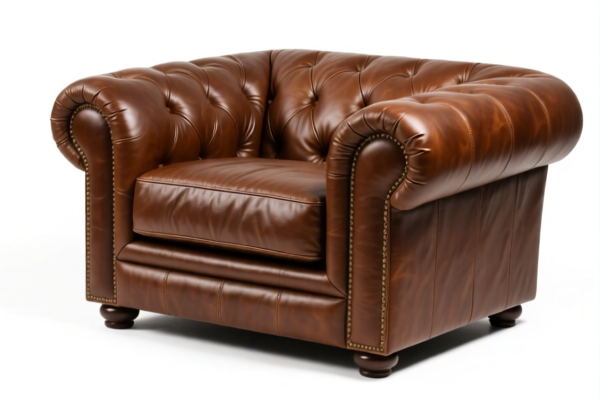
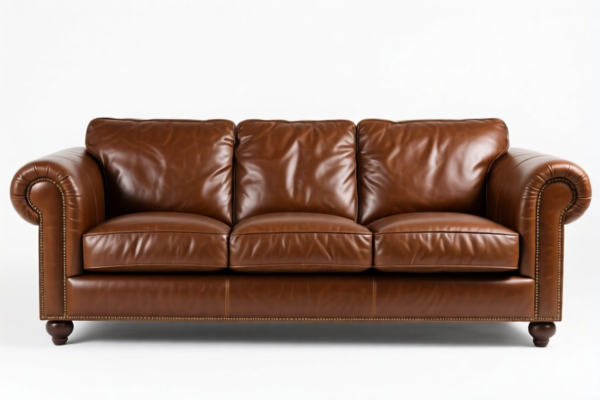
🐂 Furniture Grade Full Grain Cowhide Leather
🌐 HS Code Reference & Customs Clearance Guide | 2026 Latest Tariff Analysis | Professional Clearance Strategy
📌 1. Product Definition and Classification: What is "Furniture Grade Full Grain Cowhide"?
Furniture-grade full-grain cowhide leather refers to high-quality leather derived from bovine animals (cows, including buffalo) or equine animals, specifically prepared for upholstery purposes. It retains the original grain surface (unsplit), has been tanned or crust-processed, and is hair-on or hair-off (typically hair-off for furniture). It does not include patent leather or metallized leather (Heading 4114).
⚠️ Key Classification Criteria:
- Animal Source: Bovine (including buffalo) or Equine.
- Processing State: Tanned or crust-prepared, further prepared.
- Grain Structure: Full grain, unsplit (not split into layers).
- End Use: Specifically designated as Upholstery Leather.
- Surface: Hair removed (without hair on).
📦 2. HS Code Classification Details (2026 Latest Tariff Authority Comparison)
Based on the provided data, this product falls under two primary HS Codes depending on the size/shape of the hide/skin:
| HS Code | Product Description | Application Scenario | Split Status |
|---|---|---|---|
4107.11.50.00 |
Whole hides and skins: Full grains, unsplit: Other: Other: Upholstery leather | Large, intact hides/skins used for large furniture pieces | ✅ Unsplit |
4107.91.50.00 |
Other, including sides: Full grains, unsplit: Other: Upholstery leather | Sides or smaller portions of hides/skins used for upholstery | ✅ Unsplit |
🔍 Key Distinction:
-4107.11.50.00: Applies to whole hides/skins (full size, not cut into sides).
-4107.91.50.00: Applies to sides or other partial pieces (split into halves or smaller sections but not split into layers).
- Both are "Full Grain" and "Unsplit": This means the leather has not been divided into grain and flesh layers; it remains a single, durable layer.
- Both are "Upholstery Leather": Explicitly designated for furniture use.
💰 3. 2026 Latest Tariff Rate Details (Including Additional Taxes, Policy Surcharges)
✅ Applicable Country: United States (US)
✅ Origin: China (CN) (Assumed based on common trade context; verify if other origins apply)
✅ Effective Date: 2025 onwards (Current tariff structure)
🎯 1. 4107.11.50.00 — Whole Hides/Skins, Full Grain, Unsplit, Upholstery
| Item | Content |
|---|---|
| Base Tariff Rate | 0.0% (ad valorem) |
| Additional Tariff (Section 301) | 0.0% |
| Total Tariff Rate | 0.0% |
| Tax Calculation | CIF Value × 0% = $0 |
| De Minimis Exemption Eligibility | ❌ Not Applicable (Usually, bulk leather shipments exceed de minimis thresholds, but rate is 0% anyway) |
| Legal Basis Path | USITC:4107.11.50.00 → FOOTNOTE:None |
📌 Explanation:
- This code benefits from a 0% base tariff.
- Crucially, there are NO additional Section 301 tariffs or IEEPA surcharges applied to this specific leather category in the provided data.
- This makes it a low-cost, high-efficiency import category compared to many other goods.
🎯 2. 4107.91.50.00 — Sides/Other, Full Grain, Unsplit, Upholstery
| Item | Content |
|---|---|
| Base Tariff Rate | 0.0% (ad valorem) |
| Additional Tariff (Section 301) | 0.0% |
| Total Tariff Rate | 0.0% |
| Tax Calculation | CIF Value × 0% = $0 |
| De Minimis Exemption Eligibility | ❌ Not Applicable |
| Legal Basis Path | USITC:4107.91.50.00 → FOOTNOTE:None |
📌 Note:
- Identical tariff treatment to whole hides.
- Whether shipped as whole hides or sides, the 0% tariff rate applies.
- Ensure the description explicitly states "Full Grain, Unsplit" to avoid misclassification into split leather codes (which may have different rates).
🛠️ 4. Customs Clearance Practical Advice (Real-World Pitfall Avoidance Guide)
✅ 1. Required Documentation Checklist (Mandatory)
| Document | Must Provide | Explanation |
|---|---|---|
| ✅ Product Specification Sheet | ✔️ | Detail animal source (cow/buffalo), tanning method, grain type (full/unsplit), thickness, and end-use (upholstery). |
| ✅ Commercial Invoice | ✔️ | Must clearly state "Full Grain, Unsplit, Upholstery Leather" and specify "Whole Hides" vs. "Sides". |
| ✅ Packing List | ✔️ | Show weight, dimensions, and number of hides/skins. |
| ✅ Certificate of Origin (CO) | ✔️ | To confirm origin (e.g., China, Brazil, Italy) for tariff verification. |
| ✅ Photos of Hides/Skins | ✔️ | Show grain surface, edges, and labeling to prove "full grain" and "unsplit" status. |
| ✅ Tanning Process Description | ✔️ | Explain that leather is "further prepared after tanning" to justify Heading 4107. |
✅ 2. Declaration Tips (Key Mantras)
🔥 "Full Grain, Unsplit, Upholstery Use, 0% Tariff!"
| Scenario | Correct Declaration | Incorrect Declaration |
|---|---|---|
| Whole hides used for sofas | 4107.11.50.00 - "Whole Hides, Full Grain, Unsplit, Upholstery" |
"Split Leather" → Higher risk, potential misclassification |
| Sides used for chairs | 4107.91.50.00 - "Sides, Full Grain, Unsplit, Upholstery" |
"Raw Hide" → Incorrect stage of processing |
| Split leather (for garments) | Do not use 4107 codes → Use other headings (e.g., 4106/4107 split codes) | Mislabeling split as "full grain" → Penalties + Back Taxes |
📌 Critical Warning:
- "Unsplit" is the key: If the leather is split into top-grain and flesh layers, it cannot use these codes. It must be declared as split leather, which may have different tariff treatments.
- "Upholstery" is the key: If the leather is for footwear, gloves, or luggage, it may fall under different subheadings within Heading 4107, potentially affecting duty rates or eligibility for certain exemptions.
✅ 3. Special Case Handling
| Situation | Handling Advice |
|---|---|
| Mixed Shipments (Hides + Sides) | Declare separately on the invoice with distinct HS Codes (4107.11.50.00 and 4107.91.50.00). Do not combine into one line item. |
| Damaged or Graded Hides | Still eligible for 0% if they meet "full grain, unsplit, upholstery" criteria. Provide quality grade (e.g., Grade A, B). |
| Vegetable-Tanned vs. Chrome-Tanned | Both are eligible. Specify tanning method in the description for clarity. |
| Import from Non-China Origins | Verify if any FTA (Free Trade Agreement) benefits apply, though the base rate is already 0%. |
🌍 5. Global Market Customs Comparison (2026 Latest)
| Country/Region | Recommended HS Code | Tariff | Certification Requirement | Notes |
|---|---|---|---|---|
| 🇺🇸 USA | 4107.11.50.00 / 4107.91.50.00 |
0.0% | None | No additional Section 301 tariffs on this code. |
| 🇨🇳 China (Export) | Same | Varies | N/A | For export declaration. |
| 🇪🇺 EU | 4107 11 / 4107 91 | 0% - 4.7% | REACH Compliance | Check specific EU TARIC codes for exact rate. |
| 🇬🇧 UK | 4107 11 / 4107 91 | 0% - 4.7% | UKCA | Post-Brexit rules may apply. |
| 🇯🇵 Japan | 4107 11 / 4107 91 | 3.2% - 4.3% | None | Standard MFN rate applies. |
📌 Conclusion:
- USA offers the most favorable tariff (0%) for this specific product category.
- EU and Japan have low but non-zero tariffs; check for preferential trade agreements.
- No major anti-dumping or countervailing duties are indicated in the provided data for these leather codes.
📌 6. Common Errors & Pitfall Guide (Lessons from Experience)
❌ Error 1: Declaring "Split Leather" as "Full Grain"
👉 Consequence: Misclassification → Potential back taxes + penalties. Split leather has different duty structures.
👉 Solution: Physically verify the cross-section of the leather. If two layers exist, it is split.
❌ Error 2: Using "Leather" as a generic description
👉 Consequence: Customs may request additional information → Delays.
👉 Solution: Always specify "Full Grain, Unsplit, Upholstery, Bovine/Equine".
❌ Error 3: Confusing "Whole Hides" with "Sides"
👉 Consequence: Wrong HS Code (4107.11 vs. 4107.91). While both are 0%, accuracy prevents audits.
👉 Solution: Measure the hide. If it’s a complete, uncut hide, use 4107.11. If cut in half (sides), use 4107.91.
❌ Error 4: Ignoring "Upholstery" designation
👉 Consequence: If the leather is for other uses (e.g., belts), it may fall under different subheadings with potentially different treatment.
👉 Solution: Ensure the end-use is explicitly stated as "upholstery" in the invoice.
✅ Correct Declaration Example:
"Upholstery Leather, Full Grain, Unsplit, Cowhide, Tanned, Hair-Off, Whole Hides, Grade A, for Furniture Use, Origin: China"
🎯 7. Conclusion: Professional Declaration, Low Cost, High Efficiency!
🎯 Remember the Mantra:
🔹 "Full Grain, Unsplit, Upholstery, 0% Tariff!"
🔹 "HS Code Accuracy Prevents Delays, 0% Rate Maximizes Profit!"
📌 Pro Tip:
- If your leather is vegetable-tanned or chrome-tanned, it still qualifies under these codes as long as it is full grain, unsplit, and for upholstery.
- Always request a pre-ruling from CBP (Customs and Border Protection) if unsure about the "full grain" status, especially for large shipments.
- Keep detailed photos of the leather grain and cross-sections to prove "unsplit" status in case of an audit.
📣 Immediate Action:
📞 Consult with a licensed customs broker to verify the exact classification based on your specific leather batches.
🚀 Ensure your invoice and packing list match the HS Code descriptions exactly to avoid customs holds.
✨ Professional Clearance Starts with Accurate Classification!
💼 Every Dollar Saved in Tariffs is Pure Profit!
用户评价
关于 HS 编码归类
协调制度(HS)是由世界海关组织(WCO)制定的国际贸易商品分类标准。全球 200 多个国家采用 HS 系统作为海关关税、贸易统计和进出口监管的基础。
每个 HS 编码遵循以下层级结构:
- 章(2 位)——商品大类(例如:第 84 章:机器和机械设备)
- 品目(4 位)——章内的更具体分类
- 子目(6 位)——国际通用细分,所有 WCO 成员国统一使用
- 本国细分(8-10 位)——各国自行扩展的细分编码,如美国 HTSUS 10 位编码
正确的 HS 编码归类对于顺利通关、准确缴纳关税和遵守贸易法规至关重要。错误归类可能导致海关延误、多缴关税或罚款。
从CN进口到US时,适用的关税税率可能包括:
- 最惠国(MFN)税率——适用于 WTO 成员国的标准关税税率
- 普通税率——适用于无贸易协定国家
- 贸易救济关税——附加关税,如 301 条款(反倾销)、232 条款(国家安全)或反补贴税
本页内容仅供参考。如需正式归类,请咨询当地海关或持牌报关代理。