Furniture grade Full Grain Cowhide Leather
CN → US| HS Code | Tariff Rate | Origin | Destination | Doc |
|---|---|---|---|---|
| 4107115000 | 12.8% | CN | US | Official Doc |
| 4107915000 | 12.8% | CN | US | Official Doc |
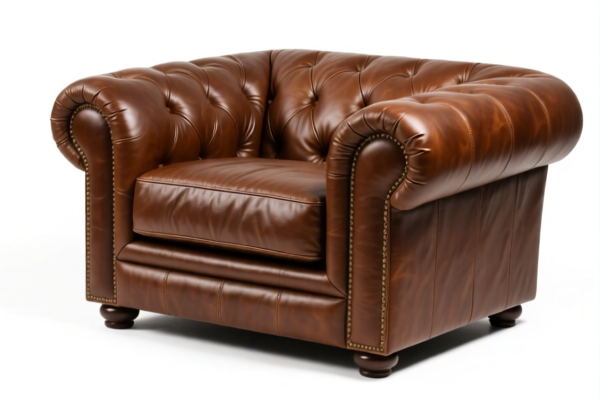
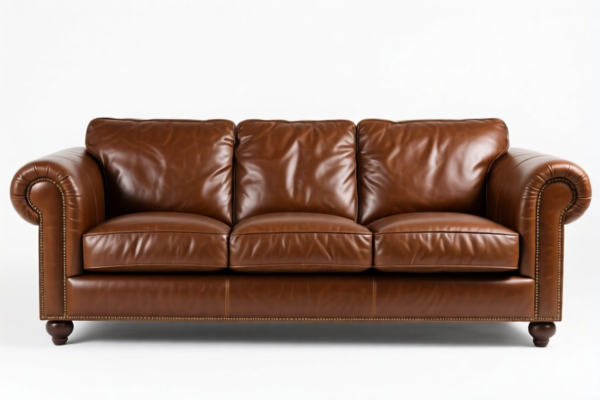
Product Images
AI Analysis
🐂 Furniture Grade Full Grain Cowhide Leather
🌐 HS Code Reference & Customs Clearance Guide | 2026 Latest Tariff Analysis | Professional Clearance Strategy
📌 1. Product Definition and Classification: What is "Furniture Grade Full Grain Cowhide"?
Furniture-grade full-grain cowhide leather refers to high-quality leather derived from bovine animals (cows, including buffalo) or equine animals, specifically prepared for upholstery purposes. It retains the original grain surface (unsplit), has been tanned or crust-processed, and is hair-on or hair-off (typically hair-off for furniture). It does not include patent leather or metallized leather (Heading 4114).
⚠️ Key Classification Criteria:
- Animal Source: Bovine (including buffalo) or Equine.
- Processing State: Tanned or crust-prepared, further prepared.
- Grain Structure: Full grain, unsplit (not split into layers).
- End Use: Specifically designated as Upholstery Leather.
- Surface: Hair removed (without hair on).
📦 2. HS Code Classification Details (2026 Latest Tariff Authority Comparison)
Based on the provided data, this product falls under two primary HS Codes depending on the size/shape of the hide/skin:
| HS Code | Product Description | Application Scenario | Split Status |
|---|---|---|---|
4107.11.50.00 |
Whole hides and skins: Full grains, unsplit: Other: Other: Upholstery leather | Large, intact hides/skins used for large furniture pieces | ✅ Unsplit |
4107.91.50.00 |
Other, including sides: Full grains, unsplit: Other: Upholstery leather | Sides or smaller portions of hides/skins used for upholstery | ✅ Unsplit |
🔍 Key Distinction:
-4107.11.50.00: Applies to whole hides/skins (full size, not cut into sides).
-4107.91.50.00: Applies to sides or other partial pieces (split into halves or smaller sections but not split into layers).
- Both are "Full Grain" and "Unsplit": This means the leather has not been divided into grain and flesh layers; it remains a single, durable layer.
- Both are "Upholstery Leather": Explicitly designated for furniture use.
💰 3. 2026 Latest Tariff Rate Details (Including Additional Taxes, Policy Surcharges)
✅ Applicable Country: United States (US)
✅ Origin: China (CN) (Assumed based on common trade context; verify if other origins apply)
✅ Effective Date: 2025 onwards (Current tariff structure)
🎯 1. 4107.11.50.00 — Whole Hides/Skins, Full Grain, Unsplit, Upholstery
| Item | Content |
|---|---|
| Base Tariff Rate | 0.0% (ad valorem) |
| Additional Tariff (Section 301) | 0.0% |
| Total Tariff Rate | 0.0% |
| Tax Calculation | CIF Value × 0% = $0 |
| De Minimis Exemption Eligibility | ❌ Not Applicable (Usually, bulk leather shipments exceed de minimis thresholds, but rate is 0% anyway) |
| Legal Basis Path | USITC:4107.11.50.00 → FOOTNOTE:None |
📌 Explanation:
- This code benefits from a 0% base tariff.
- Crucially, there are NO additional Section 301 tariffs or IEEPA surcharges applied to this specific leather category in the provided data.
- This makes it a low-cost, high-efficiency import category compared to many other goods.
🎯 2. 4107.91.50.00 — Sides/Other, Full Grain, Unsplit, Upholstery
| Item | Content |
|---|---|
| Base Tariff Rate | 0.0% (ad valorem) |
| Additional Tariff (Section 301) | 0.0% |
| Total Tariff Rate | 0.0% |
| Tax Calculation | CIF Value × 0% = $0 |
| De Minimis Exemption Eligibility | ❌ Not Applicable |
| Legal Basis Path | USITC:4107.91.50.00 → FOOTNOTE:None |
📌 Note:
- Identical tariff treatment to whole hides.
- Whether shipped as whole hides or sides, the 0% tariff rate applies.
- Ensure the description explicitly states "Full Grain, Unsplit" to avoid misclassification into split leather codes (which may have different rates).
🛠️ 4. Customs Clearance Practical Advice (Real-World Pitfall Avoidance Guide)
✅ 1. Required Documentation Checklist (Mandatory)
| Document | Must Provide | Explanation |
|---|---|---|
| ✅ Product Specification Sheet | ✔️ | Detail animal source (cow/buffalo), tanning method, grain type (full/unsplit), thickness, and end-use (upholstery). |
| ✅ Commercial Invoice | ✔️ | Must clearly state "Full Grain, Unsplit, Upholstery Leather" and specify "Whole Hides" vs. "Sides". |
| ✅ Packing List | ✔️ | Show weight, dimensions, and number of hides/skins. |
| ✅ Certificate of Origin (CO) | ✔️ | To confirm origin (e.g., China, Brazil, Italy) for tariff verification. |
| ✅ Photos of Hides/Skins | ✔️ | Show grain surface, edges, and labeling to prove "full grain" and "unsplit" status. |
| ✅ Tanning Process Description | ✔️ | Explain that leather is "further prepared after tanning" to justify Heading 4107. |
✅ 2. Declaration Tips (Key Mantras)
🔥 "Full Grain, Unsplit, Upholstery Use, 0% Tariff!"
| Scenario | Correct Declaration | Incorrect Declaration |
|---|---|---|
| Whole hides used for sofas | 4107.11.50.00 - "Whole Hides, Full Grain, Unsplit, Upholstery" |
"Split Leather" → Higher risk, potential misclassification |
| Sides used for chairs | 4107.91.50.00 - "Sides, Full Grain, Unsplit, Upholstery" |
"Raw Hide" → Incorrect stage of processing |
| Split leather (for garments) | Do not use 4107 codes → Use other headings (e.g., 4106/4107 split codes) | Mislabeling split as "full grain" → Penalties + Back Taxes |
📌 Critical Warning:
- "Unsplit" is the key: If the leather is split into top-grain and flesh layers, it cannot use these codes. It must be declared as split leather, which may have different tariff treatments.
- "Upholstery" is the key: If the leather is for footwear, gloves, or luggage, it may fall under different subheadings within Heading 4107, potentially affecting duty rates or eligibility for certain exemptions.
✅ 3. Special Case Handling
| Situation | Handling Advice |
|---|---|
| Mixed Shipments (Hides + Sides) | Declare separately on the invoice with distinct HS Codes (4107.11.50.00 and 4107.91.50.00). Do not combine into one line item. |
| Damaged or Graded Hides | Still eligible for 0% if they meet "full grain, unsplit, upholstery" criteria. Provide quality grade (e.g., Grade A, B). |
| Vegetable-Tanned vs. Chrome-Tanned | Both are eligible. Specify tanning method in the description for clarity. |
| Import from Non-China Origins | Verify if any FTA (Free Trade Agreement) benefits apply, though the base rate is already 0%. |
🌍 5. Global Market Customs Comparison (2026 Latest)
| Country/Region | Recommended HS Code | Tariff | Certification Requirement | Notes |
|---|---|---|---|---|
| 🇺🇸 USA | 4107.11.50.00 / 4107.91.50.00 |
0.0% | None | No additional Section 301 tariffs on this code. |
| 🇨🇳 China (Export) | Same | Varies | N/A | For export declaration. |
| 🇪🇺 EU | 4107 11 / 4107 91 | 0% - 4.7% | REACH Compliance | Check specific EU TARIC codes for exact rate. |
| 🇬🇧 UK | 4107 11 / 4107 91 | 0% - 4.7% | UKCA | Post-Brexit rules may apply. |
| 🇯🇵 Japan | 4107 11 / 4107 91 | 3.2% - 4.3% | None | Standard MFN rate applies. |
📌 Conclusion:
- USA offers the most favorable tariff (0%) for this specific product category.
- EU and Japan have low but non-zero tariffs; check for preferential trade agreements.
- No major anti-dumping or countervailing duties are indicated in the provided data for these leather codes.
📌 6. Common Errors & Pitfall Guide (Lessons from Experience)
❌ Error 1: Declaring "Split Leather" as "Full Grain"
👉 Consequence: Misclassification → Potential back taxes + penalties. Split leather has different duty structures.
👉 Solution: Physically verify the cross-section of the leather. If two layers exist, it is split.
❌ Error 2: Using "Leather" as a generic description
👉 Consequence: Customs may request additional information → Delays.
👉 Solution: Always specify "Full Grain, Unsplit, Upholstery, Bovine/Equine".
❌ Error 3: Confusing "Whole Hides" with "Sides"
👉 Consequence: Wrong HS Code (4107.11 vs. 4107.91). While both are 0%, accuracy prevents audits.
👉 Solution: Measure the hide. If it’s a complete, uncut hide, use 4107.11. If cut in half (sides), use 4107.91.
❌ Error 4: Ignoring "Upholstery" designation
👉 Consequence: If the leather is for other uses (e.g., belts), it may fall under different subheadings with potentially different treatment.
👉 Solution: Ensure the end-use is explicitly stated as "upholstery" in the invoice.
✅ Correct Declaration Example:
"Upholstery Leather, Full Grain, Unsplit, Cowhide, Tanned, Hair-Off, Whole Hides, Grade A, for Furniture Use, Origin: China"
🎯 7. Conclusion: Professional Declaration, Low Cost, High Efficiency!
🎯 Remember the Mantra:
🔹 "Full Grain, Unsplit, Upholstery, 0% Tariff!"
🔹 "HS Code Accuracy Prevents Delays, 0% Rate Maximizes Profit!"
📌 Pro Tip:
- If your leather is vegetable-tanned or chrome-tanned, it still qualifies under these codes as long as it is full grain, unsplit, and for upholstery.
- Always request a pre-ruling from CBP (Customs and Border Protection) if unsure about the "full grain" status, especially for large shipments.
- Keep detailed photos of the leather grain and cross-sections to prove "unsplit" status in case of an audit.
📣 Immediate Action:
📞 Consult with a licensed customs broker to verify the exact classification based on your specific leather batches.
🚀 Ensure your invoice and packing list match the HS Code descriptions exactly to avoid customs holds.
✨ Professional Clearance Starts with Accurate Classification!
💼 Every Dollar Saved in Tariffs is Pure Profit!
Customer Reviews
About HS Code Classification
The Harmonized System (HS) is an internationally standardized nomenclature developed by the World Customs Organization (WCO) to classify traded products. Over 200 countries use the HS system as the basis for customs tariffs, trade statistics, and import/export regulations.
Each HS code follows a hierarchical structure:
- Chapter (2 digits) — Broad category of goods (e.g., Chapter 84: Machinery and Mechanical Appliances)
- Heading (4 digits) — More specific grouping within the chapter
- Subheading (6 digits) — Internationally standardized breakdown, used by all WCO member countries
- National subdivisions (8-10 digits) — Country-specific extensions for further classification, such as US HTSUS 10-digit codes
Correct HS code classification is essential for smooth customs clearance, accurate duty payment, and compliance with trade regulations. Misclassification can lead to customs delays, overpayment of duties, or penalties.
When importing from CN to US, the applicable tariff rates may include:
- Most-Favored-Nation (MFN) rate — The standard duty rate applied to WTO members
- General rate — Applied to countries without trade agreements
- Trade remedy duties — Additional tariffs such as Section 301 (anti-dumping), Section 232 (national security), or countervailing duties
The information provided on this page is for reference purposes only. For official classification, please consult with your local customs authority or a licensed customs broker.