Gas Detector
CN → US| HS编码 | 关税税率 | 原产国 | 目的国 | 文档 |
|---|---|---|---|---|
| 9031499000 | 35.0% | CN | US | 官方文档 |
| 9026806000 | 17.5% | CN | US | 官方文档 |
| 9027102000 | 35.0% | CN | US | 官方文档 |
| 9027106000 | 35.0% | CN | US | 官方文档 |
| 9031808085 | 10.0% | CN | US | 官方文档 |
| 9026802000 | 35.0% | CN | US | 官方文档 |
商品图片
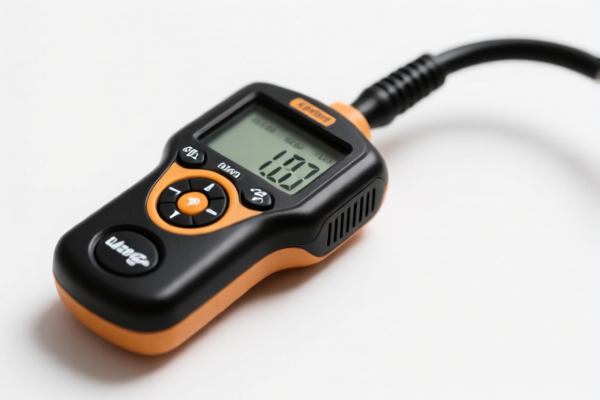
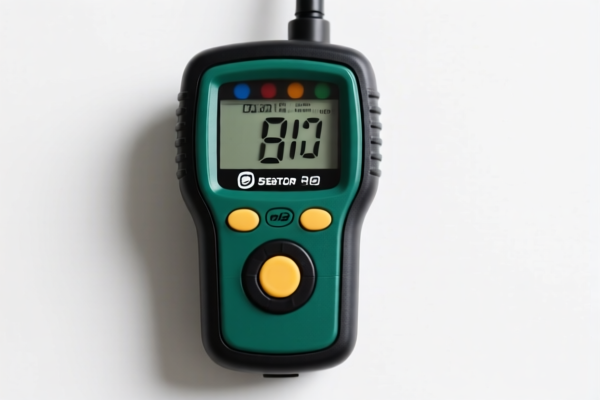
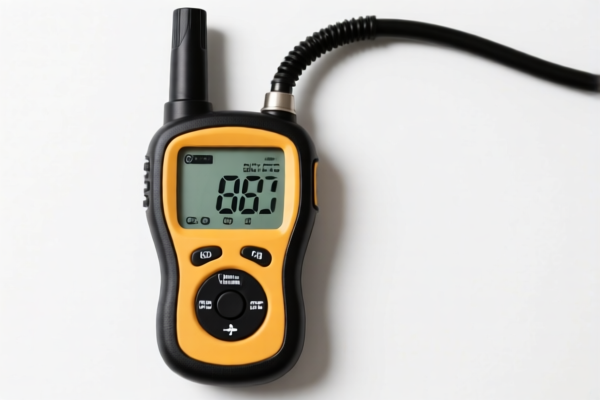
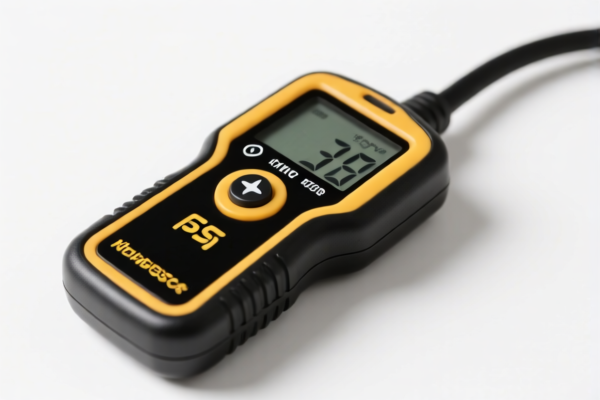
AI分析
🔍 Gas Detectors & Analyzers: The Ultimate Classification & Tax Guide (2026 US Import)
🌐 HS Code Reference & Customs Clearance Guide | Latest Tariff Analysis | Professional Clearance Strategy
📌 I. Product Definition: What Exactly is a "Gas Detector"?
A Gas Detector is an instrument used to detect the presence of gases in an area, often as part of a safety system. In international trade, these devices are not a single unified category but are split based on their primary function: 1. Analyzers: Devices that perform a continuous analysis of a process stream or sample (measuring composition, concentration, purity, etc.). These fall under Chapter 90 (Optical, Chemical, Physical Analyzers). 2. Sensors/Probes: Standalone sensing elements or probes used within larger systems, often falling under Chapter 85 (Electrical Machinery/Parts) or as parts of Chapter 90 instruments. 3. General Measurement Devices: If the gas detection is incidental to measuring another variable (like flow or pressure), it may fall under general measurement instruments (Chapter 90).
⚠️ Critical Distinction for Customs:
- If the device analyzes the chemical composition of the gas (e.g., "This gas is 5% Oxygen") → Chapter 90 (9027/9031).
- If the device measures physical properties like flow rate or pressure using gas as the medium → Chapter 90 (9026).
- If it is a standalone sensor for broader monitoring systems → Chapter 85 or 9031.
📦 II. HS Code Classification Details (2026 Latest Tariff Alignment)
Based on the provided data, here are the six primary HS Codes applicable to Gas Detectors, with their specific duties and rationales.
| HS Code | Product Description & Rationale | Total Tax Rate (US/China) | Tax Breakdown |
|---|---|---|---|
9031.49.90.00 |
Optical/Physical Detection Instruments • Rationale: Falls under optical/physical detection instruments. Used for measurement or inspection purposes. Acts as a "catch-all" for detection devices not specifically listed elsewhere. • Best for: Non-specific gas detection where primary function is "detection" rather than "chemical analysis." |
35.0% | Base: 0% Section 301: 25% Section 122: 10% |
9026.80.60.00 |
Gas Physical Quantity Detectors • Rationale: Specifically for detecting physical gas quantities such as flow rate, concentration (in physical terms), level, or pressure. • Best for: Flow meters, pressure transmitters where the "gas" is just the medium being measured. |
17.5% | Base: 0% Section 301: 7.5% Section 122: 10% |
9027.10.20.00 |
Electrical Gas Analyzers • Rationale: Gas detection purpose aligns with gas analysis. Specifically classified as electrical analytical instruments. • Best for: Devices that use electrical signals to determine chemical composition (e.g., electrochemical sensors, catalytic bead sensors). |
35.0% | Base: 0% Section 301: 25% Section 122: 10% |
9027.10.60.00 |
Gas/Smoke Analyzers • Rationale: Function and purpose are identical to gas or smoke analysis instruments. • Best for: Dedicated smoke detectors or gas analyzers for air quality/safety compliance. |
35.0% | Base: 0% Section 301: 25% Section 122: 10% |
9031.80.80.85 |
Other Measuring Instruments (Gas Detection) • Rationale: Falls under measuring instruments. Gas detection fits the definition of measurement or inspection. Acts as a "catch-all" for other instruments not elsewhere specified. • Best for: General-purpose gas monitors that don't fit strict "analyzer" definitions but are clearly measurement devices. |
10.0% | Base: 0% Section 301: 0% Section 122: 10% |
9026.80.20.00 |
Gas Variable Detectors (Flow/Level/Pressure) • Rationale: Usage perfectly matches the detection of gas flow, level, pressure, or other variables. No material or form conflict as an electrical apparatus. • Best for: Industrial gas flow meters, pressure sensors, and level gauges using gas. |
35.0% | Base: 0% Section 301: 25% Section 122: 10% |
🔍 Key Insight:
- Lowest Tax Option:9031.80.80.85(10%) is the most tariff-efficient for general gas detectors that can be classified as "other measuring instruments."
- High Tax Trap: Classification as "Electrical Analyzers" (9027.10.20.00) or "Optical Detectors" (9031.49.90.00) incurs a 35% total tax due to the additional Section 301 duties.
- Special Case: If your device measures physical gas properties (like flow),9026.80.60.00offers a 17.5% rate, significantly lower than analyzer rates.
💰 III. 2026 Tariff Rate Detail (Including Surcharges)
✅ Applicable Country: United States (US)
✅ Origin: China (CN)
✅ Effective Date: Post-2025 (Current Enforcement)
🎯 1. The "High-Tax" Cluster (35% Total)
Codes: 9031.49.90.00, 9027.10.20.00, 9027.10.60.00, 9026.80.20.00
| Component | Rate | Legal Basis |
|---|---|---|
| Base Duty | 0% | US Harmonized Tariff Schedule |
| Section 301 (USITC) | +25% | Footnote 9903.88.01 / 9903.01.25 |
| Section 122 (IEEPA) | +10% | International Emergency Economic Powers Act |
| TOTAL | 35% | High Risk Category |
📌 Explanation:
- These codes are classified as Analytical Instruments or Optical/Physical Detectors.
- The 25% Section 301 duty is the dominant cost driver.
- The 10% Section 122 duty is a specific surcharge on certain Chinese-origin instruments.
- Strategic Implication: If your device can be argued as a general "measuring instrument" rather than a specialized "analyzer," consider reclassifying to lower the tax burden.
🎯 2. The "Medium-Tax" Option (17.5% Total)
Code: 9026.80.60.00
| Component | Rate | Legal Basis |
|---|---|---|
| Base Duty | 0% | US Harmonized Tariff Schedule |
| Section 301 (USITC) | +7.5% | Footnote 9903.01.24 (Partial Relief) |
| Section 122 (IEEPA) | +10% | International Emergency Economic Powers Act |
| TOTAL | 17.5% | Moderate Risk Category |
📌 Explanation:
- This code applies to physical quantity detection (flow, pressure, level).
- The Section 301 duty is reduced to 7.5% for specific subclasses of physical measurement instruments.
- Strategic Implication: If your gas detector primarily measures flow or pressure, this is the optimal classification.
🎯 3. The "Low-Tax" Strategic Option (10% Total)
Code: 9031.80.80.85
| Component | Rate | Legal Basis |
|---|---|---|
| Base Duty | 0% | US Harmonized Tariff Schedule |
| Section 301 (USITC) | 0% | Excluded from high-rate sections |
| Section 122 (IEEPA) | +10% | International Emergency Economic Powers Act |
| TOTAL | 10% | Low Risk Category |
📌 Explanation:
- This is a catch-all for "Other Measuring Instruments."
- It avoids the higher Section 301 duties by not being classified as a specialized analyzer or optical detector.
- Strategic Implication: Use this for general-purpose gas monitors that don't have complex analytical capabilities. Always provide documentation proving it is a "measurement device" not a "chemical analyzer."
🛠️ IV. Customs Clearance Practical Advice (Pitfall Avoidance Guide)
✅ 1. Documentation Checklist (Non-Negotiable)
| Document | Required? | Purpose |
|---|---|---|
| ✅ Product Specifications | ✔️ | Must clearly state: "Gas Detection," "Measurement Range," "Output Signal." |
| ✅ Circuit/Block Diagram | ✔️ | Critical to prove it is a measurement device (9031) vs. an analyzer (9027). |
| ✅ Photos (Front/Back/Rear) | ✔️ | Show ports, screens, and labels. No complex lab-style interfaces if aiming for 9031. |
| ✅ User Manual | ✔️ | Highlights "Detection" and "Monitoring" functions. |
| ✅ Commercial Invoice | ✔️ | Description must match HS Code rationale (e.g., "Gas Flow Detector" vs. "Gas Analyzer"). |
| ✅ Certificate of Origin | ✔️ | Confirm Chinese origin to apply correct Section 301/122 duties. |
✅ 2. Declaration Strategy (Key Mnemonics)
🔥 "Analyze vs. Measure: Choose Your Tax!"
| Scenario | Recommended HS Code | Reason | Risk |
|---|---|---|---|
| Complex Lab Analyzer (Chemical Composition) |
9027.10.20.00 or 9027.10.60.00 |
Clearly an "Analyzer" | High Tax (35%) |
| Safety Gas Monitor (PID/LEL Sensors) |
9031.80.80.85 |
"Other Measuring Instrument" | Low Tax (10%) ✅ |
| Gas Flow Meter | 9026.80.60.00 |
Measures Physical Quantity | Medium Tax (17.5%) |
| Generic Gas Detector | 9031.49.90.00 |
Optical/Physical Detection | High Tax (35%) |
⚠️ Warning:
- Do NOT describe the product as "Gas Analyzer" if you intend to classify it under9031.80.80.85.
- Do NOT describe it as "Gas Detector" if it is actually a flow meter; use "Flow Detector."
✅ 3. Special Handling
| Situation | Advice |
|---|---|
| OEM Custom Gas Detectors | Provide custom design drawings. Prove that the device lacks "analytical" software/hardware to avoid 9027 classification. |
| Combination Devices (e.g., Gas + Temp + Pressure) |
Declare based on the principal function. If gas detection is primary, use gas detector codes. |
| Portable vs. Fixed | Both can use the same HS codes. Ensure packaging description does not imply "consumer electronics" (which might be misclassified). |
🌍 V. Global Market Comparison (2026)
| Market | Recommended HS Code | Est. Total Duty | Notes |
|---|---|---|---|
| 🇺🇸 USA | 9031.80.80.85 |
10% | Best option for general detectors. Avoid 9027 (35%). |
| 🇨🇳 China | 9027.10.20.00 |
~5-10% | Lower tariffs, but different classification logic. |
| 🇪🇺 EU | 9027.80.80 |
0-4.5% | Generally lower duties. No Section 301 equivalent. |
| 🇬🇧 UK | 9027.80.00 |
0-4.5% | Post-Brexit tariffs align closely with EU. |
📌 Conclusion:
- The US market is the most challenging due to Section 301 and Section 122 duties.
- Strategic Classification under9031.80.80.85can save 25% in duties compared to9027codes.
📌 VI. Common Errors & Pitfalls (Blood Lessons)
❌ Error 1: Calling every gas device a "Gas Analyzer"
👉 Result: Classification under 9027.10.20.00 → 35% Tax.
👉 Fix: If it only detects presence/concentration without complex analysis, use 9031.80.80.85 (10%).
❌ Error 2: Mixing "Physical" and "Chemical" descriptions
👉 Result: Customs may reject 9026.80.60.00 if you mention "chemical composition."
👉 Fix: For flow/pressure, emphasize "Physical Measurement." For concentration, be careful with "Analysis" vs. "Detection."
❌ Error 3: Ignoring Section 122 Surcharge
👉 Result: Underpaying by 10% on all codes.
👉 Fix: Always include the 10% IEEPA surcharge in cost calculations for ALL 6 codes.
🎯 VII. Conclusion: Professional Declaration, Cost Efficiency!
🎯 Key Takeaway:
🔹 "Don't be an Analyzer, be a Measurer!"
🔹9031.80.80.85(10%) is your best friend for general gas detectors.
🔹9027codes (35%) are for complex chemical analyzers.
🔹9026codes (17.5%) are for flow/pressure/level detection.
📌 Pro Tip:
- Provide block diagrams showing simple signal processing (Detection → Output) rather than complex analytical algorithms.
- Use terms like "Monitor," "Detector," "Sensor" instead of "Analyzer."
- Consult a Customs Broker for pre-classification ruling if the device has dual functions.
📣 Immediate Action:
📞 Contact your clearing agent with the correct product description.
📝 Prepare documentation supporting "Measurement" over "Analysis."
🚀 Save 25% in taxes by choosing the right HS Code!
✨ Precise Classification Saves Money!
💼 Every Percent Counts in Cross-Border Trade!
用户评价
关于 HS 编码归类
协调制度(HS)是由世界海关组织(WCO)制定的国际贸易商品分类标准。全球 200 多个国家采用 HS 系统作为海关关税、贸易统计和进出口监管的基础。
每个 HS 编码遵循以下层级结构:
- 章(2 位)——商品大类(例如:第 84 章:机器和机械设备)
- 品目(4 位)——章内的更具体分类
- 子目(6 位)——国际通用细分,所有 WCO 成员国统一使用
- 本国细分(8-10 位)——各国自行扩展的细分编码,如美国 HTSUS 10 位编码
正确的 HS 编码归类对于顺利通关、准确缴纳关税和遵守贸易法规至关重要。错误归类可能导致海关延误、多缴关税或罚款。
从CN进口到US时,适用的关税税率可能包括:
- 最惠国(MFN)税率——适用于 WTO 成员国的标准关税税率
- 普通税率——适用于无贸易协定国家
- 贸易救济关税——附加关税,如 301 条款(反倾销)、232 条款(国家安全)或反补贴税
本页内容仅供参考。如需正式归类,请咨询当地海关或持牌报关代理。