Gas Detector
CN → US| HS Code | Tariff Rate | Origin | Destination | Doc |
|---|---|---|---|---|
| 9031499000 | 35.0% | CN | US | Official Doc |
| 9026806000 | 17.5% | CN | US | Official Doc |
| 9027102000 | 35.0% | CN | US | Official Doc |
| 9027106000 | 35.0% | CN | US | Official Doc |
| 9031808085 | 10.0% | CN | US | Official Doc |
| 9026802000 | 35.0% | CN | US | Official Doc |
Product Images
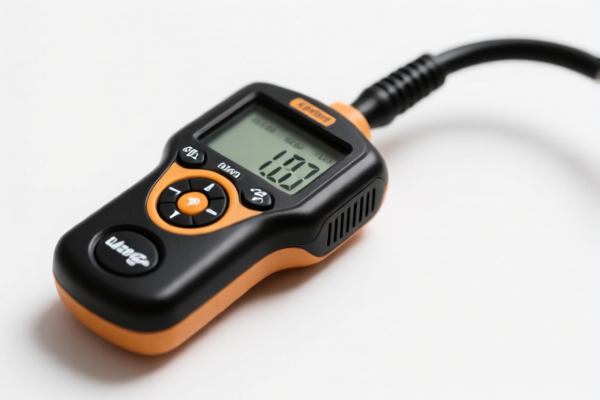
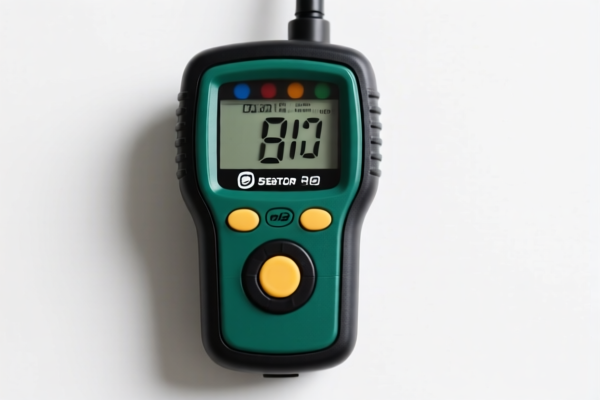
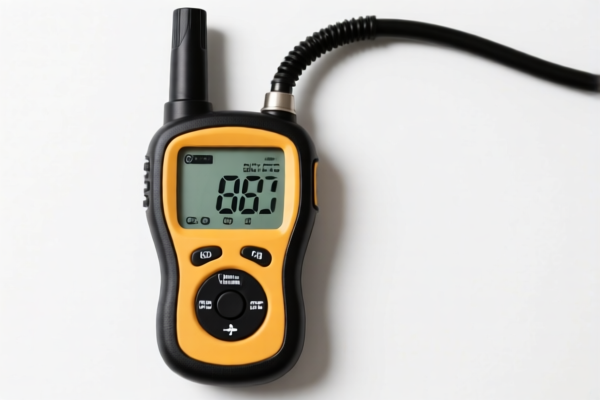
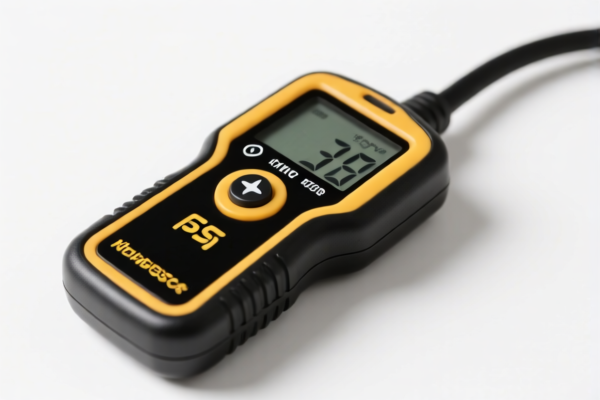
AI Analysis
🔍 Gas Detectors & Analyzers: The Ultimate Classification & Tax Guide (2026 US Import)
🌐 HS Code Reference & Customs Clearance Guide | Latest Tariff Analysis | Professional Clearance Strategy
📌 I. Product Definition: What Exactly is a "Gas Detector"?
A Gas Detector is an instrument used to detect the presence of gases in an area, often as part of a safety system. In international trade, these devices are not a single unified category but are split based on their primary function: 1. Analyzers: Devices that perform a continuous analysis of a process stream or sample (measuring composition, concentration, purity, etc.). These fall under Chapter 90 (Optical, Chemical, Physical Analyzers). 2. Sensors/Probes: Standalone sensing elements or probes used within larger systems, often falling under Chapter 85 (Electrical Machinery/Parts) or as parts of Chapter 90 instruments. 3. General Measurement Devices: If the gas detection is incidental to measuring another variable (like flow or pressure), it may fall under general measurement instruments (Chapter 90).
⚠️ Critical Distinction for Customs:
- If the device analyzes the chemical composition of the gas (e.g., "This gas is 5% Oxygen") → Chapter 90 (9027/9031).
- If the device measures physical properties like flow rate or pressure using gas as the medium → Chapter 90 (9026).
- If it is a standalone sensor for broader monitoring systems → Chapter 85 or 9031.
📦 II. HS Code Classification Details (2026 Latest Tariff Alignment)
Based on the provided data, here are the six primary HS Codes applicable to Gas Detectors, with their specific duties and rationales.
| HS Code | Product Description & Rationale | Total Tax Rate (US/China) | Tax Breakdown |
|---|---|---|---|
9031.49.90.00 |
Optical/Physical Detection Instruments • Rationale: Falls under optical/physical detection instruments. Used for measurement or inspection purposes. Acts as a "catch-all" for detection devices not specifically listed elsewhere. • Best for: Non-specific gas detection where primary function is "detection" rather than "chemical analysis." |
35.0% | Base: 0% Section 301: 25% Section 122: 10% |
9026.80.60.00 |
Gas Physical Quantity Detectors • Rationale: Specifically for detecting physical gas quantities such as flow rate, concentration (in physical terms), level, or pressure. • Best for: Flow meters, pressure transmitters where the "gas" is just the medium being measured. |
17.5% | Base: 0% Section 301: 7.5% Section 122: 10% |
9027.10.20.00 |
Electrical Gas Analyzers • Rationale: Gas detection purpose aligns with gas analysis. Specifically classified as electrical analytical instruments. • Best for: Devices that use electrical signals to determine chemical composition (e.g., electrochemical sensors, catalytic bead sensors). |
35.0% | Base: 0% Section 301: 25% Section 122: 10% |
9027.10.60.00 |
Gas/Smoke Analyzers • Rationale: Function and purpose are identical to gas or smoke analysis instruments. • Best for: Dedicated smoke detectors or gas analyzers for air quality/safety compliance. |
35.0% | Base: 0% Section 301: 25% Section 122: 10% |
9031.80.80.85 |
Other Measuring Instruments (Gas Detection) • Rationale: Falls under measuring instruments. Gas detection fits the definition of measurement or inspection. Acts as a "catch-all" for other instruments not elsewhere specified. • Best for: General-purpose gas monitors that don't fit strict "analyzer" definitions but are clearly measurement devices. |
10.0% | Base: 0% Section 301: 0% Section 122: 10% |
9026.80.20.00 |
Gas Variable Detectors (Flow/Level/Pressure) • Rationale: Usage perfectly matches the detection of gas flow, level, pressure, or other variables. No material or form conflict as an electrical apparatus. • Best for: Industrial gas flow meters, pressure sensors, and level gauges using gas. |
35.0% | Base: 0% Section 301: 25% Section 122: 10% |
🔍 Key Insight:
- Lowest Tax Option:9031.80.80.85(10%) is the most tariff-efficient for general gas detectors that can be classified as "other measuring instruments."
- High Tax Trap: Classification as "Electrical Analyzers" (9027.10.20.00) or "Optical Detectors" (9031.49.90.00) incurs a 35% total tax due to the additional Section 301 duties.
- Special Case: If your device measures physical gas properties (like flow),9026.80.60.00offers a 17.5% rate, significantly lower than analyzer rates.
💰 III. 2026 Tariff Rate Detail (Including Surcharges)
✅ Applicable Country: United States (US)
✅ Origin: China (CN)
✅ Effective Date: Post-2025 (Current Enforcement)
🎯 1. The "High-Tax" Cluster (35% Total)
Codes: 9031.49.90.00, 9027.10.20.00, 9027.10.60.00, 9026.80.20.00
| Component | Rate | Legal Basis |
|---|---|---|
| Base Duty | 0% | US Harmonized Tariff Schedule |
| Section 301 (USITC) | +25% | Footnote 9903.88.01 / 9903.01.25 |
| Section 122 (IEEPA) | +10% | International Emergency Economic Powers Act |
| TOTAL | 35% | High Risk Category |
📌 Explanation:
- These codes are classified as Analytical Instruments or Optical/Physical Detectors.
- The 25% Section 301 duty is the dominant cost driver.
- The 10% Section 122 duty is a specific surcharge on certain Chinese-origin instruments.
- Strategic Implication: If your device can be argued as a general "measuring instrument" rather than a specialized "analyzer," consider reclassifying to lower the tax burden.
🎯 2. The "Medium-Tax" Option (17.5% Total)
Code: 9026.80.60.00
| Component | Rate | Legal Basis |
|---|---|---|
| Base Duty | 0% | US Harmonized Tariff Schedule |
| Section 301 (USITC) | +7.5% | Footnote 9903.01.24 (Partial Relief) |
| Section 122 (IEEPA) | +10% | International Emergency Economic Powers Act |
| TOTAL | 17.5% | Moderate Risk Category |
📌 Explanation:
- This code applies to physical quantity detection (flow, pressure, level).
- The Section 301 duty is reduced to 7.5% for specific subclasses of physical measurement instruments.
- Strategic Implication: If your gas detector primarily measures flow or pressure, this is the optimal classification.
🎯 3. The "Low-Tax" Strategic Option (10% Total)
Code: 9031.80.80.85
| Component | Rate | Legal Basis |
|---|---|---|
| Base Duty | 0% | US Harmonized Tariff Schedule |
| Section 301 (USITC) | 0% | Excluded from high-rate sections |
| Section 122 (IEEPA) | +10% | International Emergency Economic Powers Act |
| TOTAL | 10% | Low Risk Category |
📌 Explanation:
- This is a catch-all for "Other Measuring Instruments."
- It avoids the higher Section 301 duties by not being classified as a specialized analyzer or optical detector.
- Strategic Implication: Use this for general-purpose gas monitors that don't have complex analytical capabilities. Always provide documentation proving it is a "measurement device" not a "chemical analyzer."
🛠️ IV. Customs Clearance Practical Advice (Pitfall Avoidance Guide)
✅ 1. Documentation Checklist (Non-Negotiable)
| Document | Required? | Purpose |
|---|---|---|
| ✅ Product Specifications | ✔️ | Must clearly state: "Gas Detection," "Measurement Range," "Output Signal." |
| ✅ Circuit/Block Diagram | ✔️ | Critical to prove it is a measurement device (9031) vs. an analyzer (9027). |
| ✅ Photos (Front/Back/Rear) | ✔️ | Show ports, screens, and labels. No complex lab-style interfaces if aiming for 9031. |
| ✅ User Manual | ✔️ | Highlights "Detection" and "Monitoring" functions. |
| ✅ Commercial Invoice | ✔️ | Description must match HS Code rationale (e.g., "Gas Flow Detector" vs. "Gas Analyzer"). |
| ✅ Certificate of Origin | ✔️ | Confirm Chinese origin to apply correct Section 301/122 duties. |
✅ 2. Declaration Strategy (Key Mnemonics)
🔥 "Analyze vs. Measure: Choose Your Tax!"
| Scenario | Recommended HS Code | Reason | Risk |
|---|---|---|---|
| Complex Lab Analyzer (Chemical Composition) |
9027.10.20.00 or 9027.10.60.00 |
Clearly an "Analyzer" | High Tax (35%) |
| Safety Gas Monitor (PID/LEL Sensors) |
9031.80.80.85 |
"Other Measuring Instrument" | Low Tax (10%) ✅ |
| Gas Flow Meter | 9026.80.60.00 |
Measures Physical Quantity | Medium Tax (17.5%) |
| Generic Gas Detector | 9031.49.90.00 |
Optical/Physical Detection | High Tax (35%) |
⚠️ Warning:
- Do NOT describe the product as "Gas Analyzer" if you intend to classify it under9031.80.80.85.
- Do NOT describe it as "Gas Detector" if it is actually a flow meter; use "Flow Detector."
✅ 3. Special Handling
| Situation | Advice |
|---|---|
| OEM Custom Gas Detectors | Provide custom design drawings. Prove that the device lacks "analytical" software/hardware to avoid 9027 classification. |
| Combination Devices (e.g., Gas + Temp + Pressure) |
Declare based on the principal function. If gas detection is primary, use gas detector codes. |
| Portable vs. Fixed | Both can use the same HS codes. Ensure packaging description does not imply "consumer electronics" (which might be misclassified). |
🌍 V. Global Market Comparison (2026)
| Market | Recommended HS Code | Est. Total Duty | Notes |
|---|---|---|---|
| 🇺🇸 USA | 9031.80.80.85 |
10% | Best option for general detectors. Avoid 9027 (35%). |
| 🇨🇳 China | 9027.10.20.00 |
~5-10% | Lower tariffs, but different classification logic. |
| 🇪🇺 EU | 9027.80.80 |
0-4.5% | Generally lower duties. No Section 301 equivalent. |
| 🇬🇧 UK | 9027.80.00 |
0-4.5% | Post-Brexit tariffs align closely with EU. |
📌 Conclusion:
- The US market is the most challenging due to Section 301 and Section 122 duties.
- Strategic Classification under9031.80.80.85can save 25% in duties compared to9027codes.
📌 VI. Common Errors & Pitfalls (Blood Lessons)
❌ Error 1: Calling every gas device a "Gas Analyzer"
👉 Result: Classification under 9027.10.20.00 → 35% Tax.
👉 Fix: If it only detects presence/concentration without complex analysis, use 9031.80.80.85 (10%).
❌ Error 2: Mixing "Physical" and "Chemical" descriptions
👉 Result: Customs may reject 9026.80.60.00 if you mention "chemical composition."
👉 Fix: For flow/pressure, emphasize "Physical Measurement." For concentration, be careful with "Analysis" vs. "Detection."
❌ Error 3: Ignoring Section 122 Surcharge
👉 Result: Underpaying by 10% on all codes.
👉 Fix: Always include the 10% IEEPA surcharge in cost calculations for ALL 6 codes.
🎯 VII. Conclusion: Professional Declaration, Cost Efficiency!
🎯 Key Takeaway:
🔹 "Don't be an Analyzer, be a Measurer!"
🔹9031.80.80.85(10%) is your best friend for general gas detectors.
🔹9027codes (35%) are for complex chemical analyzers.
🔹9026codes (17.5%) are for flow/pressure/level detection.
📌 Pro Tip:
- Provide block diagrams showing simple signal processing (Detection → Output) rather than complex analytical algorithms.
- Use terms like "Monitor," "Detector," "Sensor" instead of "Analyzer."
- Consult a Customs Broker for pre-classification ruling if the device has dual functions.
📣 Immediate Action:
📞 Contact your clearing agent with the correct product description.
📝 Prepare documentation supporting "Measurement" over "Analysis."
🚀 Save 25% in taxes by choosing the right HS Code!
✨ Precise Classification Saves Money!
💼 Every Percent Counts in Cross-Border Trade!
Customer Reviews
About HS Code Classification
The Harmonized System (HS) is an internationally standardized nomenclature developed by the World Customs Organization (WCO) to classify traded products. Over 200 countries use the HS system as the basis for customs tariffs, trade statistics, and import/export regulations.
Each HS code follows a hierarchical structure:
- Chapter (2 digits) — Broad category of goods (e.g., Chapter 84: Machinery and Mechanical Appliances)
- Heading (4 digits) — More specific grouping within the chapter
- Subheading (6 digits) — Internationally standardized breakdown, used by all WCO member countries
- National subdivisions (8-10 digits) — Country-specific extensions for further classification, such as US HTSUS 10-digit codes
Correct HS code classification is essential for smooth customs clearance, accurate duty payment, and compliance with trade regulations. Misclassification can lead to customs delays, overpayment of duties, or penalties.
When importing from CN to US, the applicable tariff rates may include:
- Most-Favored-Nation (MFN) rate — The standard duty rate applied to WTO members
- General rate — Applied to countries without trade agreements
- Trade remedy duties — Additional tariffs such as Section 301 (anti-dumping), Section 232 (national security), or countervailing duties
The information provided on this page is for reference purposes only. For official classification, please consult with your local customs authority or a licensed customs broker.