Gas Stove
CN → US| HS编码 | 关税税率 | 原产国 | 目的国 | 文档 |
|---|---|---|---|---|
| 7321113010 | 85.0% | CN | US | 官方文档 |
| 7321111030 | 90.7% | CN | US | 官方文档 |
| 8416200040 | 17.5% | CN | US | 官方文档 |
商品图片
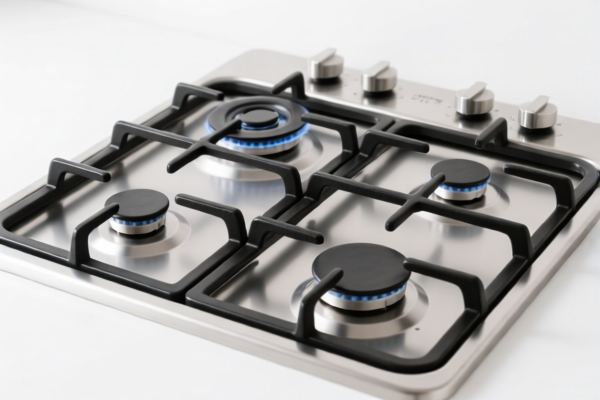
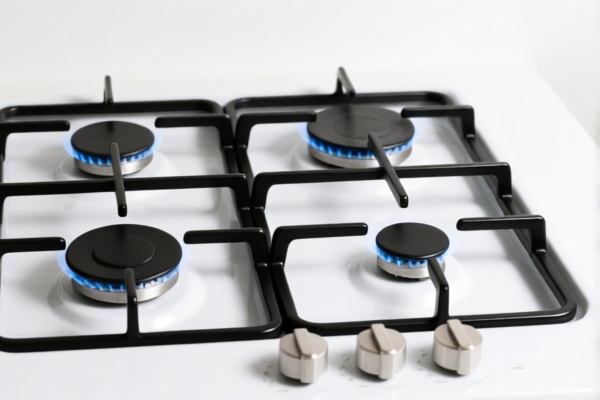
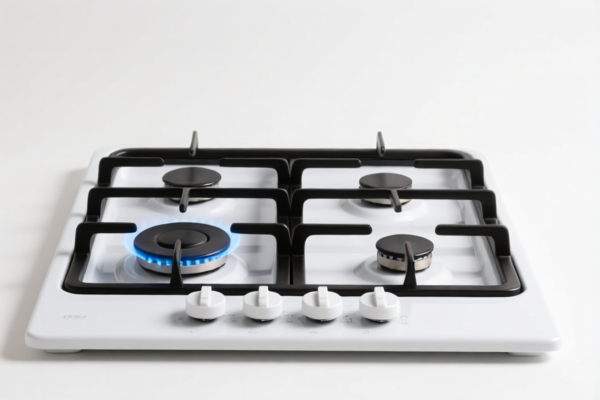
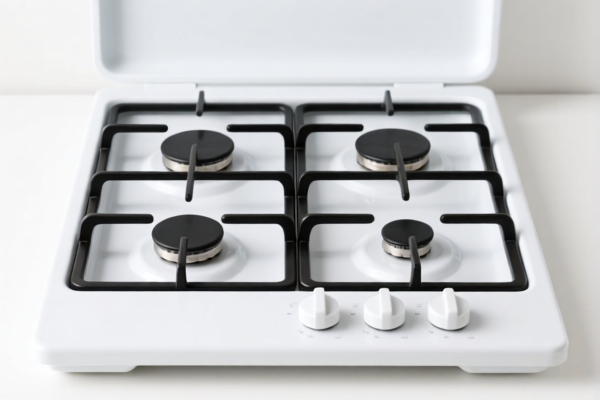
AI分析
🔥 Gas Stove (Gas Cooking Appliances)
🌐 HS Code Reference & Customs Clearance Guide | 2026 Latest Tariff Analysis | Strategic Compliance Strategy
📌 I. Product Definition & Classification: What Exactly Is a "Gas Stove"?
In international trade, a "Gas Stove" is not a single, monolithic HS code. It is bifurcated based on material composition and functional classification. The destination market (likely the US, given the specific "122 Clause" and "Steel/Aluminum" references in the data) imposes severe tariffs based on whether the item is classified as general household metalware or as a specialized gas burner appliance.
1. Metalware Classification (Household Articles): If the stove is viewed primarily as a piece of iron/steel kitchen furniture or cookware support, it falls under Chapter 73. This category is heavily targeted by trade remedies.
2. Appliance/Burner Classification (Technical Apparatus): If the stove is viewed strictly as a technical device for burning gas, it may fall under Chapter 84 (Boilers, pressure vessels, etc.). This often results in significantly lower base tariffs but still carries specific trade penalties.
⚠️ Critical Distinction Point:
- If the product is a standalone range with oven or a metal construction → Look at 7321.
- If the product is a technical gas burner unit or insert → Look at 8416.
- Do not assume all gas stoves are the same; the material and function drive the tax rate from 17.5% to 90.7%.
📦 II. HS Code Classification Details (2026 Latest Tariff Authority Mapping)
| HS Code | Product Description | Usage/Function | Material | Total Tax Rate |
|---|---|---|---|---|
7321.11.30.10 |
Gas Stove / Range | Cooking/Hearth use | Iron/Steel, Width ≤ 70cm | 85.0% |
7321.11.10.30 |
Gas Stove / Range | Cooking appliance | Iron/Steel | 90.7% |
8416.20.00.40 |
Gas Burner / Combustor | Gas fuel combustion | Technical Appliance | 17.5% |
🔍 Key Insight:
- The "Iron/Steel" classification (7321) triggers the harshest penalties (up to 90.7%). - The "Gas Burner" classification (8416) is the only viable path for lower taxes, but requires strict proof that the item is a "gas burning burner" rather than general household metalware. - Width matters: For7321.11.30.10, width ≤ 70cm is a specific sub-condition.
💰 III. 2026 Latest Tariff Rate Breakdown (Including Section 232 & 301 Penalties)
✅ Applicable Country: United States (US)
✅ Origin: China (CN)
✅ Effective Date: Current Trade Regimes (Section 232, Section 301, 122 Clause)
🎯 1. 7321.11.30.10 —— Gas Stove (Iron/Steel, ≤70cm Width)
| Item | Detail |
|---|---|
| Base Duty | 0.0% (Section 7321 often has 0% base for some subheads, but here it is listed as 0.0%) |
| Section 301 Duty | +25.0% (US Trade Representative List 3) |
| Section 122 Duty | +10.0% (Specific steel/aluminum provisions) |
| Section 232 Duty | +50.0% (Steel Products - "10% Steel, Aluminum & Copper Products surcharge") |
| Total Tax Rate | 85.0% |
| Calculation | CIF Value × 85% |
| De Minimis Eligible? | ❌ NO (Deny de minimis for steel/iron articles) |
📌 Explanation:
- The 50% Section 232 tariff is the killer here. It applies specifically to steel articles. - Even with 0% base duty, the cumulative effect of 301 (25%) + 122 (10%) + 232 (50%) results in a devastating 85% tax.
🎯 2. 7321.11.10.30 —— Gas Stove (Iron/Steel, General)
| Item | Detail |
|---|---|
| Base Duty | 5.7% |
| Section 301 Duty | +25.0% |
| Section 122 Duty | +10.0% |
| Section 232 Duty | +50.0% (Steel Products surcharge) |
| Total Tax Rate | 90.7% |
| Calculation | CIF Value × 90.7% |
| De Minimis Eligible? | ❌ NO |
📌 Explanation:
- This is the wor-case scenario. The base duty is higher (5.7%), and all surcharges apply. - Total liability is 90.7%. This effectively makes export of this specific classification unprofitable unless costs are drastically reduced.
🎯 3. 8416.20.00.40 —— Gas Burner (Gas Combustion Unit)
| Item | Detail |
|---|---|
| Base Duty | 0.0% |
| Section 301 Duty | +7.5% (Reduced or specific rate for this subheading) |
| Section 122 Duty | +10.0% |
| Section 232 Duty | N/A (Likely exempt or not applied as "Steel Article" in this specific technical form) |
| Total Tax Rate | 17.5% |
| Calculation | CIF Value × 17.5% |
| De Minimis Eligible? | ❌ NO (Check specific rules, but generally technical parts are scrutinized) |
📌 Explanation:
- This is the STRATEGIC TARGET.
- By classifying the product as a "Gas Burning Burner" (8416) rather than a "Household Metal Range" (7321), you avoid the 50% Section 232 steel tariff. - The total tax drops from ~90% to 17.5%. - Condition: You must prove it is a "gas burning burner" (Chapter 84 Note 1) and not a general-purpose stove.
🛠️ IV. Customs Clearance Practical Advice (Battle-Tested Strategy)
✅ 1. Classification Strategy: The "8416 Loophole"
| Scenario | Recommended HS Code | Why? |
|---|---|---|
| Complete Range with Oven | 7321.11.10.30 |
Hard to classify as just a burner. High tax (90.7%). |
| Gas Cooktop / Hob (Flat) | 7321.11.30.10 |
Often seen as iron/steel furniture. High tax (85%). |
| Gas Burner Unit / Insert | 8416.20.00.40 |
OPTIMAL. Classify as "Gas Burning Burner". Tax is only 17.5%. |
🚨 CRITICAL WARNING:
Do NOT simply label your product as "Gas Burner" if it is a complete kitchen range. Customs will inspect and reclassify it to 7321, leading to back taxes, penalties, and seizure.How to justify 8416: - Is it a replaceable burner assembly? - Is it not a complete self-contained range? - Does it function primarily as a combustion device?
✅ 2. Documentation Checklist (Must-Have)
| Document | Requirement | Notes |
|---|---|---|
| Product Specification Sheet | ✔️ | Must explicitly state: "Gas Burning Burner", "Combustion Device". Avoid words like "Kitchen Appliance" if aiming for 8416. |
| Technical Diagrams | ✔️ | Show internal combustion mechanism, gas valves, ignition. Prove it’s a technical unit. |
| Commercial Invoice | ✔️ | Description: "Gas Burner for Industrial/Commercial Use" (if applicable) or "Gas Combustion Unit". |
| Material Composition | ✔️ | If using 8416, minimize references to "Steel Furniture" or "Iron Cookware". |
| Certificate of Origin | ✔️ | Required for Section 232/301 determination. |
✅ 3. Risk Mitigation & Pre-Ruling
| Action | Benefit |
|---|---|
| Apply for CBP Binding Ruling | HIGHLY RECOMMENDED. Get official CBP confirmation that your specific model qualifies as 8416.20.00.40. This protects you from retroactive penalties. |
| Avoid "Section 232" Triggers | If classified as 7321, you pay 50% steel tariff. If 8416, you may avoid it. Verify the "Steel Article" definition. |
| Check "122 Clause" Applicability | Both 7321 and 8416 in the data show a 10% 122 Clause tax. This seems unavoidable for Chinese goods. Focus on avoiding the 50% 232 and 25% 301 where possible. |
🌍 V. Global Market Comparison (2026)
| Market | Preferred HS Code | Est. Total Tax | Key Issue |
|---|---|---|---|
| 🇺🇸 USA | 8416.20.00.40 |
17.5% | Avoid 7321 (85-90%) due to Steel Tariffs. |
| 🇪🇺 EU | 7321.11 |
~10-15% | No Section 232/301. Standard MFN rates apply. |
| 🇨🇳 China | 7321.11 |
~5-8% | Import into China from Vietnam/Malaysia preferred. |
📌 Conclusion:
- For US Imports, the 8416 classification is the only financially viable option for high-volume trade. - For EU/Other, classification is less critical regarding punitive tariffs, but accuracy is still key for standard duties.
📌 VI. Common Mistakes & Pitfalls (Lessons Learned)
❌ Mistake 1: Labeling a complete gas range as "Gas Burner" to get 17.5% tax.
👉 Consequence: CBP inspection reveals oven/stovetop structure → Reclassified to 7321.11.10.30 → 90.7% Tax + Penalties.
❌ Mistake 2: Ignoring the "Steel" content in 7321.
👉 Consequence: Missing the 50% Section 232 tariff calculation → Underpayment → Audit & Liens.
❌ Mistake 3: Assuming "De Minimis" applies.
👉 Consequence: Steel/Iron articles from China are excluded from de minimis (Section 321). All duties must be paid at entry.
✅ Correct Approach:
"Gas Combustion Burner, Model XYZ, Technical Specification: Gas Fuel Fired, Chapter 84 Application. Not for Household Furniture Classification."
🎯 VII. Conclusion: Strategic Sourcing & Classification
🎯 Remember the Formula:
🔹 7321 = Iron/Steel + Household = 85-90% Tax (Avoid)
🔹 8416 = Technical Burner = 17.5% Tax (Target)
🔹 "Function over Form": If you can structurally justify the product as a "burner" rather than a "range," you save ~73% in taxes.
📌 Actionable Tip:
- Before Shipping: Submit a Pre-Ruling Request to US CBP with photos and specs.
- Invoice Description: Use technical terms ("Gas Burner Assembly") rather than consumer terms ("Kitchen Stove").
- Supply Chain: If 8416 is not possible, consider final assembly in a non-steel-tariff country (if applicable, though 122/301 may still apply).
📣 Immediate Action Required:
📞 Consult Customs Broker: Confirm if your specific model fits
8416.20.00.40.
📄 Prepare Technical Docs: Proove it is a "Gas Burning Burner."
🚀 Optimize Landed Cost: Reduce tax from 90% to 17.5% through precise classification!
✨ Precision in Classification, Profit in Clearance!
💼 Every Percentage Point Saved is Pure Margin!
用户评价
关于 HS 编码归类
协调制度(HS)是由世界海关组织(WCO)制定的国际贸易商品分类标准。全球 200 多个国家采用 HS 系统作为海关关税、贸易统计和进出口监管的基础。
每个 HS 编码遵循以下层级结构:
- 章(2 位)——商品大类(例如:第 84 章:机器和机械设备)
- 品目(4 位)——章内的更具体分类
- 子目(6 位)——国际通用细分,所有 WCO 成员国统一使用
- 本国细分(8-10 位)——各国自行扩展的细分编码,如美国 HTSUS 10 位编码
正确的 HS 编码归类对于顺利通关、准确缴纳关税和遵守贸易法规至关重要。错误归类可能导致海关延误、多缴关税或罚款。
从CN进口到US时,适用的关税税率可能包括:
- 最惠国(MFN)税率——适用于 WTO 成员国的标准关税税率
- 普通税率——适用于无贸易协定国家
- 贸易救济关税——附加关税,如 301 条款(反倾销)、232 条款(国家安全)或反补贴税
本页内容仅供参考。如需正式归类,请咨询当地海关或持牌报关代理。