Gas Stove
CN → US| HS Code | Tariff Rate | Origin | Destination | Doc |
|---|---|---|---|---|
| 7321113010 | 85.0% | CN | US | Official Doc |
| 7321111030 | 90.7% | CN | US | Official Doc |
| 8416200040 | 17.5% | CN | US | Official Doc |
Product Images
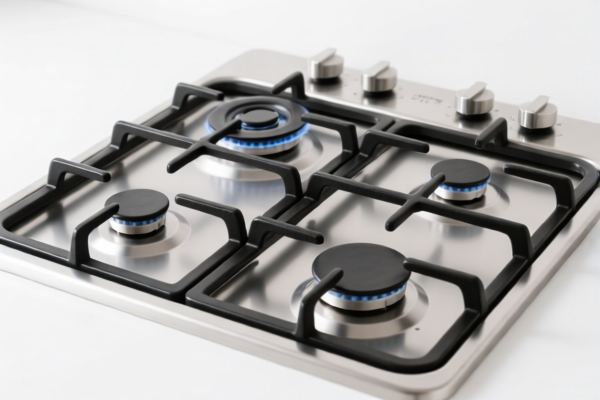
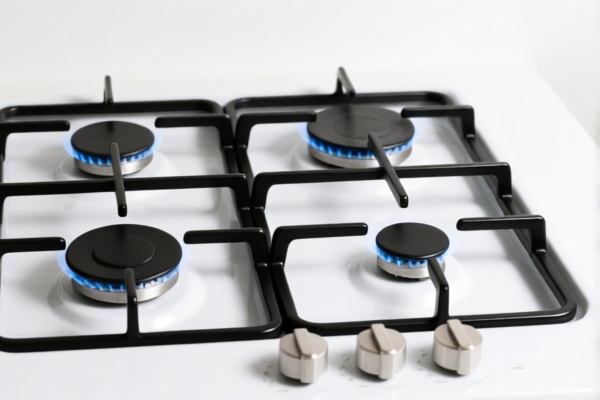
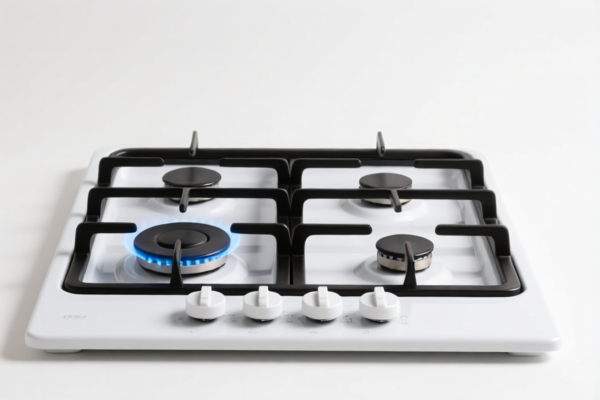
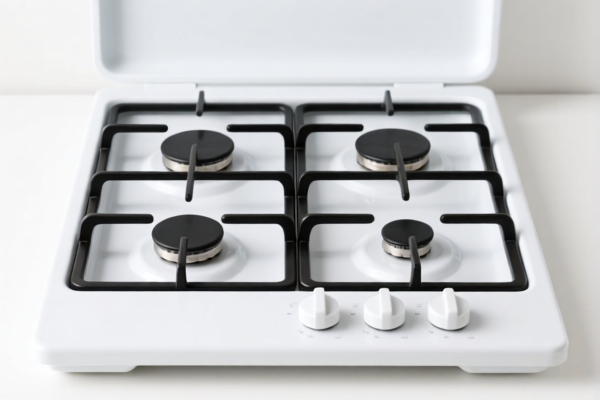
AI Analysis
🔥 Gas Stove (Gas Cooking Appliances)
🌐 HS Code Reference & Customs Clearance Guide | 2026 Latest Tariff Analysis | Strategic Compliance Strategy
📌 I. Product Definition & Classification: What Exactly Is a "Gas Stove"?
In international trade, a "Gas Stove" is not a single, monolithic HS code. It is bifurcated based on material composition and functional classification. The destination market (likely the US, given the specific "122 Clause" and "Steel/Aluminum" references in the data) imposes severe tariffs based on whether the item is classified as general household metalware or as a specialized gas burner appliance.
1. Metalware Classification (Household Articles): If the stove is viewed primarily as a piece of iron/steel kitchen furniture or cookware support, it falls under Chapter 73. This category is heavily targeted by trade remedies.
2. Appliance/Burner Classification (Technical Apparatus): If the stove is viewed strictly as a technical device for burning gas, it may fall under Chapter 84 (Boilers, pressure vessels, etc.). This often results in significantly lower base tariffs but still carries specific trade penalties.
⚠️ Critical Distinction Point:
- If the product is a standalone range with oven or a metal construction → Look at 7321.
- If the product is a technical gas burner unit or insert → Look at 8416.
- Do not assume all gas stoves are the same; the material and function drive the tax rate from 17.5% to 90.7%.
📦 II. HS Code Classification Details (2026 Latest Tariff Authority Mapping)
| HS Code | Product Description | Usage/Function | Material | Total Tax Rate |
|---|---|---|---|---|
7321.11.30.10 |
Gas Stove / Range | Cooking/Hearth use | Iron/Steel, Width ≤ 70cm | 85.0% |
7321.11.10.30 |
Gas Stove / Range | Cooking appliance | Iron/Steel | 90.7% |
8416.20.00.40 |
Gas Burner / Combustor | Gas fuel combustion | Technical Appliance | 17.5% |
🔍 Key Insight:
- The "Iron/Steel" classification (7321) triggers the harshest penalties (up to 90.7%). - The "Gas Burner" classification (8416) is the only viable path for lower taxes, but requires strict proof that the item is a "gas burning burner" rather than general household metalware. - Width matters: For7321.11.30.10, width ≤ 70cm is a specific sub-condition.
💰 III. 2026 Latest Tariff Rate Breakdown (Including Section 232 & 301 Penalties)
✅ Applicable Country: United States (US)
✅ Origin: China (CN)
✅ Effective Date: Current Trade Regimes (Section 232, Section 301, 122 Clause)
🎯 1. 7321.11.30.10 —— Gas Stove (Iron/Steel, ≤70cm Width)
| Item | Detail |
|---|---|
| Base Duty | 0.0% (Section 7321 often has 0% base for some subheads, but here it is listed as 0.0%) |
| Section 301 Duty | +25.0% (US Trade Representative List 3) |
| Section 122 Duty | +10.0% (Specific steel/aluminum provisions) |
| Section 232 Duty | +50.0% (Steel Products - "10% Steel, Aluminum & Copper Products surcharge") |
| Total Tax Rate | 85.0% |
| Calculation | CIF Value × 85% |
| De Minimis Eligible? | ❌ NO (Deny de minimis for steel/iron articles) |
📌 Explanation:
- The 50% Section 232 tariff is the killer here. It applies specifically to steel articles. - Even with 0% base duty, the cumulative effect of 301 (25%) + 122 (10%) + 232 (50%) results in a devastating 85% tax.
🎯 2. 7321.11.10.30 —— Gas Stove (Iron/Steel, General)
| Item | Detail |
|---|---|
| Base Duty | 5.7% |
| Section 301 Duty | +25.0% |
| Section 122 Duty | +10.0% |
| Section 232 Duty | +50.0% (Steel Products surcharge) |
| Total Tax Rate | 90.7% |
| Calculation | CIF Value × 90.7% |
| De Minimis Eligible? | ❌ NO |
📌 Explanation:
- This is the wor-case scenario. The base duty is higher (5.7%), and all surcharges apply. - Total liability is 90.7%. This effectively makes export of this specific classification unprofitable unless costs are drastically reduced.
🎯 3. 8416.20.00.40 —— Gas Burner (Gas Combustion Unit)
| Item | Detail |
|---|---|
| Base Duty | 0.0% |
| Section 301 Duty | +7.5% (Reduced or specific rate for this subheading) |
| Section 122 Duty | +10.0% |
| Section 232 Duty | N/A (Likely exempt or not applied as "Steel Article" in this specific technical form) |
| Total Tax Rate | 17.5% |
| Calculation | CIF Value × 17.5% |
| De Minimis Eligible? | ❌ NO (Check specific rules, but generally technical parts are scrutinized) |
📌 Explanation:
- This is the STRATEGIC TARGET.
- By classifying the product as a "Gas Burning Burner" (8416) rather than a "Household Metal Range" (7321), you avoid the 50% Section 232 steel tariff. - The total tax drops from ~90% to 17.5%. - Condition: You must prove it is a "gas burning burner" (Chapter 84 Note 1) and not a general-purpose stove.
🛠️ IV. Customs Clearance Practical Advice (Battle-Tested Strategy)
✅ 1. Classification Strategy: The "8416 Loophole"
| Scenario | Recommended HS Code | Why? |
|---|---|---|
| Complete Range with Oven | 7321.11.10.30 |
Hard to classify as just a burner. High tax (90.7%). |
| Gas Cooktop / Hob (Flat) | 7321.11.30.10 |
Often seen as iron/steel furniture. High tax (85%). |
| Gas Burner Unit / Insert | 8416.20.00.40 |
OPTIMAL. Classify as "Gas Burning Burner". Tax is only 17.5%. |
🚨 CRITICAL WARNING:
Do NOT simply label your product as "Gas Burner" if it is a complete kitchen range. Customs will inspect and reclassify it to 7321, leading to back taxes, penalties, and seizure.How to justify 8416: - Is it a replaceable burner assembly? - Is it not a complete self-contained range? - Does it function primarily as a combustion device?
✅ 2. Documentation Checklist (Must-Have)
| Document | Requirement | Notes |
|---|---|---|
| Product Specification Sheet | ✔️ | Must explicitly state: "Gas Burning Burner", "Combustion Device". Avoid words like "Kitchen Appliance" if aiming for 8416. |
| Technical Diagrams | ✔️ | Show internal combustion mechanism, gas valves, ignition. Prove it’s a technical unit. |
| Commercial Invoice | ✔️ | Description: "Gas Burner for Industrial/Commercial Use" (if applicable) or "Gas Combustion Unit". |
| Material Composition | ✔️ | If using 8416, minimize references to "Steel Furniture" or "Iron Cookware". |
| Certificate of Origin | ✔️ | Required for Section 232/301 determination. |
✅ 3. Risk Mitigation & Pre-Ruling
| Action | Benefit |
|---|---|
| Apply for CBP Binding Ruling | HIGHLY RECOMMENDED. Get official CBP confirmation that your specific model qualifies as 8416.20.00.40. This protects you from retroactive penalties. |
| Avoid "Section 232" Triggers | If classified as 7321, you pay 50% steel tariff. If 8416, you may avoid it. Verify the "Steel Article" definition. |
| Check "122 Clause" Applicability | Both 7321 and 8416 in the data show a 10% 122 Clause tax. This seems unavoidable for Chinese goods. Focus on avoiding the 50% 232 and 25% 301 where possible. |
🌍 V. Global Market Comparison (2026)
| Market | Preferred HS Code | Est. Total Tax | Key Issue |
|---|---|---|---|
| 🇺🇸 USA | 8416.20.00.40 |
17.5% | Avoid 7321 (85-90%) due to Steel Tariffs. |
| 🇪🇺 EU | 7321.11 |
~10-15% | No Section 232/301. Standard MFN rates apply. |
| 🇨🇳 China | 7321.11 |
~5-8% | Import into China from Vietnam/Malaysia preferred. |
📌 Conclusion:
- For US Imports, the 8416 classification is the only financially viable option for high-volume trade. - For EU/Other, classification is less critical regarding punitive tariffs, but accuracy is still key for standard duties.
📌 VI. Common Mistakes & Pitfalls (Lessons Learned)
❌ Mistake 1: Labeling a complete gas range as "Gas Burner" to get 17.5% tax.
👉 Consequence: CBP inspection reveals oven/stovetop structure → Reclassified to 7321.11.10.30 → 90.7% Tax + Penalties.
❌ Mistake 2: Ignoring the "Steel" content in 7321.
👉 Consequence: Missing the 50% Section 232 tariff calculation → Underpayment → Audit & Liens.
❌ Mistake 3: Assuming "De Minimis" applies.
👉 Consequence: Steel/Iron articles from China are excluded from de minimis (Section 321). All duties must be paid at entry.
✅ Correct Approach:
"Gas Combustion Burner, Model XYZ, Technical Specification: Gas Fuel Fired, Chapter 84 Application. Not for Household Furniture Classification."
🎯 VII. Conclusion: Strategic Sourcing & Classification
🎯 Remember the Formula:
🔹 7321 = Iron/Steel + Household = 85-90% Tax (Avoid)
🔹 8416 = Technical Burner = 17.5% Tax (Target)
🔹 "Function over Form": If you can structurally justify the product as a "burner" rather than a "range," you save ~73% in taxes.
📌 Actionable Tip:
- Before Shipping: Submit a Pre-Ruling Request to US CBP with photos and specs.
- Invoice Description: Use technical terms ("Gas Burner Assembly") rather than consumer terms ("Kitchen Stove").
- Supply Chain: If 8416 is not possible, consider final assembly in a non-steel-tariff country (if applicable, though 122/301 may still apply).
📣 Immediate Action Required:
📞 Consult Customs Broker: Confirm if your specific model fits
8416.20.00.40.
📄 Prepare Technical Docs: Proove it is a "Gas Burning Burner."
🚀 Optimize Landed Cost: Reduce tax from 90% to 17.5% through precise classification!
✨ Precision in Classification, Profit in Clearance!
💼 Every Percentage Point Saved is Pure Margin!
Customer Reviews
About HS Code Classification
The Harmonized System (HS) is an internationally standardized nomenclature developed by the World Customs Organization (WCO) to classify traded products. Over 200 countries use the HS system as the basis for customs tariffs, trade statistics, and import/export regulations.
Each HS code follows a hierarchical structure:
- Chapter (2 digits) — Broad category of goods (e.g., Chapter 84: Machinery and Mechanical Appliances)
- Heading (4 digits) — More specific grouping within the chapter
- Subheading (6 digits) — Internationally standardized breakdown, used by all WCO member countries
- National subdivisions (8-10 digits) — Country-specific extensions for further classification, such as US HTSUS 10-digit codes
Correct HS code classification is essential for smooth customs clearance, accurate duty payment, and compliance with trade regulations. Misclassification can lead to customs delays, overpayment of duties, or penalties.
When importing from CN to US, the applicable tariff rates may include:
- Most-Favored-Nation (MFN) rate — The standard duty rate applied to WTO members
- General rate — Applied to countries without trade agreements
- Trade remedy duties — Additional tariffs such as Section 301 (anti-dumping), Section 232 (national security), or countervailing duties
The information provided on this page is for reference purposes only. For official classification, please consult with your local customs authority or a licensed customs broker.