Glass Brush
CN → US| HS编码 | 关税税率 | 原产国 | 目的国 | 文档 |
|---|---|---|---|---|
| 8424209000 | 35.0% | CN | US | 官方文档 |
| 9603908050 | 70.3% | CN | US | 官方文档 |
| 9603404060 | 14.0% | CN | US | 官方文档 |
商品图片


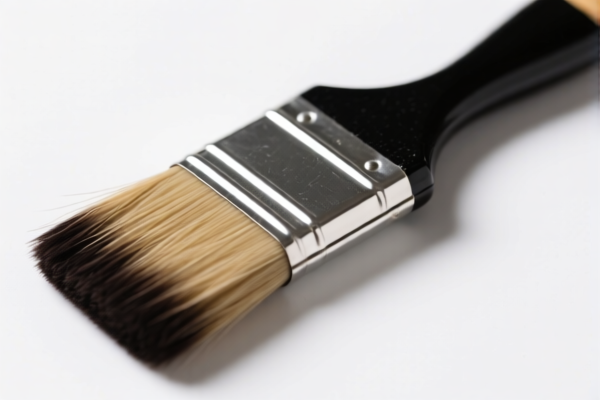
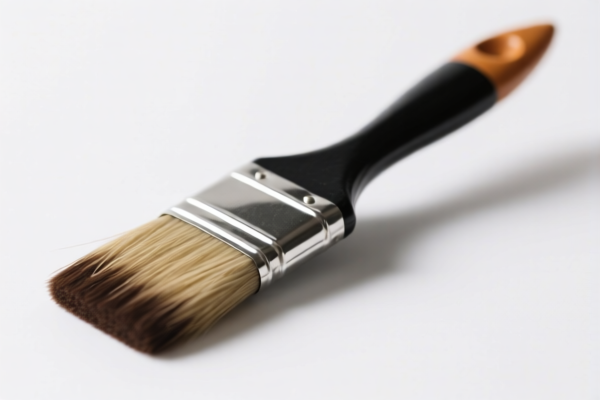
AI分析
🪟 Glass Brush: HS Code Classification & Customs Clearance Guide (2026)
🌐 HS Code Reference & Clearance Strategy | Professional Compliance for Cleaning Tools
📌 One Product, Three Classifications! Why does "Glass Brush" have such different tax rates?
A "Glass Brush" sounds simple, but in international trade, its HS Code depends entirely on its structure, material, and specific mechanism. The data provided highlights three distinct classification paths, resulting in vastly different total tax rates (14.0% vs. 35.0% vs. 70.3%).
Misclassification here is costly. Below is a detailed breakdown of each possibility based on the provided data.
📦 Part 1: HS Code Classification Breakdown
🎯 Option A: Classification under 8424.20.90.00 (Mechanical Spraying Device)
Total Tax Rate: 35.0%
- Logic: This classification treats the "Glass Brush" not just as a tool, but as a mechanical device for spraying/dispensing liquids (e.g., a spray bottle mechanism integrated with a brush, or a specialized cleaning unit).
- Key Attributes:
- Function: Used for jetting, dispersing, or spraying liquids (like cleaners).
- Material/Conflict: No material or functional conflict with "other" mechanical utensils.
- Why this code? It focuses on the spraying mechanism rather than the bristles. If the product is a "spray wand" or a mechanical dispenser used for glass cleaning, this applies.
| Tax Component | Rate | Details |
|---|---|---|
| Base Duty | 0.0% | Standard ad valorem rate. |
| Section 301 Duty | 25.0% | Additional tariffs on Chinese goods. |
| Section 122 Duty | 10.0% | Additional retaliatory/specific tariffs. |
| TOTAL | 35.0% |
🎯 Option B: Classification under 9603.90.80.50 (Other Brushes)
Total Tax Rate: 70.3% ⚠️ HIGHEST RISK
- Logic: This classifies the item strictly as a "Brush" (specifically, "other" brushes).
- Key Attributes:
- Function: Cleaning glass.
- Material Inference: The summary notes a conflict with Steel, Aluminum, or Copper products. If the brush head or handle contains these metals, it may trigger the 50% additional tariff on steel/aluminum/copper articles.
- Why this code? It fits the general definition of a brush but likely falls into a "catch-all" category due to specific material composition (metal parts) that attracts severe penalties.
| Tax Component | Rate | Details |
|---|---|---|
| Base Duty | 2.8% | Standard ad valorem rate. |
| Section 301 Duty | 7.5% | Additional tariffs. |
| Section 122 Duty | 10.0% | Additional retaliatory/specific tariffs. |
| Steel/Al/Cu Penalty | 50.0% | Critical: If the brush contains steel, aluminum, or copper components. |
| TOTAL | 70.3% |
⚠️ Warning: This is the most expensive option. If your glass brush has a metal handle or metal bristles, this risk is very high.
🎯 Option C: Classification under 9603.40.40.60 (Paint/Varnish Brushes - "Other")
Total Tax Rate: 14.0% 💰 LOWEST RISK / OPTIMAL
- Logic: This classifies the item as a "Brush" but specifically within the category of paint, varnish, or similar brushes (subheading 9603.40).
- Key Attributes:
- Function: Cleaning glass (inferred as a type of "brush" similar to paint brushes in structure).
- Material: No conflict mentioned. It assumes non-metallic or standard brush materials.
- Why this code? It leverages a specific sub-category for "other" brushes in this group, which historically has lower base duties and avoids the heavy metal penalties of Option B.
| Tax Component | Rate | Details |
|---|---|---|
| Base Duty | 4.0% | Standard ad valorem rate. |
| Section 301 Duty | 0.0% | No additional Section 301 tariffs listed. |
| Section 122 Duty | 10.0% | Additional retaliatory/specific tariffs. |
| TOTAL | 14.0% |
🛠️ Part 2: Customs Clearance Strategy & Recommendations
✅ 1. Product Description & Documentation
To ensure the best classification (aiming for 9603.40.40.60 at 14.0% or 8424.20.90.00 at 35.0% if it’s a sprayer), your commercial invoice and packing list must be precise.
| Document | Required Content | Why It Matters |
|---|---|---|
| Commercial Invoice | - HS Code: Clearly state the intended code (e.g., 9603.40.40.60). - Description: "Plastic Handle Glass Cleaning Brush" (Avoid "Metal" if possible). - Function: "Used for cleaning windows/glass." |
Prevents customs from assuming it’s a metal tool (which triggers the 50% penalty). |
| Product Photos | - Clear image of the bristles. - Clear image of the handle (highlight material: plastic, wood, or rubber). - Image showing no metal parts (if aiming for 14%). |
Proof that it is not a "steel/aluminum/copper" product. |
| Material Composition | - Specify % of plastic, wood, bristles. - Explicitly state: "Handle is 100% Plastic/Wood. No metal components." |
Directly addresses the 70.3% risk factor. |
✅ 2. Key Decision Matrix: Which Code to Choose?
| Scenario | Recommended HS Code | Total Tax | Action |
|---|---|---|---|
| Brush is all plastic/wood/rubber | 9603.40.40.60 | 14.0% | ✅ Best Option. Declare as "Plastic Glass Brush." |
| Brush is a Spray Bottle/Wand | 8424.20.90.00 | 35.0% | If it sprays liquid, declare as "Spraying Device." |
| Brush has Metal Handle/Bristles | 9603.90.80.50 | 70.3% | ❌ Avoid. Only use if unavoidable. Consider redesigning to plastic. |
✅ 3. Common Pitfalls to Avoid
- ❌ Vague Description: Writing only "Glass Brush" allows customs officers to pick the highest duty code (70.3%) if they suspect metal content.
- ❌ Hidden Metal Parts: Even small screws or metal springs in the brush head can trigger the 50% Steel/Al/Cu penalty.
- ❌ Misidentifying Function: If it sprays water, do not declare it as a simple dry brush (9603). It must go to 8424 (35.0%).
🌍 Part 3: Global Market Comparison (2026)
| Market | Recommended Code | Est. Duty | Notes |
|---|---|---|---|
| 🇺🇸 USA (China Origin) | 9603.40.40.60 | 14.0% | Avoid metal parts to stay in this bracket. |
| 🇺🇸 USA (China Origin) | 8424.20.90.00 | 35.0% | If it’s a sprayer. |
| 🇪🇺 EU | Varies | Low | Generally lower base duties; focus on CE/RoHS compliance. |
| 🇨🇳 China (Export) | 9603.40.40.60 | Low | Standard export code for brushes. |
📌 Final Verdict & Pro Tip
🎯 Goal: Minimize Duty to 14.0%
- Eliminate Metal: Ensure your "Glass Brush" has NO steel, aluminum, or copper parts. Use plastic, wood, or silicone.
- Describe Precisely: Use "Plastic Glass Cleaning Brush" on invoices.
- Avoid Sprayers: If it sprays, expect 35.0%. If it’s dry/wet wiping only, aim for 14.0%.
💡 Pro Tip: If your product is a "Spray Bottle with Brush," do not try to classify it as a simple brush (9603). It will likely be rejected or reclassified to 8424 (35.0%). It’s better to be accurate at 35% than penalized later. But if it’s a simple handle + bristle, 9603.40.40.60 is your golden ticket.
📣 Action Required: 1. Check Material: Confirm no metal components. 2. Update Invoice: Change description to "Plastic Glass Brush." 3. Submit for Pre-Ruling: Consider filing an HTSUS Advance Ruling with U.S. Customs to lock in the 14.0% rate and avoid disputes.
✨ Clear Brush, Clear Customs! Stay compliant, save money. ✨
用户评价
关于 HS 编码归类
协调制度(HS)是由世界海关组织(WCO)制定的国际贸易商品分类标准。全球 200 多个国家采用 HS 系统作为海关关税、贸易统计和进出口监管的基础。
每个 HS 编码遵循以下层级结构:
- 章(2 位)——商品大类(例如:第 84 章:机器和机械设备)
- 品目(4 位)——章内的更具体分类
- 子目(6 位)——国际通用细分,所有 WCO 成员国统一使用
- 本国细分(8-10 位)——各国自行扩展的细分编码,如美国 HTSUS 10 位编码
正确的 HS 编码归类对于顺利通关、准确缴纳关税和遵守贸易法规至关重要。错误归类可能导致海关延误、多缴关税或罚款。
从CN进口到US时,适用的关税税率可能包括:
- 最惠国(MFN)税率——适用于 WTO 成员国的标准关税税率
- 普通税率——适用于无贸易协定国家
- 贸易救济关税——附加关税,如 301 条款(反倾销)、232 条款(国家安全)或反补贴税
本页内容仅供参考。如需正式归类,请咨询当地海关或持牌报关代理。