商品图片
AI分析
🧵 Glass Fiber Yarn: The Reinforcement Backbone of Modern Industry
🌐 HS Code Reference & Customs Clearance Guide | 2026 Latest Tariff Analysis | Professional Level Strategy
📌 I. Product Definition & Classification: Do You Really Understand "Glass Fiber Yarn"?
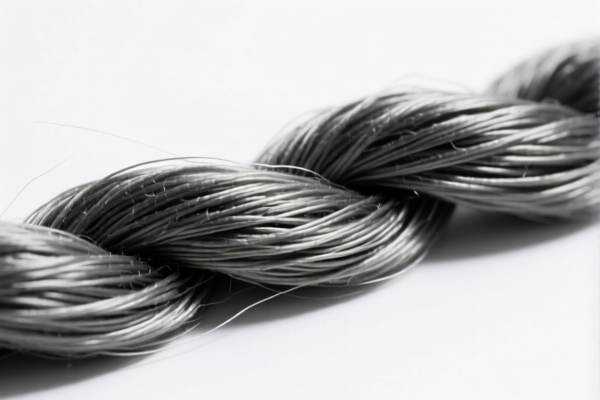
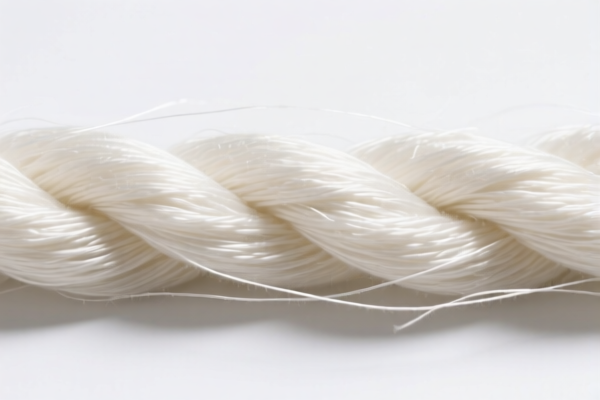
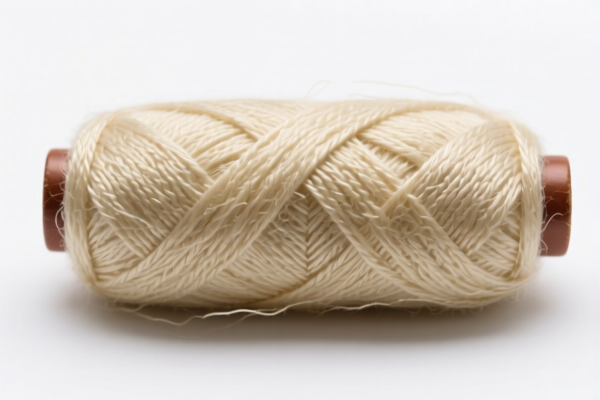
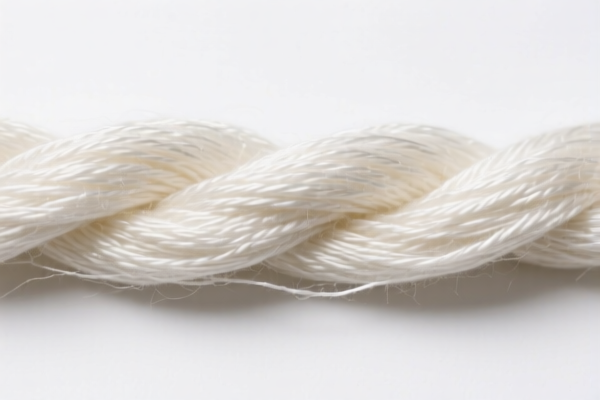
Glass fiber yarn, whether or not twisted, is a critical raw material in high-tech manufacturing. In international trade, it is strictly categorized based on its form and specific application, primarily focusing on reinforcement and specialized industrial uses.
Reinforcement Yarns (Primary Use): Yarns used mainly in composites (FRP), industrial textiles, and insulation. Other/Technical Yarns: Yarns used for filtration, electrical insulation, or structural reinforcement where no specific subheading applies.
⚠️ Key Distinction Point:
- If the yarn is put up for retail sale (small spools for home use) → Excluded from HS 5407.40.
- If the yarn is not put up for retail (large cones, bulk packs) → Included in HS 5407.40 or 5407.99.
- Crucial Note: This HS Code group specifically covers yarns used for reinforcement. If it’s used for textile fabric production (like clothing), it might fall under different chapters (e.g., HS 5407.61/62). Here, we focus on industrial/composite reinforcement.
📦 II. HS Code Classification Details (2026 Latest Tariff Authority Comparison)
| HS Code | Product Description | Application Scenario | Retail Packaging? |
|---|---|---|---|
5407.40 |
Glass fiber yarn, whether or not twisted, not put up for retail sale, primarily used for reinforcement (composites, insulation, industrial textiles) | Wind turbine blades, boat hulls, automotive parts, pipeline reinforcement, thermal insulation | ❌ No (Bulk/Industrial) |
5407.99 |
Other glass fiber yarn, not elsewhere specified, including yarns used in technical/industrial applications like filtration, electrical insulation, and structural reinforcement | Filter bags, capacitor insulation, cable shielding, specialized structural fabrics | ❌ No (Bulk/Industrial) |
🔍 Key Reminder:
- HS 5407.40 is for yarns where reinforcement is the primary function.
- HS 5407.99 is a "catch-all" for other glass fiber yarns that are industrial/technical but don’t fit the specific "reinforcement" definition of 5407.40, or if the specific reinforcement subtype isn’t listed elsewhere.
- Retail Packaged Yarn: If sold in small spools for retail hobbyists, it generally falls under HS 5605.00 (Metallized yarn) or HS 5407.61 (if woven into fabric first), NOT 5407.40/99.
💰 III. 2026 Latest Tariff Rate Details (Including Additional Taxes & Policy Surcharges)
✅ Applicable Country: United States (US)
✅ Country of Origin: China (CN)
✅ Effective Date: Ongoing (Check current IEEPA/USITC status)
🎯 1. 5407.40 —— Glass Fiber Yarn for Reinforcement (Not Retail)
| Item | Content |
|---|---|
| Base Tariff Rate | 0% (ad valorem) under General Duty |
| USITC Additional Tariff | +0% (Currently, many textile/yarn products are exempt from the 25% Section 301 list, but verify latest exclusions) |
| IEEPA Additional Tariff | +7.5% or +25% (Depending on specific subheading and current US-China trade policy adjustments) |
| Total Rate | Varies: 0% ~ 32.5% (Highly dependent on current enforcement) |
| Tax Calculation | CIF Value × Applicable Rate |
| De Minimis Exemption | ❌ Not Eligible (Glass fiber is considered industrial material; shipments under $800 are still scrutinized if classified under HS 5407) |
| Legal Basis Path | USITC:5407.40.0000 → Trade Policy: China Specific |
📌 Explanation:
- Glass fiber yarn is often subject to anti-dumping duties (AD) and countervailing duties (CVD) in addition to standard tariffs.
- Critical: Many glass fiber products from China face AD/CVD rates ranging from 20% to 100%+ depending on the specific manufacturer.
- IEEPA may add further surcharges depending on current executive orders.
- Always check AD/CVD case numbers for your specific supplier.
🎯 2. 5407.99 —— Other Glass Fiber Yarn (Technical/Industrial)
| Item | Content |
|---|---|
| Base Tariff Rate | 0% (ad valorem) under General Duty |
| USITC Additional Tariff | +0% (Verify exclusions) |
| IEEPA Additional Tariff | +7.5% or +25% |
| Total Rate | Varies: 0% ~ 32.5% |
| Tax Calculation | CIF Value × Applicable Rate |
| De Minimis Exemption | ❌ Not Eligible |
| Legal Basis Path | USITC:5407.99.0000 → Trade Policy: China Specific |
📌 Note:
- Same tariff structure as 5407.40.
- AD/CVD is the biggest risk: Even if base tariff is 0%, the AD/CVD rate can be massive.
- Example: Some glass fiber yarns have AD rates of 300%+ if not sourced from approved factories.
🛠️ IV. Customs Clearance Practical Advice (Battle-Tested Pitfall Guide)
✅ 1. Required Document Checklist (No Exceptions)
| Document | Mandatory? | Description |
|---|---|---|
| ✅ Technical Specification Sheet | ✔️ | Must state: Twist type, linear density (tex/denier), reinforcement type, intended use (e.g., "for composite lamination") |
| ✅ Non-Retail Declaration | ✔️ | Explicitly state: "NOT put up for retail sale" |
| ✅ Commercial Invoice | ✔️ | Must clearly describe as "Glass Fiber Yarn for Reinforcement" – avoid vague terms like "Fiberglass Thread" |
| ✅ Certificate of Origin | ✔️ | Required for any potential trade agreement benefits (though limited for China) |
| ✅ AD/CVD Questionnaire Response | ✔️ | If your supplier is under an AD/CVD order, you must provide the correct company-specific rate |
| ✅ Packaging List | ✔️ | Show net/gross weight, number of spools/cones, and total linear meters |
✅ 2. Declaration Tips (Critical Keywords)
🔥 “Specify Use, Declare Non-Retail, Avoid Vague Terms!”
| Scenario | Correct Declaration | Wrong Practice |
|---|---|---|
| Yarn for making boat hulls | "Glass Fiber Yarn, Not Retail, for Reinforcement in Composites" | "Fiberglass String" |
| Yarn for electrical insulation | "Glass Fiber Yarn, Not Retail, for Electrical Insulation" | "Insulating Wire" |
| Retail spool for hobbyists | Do NOT use HS 5407 – Use HS 5605.00 or 5407.61 | Misdeclaring retail items as industrial |
| Mixed shipment (Yarn + Fabric) | Split Declaration: Yarn under 5407.40, Fabric under 5407.61 | Lumping together → Audit risk |
✅ 3. Special Case Handling
| Scenario | Handling Advice |
|---|---|
| AD/CVD Risk | Check the Customs Tariff Number against the AD/CVD case list. If listed, your supplier must provide a CVD/AD certificate or you pay the full rate. |
| Twisted vs. Untwisted | Both fall under 5407.40/99. Twist level (C-twist, S-twist) does not change HS code. |
| Metal-Coated Yarn | If coated with metal (e.g., aluminum) for electromagnetic shielding, it may fall under HS 5605 (Metallized Yarn), NOT 5407. Check coating percentage. |
| Retail Sale | If sold in small spools (< 1 kg) to end consumers, it is NOT HS 5407.40. Use HS 5605.00 or relevant textile chapter. |
🌍 V. Global Main Market Customs Comparison (2026 Latest)
| Country/Region | Recommended HS Code | Tariff (China Origin) | Certification Requirement | Notes |
|---|---|---|---|---|
| 🇺🇸 USA | 5407.40 / 5407.99 |
0% Base + AD/CVD (Up to 300%+) | None for Yarn, but strict AD/CVD | AD/CVD is the biggest cost driver |
| 🇨🇳 China | 5407.40 / 5407.99 |
0% | None | Export-friendly |
| 🇪🇺 EU | 5407.40 / 5407.99 |
0% (Under GSP or standard) | REACH Compliance | REACH registration required for manufacturers |
| 🇬🇧 UK | 5407.40 / 5407.99 |
0% | UKCA (if applicable) | Post-Brexit rules apply |
| 🇯🇵 Japan | 5407.40 / 5407.99 |
0% (Under JETRO agreements) | JIS Standards | Often duty-free under FTAs |
📌 Conclusion:
- USA: Highest risk due to AD/CVD. Verify supplier’s AD/CVD status meticulously.
- EU/UK: Focus on REACH compliance (chemical registration for manufacturing processes).
- Asia: Generally lower tariffs, but quality standards (JIS, GB) may apply.
📌 VI. Common Mistakes & Pitfall Guide (Lessons Learned)
❌ Mistake 1: Declaring "Glass Fiber Yarn" without specifying "Not Retail"
👉 Consequence: Customs may reclassify to retail codes, causing delays or fines.
❌ Mistake 2: Ignoring AD/CVD rates
👉 Consequence: Facing 100-300% additional duties if supplier is not on the approved list.
❌ Mistake 3: Confusing Glass Fiber Yarn with Metallic Yarn
👉 Consequence: If coated with metal, HS code changes to 5605, which has different tariff structures.
❌ Mistake 4: Using vague descriptions like "Fiberglass Thread"
👉 Consequence: Customs may suspect misclassification for textile goods, leading to audits.
✅ Correct Approach:
"Glass Fiber Yarn, Twisted, 1200 Tex, Not Put Up for Retail, for Reinforcement in Composite Structures, Manufacturer: [Company], AD/CVD Case: [Number if applicable]"
🎯 VII. Conclusion: Precision in Declaration, Safety in Clearance
🎯 Remember the Key Rules:
🔹 "Not Retail, Industrial Use, Specify Reinforcement."
🔹 "Check AD/CVD First, Before You Ship."
🔹 "Metal Coating? Then HS 5605, Not 5407."
📌 Pro Tip:
If your glass fiber yarn is metal-coated (e.g., for EMI shielding), consult a customs broker before shipping to determine if it should be declared under HS 5605 instead. This can sometimes result in lower tariffs or different compliance requirements.
📣 Immediate Action:
📞 Contact your customs broker + Provide Technical Specs + Verify AD/CVD Status
🚀 Ensure your glass fiber yarn clears customs smoothly, avoids costly penalties, and protects your profit margins!
✨ Professional Clearance Starts with Accurate Classification!
💼 Every dollar of tariff saved is pure profit!
用户评价
关于 HS 编码归类
协调制度(HS)是由世界海关组织(WCO)制定的国际贸易商品分类标准。全球 200 多个国家采用 HS 系统作为海关关税、贸易统计和进出口监管的基础。
每个 HS 编码遵循以下层级结构:
- 章(2 位)——商品大类(例如:第 84 章:机器和机械设备)
- 品目(4 位)——章内的更具体分类
- 子目(6 位)——国际通用细分,所有 WCO 成员国统一使用
- 本国细分(8-10 位)——各国自行扩展的细分编码,如美国 HTSUS 10 位编码
正确的 HS 编码归类对于顺利通关、准确缴纳关税和遵守贸易法规至关重要。错误归类可能导致海关延误、多缴关税或罚款。
从CN进口到US时,适用的关税税率可能包括:
- 最惠国(MFN)税率——适用于 WTO 成员国的标准关税税率
- 普通税率——适用于无贸易协定国家
- 贸易救济关税——附加关税,如 301 条款(反倾销)、232 条款(国家安全)或反补贴税
本页内容仅供参考。如需正式归类,请咨询当地海关或持牌报关代理。