Glass Fiber Yarn
CN → US| HS Code | Tariff Rate | Origin | Destination | Doc |
|---|---|---|---|---|
| 540740 | 0.0% | CN | US | Official Doc |
| 540799 | 0.0% | CN | US | Official Doc |
Product Images
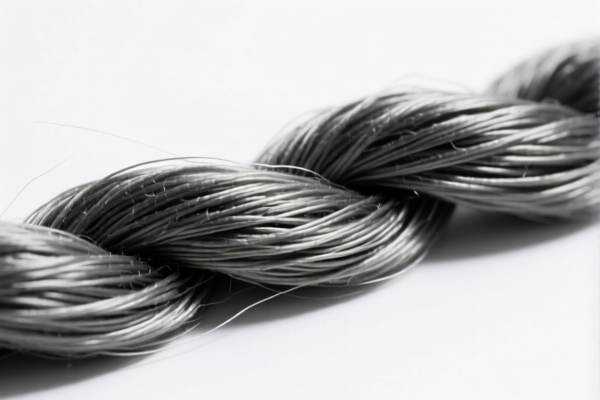
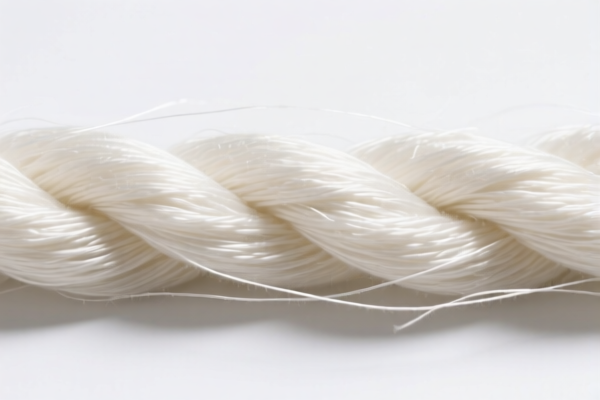
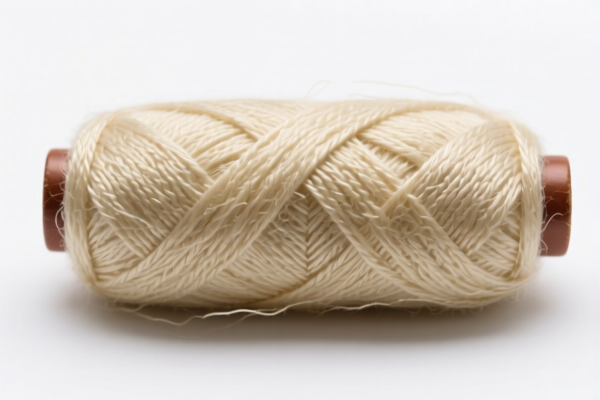
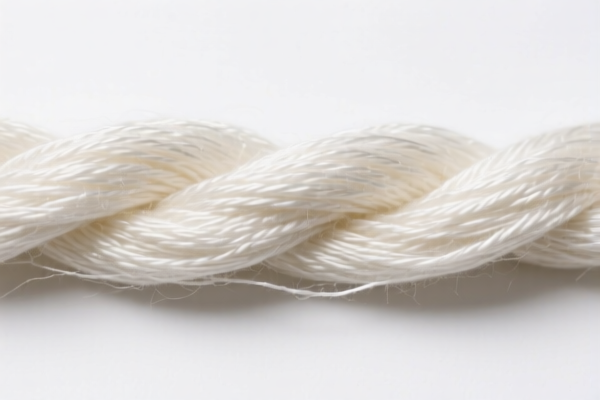
AI Analysis
🧵 Glass Fiber Yarn: The Reinforcement Backbone of Modern Industry
🌐 HS Code Reference & Customs Clearance Guide | 2026 Latest Tariff Analysis | Professional Level Strategy
📌 I. Product Definition & Classification: Do You Really Understand "Glass Fiber Yarn"?
Glass fiber yarn, whether or not twisted, is a critical raw material in high-tech manufacturing. In international trade, it is strictly categorized based on its form and specific application, primarily focusing on reinforcement and specialized industrial uses.
Reinforcement Yarns (Primary Use): Yarns used mainly in composites (FRP), industrial textiles, and insulation. Other/Technical Yarns: Yarns used for filtration, electrical insulation, or structural reinforcement where no specific subheading applies.
⚠️ Key Distinction Point:
- If the yarn is put up for retail sale (small spools for home use) → Excluded from HS 5407.40.
- If the yarn is not put up for retail (large cones, bulk packs) → Included in HS 5407.40 or 5407.99.
- Crucial Note: This HS Code group specifically covers yarns used for reinforcement. If it’s used for textile fabric production (like clothing), it might fall under different chapters (e.g., HS 5407.61/62). Here, we focus on industrial/composite reinforcement.
📦 II. HS Code Classification Details (2026 Latest Tariff Authority Comparison)
| HS Code | Product Description | Application Scenario | Retail Packaging? |
|---|---|---|---|
5407.40 |
Glass fiber yarn, whether or not twisted, not put up for retail sale, primarily used for reinforcement (composites, insulation, industrial textiles) | Wind turbine blades, boat hulls, automotive parts, pipeline reinforcement, thermal insulation | ❌ No (Bulk/Industrial) |
5407.99 |
Other glass fiber yarn, not elsewhere specified, including yarns used in technical/industrial applications like filtration, electrical insulation, and structural reinforcement | Filter bags, capacitor insulation, cable shielding, specialized structural fabrics | ❌ No (Bulk/Industrial) |
🔍 Key Reminder:
- HS 5407.40 is for yarns where reinforcement is the primary function.
- HS 5407.99 is a "catch-all" for other glass fiber yarns that are industrial/technical but don’t fit the specific "reinforcement" definition of 5407.40, or if the specific reinforcement subtype isn’t listed elsewhere.
- Retail Packaged Yarn: If sold in small spools for retail hobbyists, it generally falls under HS 5605.00 (Metallized yarn) or HS 5407.61 (if woven into fabric first), NOT 5407.40/99.
💰 III. 2026 Latest Tariff Rate Details (Including Additional Taxes & Policy Surcharges)
✅ Applicable Country: United States (US)
✅ Country of Origin: China (CN)
✅ Effective Date: Ongoing (Check current IEEPA/USITC status)
🎯 1. 5407.40 —— Glass Fiber Yarn for Reinforcement (Not Retail)
| Item | Content |
|---|---|
| Base Tariff Rate | 0% (ad valorem) under General Duty |
| USITC Additional Tariff | +0% (Currently, many textile/yarn products are exempt from the 25% Section 301 list, but verify latest exclusions) |
| IEEPA Additional Tariff | +7.5% or +25% (Depending on specific subheading and current US-China trade policy adjustments) |
| Total Rate | Varies: 0% ~ 32.5% (Highly dependent on current enforcement) |
| Tax Calculation | CIF Value × Applicable Rate |
| De Minimis Exemption | ❌ Not Eligible (Glass fiber is considered industrial material; shipments under $800 are still scrutinized if classified under HS 5407) |
| Legal Basis Path | USITC:5407.40.0000 → Trade Policy: China Specific |
📌 Explanation:
- Glass fiber yarn is often subject to anti-dumping duties (AD) and countervailing duties (CVD) in addition to standard tariffs.
- Critical: Many glass fiber products from China face AD/CVD rates ranging from 20% to 100%+ depending on the specific manufacturer.
- IEEPA may add further surcharges depending on current executive orders.
- Always check AD/CVD case numbers for your specific supplier.
🎯 2. 5407.99 —— Other Glass Fiber Yarn (Technical/Industrial)
| Item | Content |
|---|---|
| Base Tariff Rate | 0% (ad valorem) under General Duty |
| USITC Additional Tariff | +0% (Verify exclusions) |
| IEEPA Additional Tariff | +7.5% or +25% |
| Total Rate | Varies: 0% ~ 32.5% |
| Tax Calculation | CIF Value × Applicable Rate |
| De Minimis Exemption | ❌ Not Eligible |
| Legal Basis Path | USITC:5407.99.0000 → Trade Policy: China Specific |
📌 Note:
- Same tariff structure as 5407.40.
- AD/CVD is the biggest risk: Even if base tariff is 0%, the AD/CVD rate can be massive.
- Example: Some glass fiber yarns have AD rates of 300%+ if not sourced from approved factories.
🛠️ IV. Customs Clearance Practical Advice (Battle-Tested Pitfall Guide)
✅ 1. Required Document Checklist (No Exceptions)
| Document | Mandatory? | Description |
|---|---|---|
| ✅ Technical Specification Sheet | ✔️ | Must state: Twist type, linear density (tex/denier), reinforcement type, intended use (e.g., "for composite lamination") |
| ✅ Non-Retail Declaration | ✔️ | Explicitly state: "NOT put up for retail sale" |
| ✅ Commercial Invoice | ✔️ | Must clearly describe as "Glass Fiber Yarn for Reinforcement" – avoid vague terms like "Fiberglass Thread" |
| ✅ Certificate of Origin | ✔️ | Required for any potential trade agreement benefits (though limited for China) |
| ✅ AD/CVD Questionnaire Response | ✔️ | If your supplier is under an AD/CVD order, you must provide the correct company-specific rate |
| ✅ Packaging List | ✔️ | Show net/gross weight, number of spools/cones, and total linear meters |
✅ 2. Declaration Tips (Critical Keywords)
🔥 “Specify Use, Declare Non-Retail, Avoid Vague Terms!”
| Scenario | Correct Declaration | Wrong Practice |
|---|---|---|
| Yarn for making boat hulls | "Glass Fiber Yarn, Not Retail, for Reinforcement in Composites" | "Fiberglass String" |
| Yarn for electrical insulation | "Glass Fiber Yarn, Not Retail, for Electrical Insulation" | "Insulating Wire" |
| Retail spool for hobbyists | Do NOT use HS 5407 – Use HS 5605.00 or 5407.61 | Misdeclaring retail items as industrial |
| Mixed shipment (Yarn + Fabric) | Split Declaration: Yarn under 5407.40, Fabric under 5407.61 | Lumping together → Audit risk |
✅ 3. Special Case Handling
| Scenario | Handling Advice |
|---|---|
| AD/CVD Risk | Check the Customs Tariff Number against the AD/CVD case list. If listed, your supplier must provide a CVD/AD certificate or you pay the full rate. |
| Twisted vs. Untwisted | Both fall under 5407.40/99. Twist level (C-twist, S-twist) does not change HS code. |
| Metal-Coated Yarn | If coated with metal (e.g., aluminum) for electromagnetic shielding, it may fall under HS 5605 (Metallized Yarn), NOT 5407. Check coating percentage. |
| Retail Sale | If sold in small spools (< 1 kg) to end consumers, it is NOT HS 5407.40. Use HS 5605.00 or relevant textile chapter. |
🌍 V. Global Main Market Customs Comparison (2026 Latest)
| Country/Region | Recommended HS Code | Tariff (China Origin) | Certification Requirement | Notes |
|---|---|---|---|---|
| 🇺🇸 USA | 5407.40 / 5407.99 |
0% Base + AD/CVD (Up to 300%+) | None for Yarn, but strict AD/CVD | AD/CVD is the biggest cost driver |
| 🇨🇳 China | 5407.40 / 5407.99 |
0% | None | Export-friendly |
| 🇪🇺 EU | 5407.40 / 5407.99 |
0% (Under GSP or standard) | REACH Compliance | REACH registration required for manufacturers |
| 🇬🇧 UK | 5407.40 / 5407.99 |
0% | UKCA (if applicable) | Post-Brexit rules apply |
| 🇯🇵 Japan | 5407.40 / 5407.99 |
0% (Under JETRO agreements) | JIS Standards | Often duty-free under FTAs |
📌 Conclusion:
- USA: Highest risk due to AD/CVD. Verify supplier’s AD/CVD status meticulously.
- EU/UK: Focus on REACH compliance (chemical registration for manufacturing processes).
- Asia: Generally lower tariffs, but quality standards (JIS, GB) may apply.
📌 VI. Common Mistakes & Pitfall Guide (Lessons Learned)
❌ Mistake 1: Declaring "Glass Fiber Yarn" without specifying "Not Retail"
👉 Consequence: Customs may reclassify to retail codes, causing delays or fines.
❌ Mistake 2: Ignoring AD/CVD rates
👉 Consequence: Facing 100-300% additional duties if supplier is not on the approved list.
❌ Mistake 3: Confusing Glass Fiber Yarn with Metallic Yarn
👉 Consequence: If coated with metal, HS code changes to 5605, which has different tariff structures.
❌ Mistake 4: Using vague descriptions like "Fiberglass Thread"
👉 Consequence: Customs may suspect misclassification for textile goods, leading to audits.
✅ Correct Approach:
"Glass Fiber Yarn, Twisted, 1200 Tex, Not Put Up for Retail, for Reinforcement in Composite Structures, Manufacturer: [Company], AD/CVD Case: [Number if applicable]"
🎯 VII. Conclusion: Precision in Declaration, Safety in Clearance
🎯 Remember the Key Rules:
🔹 "Not Retail, Industrial Use, Specify Reinforcement."
🔹 "Check AD/CVD First, Before You Ship."
🔹 "Metal Coating? Then HS 5605, Not 5407."
📌 Pro Tip:
If your glass fiber yarn is metal-coated (e.g., for EMI shielding), consult a customs broker before shipping to determine if it should be declared under HS 5605 instead. This can sometimes result in lower tariffs or different compliance requirements.
📣 Immediate Action:
📞 Contact your customs broker + Provide Technical Specs + Verify AD/CVD Status
🚀 Ensure your glass fiber yarn clears customs smoothly, avoids costly penalties, and protects your profit margins!
✨ Professional Clearance Starts with Accurate Classification!
💼 Every dollar of tariff saved is pure profit!
Customer Reviews
About HS Code Classification
The Harmonized System (HS) is an internationally standardized nomenclature developed by the World Customs Organization (WCO) to classify traded products. Over 200 countries use the HS system as the basis for customs tariffs, trade statistics, and import/export regulations.
Each HS code follows a hierarchical structure:
- Chapter (2 digits) — Broad category of goods (e.g., Chapter 84: Machinery and Mechanical Appliances)
- Heading (4 digits) — More specific grouping within the chapter
- Subheading (6 digits) — Internationally standardized breakdown, used by all WCO member countries
- National subdivisions (8-10 digits) — Country-specific extensions for further classification, such as US HTSUS 10-digit codes
Correct HS code classification is essential for smooth customs clearance, accurate duty payment, and compliance with trade regulations. Misclassification can lead to customs delays, overpayment of duties, or penalties.
When importing from CN to US, the applicable tariff rates may include:
- Most-Favored-Nation (MFN) rate — The standard duty rate applied to WTO members
- General rate — Applied to countries without trade agreements
- Trade remedy duties — Additional tariffs such as Section 301 (anti-dumping), Section 232 (national security), or countervailing duties
The information provided on this page is for reference purposes only. For official classification, please consult with your local customs authority or a licensed customs broker.