Glyphosate Wettable Powder
CN → US| HS编码 | 关税税率 | 原产国 | 目的国 | 文档 |
|---|---|---|---|---|
| 3808935020 | 40.0% | CN | US | 官方文档 |
| 3808935040 | 40.0% | CN | US | 官方文档 |
商品图片
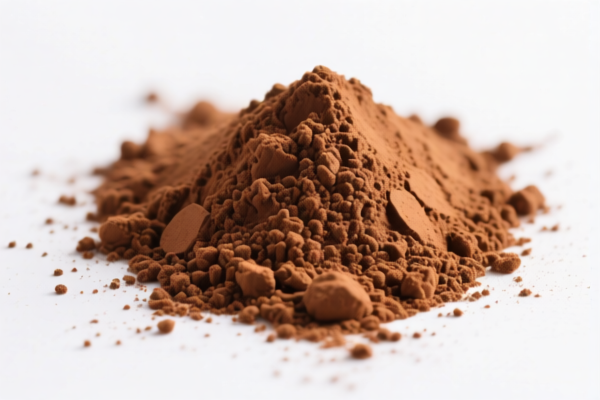
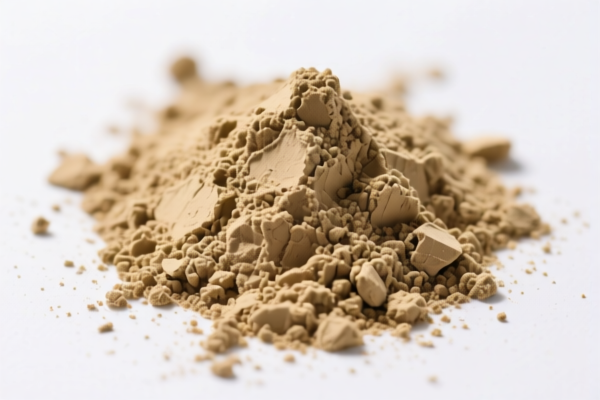
AI分析
🧪 Glyphosate Wettable Powder (Agrochemicals / Herbicides)
🌐 HS Code Reference & Customs Clearance Guide | 2026 Latest Tariff Analysis | Professional Clearance Strategy
📌 I. Product Definition & Classification: What Exactly is "Glyphosate Wettable Powder"?
Glyphosate Wettable Powder is a solid agrochemical formulation containing the active ingredient N-(phosphonomethyl) glycine (glyphosate) or its salts/esters, mixed with application adjuvants (such as wetting agents, dispersants, and fillers) to facilitate spraying. It is specifically packaged for retail sale or used as a prepared pesticide.
In international trade, this product falls under Chapter 38, specifically heading 3808, which covers insecticides, rodenticides, fungicides, herbicides, antisprouting products, and plant-growth regulators.
⚠️ Key Classification Distinction:
- Preparation vs. Pure Substance: Pure glyphosate acid usually falls under Chapter 29. However, once mixed with adjuvants and put up in forms for retail use (like a powder), it is classified as a preparation under HS Code 3808.
- Specific Subheading: Within 3808, it is categorized under 3808.93 (Herbicides, anti-sprouting products, and plant-growth regulators) → 3808.93.50 (Other: Mixtures of glyphosate and adjuvants).
📦 II. HS Code Classification Details (Based on Provided Data)
Based on the provided <DATA> JSON, there are two potential HS Codes for this product, differentiated by the total tax rate and specific tariff applicability (likely reflecting origin-based distinctions, e.g., US vs. Non-US or specific trade policy adjustments).
| HS Code | Product Description | Tax Rate Details | Total Tax |
|---|---|---|---|
3808.93.50.20 |
Mixtures of N-(phosphonomethyl) glycine (glyphosate) or its salts or esters and application adjuvants. | Base Tariff: 5.0% Additional Tariff: 0.0% |
5.0% |
3808.93.50.40 |
Other Herbicides, anti-sprouting products, and plant-growth regulators (Other). | Base Tariff: 5.0% Additional Tariff: 25.0% |
30.0% |
🔍 Critical Note:
- Both codes fall under the same descriptive hierarchy: Insecticides, rodenticides... Herbiicides... Other... Mixtures of glyphosate...
- The difference lies in the Additional Tariff (often linked to Section 301 trade measures for Chinese origins or specific non-FTA origins).
- Code .20 implies a standard or FTAs-friendly rate (5% total).
- Code .40 implies a penalized or high-duty rate (30% total), likely due to "Other" classification without specific adjuvant exemptions or due to origin-based additional tariffs.
💰 III. 2026 Latest Tariff Rate Breakdown
✅ Applicable Country: United States (US)
✅ Origin Context: The data reflects a 5% base + 0%/25% additional structure, typical of US import duties on agrochemicals with Section 301 implications.
🎯 1. 3808.93.50.20 – Glyphosate Mixtures (Low Duty Scenario)
| Item | Content |
|---|---|
| Base Tariff | 5.0% |
| Additional Tariff | 0.0% |
| Total Tariff | 5.0% |
| Calculation | CIF Value × 5.0% |
| Legal Basis | HTSUS 3808.93.50.20 |
📌 Explanation:
- This rate applies if the product is recognized as a standard glyphosate mixture eligible for the lower additional tariff (e.g., if originating from a country with no Section 301 penalties, or if a specific exclusion applies).
- Risk: If the customs broker misclassifies this as "Other" (Code .40), the duty jumps from 5% to 30%.
🎯 2. 3808.93.50.40 – Other Herbicides (High Duty Scenario)
| Item | Content |
|---|---|
| Base Tariff | 5.0% |
| Additional Tariff | 25.0% |
| Total Tariff | 30.0% |
| Calculation | CIF Value × 30.0% |
| Legal Basis | HTSUS 3808.93.50.40 |
📌 Explanation:
- The 25% additional tariff is likely due to US Trade Representative (USTR) actions against certain Chinese-origin industrial goods, including agrochemicals.
- This code is used if the product does not meet the specific criteria for .20 (e.g., different adjuvant composition, origin, or lack of specific exemption).
- Impact: A 25% increase in landed cost can significantly erode profit margins.
🛠️ IV. Customs Clearance Operational Advice (Practical Pitfall Guide)
✅ 1. Document Checklist (Mandatory)
| Document | Required | Description |
|---|---|---|
| ✅ Product Specification Sheet | ✔️ | Must explicitly state "Wettable Powder" and list % Active Ingredient (e.g., Glyphosate isopropylamine salt 41%). |
| ✅ Formula / Composition | ✔️ | Breakdown of adjuvants (surfactants, carriers). Critical for distinguishing between .20 and .40. |
| ✅ MSDS (Safety Data Sheet) | ✔️ | Required for hazardous materials handling. Confirms it is not a pure chemical (Chapter 29) but a preparation. |
| ✅ Commercial Invoice | ✔️ | Must clearly describe: "Glyphosate Wettable Powder, 41% AI, for Agricultural Use" |
| ✅ USDA APHIS Permit | ✔️ | Many pesticide imports require plant protection permits to prevent invasive species contamination. |
| ✅ EPA Registration Number | ✔️ | Mandatory. The product must be registered with the US Environmental Protection Agency (EPA) before import. The EPA Reg. No. must appear on the label and invoice. |
| ✅ Certificate of Origin | ✔️ | Critical for determining if the 0% or 25% additional tariff applies. |
✅ 2. Declaration Tips (Key Mantra)
🔥 “EPA Number First, Formula Clear, Adjuvants Listed, Duty Saved!”
| Scenario | Correct Declaration | Error to Avoid |
|---|---|---|
| Standard Glyphosate WP | 3808.93.50.20 + EPA Reg. No. + 41% AI |
Omitting EPA number → Seizure/Rejection |
| High-Price Formulation | 3808.93.50.20 |
Using .40 without justification → Overpayment (25% extra) |
| Pure Glyphosate Salt | Chapter 29 (e.g., 2931.90) | Classifying pure salt as 3808 → Misclassification |
| Ready-to-Use Liquid | 3808.94 (if liquid) |
Declaring powder as liquid → Data Mismatch |
✅ 3. Special Case Handling
| Situation | Handling Advice |
|---|---|
| EPA Registration | Ensure the EPA Establishment Number is on the label. Unregistered pesticides are illegal to import. |
| Chinese Origin | If shipped from China, assume 25% additional tariff unless a specific exclusion applies. Prepare for 30% total duty. |
| Adjuvant Changes | If the formula changes significantly (e.g., different surfactants), re-evaluate if it still qualifies for .20. Minor changes may not affect classification, but major ones might. |
| Retail vs. Bulk | The HS Code 3808 applies to "retail sale" or "preparations". If it is a bulk raw chemical not for direct retail, it might fall under Chapter 29. Ensure packaging matches the classification. |
🌍 V. Global Market Comparison (2026)
| Country/Region | Recommended HS Code | Base Tariff | Additional/Other Notes |
|---|---|---|---|
| 🇺🇸 United States | 3808.93.50.20 / .40 |
5% | +25% for China origin (if .40). EPA Approval Mandatory. |
| 🇨🇳 China | 3808.93.00.00 |
5-9% | Import license required for pesticides. |
| 🇪🇺 European Union | 3808.94.20 |
6.5% | Requires EU Pesticides Regulation compliance. No Section 301 equivalent. |
| 🇯🇵 Japan | 3808.93.000 |
6.0% | Ministry of Agriculture, Forestry and Fisheries (MAFF) registration required. |
📌 Conclusion:
- USA: Highest risk due to 25% additional tariff and strict EPA rules.
- EU/JP: Strict regulatory compliance but no punitive additional tariffs.
📌 VI. Common Errors & Pitfalls (Lessons Learned)
❌ Error 1: Omitting the EPA Registration Number on the invoice.
👉 Consequence: 100% Cargo Hold/Seizure by CBP and EPA. No fines can resolve this; the product is illegal.
❌ Error 2: Classifying as 2931.90 (Chemical) instead of 3808.93.50 (Preparation).
👉 Consequence: If the product is a "wettable powder" with adjuvants, it is a preparation. Misclassification leads to penalties and back taxes.
❌ Error 3: Ignoring the Origin when determining the Additional Tariff.
👉 Consequence: Assuming 5% duty for Chinese-origin goods → Underpayment of 25%. CBP will issue a Post-Entry Summary (PES) bill.
❌ Error 4: Vague Description: "Pesticide Powder".
👉 Consequence: Customs may classify as "Other" (.40) by default, leading to 30% duty. Always specify "Glyphosate Mixture".
✅ Correct Declaration Example:
"Glyphosate Wettable Powder, 41% Active Ingredient, with Surfactants. EPA Reg. No. 12345-67. For Agricultural Weed Control. HS 3808.93.50.20."
🎯 VII. Conclusion: Precision Saves Money!
🎯 Remember the Mantra:
🔹 "EPA Number is King, Formula Defines HS, Origin Dictates Extra Duty!"
🔹 ".20 is 5%, .40 is 30% – Don't Guess, Declare Accurate!"
📌 Pro Tip:
- If your supplier is in China, budget for 30% total duty (5% base + 25% additional) unless you have a specific exclusion.
- Always request the EPA Registration Certificate from your supplier before shipping.
- Consider applying for an Advance Ruling from CBP if this is a high-volume, high-value shipment to lock in the 5.0% rate if eligible.
📣 Immediate Action:
📞 Contact EPA for registration verification + Confirm Origin + Prepare MSDS & Formula
🚀 Ensure your broker uses HS 3808.93.50.20 if eligible to save 25%!
✨ Professional Clearance, Start with Accurate Classification!
💼 Every percent of duty counts in agrochemicals!
用户评价
关于 HS 编码归类
协调制度(HS)是由世界海关组织(WCO)制定的国际贸易商品分类标准。全球 200 多个国家采用 HS 系统作为海关关税、贸易统计和进出口监管的基础。
每个 HS 编码遵循以下层级结构:
- 章(2 位)——商品大类(例如:第 84 章:机器和机械设备)
- 品目(4 位)——章内的更具体分类
- 子目(6 位)——国际通用细分,所有 WCO 成员国统一使用
- 本国细分(8-10 位)——各国自行扩展的细分编码,如美国 HTSUS 10 位编码
正确的 HS 编码归类对于顺利通关、准确缴纳关税和遵守贸易法规至关重要。错误归类可能导致海关延误、多缴关税或罚款。
从CN进口到US时,适用的关税税率可能包括:
- 最惠国(MFN)税率——适用于 WTO 成员国的标准关税税率
- 普通税率——适用于无贸易协定国家
- 贸易救济关税——附加关税,如 301 条款(反倾销)、232 条款(国家安全)或反补贴税
本页内容仅供参考。如需正式归类,请咨询当地海关或持牌报关代理。