Glyphosate Wettable Powder
CN → US| HS Code | Tariff Rate | Origin | Destination | Doc |
|---|---|---|---|---|
| 3808935020 | 40.0% | CN | US | Official Doc |
| 3808935040 | 40.0% | CN | US | Official Doc |
Product Images
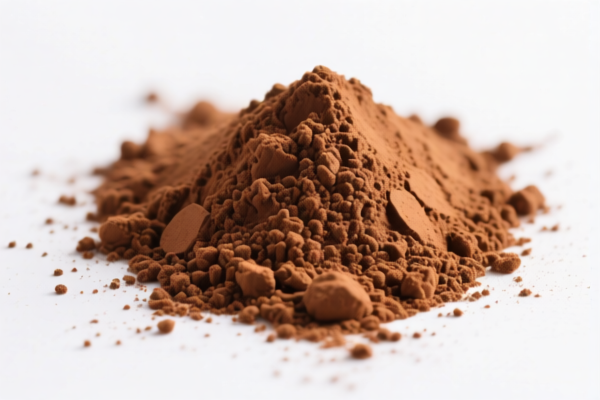

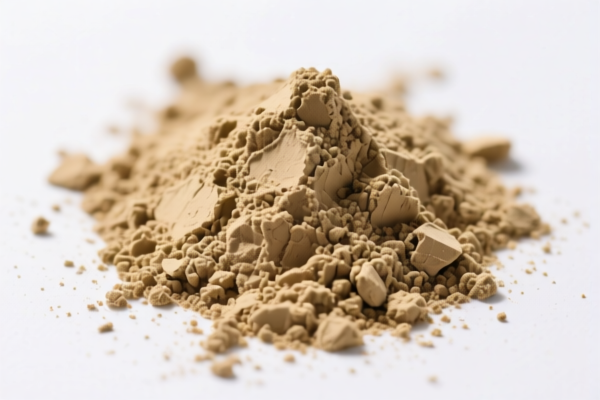
AI Analysis
🧪 Glyphosate Wettable Powder (Agrochemicals / Herbicides)
🌐 HS Code Reference & Customs Clearance Guide | 2026 Latest Tariff Analysis | Professional Clearance Strategy
📌 I. Product Definition & Classification: What Exactly is "Glyphosate Wettable Powder"?
Glyphosate Wettable Powder is a solid agrochemical formulation containing the active ingredient N-(phosphonomethyl) glycine (glyphosate) or its salts/esters, mixed with application adjuvants (such as wetting agents, dispersants, and fillers) to facilitate spraying. It is specifically packaged for retail sale or used as a prepared pesticide.
In international trade, this product falls under Chapter 38, specifically heading 3808, which covers insecticides, rodenticides, fungicides, herbicides, antisprouting products, and plant-growth regulators.
⚠️ Key Classification Distinction:
- Preparation vs. Pure Substance: Pure glyphosate acid usually falls under Chapter 29. However, once mixed with adjuvants and put up in forms for retail use (like a powder), it is classified as a preparation under HS Code 3808.
- Specific Subheading: Within 3808, it is categorized under 3808.93 (Herbicides, anti-sprouting products, and plant-growth regulators) → 3808.93.50 (Other: Mixtures of glyphosate and adjuvants).
📦 II. HS Code Classification Details (Based on Provided Data)
Based on the provided <DATA> JSON, there are two potential HS Codes for this product, differentiated by the total tax rate and specific tariff applicability (likely reflecting origin-based distinctions, e.g., US vs. Non-US or specific trade policy adjustments).
| HS Code | Product Description | Tax Rate Details | Total Tax |
|---|---|---|---|
3808.93.50.20 |
Mixtures of N-(phosphonomethyl) glycine (glyphosate) or its salts or esters and application adjuvants. | Base Tariff: 5.0% Additional Tariff: 0.0% |
5.0% |
3808.93.50.40 |
Other Herbicides, anti-sprouting products, and plant-growth regulators (Other). | Base Tariff: 5.0% Additional Tariff: 25.0% |
30.0% |
🔍 Critical Note:
- Both codes fall under the same descriptive hierarchy: Insecticides, rodenticides... Herbiicides... Other... Mixtures of glyphosate...
- The difference lies in the Additional Tariff (often linked to Section 301 trade measures for Chinese origins or specific non-FTA origins).
- Code .20 implies a standard or FTAs-friendly rate (5% total).
- Code .40 implies a penalized or high-duty rate (30% total), likely due to "Other" classification without specific adjuvant exemptions or due to origin-based additional tariffs.
💰 III. 2026 Latest Tariff Rate Breakdown
✅ Applicable Country: United States (US)
✅ Origin Context: The data reflects a 5% base + 0%/25% additional structure, typical of US import duties on agrochemicals with Section 301 implications.
🎯 1. 3808.93.50.20 – Glyphosate Mixtures (Low Duty Scenario)
| Item | Content |
|---|---|
| Base Tariff | 5.0% |
| Additional Tariff | 0.0% |
| Total Tariff | 5.0% |
| Calculation | CIF Value × 5.0% |
| Legal Basis | HTSUS 3808.93.50.20 |
📌 Explanation:
- This rate applies if the product is recognized as a standard glyphosate mixture eligible for the lower additional tariff (e.g., if originating from a country with no Section 301 penalties, or if a specific exclusion applies).
- Risk: If the customs broker misclassifies this as "Other" (Code .40), the duty jumps from 5% to 30%.
🎯 2. 3808.93.50.40 – Other Herbicides (High Duty Scenario)
| Item | Content |
|---|---|
| Base Tariff | 5.0% |
| Additional Tariff | 25.0% |
| Total Tariff | 30.0% |
| Calculation | CIF Value × 30.0% |
| Legal Basis | HTSUS 3808.93.50.40 |
📌 Explanation:
- The 25% additional tariff is likely due to US Trade Representative (USTR) actions against certain Chinese-origin industrial goods, including agrochemicals.
- This code is used if the product does not meet the specific criteria for .20 (e.g., different adjuvant composition, origin, or lack of specific exemption).
- Impact: A 25% increase in landed cost can significantly erode profit margins.
🛠️ IV. Customs Clearance Operational Advice (Practical Pitfall Guide)
✅ 1. Document Checklist (Mandatory)
| Document | Required | Description |
|---|---|---|
| ✅ Product Specification Sheet | ✔️ | Must explicitly state "Wettable Powder" and list % Active Ingredient (e.g., Glyphosate isopropylamine salt 41%). |
| ✅ Formula / Composition | ✔️ | Breakdown of adjuvants (surfactants, carriers). Critical for distinguishing between .20 and .40. |
| ✅ MSDS (Safety Data Sheet) | ✔️ | Required for hazardous materials handling. Confirms it is not a pure chemical (Chapter 29) but a preparation. |
| ✅ Commercial Invoice | ✔️ | Must clearly describe: "Glyphosate Wettable Powder, 41% AI, for Agricultural Use" |
| ✅ USDA APHIS Permit | ✔️ | Many pesticide imports require plant protection permits to prevent invasive species contamination. |
| ✅ EPA Registration Number | ✔️ | Mandatory. The product must be registered with the US Environmental Protection Agency (EPA) before import. The EPA Reg. No. must appear on the label and invoice. |
| ✅ Certificate of Origin | ✔️ | Critical for determining if the 0% or 25% additional tariff applies. |
✅ 2. Declaration Tips (Key Mantra)
🔥 “EPA Number First, Formula Clear, Adjuvants Listed, Duty Saved!”
| Scenario | Correct Declaration | Error to Avoid |
|---|---|---|
| Standard Glyphosate WP | 3808.93.50.20 + EPA Reg. No. + 41% AI |
Omitting EPA number → Seizure/Rejection |
| High-Price Formulation | 3808.93.50.20 |
Using .40 without justification → Overpayment (25% extra) |
| Pure Glyphosate Salt | Chapter 29 (e.g., 2931.90) | Classifying pure salt as 3808 → Misclassification |
| Ready-to-Use Liquid | 3808.94 (if liquid) |
Declaring powder as liquid → Data Mismatch |
✅ 3. Special Case Handling
| Situation | Handling Advice |
|---|---|
| EPA Registration | Ensure the EPA Establishment Number is on the label. Unregistered pesticides are illegal to import. |
| Chinese Origin | If shipped from China, assume 25% additional tariff unless a specific exclusion applies. Prepare for 30% total duty. |
| Adjuvant Changes | If the formula changes significantly (e.g., different surfactants), re-evaluate if it still qualifies for .20. Minor changes may not affect classification, but major ones might. |
| Retail vs. Bulk | The HS Code 3808 applies to "retail sale" or "preparations". If it is a bulk raw chemical not for direct retail, it might fall under Chapter 29. Ensure packaging matches the classification. |
🌍 V. Global Market Comparison (2026)
| Country/Region | Recommended HS Code | Base Tariff | Additional/Other Notes |
|---|---|---|---|
| 🇺🇸 United States | 3808.93.50.20 / .40 |
5% | +25% for China origin (if .40). EPA Approval Mandatory. |
| 🇨🇳 China | 3808.93.00.00 |
5-9% | Import license required for pesticides. |
| 🇪🇺 European Union | 3808.94.20 |
6.5% | Requires EU Pesticides Regulation compliance. No Section 301 equivalent. |
| 🇯🇵 Japan | 3808.93.000 |
6.0% | Ministry of Agriculture, Forestry and Fisheries (MAFF) registration required. |
📌 Conclusion:
- USA: Highest risk due to 25% additional tariff and strict EPA rules.
- EU/JP: Strict regulatory compliance but no punitive additional tariffs.
📌 VI. Common Errors & Pitfalls (Lessons Learned)
❌ Error 1: Omitting the EPA Registration Number on the invoice.
👉 Consequence: 100% Cargo Hold/Seizure by CBP and EPA. No fines can resolve this; the product is illegal.
❌ Error 2: Classifying as 2931.90 (Chemical) instead of 3808.93.50 (Preparation).
👉 Consequence: If the product is a "wettable powder" with adjuvants, it is a preparation. Misclassification leads to penalties and back taxes.
❌ Error 3: Ignoring the Origin when determining the Additional Tariff.
👉 Consequence: Assuming 5% duty for Chinese-origin goods → Underpayment of 25%. CBP will issue a Post-Entry Summary (PES) bill.
❌ Error 4: Vague Description: "Pesticide Powder".
👉 Consequence: Customs may classify as "Other" (.40) by default, leading to 30% duty. Always specify "Glyphosate Mixture".
✅ Correct Declaration Example:
"Glyphosate Wettable Powder, 41% Active Ingredient, with Surfactants. EPA Reg. No. 12345-67. For Agricultural Weed Control. HS 3808.93.50.20."
🎯 VII. Conclusion: Precision Saves Money!
🎯 Remember the Mantra:
🔹 "EPA Number is King, Formula Defines HS, Origin Dictates Extra Duty!"
🔹 ".20 is 5%, .40 is 30% – Don't Guess, Declare Accurate!"
📌 Pro Tip:
- If your supplier is in China, budget for 30% total duty (5% base + 25% additional) unless you have a specific exclusion.
- Always request the EPA Registration Certificate from your supplier before shipping.
- Consider applying for an Advance Ruling from CBP if this is a high-volume, high-value shipment to lock in the 5.0% rate if eligible.
📣 Immediate Action:
📞 Contact EPA for registration verification + Confirm Origin + Prepare MSDS & Formula
🚀 Ensure your broker uses HS 3808.93.50.20 if eligible to save 25%!
✨ Professional Clearance, Start with Accurate Classification!
💼 Every percent of duty counts in agrochemicals!
Customer Reviews
About HS Code Classification
The Harmonized System (HS) is an internationally standardized nomenclature developed by the World Customs Organization (WCO) to classify traded products. Over 200 countries use the HS system as the basis for customs tariffs, trade statistics, and import/export regulations.
Each HS code follows a hierarchical structure:
- Chapter (2 digits) — Broad category of goods (e.g., Chapter 84: Machinery and Mechanical Appliances)
- Heading (4 digits) — More specific grouping within the chapter
- Subheading (6 digits) — Internationally standardized breakdown, used by all WCO member countries
- National subdivisions (8-10 digits) — Country-specific extensions for further classification, such as US HTSUS 10-digit codes
Correct HS code classification is essential for smooth customs clearance, accurate duty payment, and compliance with trade regulations. Misclassification can lead to customs delays, overpayment of duties, or penalties.
When importing from CN to US, the applicable tariff rates may include:
- Most-Favored-Nation (MFN) rate — The standard duty rate applied to WTO members
- General rate — Applied to countries without trade agreements
- Trade remedy duties — Additional tariffs such as Section 301 (anti-dumping), Section 232 (national security), or countervailing duties
The information provided on this page is for reference purposes only. For official classification, please consult with your local customs authority or a licensed customs broker.