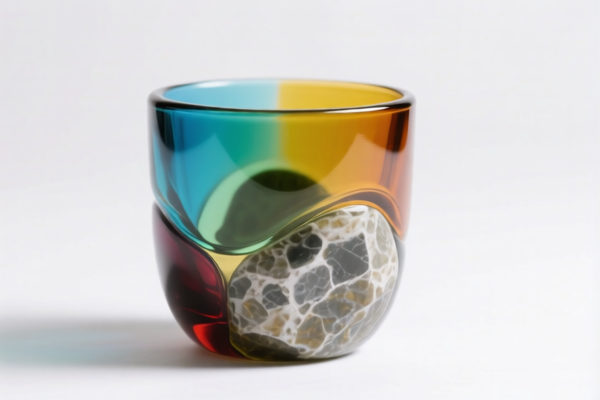
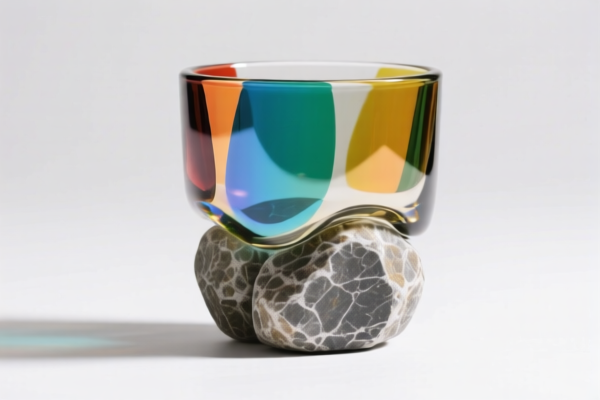
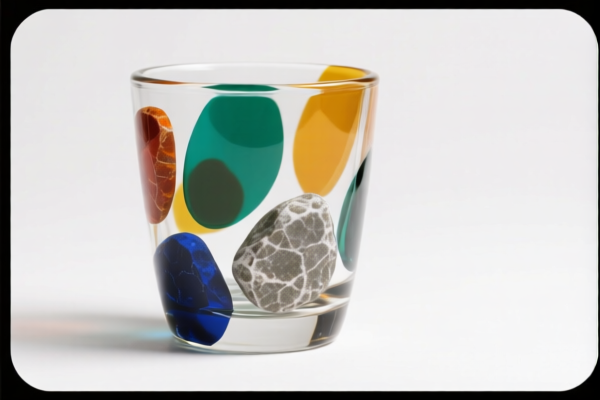
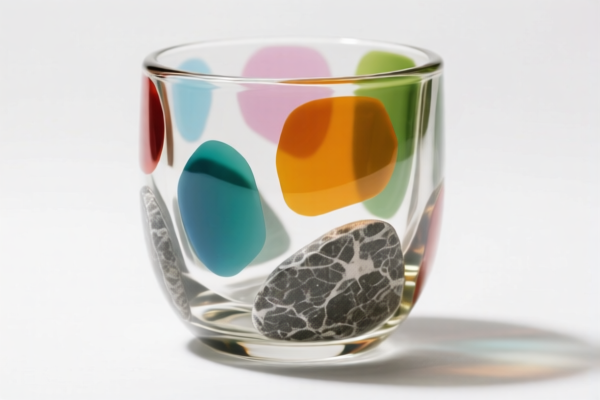
Gradient Color Bear Straw Cup
CN → US| HS编码 | 关税税率 | 原产国 | 目的国 | 文档 |
|---|---|---|---|---|
| 6912004400 | 20.0% | CN | US | 官方文档 |
| 3924102000 | 24.0% | CN | US | 官方文档 |
| 3924104000 | 13.4% | CN | US | 官方文档 |
| 6912004810 | 19.8% | CN | US | 官方文档 |
| 6911108010 | 38.3% | CN | US | 官方文档 |
商品图片
AI分析
🐻 Gradient Color Bear Straw Cup (Insulated/Tumbler Style)
🌐 HS Code Reference & Customs Clearance Guide | 2026 Latest Tariff Analysis | Professional Strategy
📌 I. Product Definition & Classification: Do You Really Understand the "Bear Cup"?
The "Gradient Color Bear Straw Cup" is a trendy consumer good, typically characterized by a plastic or ceramic body, animal-shaped design (often a bear), gradient color finishing, and an integrated drinking straw. In international trade, its classification depends strictly on the primary material and functional design.
Key Distinction Logic:
1. Material First: Is it Ceramic/China (6911/6912) or Plastic (3924)?
2. Function Second: Is it specifically for drinking (cup/glass) or general tableware?
3. Design Impact: The "Bear" shape and "Gradient" color do not create a new HS code. They are merely finishing details. The base material dictates the chapter.
⚠️ Critical Note:
- If the cup is made of Ceramic but is not porcelain (e.g., stoneware, earthenware), it falls under 6912.
- If the cup is made of Porcelain/China (white, translucent, high-fired), it falls under 6911.
- If the cup is made of Plastic, it falls under 3924.
- Note: Most "Trendy/Insulated" bear cups are Plastic or Ceramic. Pure porcelain is less common for this specific "kawaii/trendy" style due to fragility, but still possible.
📦 II. HS Code Classification Details (2026 Latest Tariff Alignment)
Based on the provided <DATA>, here are the specific HS Codes applicable to "Gradient Color Bear Straw Cups," categorized by material:
| HS Code | Product Description | Material | Key Application/Feature | Tax Rate (Total) |
|---|---|---|---|---|
6912.00.44.00 |
Non-porcelain drinking vessels, conforming to use as mugs and wine glasses | Non-Porcelain Ceramic | Mugs, drinking vessels | 20.0% |
3924.10.20.00 |
Tableware, kitchenware, other household articles and toilet articles, of plastics; cups | Plastic | Plastic cups with straws | 24.0% |
3924.10.40.00 |
Tableware, kitchenware, other household articles and toilet articles, of plastics; other | Plastic | General plastic drinkware | 13.4% |
6912.00.48.10 |
Non-porcelain tableware and other kitchenware, for food or beverage contact | Non-Porcelain Ceramic | General non-porcelain tableware | 19.8% |
6911.10.80.10 |
Tableware and other kitchen articles, of porcelain or china | Porcelain/China | High-end porcelain cups | 38.3% |
🔍 Classification Guidance:
- Most Common Scenario: If your "Bear Cup" is made of Plastic (common for durable, trendy, gradient-finish items), choose between3924.10.20.00(if explicitly categorized as cups) or3924.10.40.00(if categorized as general household plastic ware).
- Ceramic Scenario: If it is a non-porcelain ceramic (e.g., matte finish, opaque, heavy), use6912.00.44.00(if used as a mug) or6912.00.48.10.
- Porcelain Scenario: Rare for this style, but if it is fine china, use6911.10.80.10.
💰 III. 2026 Latest Tariff Rate Breakdown (Including Surtaxes)
✅ Applicable Country: USA (Importing from China)
✅ Origin: China (CN)
✅ Effective Time: 2025-11-10 onwards (Includes subsequent imports)
🎯 1. Plastic Cups (HS Codes: 3924.10.20.00 / 3924.10.40.00)
Plastic drinkware attracts the highest effective tax burden due to the combination of base duties and Section 301/IEEPA surcharges.
| Item | 3924.10.20.00 (Plastic Cups) |
3924.10.40.00 (Other Plastic Tableware) |
|---|---|---|
| Base Duty | 6.5% | 3.4% |
| Section 301 Surtax | 7.5% | 0.0% |
| 122-Clause Surtax | 10.0% | 10.0% |
| Total Tax Rate | 24.0% | 13.4% |
| Calculation Base | CIF Value × 24.0% | CIF Value × 13.4% |
| De Minimis Exemption | ❌ Not Eligible | ❌ Not Eligible |
| Legal Basis | IEEPA + Section 301 | IEEPA + Base Tariff |
📌 Explanation:
-3924.10.20.00: Higher total tax (24%) because it incurs both Section 301 (7.5%) and 122-Clause (10%) surcharges on top of the base duty.
-3924.10.40.00: Lower total tax (13.4%) as it only pays the base duty (3.4%) and 122-Clause (10%), avoiding the Section 301 surtax.
- Strategy: If your product can be classified as "Other plastic household articles" rather than "Cups," you might save 10.6% in taxes. However, classification must be accurate. Misclassification carries risks.
🎯 2. Non-Porcelain Ceramic Cups (HS Codes: 6912.00.44.00 / 6912.00.48.10)
Non-porcelain ceramics (e.g., stoneware) have moderate tax burdens.
| Item | 6912.00.44.00 (Non-porcelain Mugs/Glasses) |
6912.00.48.10 (Non-porcelain Tableware) |
|---|---|---|
| Base Duty | 10.0% | 9.8% |
| Section 301 Surtax | 0.0% | 0.0% |
| 122-Clause Surtax | 10.0% | 10.0% |
| Total Tax Rate | 20.0% | 19.8% |
| Calculation Base | CIF Value × 20.0% | CIF Value × 19.8% |
| De Minimis Exemption | ❌ Not Eligible | ❌ Not Eligible |
📌 Explanation:
- Both codes incur a 10% 122-Clause surtax.
- No Section 301 surtax applies to these ceramic codes in this dataset.
- Difference is minimal (0.2%). Choose6912.00.44.00if the primary use is clearly as a drinking vessel/mug. Choose6912.00.48.10for general kitchenware/tableware.
🎯 3. Porcelain Cups (HS Code: 6911.10.80.10)
Porcelain (china) faces the highest tax burden in this dataset.
| Item | 6911.10.80.10 (Porcelain Tableware) |
|---|---|
| Base Duty | 20.8% |
| Section 301 Surtax | 7.5% |
| 122-Clause Surtax | 10.0% |
| Total Tax Rate | 38.3% |
| Calculation Base | CIF Value × 38.3% |
| De Minimis Exemption | ❌ Not Eligible |
📌 Warning:
- If your "Bear Cup" is made of fine porcelain, expect a 38.3% total tax. This is significantly higher than plastic or non-porcelain ceramic.
- Ensure your product is not misclassified as non-porcelain to avoid penalty.
🛠️ IV. Customs Clearance Practical Advice (Avoid Pitfalls)
✅ 1. Required Documentation Checklist
| Document | Required? | Notes |
|---|---|---|
| Product Spec Sheet | ✅ Yes | Must specify material (Plastic vs. Ceramic), dimensions, and capacity. |
| Material Certificate | ✅ Yes | Crucial for distinguishing Plastic (3924) vs. Ceramic (6911/6912). |
| Photos (Clear) | ✅ Yes | Show gradient finish, bear shape, straw attachment, and bottom markings. |
| Commercial Invoice | ✅ Yes | Description must match HS code logic (e.g., "Plastic Drinking Cup" vs. "Porcelain Mug"). |
| Packing List | ✅ Yes | Include net/gross weight and carton dimensions. |
✅ 2. Classification Strategy & Tips
🔥 Golden Rule:
"Material Determines Chapter, Function Determines Heading, Design is Irrelevant for HS."
| Scenario | Correct HS Code | Risk if Misclassified |
|---|---|---|
| Plastic Cup with Straw | 3924.10.20.00 or 3924.10.40.00 |
If declared as Ceramic → Rejection + Penalty |
| Ceramic Mug (Non-Porcelain) | 6912.00.44.00 |
If declared as Plastic → Duty underpayment risk |
| Porcelain Cup | 6911.10.80.10 |
High tax risk if misclassified as non-porcelain |
| Cup + Straw (Separate Items) | Declare Together | If separated, straw may have different duty; combine for clarity |
📌 Key Tip:
- For Plastic Cups, try to justify classification under3924.10.40.00(Other) if possible to save 10.6% (13.4% vs 24.0%). However, ensure it doesn't contradict the "Cup" definition.
- For Ceramic,6912.00.44.00(20%) is better than6912.00.48.10(19.8%) only by 0.2%. Focus on accurate material description.
- Avoid Porcelain if cost-sensitive, as6911.10.80.10(38.3%) is nearly double the plastic rate.
✅ 3. Special Considerations for "Gradient Color" & "Bear Shape"
- Gradient Color: Does not affect HS code. Ensure colorfastness certificates are available if required by customs for safety compliance (e.g., FDA for food contact).
- Bear Shape: Does not create a special category. It is still "Tableware" or "Household Article."
- Straw: If the straw is detachable, declare it together with the cup. If the straw is made of a different material (e.g., metal straw with plastic cup), declare as a set under the principal material (Plastic/Ceramic).
🌍 V. Global Market Comparison (2026)
| Country | Recommended HS Code | Total Tax (China Origin) | Key Certification |
|---|---|---|---|
| 🇺🇸 USA | 3924.10.20.00 (Plastic) |
24.0% | FDA, Prop 65 |
| 🇺🇸 USA | 6912.00.44.00 (Ceramic) |
20.0% | FDA |
| 🇨🇳 China | 3924.10.20.00 |
~5-6% (Import Duty) | GB Standards |
| 🇪🇺 EU | 3924.10.20.00 |
0% (if CE) | CE, LFGB |
| 🇯🇵 Japan | 3924.10.20.00 |
0-5% | JIS, Food Sanitation Law |
📌 Conclusion:
- The USA imposes the highest tariffs due to Section 301 and 122-Clause surcharges.
- Plastic cups face a 24% total tax, while Non-porcelain ceramic faces 20%.
- Porcelain is extremely tax-inefficient for the US market (38.3%).
📌 VI. Common Mistakes & Pitfalls (Lessons Learned)
❌ Mistake 1: Classifying a Plastic Cup as "Ceramic" to avoid Section 301.
👉 Consequence: Customs inspection reveals material mismatch → Seizure + Fine.
❌ Mistake 2: Not declaring the 122-Clause Surtax (10%).
👉 Consequence: Underpayment of duty → Back Taxes + Interest.
❌ Mistake 3: Ignoring the "Straw" as a separate item.
👉 Consequence: If declared separately, straw might be classified differently, leading to complex billing and potential errors.
❌ Mistake 4: Assuming "Gradient Color" requires a special HS code.
👉 Consequence: Unnecessary complexity. Stick to material-based codes.
✅ Correct Approach:
"Gradient Color Plastic Bear Cup with Straw, Food-Grade Material, 500ml Capacity, For Drinking Use."
🎯 VII. Conclusion: Smart Classification, Cost Control
🎯 Key Takeaways:
🔹 Material is King: Plastic (
3924) vs. Ceramic (6911/6912) determines your HS code.
🔹 Tax Savings: Plastic3924.10.40.00(13.4%) is cheaper than3924.10.20.00(24.0%) if classification allows.
🔹 Avoid Porcelain:6911.10.80.10(38.3%) is too expensive for trend-driven items.
🔹 Always Include Surtaxes: 122-Clause (10%) applies to all categories in this dataset.
📌 Pro Tip:
If your supplier can switch from Porcelain to Non-Porcelain Ceramic or Plastic, you can save 10-20% in total tax burden. Conduct a Pre-Ruling with US Customs (CBP) if the material is ambiguous.
📣 Immediate Action:
📞 Verify Material Composition
📄 Prepare FDA/Food Contact Compliance Docs
🚀 Declare Accurately to Avoid Delays
✨ Professional Customs Clearance Starts with Accurate Classification!
💼 Save Every Percent, Deliver Every Box!
用户评价
关于 HS 编码归类
协调制度(HS)是由世界海关组织(WCO)制定的国际贸易商品分类标准。全球 200 多个国家采用 HS 系统作为海关关税、贸易统计和进出口监管的基础。
每个 HS 编码遵循以下层级结构:
- 章(2 位)——商品大类(例如:第 84 章:机器和机械设备)
- 品目(4 位)——章内的更具体分类
- 子目(6 位)——国际通用细分,所有 WCO 成员国统一使用
- 本国细分(8-10 位)——各国自行扩展的细分编码,如美国 HTSUS 10 位编码
正确的 HS 编码归类对于顺利通关、准确缴纳关税和遵守贸易法规至关重要。错误归类可能导致海关延误、多缴关税或罚款。
从CN进口到US时,适用的关税税率可能包括:
- 最惠国(MFN)税率——适用于 WTO 成员国的标准关税税率
- 普通税率——适用于无贸易协定国家
- 贸易救济关税——附加关税,如 301 条款(反倾销)、232 条款(国家安全)或反补贴税
本页内容仅供参考。如需正式归类,请咨询当地海关或持牌报关代理。