Gradient Color Bear Straw Cup
CN → US| HS Code | Tariff Rate | Origin | Destination | Doc |
|---|---|---|---|---|
| 6912004400 | 20.0% | CN | US | Official Doc |
| 3924102000 | 24.0% | CN | US | Official Doc |
| 3924104000 | 13.4% | CN | US | Official Doc |
| 6912004810 | 19.8% | CN | US | Official Doc |
| 6911108010 | 38.3% | CN | US | Official Doc |
Product Images
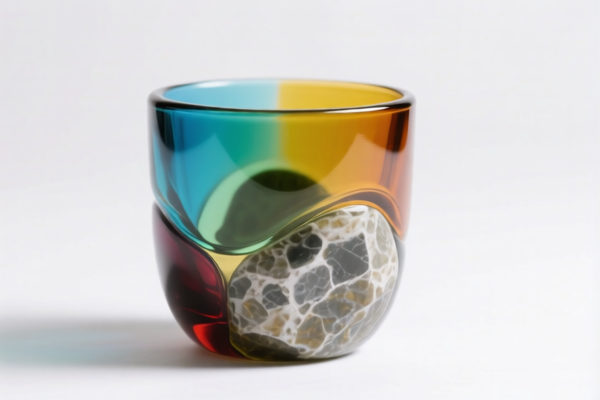
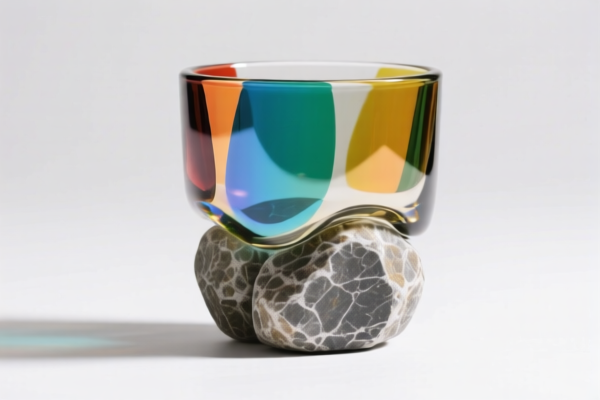
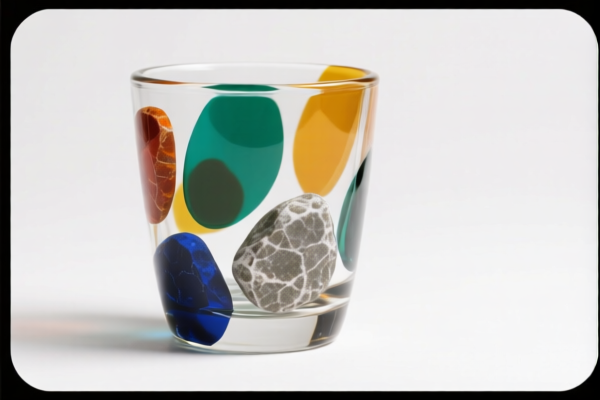
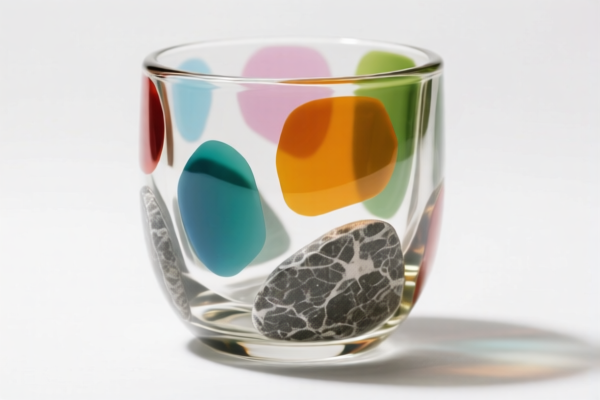
AI Analysis
🐻 Gradient Color Bear Straw Cup (Insulated/Tumbler Style)
🌐 HS Code Reference & Customs Clearance Guide | 2026 Latest Tariff Analysis | Professional Strategy
📌 I. Product Definition & Classification: Do You Really Understand the "Bear Cup"?
The "Gradient Color Bear Straw Cup" is a trendy consumer good, typically characterized by a plastic or ceramic body, animal-shaped design (often a bear), gradient color finishing, and an integrated drinking straw. In international trade, its classification depends strictly on the primary material and functional design.
Key Distinction Logic:
1. Material First: Is it Ceramic/China (6911/6912) or Plastic (3924)?
2. Function Second: Is it specifically for drinking (cup/glass) or general tableware?
3. Design Impact: The "Bear" shape and "Gradient" color do not create a new HS code. They are merely finishing details. The base material dictates the chapter.
⚠️ Critical Note:
- If the cup is made of Ceramic but is not porcelain (e.g., stoneware, earthenware), it falls under 6912.
- If the cup is made of Porcelain/China (white, translucent, high-fired), it falls under 6911.
- If the cup is made of Plastic, it falls under 3924.
- Note: Most "Trendy/Insulated" bear cups are Plastic or Ceramic. Pure porcelain is less common for this specific "kawaii/trendy" style due to fragility, but still possible.
📦 II. HS Code Classification Details (2026 Latest Tariff Alignment)
Based on the provided <DATA>, here are the specific HS Codes applicable to "Gradient Color Bear Straw Cups," categorized by material:
| HS Code | Product Description | Material | Key Application/Feature | Tax Rate (Total) |
|---|---|---|---|---|
6912.00.44.00 |
Non-porcelain drinking vessels, conforming to use as mugs and wine glasses | Non-Porcelain Ceramic | Mugs, drinking vessels | 20.0% |
3924.10.20.00 |
Tableware, kitchenware, other household articles and toilet articles, of plastics; cups | Plastic | Plastic cups with straws | 24.0% |
3924.10.40.00 |
Tableware, kitchenware, other household articles and toilet articles, of plastics; other | Plastic | General plastic drinkware | 13.4% |
6912.00.48.10 |
Non-porcelain tableware and other kitchenware, for food or beverage contact | Non-Porcelain Ceramic | General non-porcelain tableware | 19.8% |
6911.10.80.10 |
Tableware and other kitchen articles, of porcelain or china | Porcelain/China | High-end porcelain cups | 38.3% |
🔍 Classification Guidance:
- Most Common Scenario: If your "Bear Cup" is made of Plastic (common for durable, trendy, gradient-finish items), choose between3924.10.20.00(if explicitly categorized as cups) or3924.10.40.00(if categorized as general household plastic ware).
- Ceramic Scenario: If it is a non-porcelain ceramic (e.g., matte finish, opaque, heavy), use6912.00.44.00(if used as a mug) or6912.00.48.10.
- Porcelain Scenario: Rare for this style, but if it is fine china, use6911.10.80.10.
💰 III. 2026 Latest Tariff Rate Breakdown (Including Surtaxes)
✅ Applicable Country: USA (Importing from China)
✅ Origin: China (CN)
✅ Effective Time: 2025-11-10 onwards (Includes subsequent imports)
🎯 1. Plastic Cups (HS Codes: 3924.10.20.00 / 3924.10.40.00)
Plastic drinkware attracts the highest effective tax burden due to the combination of base duties and Section 301/IEEPA surcharges.
| Item | 3924.10.20.00 (Plastic Cups) |
3924.10.40.00 (Other Plastic Tableware) |
|---|---|---|
| Base Duty | 6.5% | 3.4% |
| Section 301 Surtax | 7.5% | 0.0% |
| 122-Clause Surtax | 10.0% | 10.0% |
| Total Tax Rate | 24.0% | 13.4% |
| Calculation Base | CIF Value × 24.0% | CIF Value × 13.4% |
| De Minimis Exemption | ❌ Not Eligible | ❌ Not Eligible |
| Legal Basis | IEEPA + Section 301 | IEEPA + Base Tariff |
📌 Explanation:
-3924.10.20.00: Higher total tax (24%) because it incurs both Section 301 (7.5%) and 122-Clause (10%) surcharges on top of the base duty.
-3924.10.40.00: Lower total tax (13.4%) as it only pays the base duty (3.4%) and 122-Clause (10%), avoiding the Section 301 surtax.
- Strategy: If your product can be classified as "Other plastic household articles" rather than "Cups," you might save 10.6% in taxes. However, classification must be accurate. Misclassification carries risks.
🎯 2. Non-Porcelain Ceramic Cups (HS Codes: 6912.00.44.00 / 6912.00.48.10)
Non-porcelain ceramics (e.g., stoneware) have moderate tax burdens.
| Item | 6912.00.44.00 (Non-porcelain Mugs/Glasses) |
6912.00.48.10 (Non-porcelain Tableware) |
|---|---|---|
| Base Duty | 10.0% | 9.8% |
| Section 301 Surtax | 0.0% | 0.0% |
| 122-Clause Surtax | 10.0% | 10.0% |
| Total Tax Rate | 20.0% | 19.8% |
| Calculation Base | CIF Value × 20.0% | CIF Value × 19.8% |
| De Minimis Exemption | ❌ Not Eligible | ❌ Not Eligible |
📌 Explanation:
- Both codes incur a 10% 122-Clause surtax.
- No Section 301 surtax applies to these ceramic codes in this dataset.
- Difference is minimal (0.2%). Choose6912.00.44.00if the primary use is clearly as a drinking vessel/mug. Choose6912.00.48.10for general kitchenware/tableware.
🎯 3. Porcelain Cups (HS Code: 6911.10.80.10)
Porcelain (china) faces the highest tax burden in this dataset.
| Item | 6911.10.80.10 (Porcelain Tableware) |
|---|---|
| Base Duty | 20.8% |
| Section 301 Surtax | 7.5% |
| 122-Clause Surtax | 10.0% |
| Total Tax Rate | 38.3% |
| Calculation Base | CIF Value × 38.3% |
| De Minimis Exemption | ❌ Not Eligible |
📌 Warning:
- If your "Bear Cup" is made of fine porcelain, expect a 38.3% total tax. This is significantly higher than plastic or non-porcelain ceramic.
- Ensure your product is not misclassified as non-porcelain to avoid penalty.
🛠️ IV. Customs Clearance Practical Advice (Avoid Pitfalls)
✅ 1. Required Documentation Checklist
| Document | Required? | Notes |
|---|---|---|
| Product Spec Sheet | ✅ Yes | Must specify material (Plastic vs. Ceramic), dimensions, and capacity. |
| Material Certificate | ✅ Yes | Crucial for distinguishing Plastic (3924) vs. Ceramic (6911/6912). |
| Photos (Clear) | ✅ Yes | Show gradient finish, bear shape, straw attachment, and bottom markings. |
| Commercial Invoice | ✅ Yes | Description must match HS code logic (e.g., "Plastic Drinking Cup" vs. "Porcelain Mug"). |
| Packing List | ✅ Yes | Include net/gross weight and carton dimensions. |
✅ 2. Classification Strategy & Tips
🔥 Golden Rule:
"Material Determines Chapter, Function Determines Heading, Design is Irrelevant for HS."
| Scenario | Correct HS Code | Risk if Misclassified |
|---|---|---|
| Plastic Cup with Straw | 3924.10.20.00 or 3924.10.40.00 |
If declared as Ceramic → Rejection + Penalty |
| Ceramic Mug (Non-Porcelain) | 6912.00.44.00 |
If declared as Plastic → Duty underpayment risk |
| Porcelain Cup | 6911.10.80.10 |
High tax risk if misclassified as non-porcelain |
| Cup + Straw (Separate Items) | Declare Together | If separated, straw may have different duty; combine for clarity |
📌 Key Tip:
- For Plastic Cups, try to justify classification under3924.10.40.00(Other) if possible to save 10.6% (13.4% vs 24.0%). However, ensure it doesn't contradict the "Cup" definition.
- For Ceramic,6912.00.44.00(20%) is better than6912.00.48.10(19.8%) only by 0.2%. Focus on accurate material description.
- Avoid Porcelain if cost-sensitive, as6911.10.80.10(38.3%) is nearly double the plastic rate.
✅ 3. Special Considerations for "Gradient Color" & "Bear Shape"
- Gradient Color: Does not affect HS code. Ensure colorfastness certificates are available if required by customs for safety compliance (e.g., FDA for food contact).
- Bear Shape: Does not create a special category. It is still "Tableware" or "Household Article."
- Straw: If the straw is detachable, declare it together with the cup. If the straw is made of a different material (e.g., metal straw with plastic cup), declare as a set under the principal material (Plastic/Ceramic).
🌍 V. Global Market Comparison (2026)
| Country | Recommended HS Code | Total Tax (China Origin) | Key Certification |
|---|---|---|---|
| 🇺🇸 USA | 3924.10.20.00 (Plastic) |
24.0% | FDA, Prop 65 |
| 🇺🇸 USA | 6912.00.44.00 (Ceramic) |
20.0% | FDA |
| 🇨🇳 China | 3924.10.20.00 |
~5-6% (Import Duty) | GB Standards |
| 🇪🇺 EU | 3924.10.20.00 |
0% (if CE) | CE, LFGB |
| 🇯🇵 Japan | 3924.10.20.00 |
0-5% | JIS, Food Sanitation Law |
📌 Conclusion:
- The USA imposes the highest tariffs due to Section 301 and 122-Clause surcharges.
- Plastic cups face a 24% total tax, while Non-porcelain ceramic faces 20%.
- Porcelain is extremely tax-inefficient for the US market (38.3%).
📌 VI. Common Mistakes & Pitfalls (Lessons Learned)
❌ Mistake 1: Classifying a Plastic Cup as "Ceramic" to avoid Section 301.
👉 Consequence: Customs inspection reveals material mismatch → Seizure + Fine.
❌ Mistake 2: Not declaring the 122-Clause Surtax (10%).
👉 Consequence: Underpayment of duty → Back Taxes + Interest.
❌ Mistake 3: Ignoring the "Straw" as a separate item.
👉 Consequence: If declared separately, straw might be classified differently, leading to complex billing and potential errors.
❌ Mistake 4: Assuming "Gradient Color" requires a special HS code.
👉 Consequence: Unnecessary complexity. Stick to material-based codes.
✅ Correct Approach:
"Gradient Color Plastic Bear Cup with Straw, Food-Grade Material, 500ml Capacity, For Drinking Use."
🎯 VII. Conclusion: Smart Classification, Cost Control
🎯 Key Takeaways:
🔹 Material is King: Plastic (
3924) vs. Ceramic (6911/6912) determines your HS code.
🔹 Tax Savings: Plastic3924.10.40.00(13.4%) is cheaper than3924.10.20.00(24.0%) if classification allows.
🔹 Avoid Porcelain:6911.10.80.10(38.3%) is too expensive for trend-driven items.
🔹 Always Include Surtaxes: 122-Clause (10%) applies to all categories in this dataset.
📌 Pro Tip:
If your supplier can switch from Porcelain to Non-Porcelain Ceramic or Plastic, you can save 10-20% in total tax burden. Conduct a Pre-Ruling with US Customs (CBP) if the material is ambiguous.
📣 Immediate Action:
📞 Verify Material Composition
📄 Prepare FDA/Food Contact Compliance Docs
🚀 Declare Accurately to Avoid Delays
✨ Professional Customs Clearance Starts with Accurate Classification!
💼 Save Every Percent, Deliver Every Box!
Customer Reviews
About HS Code Classification
The Harmonized System (HS) is an internationally standardized nomenclature developed by the World Customs Organization (WCO) to classify traded products. Over 200 countries use the HS system as the basis for customs tariffs, trade statistics, and import/export regulations.
Each HS code follows a hierarchical structure:
- Chapter (2 digits) — Broad category of goods (e.g., Chapter 84: Machinery and Mechanical Appliances)
- Heading (4 digits) — More specific grouping within the chapter
- Subheading (6 digits) — Internationally standardized breakdown, used by all WCO member countries
- National subdivisions (8-10 digits) — Country-specific extensions for further classification, such as US HTSUS 10-digit codes
Correct HS code classification is essential for smooth customs clearance, accurate duty payment, and compliance with trade regulations. Misclassification can lead to customs delays, overpayment of duties, or penalties.
When importing from CN to US, the applicable tariff rates may include:
- Most-Favored-Nation (MFN) rate — The standard duty rate applied to WTO members
- General rate — Applied to countries without trade agreements
- Trade remedy duties — Additional tariffs such as Section 301 (anti-dumping), Section 232 (national security), or countervailing duties
The information provided on this page is for reference purposes only. For official classification, please consult with your local customs authority or a licensed customs broker.