Graphene based heat dissipation material
CN → US| HS编码 | 关税税率 | 原产国 | 目的国 | 文档 |
|---|---|---|---|---|
| 3801105010 | 35.0% | CN | US | 官方文档 |
| 3801105090 | 35.0% | CN | US | 官方文档 |
| 6815190000 | 35.0% | CN | US | 官方文档 |
| 3926909989 | 22.8% | CN | US | 官方文档 |
| 6815130000 | 35.0% | CN | US | 官方文档 |
商品图片
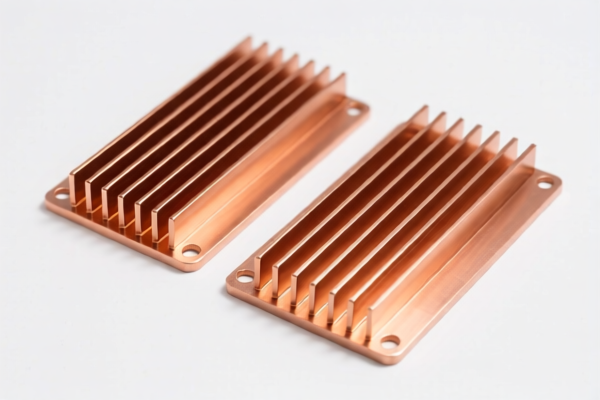
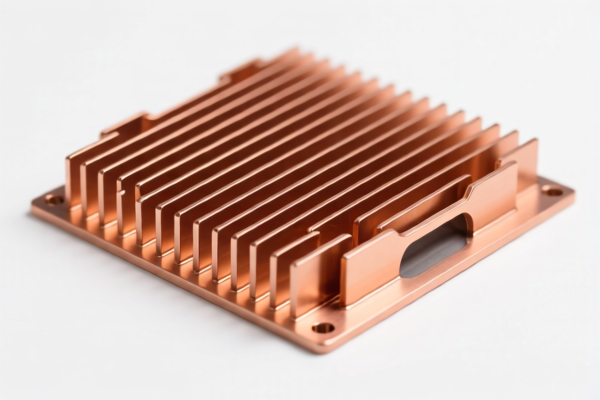
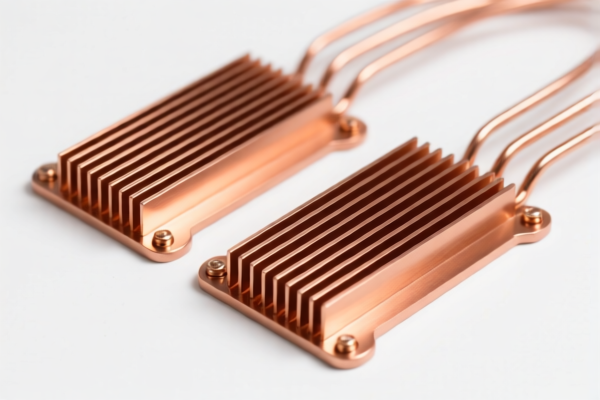
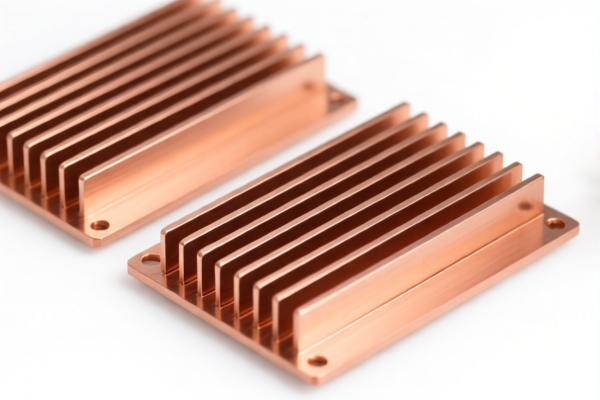
AI分析
🌡️ Graphene-Based Heat Dissipation Materials (Graphite Heat Sinks)
🌐 HS Code Reference & Customs Clearance Guide | 2026 Latest Tariff Analysis | Strategic Compliance Strategy
📌 I. Product Definition & Classification: What Exactly is a "Graphene Heat Sink"?
Graphene-based heat dissipation materials, commonly referred to as Graphite Heat Sinks or Graphite Thermal Spreading Plates, are high-performance thermal management solutions used in consumer electronics, electric vehicles (EVs), and industrial machinery. They function by rapidly transferring heat away from hotspots (like CPUs, GPUs, or batteries) across a larger surface area.
In international trade, the classification of these materials is highly dependent on their specific physical form, manufacturing process, and exact material composition. They are not universally classified under a single code.
⚠️ Critical Distinction Points:
- If the material is natural or synthetic graphite in sheet/plate form used for thermal conductivity → Often falls under Carbon/Graphite Articles (Chapter 68 or 38).
- If the material is impregnated with resin or polymers to form a composite → It may fall under Plastics/Resins (Chapter 39).
- Misclassification Risk: Classifying a graphite sheet as a simple "part of a machine" or "plastic sheet" can lead to severe underpayment of duties, as the "China-specific" tariffs are high for carbon products but vary significantly based on the exact subheading.
📦 II. HS Code Classification Matrix (Based on Provided Data)
The following HS Codes are derived from the provided dataset. Each code represents a different technical interpretation of the product.
| HS Code | Product Description & Logic | Total Tax Rate (US/China Origin) | Tax Breakdown |
|---|---|---|---|
| 3801.10.50.10 | Graphite Heat Sink: Classified based on shape and specific application (matching graphite form and heat sink use). This is a specific "other" subheading for artificial graphite. | 35.0% | Base: 0.0% + Section 301: 25.0% + Section 122: 10.0% |
| 3801.10.50.90 | Graphite Heat Sink: Classified under artificial graphite materials and parts. This is the general "other" category for artificial graphite articles. | 35.0% | Base: 0.0% + Section 301: 25.0% + Section 122: 10.0% |
| 6815.19.00.00 | Graphite Heat Sink: Classified as carbon or mineral material articles. This captures non-graphite-specific carbon products (e.g., amorphous carbon or specific mineral composites). | 35.0% | Base: 0.0% + Section 301: 25.0% + Section 122: 10.0% |
| 3926.90.99.89 | Graphite Heat Sink: Classified as other articles of plastics/non-metallic materials. This applies if the graphite is heavily resin-bound or treated as a plastic composite article. | 22.8% | Base: 5.3% + Section 301: 7.5% + Section 122: 10.0% |
| 6815.13.00.00 | Graphite Heat Sink: Classified under carbon/graphite articles in sheet/plate form. This is the most common classification for flat graphite thermal spreaders. | 35.0% | Base: 0.0% + Section 301: 25.0% + Section 122: 10.0% |
🔍 Key Insight:
- Four out of five provided codes carry a 35% total tax rate.
- Only 3926.90.99.89 (Plastics/Composite) offers a lower rate of 22.8%.
- The difference between 0% base (for carbon/graphite) and 5.3% base (for plastics) is significant, but the "China-specific" add-ons (Section 301 + 122) dominate the cost.
💰 III. Detailed Tariff Analysis (2026 Regulations)
✅ Applicable Country: United States (US)
✅ Origin: China (CN)
✅ Effective Date: 2025/2026 (Current Trade Regime)
🎯 1. The "High-Tax" Cluster: 3801.10.50.10 / .90 & 6815.19.00 / 6815.13.00
These codes classify the product as Carbon/Graphite.
| Item | Detail |
|---|---|
| Base Duty | 0.0% (Most carbon/graphite articles are duty-free at base) |
| Section 301 Duty | +25.0% (List 4A/4C tariffs on specific carbon/graphite products from China) |
| Section 122 Duty | +10.0% (Additional surcharge on certain Chinese imports, often linked to IEEPA or specific enforcement actions) |
| Total Effective Rate | 35.0% |
| De Minimis Exemption | ❌ NOT APPLICABLE. Section 301 and 122 tariffs cannot be avoided via the $800 de minimis rule (Section 321). |
| Legal Path | USITC:3801.10.50.xx → Section 301: Footnote 9903.88.01 → Section 122: IEEPA Authority |
📌 Explanation:
- The 25% is the standard Section 301 tariff on many Chinese industrial goods.
- The 10% is an additional "Section 122" tariff, often applied to specific strategic materials.
- Total: 35%. This is a heavy burden. If your supplier declares this as "Graphite," expect this rate.
🎯 2. The "Lower-Tax" Option: 3926.90.99.89
This code classifies the product as an Article of Plastics/Resins.
| Item | Detail |
|---|---|
| Base Duty | 5.3% |
| Section 301 Duty | +7.5% (Lower Section 301 rate for certain plastic composite articles compared to pure carbon) |
| Section 122 Duty | +10.0% |
| Total Effective Rate | 22.8% |
| De Minimis Exemption | ❌ NOT APPLICABLE. Section 301 still applies. |
| Legal Path | USITC:3926.90.99.89 → Section 301: Specific Plastic Footnotes → Section 122 |
📌 Explanation:
- This rate is 12.2% lower than the graphite-specific codes.
- However, this classification is risky. Customs may argue that if the product is >50% graphite by weight or function, it belongs in Chapter 68/38, not Chapter 39. Misclassification here can lead to back duties + penalties.
🛠️ IV. Customs Clearance Practical Advice (Avoid Pitfalls)
✅ 1. Documentation Checklist (Mandatory)
| Document | Requirement | Purpose |
|---|---|---|
| Product Specification Sheet | ✔️ Must detail: Material Composition (e.g., 95% Graphite, 5% Resin), Thermal Conductivity (W/mK), Dimensions. | Proves whether it's "Pure Graphite" (Ch 68/38) or "Resin Composite" (Ch 39). |
| Technical Drawing | ✔️ Show cross-section. | Confirms if it's a solid block, layered sheet, or molded plastic composite. |
| Commercial Invoice | ✔️ Accurate description: "Graphite Thermal Spreader" or "Polymer-Impregnated Graphite Sheet". | Avoid vague terms like "Heat Dissipation Material" which trigger manual review. |
| Origin Certificate | ✔️ If not China, get it. | If origin is Vietnam/Malaysia, you may avoid Section 301/122 tariffs entirely. |
| Bill of Lading | ✔️ Match invoice weight and value. | Consistency is key to avoiding hold-ups. |
✅ 2. Classification Strategy & Risk Assessment
| Strategy | Recommended HS Code | Tax Rate | Risk Level | Recommendation |
|---|---|---|---|---|
| Pure Artificial Graphite | 3801.10.50.10 or .90 |
35% | Low (Accurate) | Use if product is >90% pure carbon/graphite. |
| Graphite Sheets/Plates | 6815.13.00.00 |
35% | Low (Accurate) | Best for flat, rigid graphite sheets. |
| Resin-Bound Composite | 3926.90.99.89 |
22.8% | HIGH | Only use if resin is a major functional component. Be prepared for CBP challenge. |
| Non-Graphite Carbon | 6815.19.00.00 |
35% | Medium | Use for amorphous carbon or mineral-based heat sinks. |
🔥 Critical Tip:
If you declare 3926.90.99.89 to save 12.2%, CBP may audit and reclassify as 3801/6815, charging 35% + penalties.
Recommendation: If the product is standard graphite heat sink (e.g., for iPhone/Xiaomi), 3801.10.50.90 or 6815.13.00.00 is the safest, most defensible classification.
✅ 3. Special Cases & Mitigation
| Scenario | Advice |
|---|---|
| OEM for Tech Giants | Provide reference to industry standards (e.g., "Standard Graphite Thermal Sheet per IEEE 1680"). Proves function, not origin-based evasion. |
| Mixed Shipment | If you have plastic parts AND graphite heat sinks, do not mix in one HS Code. Split lines in the entry. |
| Section 301 Exclusion | Check if your specific HTS has an exclusion code (e.g., 3801.10.50.10 might have a temporary exclusion). Currently, most graphite heat sinks are not excluded. |
| Transshipment | ❌ Do NOT transship through Vietnam to hide Chinese origin. CBP uses chemical fingerprinting to detect Chinese carbon origin. Penalties are severe. |
🌍 V. Global Market Comparison (2026)
| Market | Typical HS Code | Base Duty | US Section 301/122? | Total Est. Rate (China Origin) |
|---|---|---|---|---|
| 🇺🇸 USA | 3801.10.50 / 6815.13 |
0% - 5.3% | Yes (+25% +10%) | 35% or 22.8% |
| 🇨🇳 China (Import) | 3801.10.50 |
10% | No | 10% |
| 🇪🇺 EU | 3801.10.90 / 6815.19 |
0% - 3% | No (No equivalent 301) | ~0-3% |
| 🇬🇧 UK | 3801.10.00 |
0% - 5% | No | ~0-5% |
| 🇯🇵 Japan | 3801.10.00 |
0% - 3% | No | ~0-3% |
📌 Conclusion:
- The US is the most expensive market for Chinese graphite heat sinks due to Section 301 + Section 122.
- EU, UK, and Japan have no political tariffs on these goods, making them more cost-competitive if shipping globally.
- If targeting the US, ensure your supply chain is compliant. If the product is made in Vietnam or Mexico, you can claim Free Trade Agreement (USMCA) or zero Section 301 tariffs, reducing cost to 0-5%.
📌 VI. Common Mistakes & Pitfalls (Lessons Learned)
❌ Mistake 1: Declaring "Graphite Heat Sink" as "Plastic Sheet" (3926) to save money.
👉 Consequence: CBP reclassifies as Carbon (3801/6815) → Back 12.2% + Penalty + Interest.
❌ Mistake 2: Not declaring Section 122 in the entry summary.
👉 Consequence: Underpayment of duties → Audit & Civil Penalty.
❌ Mistake 3: Using vague descriptions like "Heat Dissipator" or "Cooling Material."
👉 Consequence: CBP issues a Request for Information (RFI) → 30-60 day delay → Demurrage charges.
✅ Correct Declaration Example:
"Artificial Graphite Thermal Spreader Sheet, Pure Carbon, Size 100x100x0.1mm, Used in Mobile Electronics for Heat Dissipation, HS 3801.10.50.90"
🎯 VII. Conclusion: Strategic Compliance for Profitability
🎯 Key Takeaway:
🔹 Graphite Heat Sinks from China face a 35% tariff in the US.
🔹 Only Resin-Composites may qualify for 22.8%, but risk reclassification.
🔹 Consider Non-China Origin (Vietnam/Mexico) to avoid Section 301/122 entirely.
📌 Pro Tip:
Apply for a CBP Binding Ruling before your first shipment. This provides legal certainty on whether your specific product is 3801 (35%) or 3926 (22.8%). The cost of a ruling ($500-$1000) is negligible compared to the risk of 35% duty vs. 22.8% duty with potential penalties.
📣 Immediate Action:
📞 Consult a Customs Broker to analyze your Material Safety Data Sheet (MSDS) and Composition Report.
🚀 Optimize Your Supply Chain: If volume is high, evaluate assembly in Vietnam to achieve 0% Section 301/122 tariffs.
✨ Accurate Classification is Cost Savings.
✨ Clear Customs, Clear Profits.
💼 Don't let tariffs melt your margins.
用户评价
关于 HS 编码归类
协调制度(HS)是由世界海关组织(WCO)制定的国际贸易商品分类标准。全球 200 多个国家采用 HS 系统作为海关关税、贸易统计和进出口监管的基础。
每个 HS 编码遵循以下层级结构:
- 章(2 位)——商品大类(例如:第 84 章:机器和机械设备)
- 品目(4 位)——章内的更具体分类
- 子目(6 位)——国际通用细分,所有 WCO 成员国统一使用
- 本国细分(8-10 位)——各国自行扩展的细分编码,如美国 HTSUS 10 位编码
正确的 HS 编码归类对于顺利通关、准确缴纳关税和遵守贸易法规至关重要。错误归类可能导致海关延误、多缴关税或罚款。
从CN进口到US时,适用的关税税率可能包括:
- 最惠国(MFN)税率——适用于 WTO 成员国的标准关税税率
- 普通税率——适用于无贸易协定国家
- 贸易救济关税——附加关税,如 301 条款(反倾销)、232 条款(国家安全)或反补贴税
本页内容仅供参考。如需正式归类,请咨询当地海关或持牌报关代理。