Graphene based heat dissipation material
CN → US| HS Code | Tariff Rate | Origin | Destination | Doc |
|---|---|---|---|---|
| 3801105010 | 35.0% | CN | US | Official Doc |
| 3801105090 | 35.0% | CN | US | Official Doc |
| 6815190000 | 35.0% | CN | US | Official Doc |
| 3926909989 | 22.8% | CN | US | Official Doc |
| 6815130000 | 35.0% | CN | US | Official Doc |
Product Images
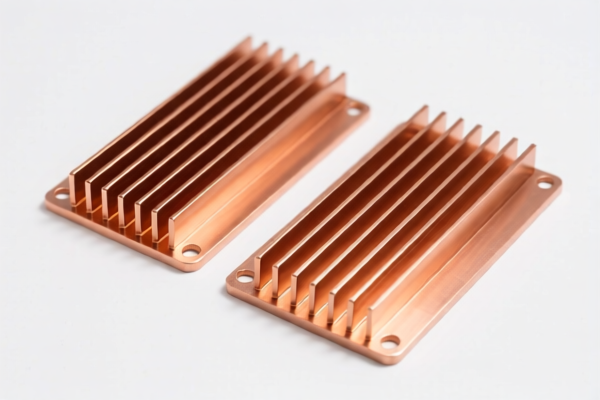
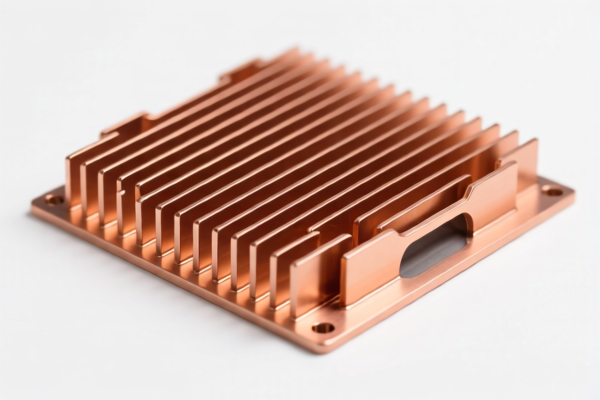

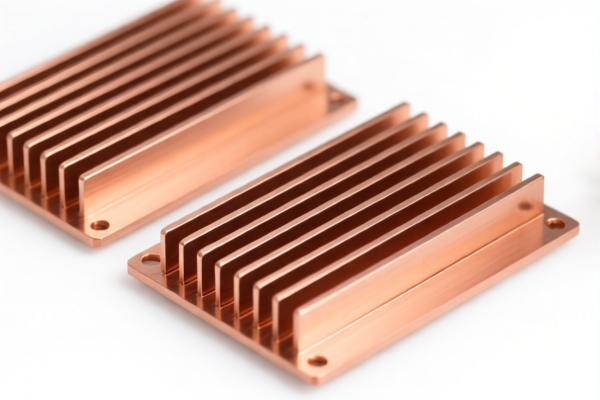
AI Analysis
🔥 Graphene Based Heat Dissipation Materials: The Ultimate Guide to HS Classification & US Customs Clearance
🌐 HS Code Reference & Customs Clearance Guide | 2026 Updated Tariff Analysis | Professional Entry Strategies
📌 I. Product Definition & Classification: What Exactly Is "Graphene Heat Dissipation"?
In the high-tech electronics, electric vehicle (EV), and telecommunications sectors, graphene-based heat dissipation materials are critical components for thermal management. However, in international trade, these materials are often misclassified because they can be viewed through multiple lenses: as carbon goods, graphite products, plastic/rubber articles, or other miscellaneous articles.
The classification depends heavily on: 1. Material Composition: Is it pure graphite, synthetic graphite, or a composite with other non-metallic materials? 2. Form & Structure: Is it a sheet, film, powder, or integrated into a heat sink structure? 3. Intended Use: Is it a standalone component or part of a larger assembly?
⚠️ Key Distinction Point: - If it is primarily carbon/mineral-based (like natural graphite or carbon composites) → It likely falls under Chapter 68. - If it is a synthetic graphite product often classified under Chapter 38 (Miscellaneous chemical products) due to its specific engineered nature. - If it is embedded in or composed of polymers/plastics → It might fall under Chapter 39.
📦 II. HS Code Classification Details (2026 Authoritative Tax Rules)
Based on the provided data, here are the five potential HS codes for Graphene Heat Dissipation Materials imported into the USA from China.
| HS Code | Product Description & Justification | Applicable Scenario | Total Tax Rate |
|---|---|---|---|
3801.10.50.10 |
Graphene Heat Dissipation Sheets: Classified under graphite forms and specific heat dissipation applications. | Engineered graphite sheets for high-performance thermal applications. | 35.0% |
3801.10.50.90 |
Graphene Heat Dissipation Sheets: Classified under synthetic graphite materials and parts category. | Generic synthetic graphite heat spreaders or sheets not specified elsewhere. | 35.0% |
6815.19.00.00 |
Graphene Heat Dissipation: Classified as carbon goods or mineral material products. | Carbon/mineral-based heat dissipation components. | 35.0% |
3926.90.99.89 |
Graphene Heat Dissipation: Classified as other articles of non-metallic materials (specifically plastics/polymers). | Graphene-infused plastic heat sinks or composite polymer heat spreaders. | 22.8% |
6815.13.00.00 |
Graphene Heat Dissipation: Classified under carbon goods/graphite goods in sheet form. | Sheet-shaped graphite or carbon-based heat dissipation plates. | 35.0% |
🔍 Critical Insight: - Four out of five codes result in a 35% total tariff. This high rate is due to the combination of US-China trade tensions (Section 301, Section 232/IEEPA). - Only
3926.90.99.89offers a significantly lower rate (22.8%), but this requires the product to be classified as a plastic/polymer article, not pure carbon/graphite.
💰 III. Detailed Tariff Rate Breakdown (Including Additional Taxes & Policies)
✅ Applicable Country: United States (US)
✅ Origin: China (CN)
✅ Effective Time: Current regulations (Subject to change)
🎯 1. Codes with 35% Total Tax: 3801.10.50.10, 3801.10.50.90, 6815.19.00.00, 6815.13.00.00
| Item | Details |
|---|---|
| Base Tariff | 0.0% (Ad Valorem) |
| Section 301 Additional Tariff | +25.0% |
| Section 232 / IEEPA Additional Tariff | +10.0% |
| Total Effective Tax Rate | 35.0% |
| Tax Calculation | CIF Value × 35% |
| De Minimis Eligibility | ❌ Not Eligible (Deny De Minimis for these categories under current trade policies) |
| Legal Basis Path | USITC:3801.10.50.10 → FOOTNOTE:301 (+25%) → IEEPA/232 (+10%) |
📌 Explanation: - Base Tariff (0%): Most carbon/graphite articles have a low or zero base rate under normal MFN treatment. - Section 301 (+25%): Imposed on Chinese goods to address trade practices. - Section 232/IEEPA (+10%): Additional surcharge on specific Chinese products for national security or economic reasons. - Total (35%): This is a heavy burden. Importers must calculate costs carefully.
🎯 2. Code with 22.8% Total Tax: 3926.90.99.89
| Item | Details |
|---|---|
| Base Tariff | 5.3% |
| Section 301 Additional Tariff | +7.5% |
| Section 232 / IEEPA Additional Tariff | +10.0% |
| Total Effective Tax Rate | 22.8% |
| Tax Calculation | CIF Value × 22.8% |
| De Minimis Eligibility | ❌ Not Eligible |
| Legal Basis Path | USITC:3926.90.99.89 → FOOTNOTE:301 (+7.5% or higher depending on list) → IEEPA (+10%) |
📌 Explanation: - This code falls under Chapter 39 (Plastics and Articles Thereof). - The base tariff is higher (5.3% vs 0%), but the Section 301 rate is lower (only +7.5% instead of +25%). - Savings: 12.2% less than the graphite/carbon codes. - Condition: The product must be structurally and chemically classified as a plastic composite or polymer article, not pure graphite.
🛠️ IV. Practical Customs Clearance Advice (Avoiding Pitfalls)
✅ 1. Document Preparation Checklist (Non-Negotiable)
| Document | Required? | Description |
|---|---|---|
| ✅ Product Specification Sheet | ✔️ | Must detail composition (e.g., "90% Graphite, 10% Polymer") |
| ✅ Composition Analysis Report | ✔️ | Lab report proving material makeup (critical for Ch. 38/68 vs Ch. 39) |
| ✅ Product Photos (Clear Label) | ✔️ | Show form factor (sheet, film, powder) and any branding |
| ✅ Commercial Invoice | ✔️ | Clearly state: "Graphene Heat Dissipation Material" + HS Code |
| ✅ Packing List | ✔️ | Weight, dimensions, and packaging details |
| ✅ Origin Certificate | ✔️ | Proof of Chinese origin (triggers tariffs) |
| ✅ FCC/RoHS Certificates | ✔️ | If intended for electronic devices, these may be requested |
✅ 2. Classification Strategy (Key Decision Matrix)
| Product Characteristic | Recommended HS Code | Why? |
|---|---|---|
| Pure Graphite/Carbon Sheet | 6815.13.00.00 or 6815.19.00.00 |
Classified as mineral/carbon goods. High tax (35%). |
| Engineered Synthetic Graphite | 3801.10.50.10 or 3801.10.50.90 |
Classified as miscellaneous chemical/graphite products. High tax (35%). |
| Graphene-Infused Plastic Composite | 3926.90.99.89 |
STRATEGIC CHOICE. If >50% polymer by weight/value, this lowers tariff to 22.8%. |
| Powder/Flake Form | Check 6815 or 3801 |
Powders often fall under carbon goods. Confirm with broker. |
🔥 Pro Tip:
If your product is a composite (e.g., graphene-coated plastic sheet), argue for3926.90.99.89. Provide evidence that the plastic substrate provides the primary structural integrity.
✅ 3. Common Errors & Consequences
| Error | Consequence |
|---|---|
| Misclassifying as "Electronics Part" | Might be assigned wrong HS, leading to penalties + back taxes |
| Claiming "De Minimis" (Under $800) | ❌ False. Graphene/graphite goods from China are excluded from de minimis exemption. Full duties apply. |
| Ignoring Section 301/232 | Customs may assess retroactive penalties if tariff evasion is suspected |
| Vague Description ("Heat Sink") | CBP may reclassify under worst-case scenario (highest duty) |
🌍 V. Global Market Comparison (2026 Update)
| Market | Recommended HS Code | Approx. Total Duty | Key Notes |
|---|---|---|---|
| 🇺🇸 USA | 3926.90.99.89 (Best Case) |
22.8% | Avoid 6815/3801 if possible (35%) |
| 🇺🇸 USA | 6815.13.00.00 (Worst Case) |
35.0% | Pure graphite/carbon classification |
| 🇨🇳 China | 3801.10.50.10 |
0% - 5% | Import duty low; VAT 13% applies |
| 🇪🇺 EU | 6815.13.00 |
6.5% | No Section 301 equivalent; lower tariffs |
| 🇯🇵 Japan | 6815.13.00 |
0% - 3% | Often duty-free for carbon goods |
📌 Conclusion:
- The USA is the most expensive market for Chinese graphene heat dissipation materials due to Section 301 + IEEPA. - EU and Japan are more favorable with lower or zero base tariffs. - For US imports, strategic classification (arguing for plastic composite) can save 12.2% in duties.
📌 VI. Final Recommendations & Action Plan
🎯 Step 1: Material Audit
- Analyze your product’s composition. Is it primarily carbon/graphite or polymer/plastic?
- If it’s a composite, gather lab reports proving the polymer matrix role.
🎯 Step 2: Pre-Ruling Application
- Submit an ACE Pre-Ruling Request to CBP for
3926.90.99.89if applicable. - Benefit: Legally binding confirmation of lower tariff rate.
🎯 Step 3: Documentation Precision
- In commercial invoices, use:
"Graphene-Enhanced Polymer Heat Dissipation Sheet, Model XYZ, Composition: 60% Polyimide, 40% Graphene, HS Code 3926.90.99.89"
🎯 Step 4: Cost Optimization
- If classification as
3926.90.99.89is not feasible, consider supply chain diversification (e.g., sourcing from Vietnam/Malaysia) to avoid US-China specific tariffs.
📣 Call to Action:
📞 Contact a Licensed Customs Broker to review your product’s material safety data sheet (MSDS) and composition analysis.
🚀 Don’t guess your HS Code — a 12.2% difference is $12,200 savings on every $100,000 shipment.
🛡️ Protect your margins with precise classification and proactive customs strategy.
✨ Smart Classification = Lower Costs = Higher Profit
💼 Your Supply Chain Deserves Precision!
Customer Reviews
About HS Code Classification
The Harmonized System (HS) is an internationally standardized nomenclature developed by the World Customs Organization (WCO) to classify traded products. Over 200 countries use the HS system as the basis for customs tariffs, trade statistics, and import/export regulations.
Each HS code follows a hierarchical structure:
- Chapter (2 digits) — Broad category of goods (e.g., Chapter 84: Machinery and Mechanical Appliances)
- Heading (4 digits) — More specific grouping within the chapter
- Subheading (6 digits) — Internationally standardized breakdown, used by all WCO member countries
- National subdivisions (8-10 digits) — Country-specific extensions for further classification, such as US HTSUS 10-digit codes
Correct HS code classification is essential for smooth customs clearance, accurate duty payment, and compliance with trade regulations. Misclassification can lead to customs delays, overpayment of duties, or penalties.
When importing from CN to US, the applicable tariff rates may include:
- Most-Favored-Nation (MFN) rate — The standard duty rate applied to WTO members
- General rate — Applied to countries without trade agreements
- Trade remedy duties — Additional tariffs such as Section 301 (anti-dumping), Section 232 (national security), or countervailing duties
The information provided on this page is for reference purposes only. For official classification, please consult with your local customs authority or a licensed customs broker.