Graphite Anti friction Material
CN → US| HS编码 | 关税税率 | 原产国 | 目的国 | 文档 |
|---|---|---|---|---|
| 6815190000 | 35.0% | CN | US | 官方文档 |
| 6909195010 | 39.0% | CN | US | 官方文档 |
| 3801105090 | 35.0% | CN | US | 官方文档 |
| 3801105010 | 35.0% | CN | US | 官方文档 |
| 6815110000 | 35.0% | CN | US | 官方文档 |
商品图片
AI分析
🕯️ Graphite Anti-Friction Material (Self-Lubricating Graphite Composites)
🌐 HS Code Reference & Customs Clearance Guide | 2026 Latest Tariff Analysis | Professional-Level Customs Strategy
📌 1. Product Definition & Classification: Do You Really Understand "Graphite Anti-Friction Material"?
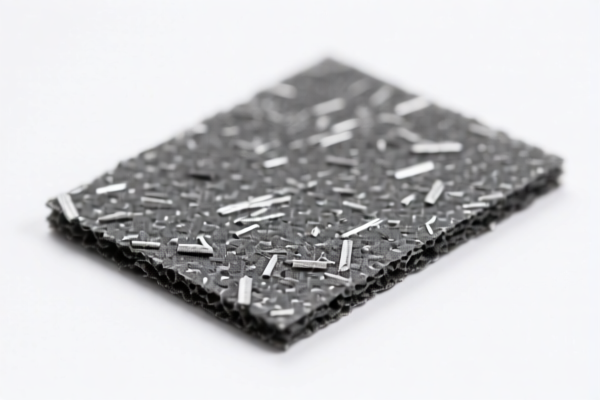
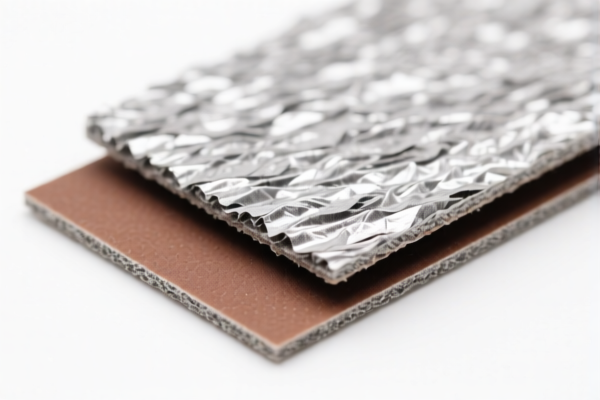
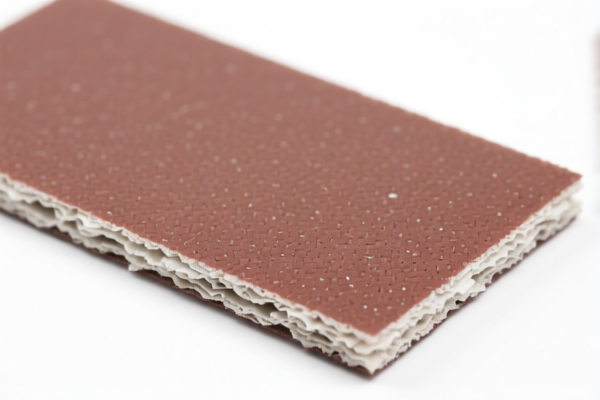
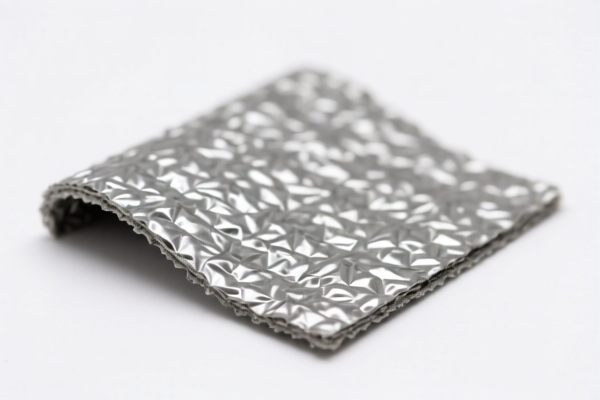
Graphite anti-friction materials are critical components in industrial machinery, pumps, valves, and electrical equipment. They are primarily categorized into two types based on their physical form and manufacturing process:
Graphite Impregnated Bakelite/Resin (Composite Blocks): Graphite powder mixed with phenolic resin and cured. These are often used for self-lubricating bearings, bushings, and seals. Pure Graphite / Carbon Graphite Blocks: High-purity graphite blocks, often pyrolytic or synthetic, used for high-temperature lubrication or electrical contacts.
⚠️ Key Distinction:
- If the material is "Graphite-based" but clearly defined as a "manufactured article" or "mechanical part" (like a seal or bearing), it typically falls under Chapter 68 (Articles of Stone or Similar Inorganic Materials).
- If the material is "Graphite-based" but defined as a "basic material" or "powder/paste" not yet formed into a specific mechanical part, it often falls under Chapter 38 (Miscellaneous Chemical Products) or Chapter 69 (Ceramic Products, if fused with other materials).
- Crucial Note: The summary provided in emphasizes "Graphite-based material" (石墨基材料) and "Non-electrical use carbon products". This distinction is vital for tariff determination.
📦 2. HS Code Classification Details (2026 Latest Tariff Authority Comparison)
| HS Code | Product Description | Application Scenario | Tariff Rate (Total) |
|---|---|---|---|
6815.19.00.00 |
Graphite-based corrosion-resistant materials, meeting graphite/carbon product material requirements, classified as non-electrical carbon products. | Industrial seals, gaskets, non-electrical graphite parts | 35.0% |
6909.19.50.10 |
Graphite-based materials, material attribute consistent with ceramics, classified as other categories. | Ceramic-graphite composites, high-temperature furnace parts | 39.0% |
3801.10.50.90 |
Graphite-based material, meeting artificial graphite core requirements, unindicated form classified as other categories. | Artificial graphite powder, paste, or unspecified forms | 35.0% |
3801.10.50.10 |
Graphite-based material corresponding to artificial graphite, other categories when form is not explicit. | Artificial graphite raw materials, unformed | 35.0% |
6815.11.00.00 |
Graphite-based explicitly identified as graphite products, meeting requirements for other non-electrical graphite or carbon products. | Standard graphite blocks, electrodes (non-electrical use), generic graphite parts | 35.0% |
🔍 Key Reminder:
-6815.11.00.00&6815.19.00.00: Best for finished mechanical parts (seals, bearings) that are clearly "graphite products" but not for electrical use.
-3801.10.50.xx: Best for raw materials, powders, or unformed graphite that meets "artificial graphite" criteria but lacks a specific mechanical form.
-6909.19.50.10: Use only if the material is chemically or physically treated to be ceramic-like (e.g., fused graphite-ceramic composites).
💰 3. 2026 Latest Tariff Rate Breakdown (Including Surcharges & Policy Add-ons)
✅ Applicable Country: United States (US)
✅ Country of Origin: China (CN)
✅ Effective Date: From November 10, 2025 (including subsequent imports)
🎯 1. 6815.11.00.00 & 6815.19.00.00 & 3801.10.50.xx —— Graphite-Based Materials & Products
| Item | Details |
|---|---|
| Base Tariff | 0.0% (ad valorem) |
| Section 301 Surcharge | +25.0% (Under USITC Footnote 9903.88.01) |
| Section 122 Surcharge | +10.0% (Against Chinese/HK products, effective from 2025-11-10) |
| Total Tariff Rate | 35.0% |
| Tax Calculation | CIF Value × 35% |
| De Minimis Exemption | ❌ Not Eligible (deny_de_minimis) |
| Legal Basis Path | IEEPA:9903.01.25 → IEEPA:9903.01.24 → USITC:6815.11.00.00 / 3801.10.50.xx → FOOTNOTE:9903.88.01 |
📌 Explanation:
- "Section 301 Surcharge 25%": Additional tariff under the "Section 301 Tariffs" from the US Trade Act;
- "Section 122 Surcharge 10%": Additional tariff under the "International Emergency Economic Powers Act" (IEEPA) for Chinese/HK products;
- Total 35%: Belongs to high tariff category, must be planned in advance!
🎯 2. 6909.19.50.10 —— Ceramic-Like Graphite Materials
| Item | Details |
|---|---|
| Base Tariff | 4.0% |
| Section 301 Surcharge | +25.0% |
| Section 122 Surcharge | +10.0% |
| Total Tariff Rate | 39.0% |
| Tax Calculation | CIF Value × 39% |
| De Minimis Exemption | ❌ Not Eligible (deny_de_minimis) |
| Legal Basis Path | IEEPA:9903.01.25 → IEEPA:9903.01.24 → USITC:6909.19.50.10 → FOOTNOTE:9903.88.01 |
📌 Note:
- This category has a higher base tariff (4%) compared to other graphite codes (0%).
- Use only if the material is explicitly ceramic-composite. Misclassification here can lead to higher costs.
🛠️ 4. Customs Clearance Practical Advice (Battle-Tested Pitfall Avoidance Guide)
✅ 1. Required Documentation Checklist (None of the following is optional)
| Document | Required | Description |
|---|---|---|
| ✅ Product Specification Sheet | ✔️ | Include composition (graphite %, resin/ceramic %), density, hardness, lubrication properties |
| ✅ Technical Data Sheet (TDS) | ✔️ | Detail chemical resistance, temperature limits, and self-lubricating mechanism |
| ✅ Product Photos (Including Labels) | ✔️ | Clear view of part shape, markings, and any certification labels |
| ✅ Third-Party Test Report | ✔️ | ASTM, ISO, or relevant standards for friction coefficient, wear rate, and chemical stability |
| ✅ Commercial Invoice | ✔️ | Must explicitly state "Graphite-Based Self-Lubricating Material/Part" and HS Code |
| ✅ Certificate of Origin (CO) | ✔️ | If non-Chinese origin, to claim preferential rates (though unlikely for graphite) |
| ✅ Packing List | ✔️ | Detail net/gross weight, packaging type, and quantity |
✅ 2. Declaration Strategy (Key Mantra)
🔥 "Material Form Matters! Define Shape, Define Code, Avoid Misclassification!"
| Scenario | Correct Declaration Method | Incorrect Practice |
|---|---|---|
| Finished Seals/Bearings (Defined part) | 6815.11.00.00 or 6815.19.00.00 |
Declare as "Raw Material" → Potential penalty |
| Graphite Powder/Paste (Unformed) | 3801.10.50.10 or 3801.10.50.90 |
Declare as "Finished Part" → Classification Error |
| Graphite-Ceramic Composite | 6909.19.50.10 |
Declare as "Graphite Product" → Higher Tax (39% vs 35%) |
| OEM Custom Parts | Provide Drawing + Spec Sheet | Generic Description "Graphite Part" → Delay |
✅ 3. Special Cases Handling
| Scenario | Handling Advice |
|---|---|
| OEM Custom Anti-Friction Blocks | Provide customer PO + 2D/3D drawings to prove "manufactured article" status under Chapter 68 |
| Mixed Shipment (Powder + Parts) | Separate Declaration! Do not mix 3801 (powder) with 6815 (parts). Different HS Codes, different risks |
| Graphite Used in Electrical Contacts | If for electrical use, it may fall under 8545 (Electrodes). Ensure declaration says "Non-Electrical Use" to stay in 6815 |
| High-Temperature Ceramic Graphite | If it contains >20% ceramic binder, consult customs for 6909. Otherwise, stick to 6815 |
🌍 5. Global Market Customs Comparison (2026 Latest)
| Country/Region | Recommended HS Code | Tariff | Certification Requirements | Notes |
|---|---|---|---|---|
| 🇺🇸 USA | 6815.11.00.00 / 3801.10.50.xx |
35% (China Origin) | None Specific | High tariff due to Section 301 + 122 |
| 🇨🇳 China | 6815.11.00.00 |
0% - 5% | N/A | Low tariff for domestic trade |
| 🇪🇺 EU | 6815.11.00.00 |
0% - 2.5% | REACH, RoHS | No additional surcharges |
| 🇦🇺 Australia | 6815.11.00.00 |
5% | N/A | No surcharges |
| 🇯🇵 Japan | 6815.11.00.00 |
0% - 3% | JIS, PSE (if electrical) | Low tariff, strict quality checks |
📌 Conclusion:
- The USA is the most challenging market for graphite anti-friction materials due to 35-39% tariffs;
- China, EU, Australia, and Japan have significantly lower or zero tariffs;
- Supply Chain Strategy: Consider sourcing graphite components from non-China origins (e.g., Vietnam, Thailand) to mitigate Section 122/301 surcharges, if feasible.
📌 6. Common Errors & Pitfall Avoidance (Lessons Learned the Hard Way)
❌ Error 1: Declaring "Graphite Bearing" as "Graphite Powder" (3801)
👉 Consequence: Customs may reject it as "unfit for declared use" or demand re-classification, leading to delays and fines.
❌ Error 2: Not specifying "Non-Electrical Use" for 6815 codes
👉 Consequence: If deemed electrical, it may be misclassified under 8545, causing confusion and potential double taxation.
❌ Error 3: Mixing "Raw Graphite" and "Finished Parts" in one shipment
👉 Consequence: Complex customs examination, possible seizure of non-compliant items, and extended clearance time.
❌ Error 4: Using "Carbon Product" instead of "Graphite-Based Material"
👉 Consequence: Ambiguity in classification. "Graphite" is a specific mineral/chemical form. Be precise.
✅ Correct Practice:
"Graphite-Based Self-Lubricating Seal, Phenolic Resin Impregnated, Non-Electrical Use, Model XYZ, ASTM D4669 Certified, HS 6815.19.00.00"
🎯 7. Conclusion: Precision in Classification, Savings in Cost!
🎯 Remember the Mantra:
🔹 "Raw Powder → 3801 (35%) | Finished Part → 6815 (35%) | Ceramic-Graphite → 6909 (39%)"
🔹 "US Tariff is High! Plan Ahead, Declare Precisely, Avoid Delays!"
🔹 "Non-Electrical is Key for 6815! If Electrical, Think 8545!"
📌 Tips:
- If your graphite anti-friction materials are originally from Vietnam, Thailand, or Malaysia, you may apply for Section 122/301 Exemptions or lower tariffs;
- Apply for an Advance Ruling (Pre-classification) with US Customs (CBP) to confirm the correct HS Code (
6815vs3801) before shipment.
📣 Immediate Action:
📞 Contact a Professional Customs Broker + Provide Product Specs + Request CBP Advance Ruling
🚀 Ensure your Graphite Anti-Friction Materials clear customs smoothly, minimize tariffs, and maximize profit!
✨ Professional Clearance Starts with Accurate Classification!
💼 Every Penny Saved is a Penny Earned!
用户评价
关于 HS 编码归类
协调制度(HS)是由世界海关组织(WCO)制定的国际贸易商品分类标准。全球 200 多个国家采用 HS 系统作为海关关税、贸易统计和进出口监管的基础。
每个 HS 编码遵循以下层级结构:
- 章(2 位)——商品大类(例如:第 84 章:机器和机械设备)
- 品目(4 位)——章内的更具体分类
- 子目(6 位)——国际通用细分,所有 WCO 成员国统一使用
- 本国细分(8-10 位)——各国自行扩展的细分编码,如美国 HTSUS 10 位编码
正确的 HS 编码归类对于顺利通关、准确缴纳关税和遵守贸易法规至关重要。错误归类可能导致海关延误、多缴关税或罚款。
从CN进口到US时,适用的关税税率可能包括:
- 最惠国(MFN)税率——适用于 WTO 成员国的标准关税税率
- 普通税率——适用于无贸易协定国家
- 贸易救济关税——附加关税,如 301 条款(反倾销)、232 条款(国家安全)或反补贴税
本页内容仅供参考。如需正式归类,请咨询当地海关或持牌报关代理。